The Mezzotint

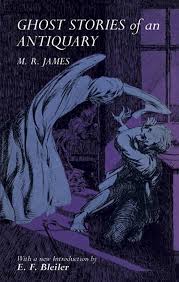
This is a review of the short story The Mezzotint, written by M.R. James and published in his collection Ghost Stories of an Antiquary. Read my review of Lost Hearts, the last story I reviewed, here. M.R. James was a Cambridge scholar who wrote ghost stories in the early 20th century.

A mezzotint is “a print made from an engraved copper or steel plate on which the surface has been partially roughened, for shading, and partially scraped smooth, giving light areas (source: Oxford Languages).” I mention this because I didn’t know what a mezzotint is. Basically, it’s the proverbial picture of a vase of flowers on the wall, or the volumes of Classic Authors collecting dust on the bookshelves. Boring decoration, which is why the author uses it.

Like all of Mr. James’ protagonists, Mr. Williams is an academic. He is an Oxford man. James, who hails from Cambridge, takes the opportunity to poke some (assumedly) good-natured fun at the rival university. Mr. Williams takes the mezzotint ‘on approval,’ which means he can return it if he doesn’t like it. This mezzotint depicts a manor house at night. Dull, right? Except the picture changes when you don’t look at it, which isn’t so dull. Add in a figure draped in a black robe and a child, and you’ve got a creepy little ghost story.

I’d be remiss not mentioning the Sadducean Professor of Ophiology, the unnamed personage who makes a brief appearance at the story’s end. Sadducean Professor of Ophiology translates to a skeptical professor of snakes, or perhaps an atheist professor of snake handling. I don’t know which. It’s a joke. James loved making up official sounding academic titles that mean nothing. Besides writing creepy stories, he also had a sense of humor!

This is the last short story in Ghost Stories of an Antiquary. I also reviewed Lost Hearts, The Ash Tree, Oh, Whistle and I’ll Come to You, My Lad, Number Thirteen, Canon Alberic’s Scrapbook, Count Magnus, and The Treasure of Abbott Thomas. If you are a fan of ghost stories, there is no excuse not to read M.R. James, and this volume collects some of his best ghost stories. I say ‘some,’ because his later ghost stories are excellent also. Recommended!
Lost Hearts

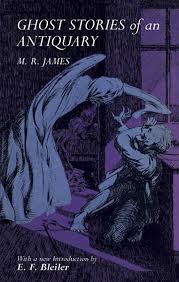
This is a review of the short story Lost Hearts, written by M.R. James and published in his collection Ghost Stories of an Antiquary. Read my review of The Ash Tree, the last story I reviewed, here. M.R. James was a Cambridge scholar who wrote ghost stories in the early 20th century.

Recently orphaned Stephen Elliott comes to Aswarby (an actual village in England) to live with his elderly cousin, Mr. Abney. Mr. James begins by describing the architecture of the hall, which has no bearing whatsoever on the story, and then tells us that Mr. Abney is an expert in Greek paganism. This is important, mainly because Mr. Abney is planning on sacrificing his 11-year old young cousin.

Why is Stephen’s age important? I don’t know. Mr. Abney seems to think it’s important, because he makes sure that he’s under twelve years old. The voluminous expository text at the story’s end states that the human sacrifice must be under 21 years, but there is no way anyone – even an old coot like Mr. Abney – could mistake an 11-year old for a 21-year old. My guess is that the text at the end should read as twelve years old.

Neither Stephen Elliott nor any of the servants knows that Mr. Abney wants to sacrifice him, but it should be fairly obvious to the reader of this type of tale, especially when we learn that two other children under his ‘care’ mysteriously vanished. Mr. Abney certainly qualifies as one of James’ absentminded academics, with a twist. Evil or crazy, take your pick.

Lost Hearts contains two unsettling images, one involving a dream sequence in a bathroom and the other occurring on the night of the sacrifice – except Mr. Abney is the one who loses his heart. The old man wants to move to another plane, which describes death pretty well, so I guess we have a happy ending!

Lost Hearts is a good story, with more plot than most of the other tales reviewed in this volume. From the modern point of view, the main issue is that it is overwritten, but that is typical for tales of this time period. Also, young Stephen (the protagonist) could be more involved. Maybe he lets the ghost children in, or whatever. Right now, he is just a spectator.

Recommended for fans of ghost stories, especially Victorian/Edwardian ghost stories!

The Ash Tree

This is a review of the short story The Ash Tree, written by M.R. James and published in his collection Ghost Stories of an Antiquary. Read my review of Count Magnus, the last story I reviewed, here. M.R. James was a Cambridge scholar who wrote ghost stories in the early 20th century.

The tale begins with Mr. James telling us how he’d like to own a manor house, and thus be the Lord of All He Surveys. He segues to England’s witch trials, and how a woman (Mrs. Mothersole) was hanged because of the testimony of Lord Matthew Fell, who did own a manor house. Lord Matthew’s testimony amounts to him seeing her acting strangely, which doesn’t mean she is a witch, but it’s enough to hang the old woman. Lord Matthew dies horribly in bed soon afterwards. His limbs turn black and swollen, and anyone who touches his skin with their bare hands gets very sick.

Nowadays, there is consensus that the victims of the witch hunts during the Middle Ages were innocent, misguided, or perhaps mentally ill women. However, Mrs. Mothersole is not innocent, misguided, or mentally ill. She’s the real deal. Years later, Matthew’s grandson Lord Richard sleeps in his grandpa’s room, which has been shut up for decades. He keeps the windows open, and the next day is dead as a doornail. When the ash tree growing next to the window is examined, they find some things they don’t expect.

Doing research (i.e. Google), I was surprised to learn that ash trees were viewed as sacred in pagan folklore. Since the characters of this story are mostly Good Christian Folk (patent pending), they would not share this worldview. Ash trees are also associated with children, which is ironic given the nature of the creatures. And, of course, Mothersole could mean ‘sole mother,’ and the text of the story links the creatures in the ash tree to her. In a way, they’re her children.         

Sir Richard himself is what I’d term giddy, or perhaps contrary. James doesn’t do a lot in the way of character development, but he does enough here. Sir Richard is not very likable. Does he deserve what happens to him? Well, yes and no. Sir Richard oversteps when he sleeps in his grandfather’s old room, which has been shut decades for a reason. It’s a naturalistic interpretation of a curse – what lives in that tree is real and not supernatural, and only dangerous under certain circumstances: i.e., if the Lord of the Manor sleeps in his bed. That’s enough.

I would not call this story scary or spine-tingling, but if you don’t like bugs it might squick you out. Recommended for fans of ghost stories and weird fiction!

Count Magnus

This is a review of the short story Count Magnus, written by M.R. James and published in his collection Ghost Stories of an Antiquary. Read my reviews of The Treasure of Abbot Thomas, Canon Alberic’s Scrap Book, ‘Oh, Whistle, And I’ll Come to You, My Lad,’ and Number Thirteen. M.R. James was a Cambridge scholar who wrote ghost stories in the early 20th century.

A scholar and gentleman-of-means named Wraxall travels to Sweden to write a guidebook and becomes interested in one Count Magnus, a deceased Swedish nobleman with a nasty reputation. Among other things, it’s said the Count went to Chorazin on the Black Pilgrimage and brought something/someone back with him. Before this, I’d never heard of Chorazin or the Black Pilgrimage. Reading is educational!

Wraxall, who talks to himself and easily loses track of his surroundings, seems like the type who walks into trees and other people’s houses. His cluelessness proves fatal when he unwittingly resurrects the Count and his companion, who looks like Cthulhu’s bratty kid brother.

Does this sound familiar? Maybe it does, because it’s the same plot as the past four stories in this volume. It goes like this: a scholar and man-of-means with wanderlust encounters the supernatural during the course of his travels. Sometimes he escapes with a few bad memories and minor phobias; sometimes his curiosity costs him his life.

None of James’ narrators have much in the way of a personality. All overstep a boundary, often without knowing it.  In this case, Wraxall summons Count Magnus by saying out loud he’d like to meet him. He has no way of knowing that the Count is ready and eager to accept visitors!

Lastly, the star of James’s stories is always the ghost, whether it’s a dancing and singing ghost, a ghost made out of bedsheets, or a ghost with the skin of a toad. James’s ghosts – and the way he describes the ghosts – are why he is still known and read today. Recommended for ghost story lovers!

Number Thirteen

This is a review of the short story Number Thirteen, written by M.R. James and published in his collection Ghost Stories of an Antiquary. You can read my reviews of The Treasure of Abbot Thomas, Canon Alberic’s Scrap Book, and ‘Oh, Whistle, and I’ll Come to You, My Lad’ here, here, and here. M.R. James was a Cambridge scholar who wrote ghost stories in the early 20th century; if you like ghosts in horror literature, you should read him.

Anderson is a scholar and gentleman-of-means who travels to Denmark in order to study the last days of Roman Catholicism in that country. James tries to make Danish history interesting and fun by telling us about the holes in the murdered King Erik Glippling’s head. It’s a trap, just like when they told you reading is fun or eating broccoli is good for you. Don’t fall for it!

Since this story isn’t about the history of the church in Denmark, you should read it. Anderson retains Room 12 in The Golden Lion. There is no Room 13. That evening, Anderson peeks out his window and sees the shadow of his neighbor, who favors red lamps and wears a hood. Oh, and the Room 13 phases into existence after the sun falls.

Anderson, doubting his own sanity, invites the inn’s garrulous landlord to his room that night to smoke a cigar and perhaps be an eyewitness. In the interim, he peeks out his window again and sees the shadow of his next-door neighbor dancing quite vigorously. When the landlord arrives, that selfsame next-door neighbor starts to sing in a cracked, cackling voice. Unfortunately, the shenanigans end when the cock cries dawn. There’s some nonsense about a corrupt archbishop and his hidden dwelling place, but don’t be fooled. This story exists because James wanted to make a ghost dance.

This is one of my favorite M.R. James’s stories. In a normal ghost story of that era, the hero/heroine would be awakened in the middle of the night by an apparition, and then swoon. James has his ghost auditioning for America’s Got Talent. Its actions are so bizarre and unexpected and funny, and that only adds to the story.

Highly recommended for lovers of ghost stories and Victorian/Edwardian literature!

‘Oh, Whistle, and I’ll Come to You, My Lad’

This is a review of the short story ‘Oh, Whistle, and I’ll Come to You, My Lad,’ written by M.R. James and published in his collection Ghost Stories of an Antiquary (published 1904). You can read my review of his short stories The Treasure of Abbot Thomas and Canon Alberic’s Scrap Bookhere and here.

Parkins is a Professor of Ontography who doesn’t believe in ghosts and is trying to improve his golf game. He goes on a golfing vacation, and his hotel room has two beds (foreshadowing alert!!!). One evening he comes across the ruins of an ancient temple by the beach, and finds an old whistle. When Parkins examines the whistle, he sees the following epitaph: Who is This Who is Coming? IMO, it should read Who is Coming, but the Victorians never met a word they didn’t like. The gist of the question is, if you want to find out who is coming blow the whistle.

Does this sound vaguely ominous? Would you blow the whistle? Well, Parkins does! As a doctor of Ontography, which doesn’t seem to be a real academic field, he doesn’t believe in ghosts. Ontography is the study and documentation of what is real; it is Philosophy and not Natural Science.

Basically, Parkins is a professor of the literal, which explains why he doesn’t believe in ghosts. I’m sure he doesn’t get subtext, either. This little in-joke adds another layer to the story. Too bad Parkins falls into the same trap as many others – i.e., mistaking his view of reality as actual reality. The whistle summons a thing that rises from the spare bed in the middle of the night, while Parkins lies quaking in his own bed. What will become of our plucky professor of Ontography?

James is great at creating ghosts, and this one is inspired. It seems mostly composed of bedsheets, and James himself says (through one of his characters) that the ghost’s power lies in frightening people out of their wits. To me, the scariest thing about this story – which might’ve freaked me out as a kid – lies in the violation of privacy. Parkins thinks he’s safe and alone in his bedroom, when it turns out he’s neither.

Recommended for ghost story lovers and lovers of Victorian supernatural fiction!

Canon Alberic’s Scrapbook

This is a review of the short story Canon Alberic’s Scrapbook, written by M.R. James and published in his collection Ghost Stories of an Antiquary (published 1904). You can read my review of his short story The Treasure of Abbot Thomas, here. Like the main character of this story, M.R. James was a scholar and a Cambridge man. If you like ghosts, he is a must read. Ghost Stories of an Antiquary contains many of his strongest stories.

An amateur archaeologist stops at an old church, where he spends the day looking at whatever amateur archaeologists look at. You’ll have to use your imagination, here. He’s accompanied by the church’s sacristan (a fancy name for keeper), an old man with a horrid case of nerves. Or is it nerves? Dennistoun – who lacks imagination – hears strange things in the church, but he’s not the sort to be put off by unexplained bumps or gouts of uncontrollable laughter.

Afterwards, the sacristan shows Dennistoun a scrapbook consisting of leaves scavenged from illuminated manuscripts. One picture stands out – King Solomon confronting a demon of the night. Dennistoun buys the book from the sacristan. Something follows him back to the hotel. Later that evening, he meets it. The end.

This is a creepy story. By today’s standards, the Victorian prose might seem overly ornate with flat characters, but you are here for the monsters. And James delivers. The demon in this story is described in a tactile way – spider eyes, shallow jaw, black hair, all bone and muscle. The creepiest thing is the monster’s closeness. Dennistoun sees its hand resting on the desk he’s working on, and then it rises up behind him. Talk about breathing down someone’s neck!

I like the idea of a haunted scrapbook. Using the magic of the Google, I searched for an image similar to the one found in the scrapbook. Alas, I found nothing. If anyone knows if an image answering to the description of King Solomon’s Dispute with a Demon of the Night exists, please let me know.

It is also interesting to note how clueless Dennistoun truly is. Or I suppose you could call him literal. There are ample warning signs that things are amiss – strange, unexplained laughter in the church, the old man’s eagerness to unload the scrapbook – which he ignores. I don’t blame him. Everyone knows monsters aren’t real.

Recommended for lovers of creepy and the supernatural.

The Treasure of Abbot Thomas

This is a review of the short story The Treasure of Abbot Thomas, written by M.R. James and first published in the collection Ghost Stories of an Antiquary. Going forward, I will be reviewing one horror short story/novel per week in addition to my graphic novel reviews. If there is anything specific people would like to see (more graphic novel reviews, horror movie reviews, etc.) please let me know.

A scholar and man-of-means goes on a treasure hunt that starts out exciting, if you call translating Latin texts, examining stained glass windows, and deciphering code exciting. Since he’s a scholar, it is to him! Others may not find this section to be as thrilling. The adventurous academic toddles off with his manservant to the abbey where the treasure is hidden, where he meets something he doesn’t expect, and that’s when the story picks up steam.

The main character is a scholar who is over inquisitive. James’ protagonists are not men of action. They are steeped in academia, amateur historians, antiquaries, college professors. All are curious, overstep, and pay a price. After encountering the supernatural, his protagonists always come away marked. Many die.

By today’s standards, this story is overwritten with an awkward frame, and I don’t think anyone over the age of nine will find it scary. On the other hand, it is atmospheric and spooky in parts, mainly because of the description of the monster. Mr. James reveals his creation in interesting ways, using senses besides sight and sound. The toad-guardian is described by touch (leathery) and smell (mold).

Because of pacing issues, The Treasure of Abbot Thomas isn’t one of James’ stronger stories, but it is still worth a read, especially if you enjoy ghost stories. The BBC produced a TV adaptation in the 1970’s, which is now streaming on Shudder. Recommended!