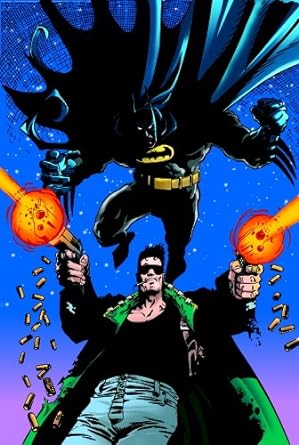
Hitman Volume Two: 10,000 Bullets

This is a review of Hitman Volume Two: 10,000 Bullets. You can read my review of the first volume, here. There’s a scene in this volume where Natt the Hat – Tommy Monaghan’s hitman friend from Detroit – stomps on a ninja’s crotch to get information. This isn’t unusual. The hero displaying his manhood by beating the crap out of a guy who can’t fight back is a staple of action movies, especially buddy cop movies. The person getting beaten up is always a bad guy, which in action movie logic makes it okay. The problem is, what if the person doing the beating is also a bad guy?

Because Natt the Hat is a bad guy, just like Tommy Monaghan is a bad guy. This isn’t an insult. They kill people for a living, and they know the score. Garth Ennis (the writer) makes them likable. He gives Monaghan an imaginary code, i.e. don’t kill the good guys. Except Tommy is the person who determines who’s a good guy. None of that changes the fact that normal people view him with revulsion, fear, and hatred.

To wit: after getting shot, Tommy and Natt hole up in his girlfriend Wendy’s apartment. Wendy doesn’t know Tommy’s a hired killer, and is shocked when he shows up on her doorway half-dead. She lets him bleed on her couch until he’s well enough to leave, and then tells him to get out. She isn’t nice about it, either. And just like that Wendy is Tommy’s ex-girlfriend.

Natt the Hat – who serves as a sort of a Hitman Everyman – asks Tommy what he was thinking. Because he knows that a girl like Wendy is way out of Monaghan’s league. Natt knows it, the reader knows it. The only person who doesn’t is Tommy, who has an adolescent streak a mile long when it comes to women. AWWW SHUCKS LOOK AT ME I’M DATING A GURL!!!!!!!!!

Natt might not be able to read minds, but he can read people better than Tommy (who can read minds). When Tommy introduces Natt as his new best friend at Noonan’s (dive bar), his old best friend Pat gets upset. Natt sees this, but Tommy doesn’t. Tommy didn’t even mean anything bad by it – maybe. When Hacken (another hitman) punches Pat and calls him a coward, Monaghan breaks it up but later tells Natt that he thinks Hacken is right. It’s a lack of respect, which pays off big time. When Pat is later tortured for information, Tommy’s words are what keeps him from blabbing. Monaghan’s reaction to all this is to go on a killing spree, but the self-hatred isn’t hard to see.

Anyway, I liked this graphic novel a lot. Be warned: this is a very violent comic (there’s a 20+ page shootout that’s awesome), but it is comic book violence and thus not realistic. Still: if violence upsets you, you might not want to read this. There are also a few slurs that people used in the 1990’s that are (rightfully) taboo today.   
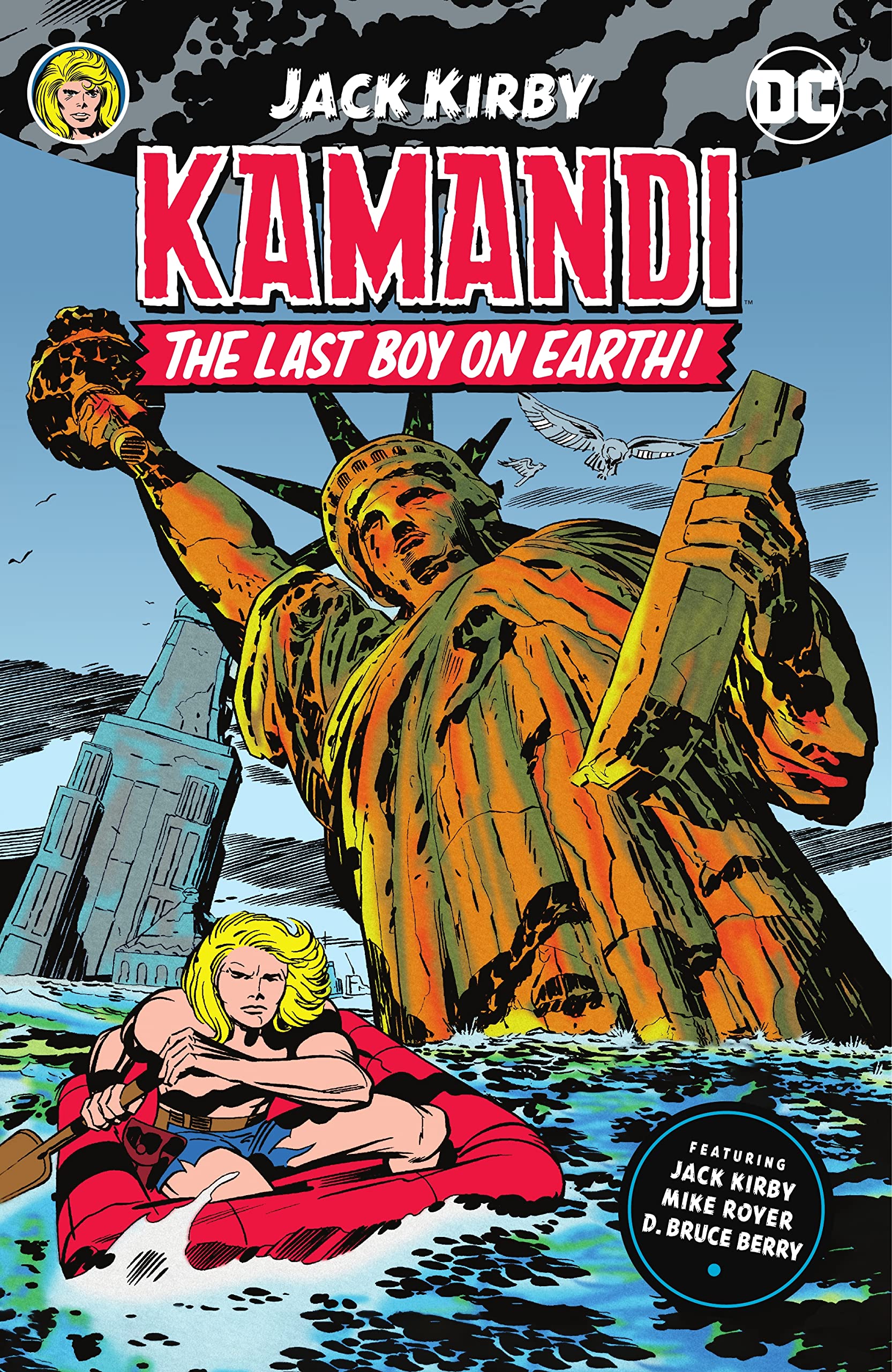
Kamandi: The Last Boy on Earth Volume One

This is a review of Kamandi: The Last Boy on Earth Volume One. Jack Kirby (the creator of Kamandi) wrote a lot of material for DC. Thus far I’ve read The Demon and OMAC, but this graphic novel blows them out of the water. Kamandi is a riff on the original Planet of the Apes movie that came out in the late 1960’s, but Mr. Kirby runs with it. In Kamandi, there are super-intelligent lions, tigers, cheetahs, groundhogs, bats, etc. Humans are now on the low end of the totem pole, and are treated like animals or even exotic pets. Some enterprising animals have even taught humans how to talk!

Kamandi, who owns a single pair of blue cargo shorts, lives in a bunker (Command 1 – get it?) with his grandfather. One day he leaves the shelter to see how earth fares after being ravaged by an unnamed natural disaster. He finds out that things are much, much worse than he thought. Thus begins a bizarre road trip.

This is not superhero comic. Kamandi has no special powers, and gets the crap kicked out of him on a regular basis. Indeed, there’s a scene where he goes berserk because he realizes that he’s stuck in this world with no way out. He’s rescued by one of his friends – Kamandi makes lots of friends, both animal and human, but the friendships never last long. He’s always wandering away, being captured by rampaging gorillas, or falling out of the hot-air balloon he’s using to escape.

This graphic novel moves quickly, has a rotating cast, and in many ways reads like a war comic. It’s really a post-apocalyptic comic. Substitute zombies for the different animals, and you’ll see what I mean. My favorite storyline in this volume is when a group of conservationist lions put Kamandi and his female companion, Flower, into their version of a nature preserve. Unfortunately, there are cougar poachers who want a piece of him. This issue is the best single comic I’ve read in years.

Highly recommended!

Tales of the Batman: Len Wein

This is a review of Tales of the Batman: Len Wein. The comics in this volume are amongst the first Batman material I ever read, over forty years ago. I enjoyed the five-part Ra’s Al Ghul story in a mass market paperback before there was such a thing as graphic novels. The Joker’s Birthday Bash story is the first Batman comic I ever bought. For some reason, I thought the writer was Gerry Conway but it’s Len Wein.

Anyway, this is a hefty volume. Over thirty issues of 70’s Batman goodness, which if you like the Dark Knight turns out to be pretty good deal. I’d suggest waiting until Comixology has another sale, though, as these volumes are pricey.

The stories are mostly one-shots, and feature Batman’s rogue gallery as well as villains from other titles. Hawkman villain the Gentleman Ghost makes an appearance here, as well as Captain Boomerang (a Flash foe). Two-Face, The Joker, Kite Man, Calendar Man, Firebug, Signal Man, etc., etc., etc. also make appearances. Selina Kyle, aka Catwoman, is present, but this time it’s mostly as Bruce Wayne’s love interest.

Selina and Bruce manage to have sex, off-screen, a fact I missed because I was twelve years old. This leads into a two-part story where it turns out Selina is dying of some rare unnamed disease she caught as Catwoman, which okay. The only cure is an urn full of even rarer Egyptian herbs, because the ancient Egyptians knew so much more about medicine than us. When the herbs are stolen from the museum, Selina becomes suspect #1. You know, the usual nonsense.

I like Mr. Wein’s portrayal of Batman. Instead of being portrayed as a sociopathic asshole, the Dark Knight manages to achieve balance in both sides of his busy life. His powers of detection are highlighted, as well as his escape artist skills. There are a number of instances where Batman is knocked out and put into a death trap, which he always manages to escape. I’m assuming the villains who choose to tie him up instead of just putting a bullet through his head either have a bondage fetish or watched too many episodes of the 60’s TV show.

Recommended for Batman fans!

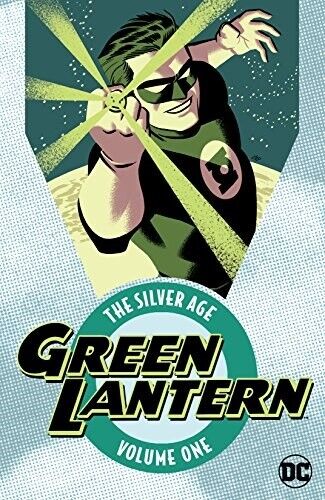
Green Lantern: The Silver Age Volume One

This is a review of Green Lantern: The Silver Age Volume One. For the most part, this is fun comic book science fiction. The writer introduces many characters and concepts – the Green Lantern Corps, Sinestro, Hector Hammond, The Weaponeers of Qward – and lays the groundwork for future stories here. There’s a story about a group of people who live underground hooked up to the Matrix – er, machines, but their minds wander about in a dream city.

Green Lantern is Hal Jordan, hotshot test pilot. He’s summoned to the spaceship of a dying alien, who gives him his power ring. This ring can manifest anything into existence, as long as you have enough willpower. I’m unsure what ‘willpower’ means in this context. Does it mean resisting second helpings or double desserts, or maybe holding it in when you have to use the bathroom? After reading this volume, I figured it means being decisive and quick-thinking, but what do I know?

Anyway, Hal becomes the equivalent of a cosmic cop. He fights evil with his power ring, which has a single vulnerability – it can’t affect the color yellow. Of course, Hal’s boss/love interest Carol Ferris falls in love with Green Lantern, while giving Hal the cold shoulder. BTW, Hal is the type of employee who gives Human Resource Departments migraines.

The episode I’ll always remember is when Green Lantern, trying to avoid Carol’s marriage proposal (it’s Leap Year, which means it’s okay for Carol to propose!), creates an enormous green monster with his power ring so he’ll have something to fight. When he bumps his head, the jolly green giant almost destroys the earth. Boy, they don’t make comics like that anymore!

My issue with this graphic novel has to do with Green Lantern’s sidekick, Thomas Kalmaku, who goes by a nickname that I will not use here. Thomas is written as a racial stereotype who’s used mostly for comic relief. Back then, people might have thought that was funny, but today it’s cringeworthy, and mars an otherwise good graphic novel.

Tales of the Batman: Steve Englehart

This is a review of Tales of the Batman: Steve Englehart. I bought a bunch of Batman graphic novels over the holiday season. I’ve read and liked parts of Mr. Englehart’s West Coast Avengers and Green Lantern runs in the 1980’s, so I took a chance.

Reader, I was not disappointed. Mr. Englehart wrote the Joker Fish storyline, which apparently is famous even though I’ve never heard of it. Before this point, I’d never even heard of Silver St. Cloud. I don’t quite get why this run is so obscure, because Mr. Englehart has a unique take on the character. It might be because his original run on Batman is blink-and-you’ll-miss-it short, running eight issues in the 1970’s – but he makes those issues count. Mr. Englehart introduces a new villain, Dr. Phosphorous, and brings back two older villains (Dr. Hugo Strange and Deadshot) in an interesting way.

He also writes an awesome Joker. The Joker Fish storyline starts with the Clown Prince dumping toxic chemicals into the bay, which produces smiling fish. The Joker decides to cash in by copyrighting his Joker Fish, which means anyone eating a fish sandwich will owe him $$$. He then commences killing any bureaucrat that refuses to grant him the copyright.

And then there’s Silver St. Cloud, the love interest I’d never heard of. That might be because Mr. Englehart goes where few Batman writers have dared. Silver & Bruce start to date, and when it gets serious she figures out his secret identity. She leaves him, for a variety of reasons, and doesn’t return for 30 or so years (real time, not comic time), when the storyline is resolved – sort of.

As I’ve said, portraying Batman as an adult human being with certain, uh, needs, seems to be taboo amongst Batman writers. This is sad, because if you read more than two issues of Batman it becomes obvious that he really needs to get laid. So why doesn’t he? The simple explanation is the one Mr. Englehart went with. Batman declared war on crime as a boy, on a boy’s terms, which leaves no room for love. The simpler explanation, which is the one I go with, is that Batman is mentally ill.

I mean, whatever. Mr. Englehart pulls off the feat of having Batman be in a serious relationship with a woman that feels real, and it is additive rather than reductive to his character. The culmination of their affair occurs when Batman says something stupid, because he has no idea how to talk to women. This makes senses, as anyone who spends their nights dressed up as a bat will almost certainly lack basic social skills. The storyline as written in this volume feels unfinished, and I’m almost afraid to Google Silver St. Cloud’s name, as the easiest solution is to fridge her.

An underrated run that spans over three decades.

Hitman: A Rage in Arkham

This is a review of Hitman: A Rage in Arkham. Garth Ennis, the writer of Hitman, is notorious. In this volume, you get PG-13 Garth because this is a superhuman comic. Superhuman, not superhero. Tommy Monaghan has X-ray vision and he can read minds. He is also a hitman who does hits on superhumans. Deep down, Tommy is portrayed as a decent guy with a sense of honor, even though he’s not. You can take this as sly meta-commentary, or just treat it like good stupid fun. Since many 90’s comics can be described as just stupid, this was and continues to be a standout title.

Tommy is hired to kill the Joker in Arkham Asylum. This leads to an encounter with Batman and a ten-armed hellfiend called The Mawzer. The best part of this volume is when Monaghan does a bunch of side-jobs in Arkham for beer and pizza money. Tommy also goes on a date, and reads her mind to discover what kind of food she likes. Hey, it beats cyber-stalking. Oh, and he throws up on Batman’s shoes.

This title works best when it is the equivalent of an action movie. From my recollection, the earlier part of this series is a lot of fun but goes downhill in later volumes, but we will see. Monaghan’s sense of honor amounts to only killing what he considers to be the bad guys. He’s written as a decent guy with a tough, blue-collar job. Like most of us, he worries about money, but he wouldn’t dream of using his newly found mind-reading powers to sell Batman’s secret identity to the highest bidder.

The trick to writing Hitman – and any other title featuring The Punisher, The Vigilante, or any other character whose main occupation is murder – is to portray the character as street smart rather than a homicidal maniac/serial killer, and have the villains be so scummy they always deserve what they get. This is also the formula for the billion or so buddy cop movies I watched in the 80’s.

Recommended!

Batman: The Long Halloween

This is a review of Batman: The Long Halloween. I read this graphic novel years ago and even owned a physical copy, which I lost during a move. The timeframe is around the same time as Batman: Year One, which I’ve never read. Batman is just starting out, aided and abetted by policeman Jim Gordon. At this point he’s basically the GCPD’s unofficially sanctioned vigilante. Just FYI: if the police department of your city has a big spotlight they use to summon a guy who dresses as a bat to fight crime, you should consider relocating to another city.

The plot: a serial killer is killing mobsters on holidays. The unknown killer, dubbed Holiday, uses a .22 equipped with a modified silencer (a baby pacifier). This upsets Batman, who wants to stop Holiday; district attorney Harvey Dent, who isn’t all that upset; and Calendar Man, a serial killer who spends the graphic novel channeling Hannibal Lecter in Arkham Asylum. The Joker is also irked, and expresses his frustration by attempting to kill everyone in Gotham City, but he’s not a big player here.

Each of the thirteen issues takes place during a holiday and usually features a member of Batman’s rogue gallery. It’s a simple framing device that works very well. Two standouts: the portrayal of Cat Woman and Two-Face are very well done; this volume is Two-Face’s origin story. The art is wonderful, and the writing is very good as well. The script has layers and is more complex than it looks, but by the end of the graphic novel I was still a little confused. I can’t say more, because spoilers.

A great read for Batman fans.

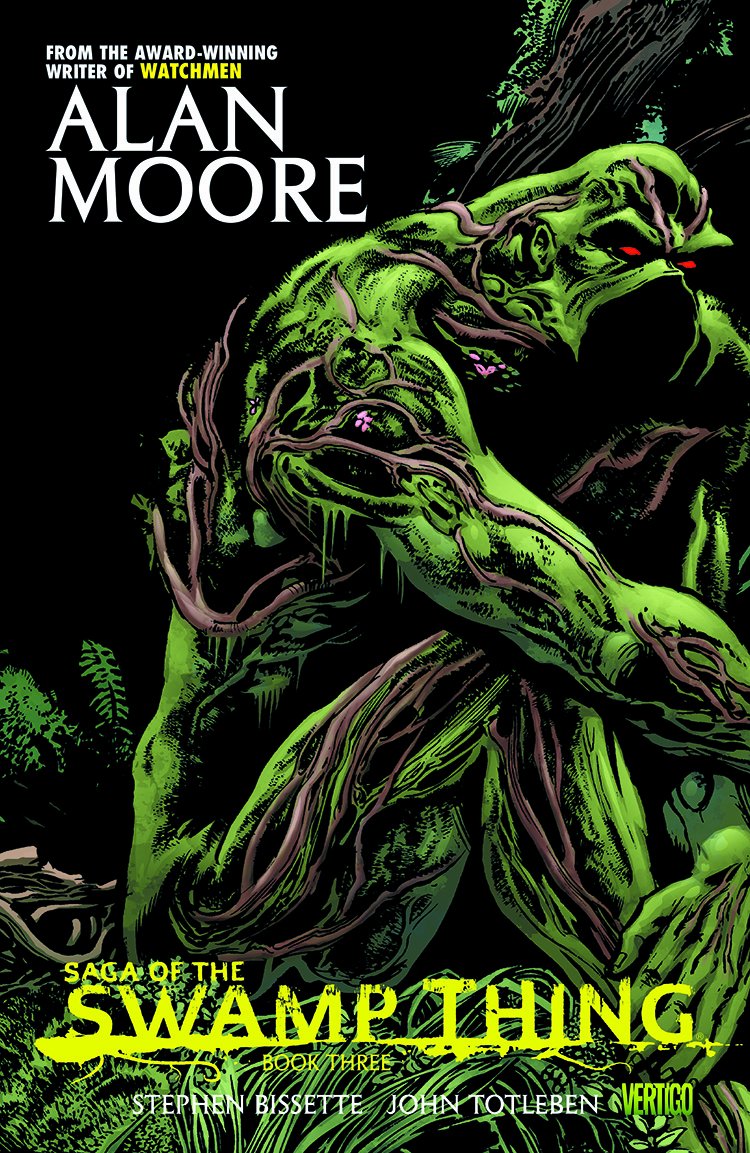
Saga of the Swamp Thing Book Three


This is a review of Saga of the Swamp Thing Volume Three, which continues Alan Moore’s groundbreaking run on the title. One of the eye-openers of this volume is reading John Totleben’s (the artist’s) introduction and realizing how much of a collaborative process comic creation is. The idea for Nukeface, one of the series more memorable characters, came from Mr. Totleben.

Swamp Thing continues be a status quo breaker. Most superhero comic series love the status quo and hate change. True, things may seem to change, but they almost always revert back to the mean. The tried and true method is to have the title character quit/die/get his or her brain swapped/be transported back in time or to another dimension. While they are on the shelf (it’s always temporary), someone else takes up the mantle.

This has happened to Spider-Man (brain swap with Dr. Octopus), Thor (unworthy of Mjolnir), Iron Man (Tony goes back on the sauce), Captain America (assassinated), Superman (killed by Doomsday), Green Lantern (quit, died), and so on. The most notable instance that I’ve read this year is the first volume of Knightfall, when Batman’s back is broken by supervillain/steroid freak Bane, and he is replaced by a guy who turned out to be so unpopular DC killed him and didn’t bother resurrecting him.

Anyway, Alan Moore’s version of Swamp Thing thrives on real change. After his tryst with Abigail Arcane, the Swampster encounters an irradiated hobo named Nukeface who calls everyone Ed. Even though Nukeface’s touch means death, he really isn’t a bad fellow. Like everyone else, Nukeface needs to eat and drink – except he eats & drinks toxic sludge.

Swamp Thing is irradiated, dies, and manages to regrow his body. Shit gets even realer with the arrival of John Constantine, a nasty Englishman who looks like a young Sting (of the Police) and is partly based on Jerry Cornelius (created by Michael Moorcock). Constantine is an occultist, and he leads Swamp Thing on a merry chase across the country, where he encounters aquatic vampires, a werewolf story (that was quite controversial at the time), and finally zombies.

A great horror comic.

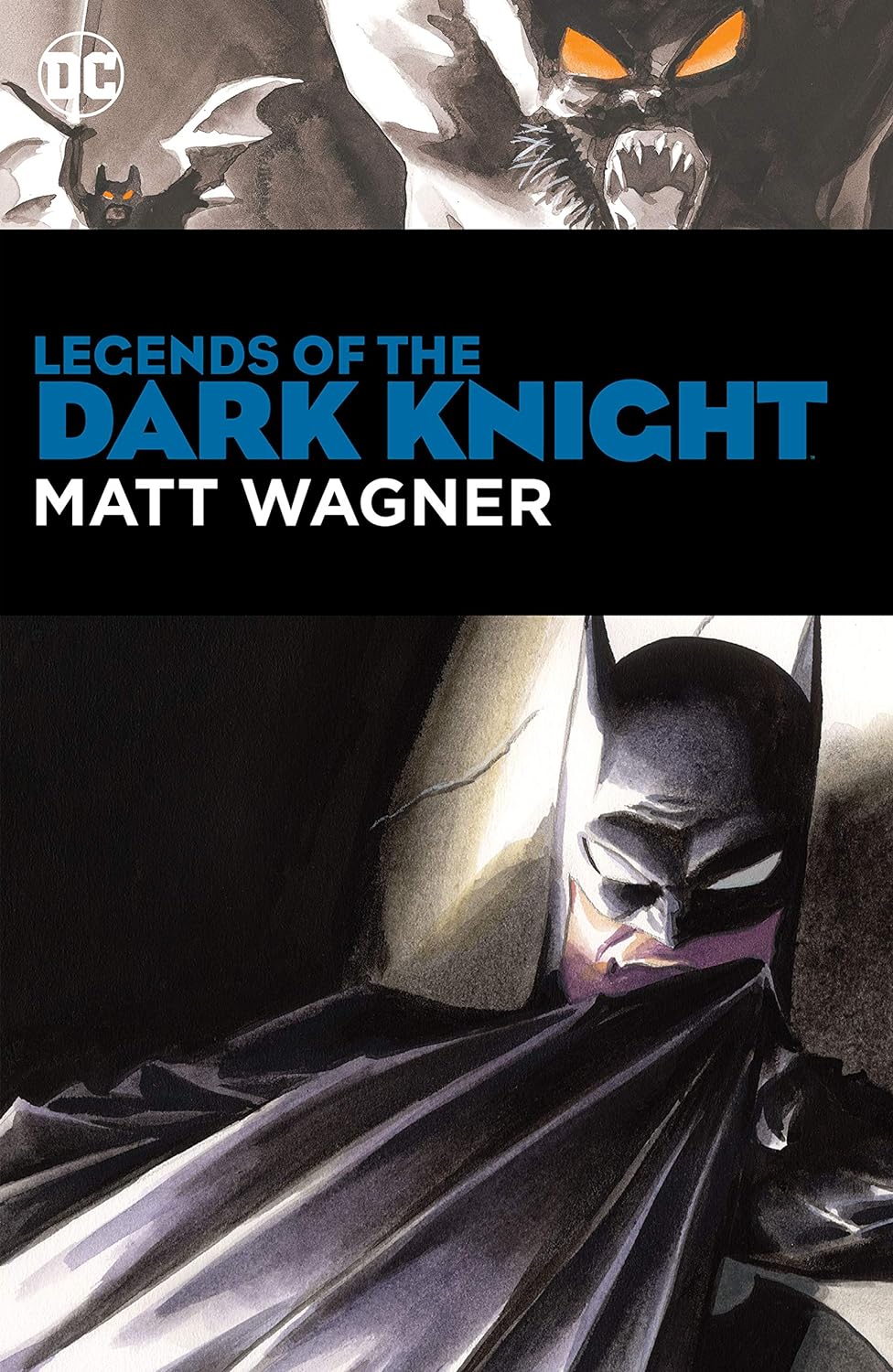
Legends of the Dark Knight: Matt Wagner


This is a review of Legends of the Dark Knight: Matt Wagner. As the book’s title tells us, this collection is written and partly drawn by comics legend Matt Wagner, creator of Grendel and the writer of Sandman Mystery Theatre. Mr. Wagner’s stories in this volume contain lots of plot, focus on side characters and side storylines, and bring a fresh perspective to The Dark Knight.

Unlike many comic scribes, who can’t, won’t, or don’t want to, Mr. Wagner goes there on a fairly regular basis. He doesn’t shy away from the dark side of human nature, writing violent, unsettling material. The other comic writer I can think of who does this is Robert Kirkman, the creator of The Walking Dead and Invincible. To me, it’s a jarring way of breaking the fourth wall.

This graphic novel contains three major storylines. The first is a Two-Face story, which is very good. There’s also a Riddler one-shot, where Ed Nigma hosts an underground game show that proves to be a big hit with the Gotham public. What interests me are the last two storylines, both of which involve Batman characters and villains from the 1940’s. The source material for these stories is contained in the Batman Golden Age volumes, some of which are reviewed here. These are retro stories that take place at the beginning of Batman’s career.

The first story involves a minor Batman villain named Hugo Strange, M.D. (medical deviant). Strange is fascinated with genetic engineering and seeks funding to continue his studies. Since he’s a mad scientist who probably locks his test subjects in the basement, nobody but mobsters will fund him. Trouble starts when it turns out that the wacky Strange does indeed lock his monstrous, mutated test subjects in the basement.

The second storyline involves a villain called the Monk. Originally a kitschy Dracula homage done by Kane & Finger, Wagner’s version of the Monk wears a bright red robe and hood, S&M style. The story is ambivalent about whether he’s really a vampire, but he’s certainly deranged. A few of the torture/dream sequences in this storyline are quite disturbing.

We also have Julie Madison, who in the 1940’s holds the distinction of being Bruce Wayne’s arm candy fiancée before she dumps him in favor of movie stardom. In these storylines, she’s really Bruce’s girlfriend, which is…look, superhero comics have always been terrible at depicting normal relationships. Historically, they’re aimed at 14-year-old boys, whose hormones are raging out of control.

IMO, having Batman behave like a normal human being is a risky proposition, because if you humanize Batman too much he falls apart as a character. That sort of happens here. Seeing Bruce lie to his girlfriend about – well, basically everything – hammers home the point that he’s an emotionally stunted man who is terrified of intimacy. The fact that he draws all the wrong conclusions when she leaves makes it worse. There’s a brief story after this one that shows us the present-day Batman, and let me tell you he is one sad motherclucker.

Recommended!

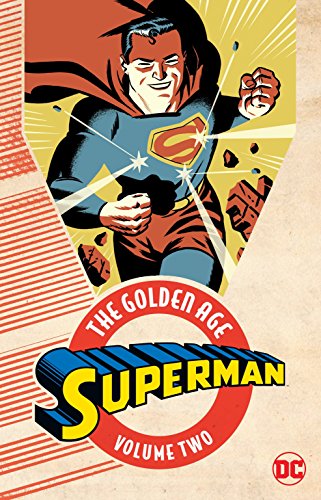
Golden Age Superman Volume Two

This is a review of Golden Age Superman Volume Two. You can read my review of the first book, here. Spoiler alert: I didn’t like this volume quite as much. Reading twenty-plus one issue stories that are identical can be mind-numbing.

A few characters return from the last volume. We have Ultra, a mad scientist who transfers his brain into the body of a beautiful young starlet. Ultra might be gorgeous, but he’s still a megolamaniac asshole who wants to conquer the earth. Strangely, Ultra is replaced by Lex Luthor, who in this volume has hair. Luthor is a mad scientist just like Ultra, so I’m unsure what happened. Why did they ditch Ultra? Maybe the public didn’t like a body swapper?

We also get Lois Lane. Lots of Lois Lane. Like Clark Kent, Lois is a reporter with no fear. Unlike Clark, she doesn’t have super powers. This means she acts in ways that can be interpreted as stupid, such as telling the gangster that she’s going to publish an exclusive exposing his evil plans. I lost track of the number of times Lois is captured and used as a hostage object in this volume. In one issue, she’s kidnapped twice!

The stories range from gangster potboilers to science fiction. Superman still can’t fly. He can be mind-controlled and knocked out by radium bombs or men with strength-sapping ray guns. There’s no suspense, which is why we have the Lois Being Kidnapped Again trope.

As I said, most of the issues blend. The exception is a story about a children’s orphanage. The owners run an operation worthy of a torture-porn movie. Watching them throw the works – buzzsaws, safes, boiling water, acid, etc. – at Superman is an eye opener. They’re nasty customers, but different from the normal gangster or megalomaniac scientist. You don’t get many pure sadists in superhero comics.

Two other things struck me about this volume. Unlike today’s Man of Tomorrow, the Superman of Yesterday didn’t have many qualms about killing. In fact, he does kill people – usually when he feels threatened (he kills the guy who hypnotizes him). He also doesn’t care about rules. There are several stories where Superman tries to gain evidence on the mobster/crooked politician/saboteur/etc., and then resorts to the tried-and-true method of threatening to crush the evildoer’s skull to a pulp if he doesn’t confess. Since this gambit always works, I’m surprised why he doesn’t just cut to the chase. It would save him time.

If you like Superman, you’ll enjoy this volume!