Tales of the Dark Knight: Norm Breyfogle, Volume One

This is a review of Legends of the Dark Knight: Norm Breyfogle, Volume One. Mr. Breyfogle filled the art duties on Batman very capably in the 1980’s and early 1990’s. He mostly worked with English writers Alan Grant and John Wagner, who is best known for his work on Judge Dredd. If you haven’t read Judge Dredd, you don’t know what you’re missing.

Who cares about Dredd, how’s those Batman comics? Well, pretty good! We don’t see much of Bruce Wayne or his life at all here. Batman is depicted as an obsessive man who despises criminals. The art is great at showing him breaking and fracturing bones, which he seems to relish. This is a very violent comic – people are murdered in the most callous and stupid ways in almost every issue.

A few of the stories are ridiculous – the anti-drug story is an eye-roller – and a few would be controversial today. When a terrorist kills a group of Vietnam veterans and flees to London, Batman follows. It turns out the terrorist is a diplomat, and he tells Batman – jeez, it’s wonderful how your country has never overthrown governments or killed any innocent people lulz. Considering the events of 1993 and 2001, this comic seems almost prescient. The other high point of this issue is watching Batman drive around London, asking people how to get to Parliament.

The creators give us a number of new Batman villains. We have the Ratcatcher, who has trained sewer rats to attack human beings and who imprisons the men who put him in jail, years ago. There’s also Cornelius Stirk, who has weird psychic abilities – he can look like Jesus, or Honest Abe Lincoln. Stirk feeds off fear, and will use his psychic powers to scare you to death.

But my favorite Bat Villain of this volume is the Corrosive Man, who was double-crossed and seeks vengeance. An explosion in a toxic waste factory means that he’s a walking chemical factory, as happens sometimes, and his touch is deadly! The writers opt to find the humor in the situation, with the Corrosive One falling out of chairs, through floors, and down flights of stairs.

The highlight of this volume is the Mud Pack saga, when the four people who have taken on the mantle of Clayface team up. Well, it’s three people and a hunk of clay, because the second Clayface is dead. I kept waiting for him to spring back to life, but it didn’t happen. The original Clayface was a ham actor who murdered a bunch of people. He’s joined by Clayface #3, who has just broken up with his mannequin girlfriend, and Clayface #4, a woman who can mimic anyone and gain their abilities. They team up, because reasons, and end up giving Batman a psychic lobotomy. Luckily, guest star Looker – of Batman & The Outsiders fame – is there to help!

This is a solid volume, but it’s pricey, so wait until it goes on sale.

The Spectre: Wrath of God

This is a review of Spectre: The Wrath of God, written by John Ostrander and drawn (mostly) by Tom Mandrake. What does it mean to be the Wrath of God? By definition, you’d see things in terms of black & white. If your host is an ex-cop who was murdered fifty years ago, you might be a tad out of touch. This is a problem, especially if you are beacoup powerful.

The Spectre, enraged at the death of his lover Amy Beitermann at the hands of a serial killer, decides to judge humanity. Translation: the Spectre is going to destroy the Earth as soon as he works himself up to do it. He’s opposed by the Phantom Stranger, who puts together a SWAT team (Doctor Fate, Zatanna, The Demon Etrigan) to stop him. He doesn’t include Madame Xanadu, which turns out to be a mistake.

If you want a snapshot of the hotspots of the planet Earth in the early 90’s, you will find them in this comic – the Spectre visits Northern Ireland, Israel, Brooklyn, and the imaginary country of Vlatava, where he shanghaies the opposing generals – just like that famous Superman comic, decades ago! Instead of urging the generals to settle the country’s civil war by fighting each other, he makes them watch while he kills every man, woman, and child in Vlatava.

This is serious Old Testament shit, and it has repercussions. The U.S. government retrieves the Spear of Destiny, a powerful magical artifact capable of killing the Spectre, and gives it to Superman. Unfortunately, the Man of Steel is vulnerable to magic…and the spear is imprinted with the psyche of Hitler.

John Ostrander is one of my favorite writers, and the trippy art by Tom Mandrake is great, so of course I recommend this graphic novel. Too bad the rest of this run isn’t available in trade or hardcover, because I’d snap it up in a minute.

I, Vampire

This is a review of I, Vampire, an early 1980’s DC back-up series which chronicles the adventures of Andrew Bennett, a 400-year-old vampire. This series – which has a beginning and an ending – features three writers/writing teams. I am not going to refer to any of them by name. The first writer – who co-created the character – lasts five issues, and doesn’t get a chance to leave a mark. The second writer jumps the shark, and leaves too much of a mark. IMO, the third writing team has the best take on the material, but their run doesn’t last long enough.

First, some background. Andrew Bennett is a vampire. He’s been pursuing his lover/enemy Mary for over 400 years. His origin story has an interesting twist: Bennett is a nobleman who goes out horseback riding and is attacked by a vampire. He kills the vampire, but becomes one himself while still retaining his humanity. I am unsure if that’s because he does not give consent, or because he killed the vampire who created him, but there you are.

 When Andrew’s lover Mary asks him to make her a vampire, he complies. Unfortunately, she becomes a traditional vampire who views humans as food items/prey. Maybe that’s because most vampires are evil, or perhaps Andrew didn’t know ‘his’ Mary as well as he thought. Andrew, racked with guilt, pursues her. Does he wants to end his ex-lover’s evil, or does he needs a panacea for an aimless existence? Maybe it’s a bizarre lovers’ game, which is how Mary seems to view it.

The vaccine storyline transforms I, Vampire from an uneven horror comic into something else. When a universal cancer vaccine is discovered, it endangers the existence of vampires everywhere because of the silver in the vaccine. The death of all vampires should be what Andrew wants, because he loathes vampires. Right? Andrew travels to Egypt in search of Mary, who is involved in a last-ditch effort to destroy the vaccine and save the vampires. Bennett’s former lover pretends to be ‘his’ Mary in order to gain his aid. You don’t think that Andrew, who has spent 400 years pursuing her, will be fooled? Do you? A little bit of background: in the past few issues, Mary and/or her minions have murdered four humans Andrew knew/had contact with/been friendly with.

Anyway, Andrew buys it. I could say ‘because reasons,’ but maybe he is that dumb. They travel through time with a pair of magic rings, because Mary wants to kill the mother of the guy who invented the vaccine. They meet Jack the Ripper, as one does. I did not read the last few issues of this storyline, instead opting to start anew with the third and last writing team, which is where this series finds its legs. Unfortunately, it’s too little too late, and the graphic novel comes to a rather abrupt conclusion. The last few issues have a nice twist that I didn’t see coming.

The best thing about I, Vampire is the atmospheric art, which is great for a horror comic. The artists do less well with fight scenes, which aren’t their forte. Unfortunately, they are asked to draw too many fight scenes, which highlights one of this title’s problems. I, Vampire is a hybrid between a horror comic and a superhero comic – Vertigo hadn’t come into existence yet – that doesn’t quite work.

Tales of the Batman: Archie Goodwin

This is a review of Tales of the Batman: Archie Goodwin. Mr. Goodwin was a prolific writer and editor. This volume collects his Batman stories, with a bonus being his entire Manhunter run (reviewed last week, here). What impressed me most about these tales is how Mr. Goodwin had a vision of Batman and stuck to it. Batman’s origins are grounded in the pulp tradition, and these stories reflect that, hearkening back to Batman’s early adventures when he fought crooked politicians, mobsters, and fifth columnists.

None of the members of Batman’s rogue gallery make appearances here. His foes are evil men and women, period. Batman himself doesn’t get tied up and put into a deathtrap once. This reflects the truism that most criminals will go for the tried & true – a bullet to the head, knife to the heart, etc. – when killing an enemy. Paraphilias aside, killing a person by tying them to a conveyer belt is stupid on multiple levels.

All the stories in this volume are great, but the standout is the final tale, which deals with child abuse. There’s a serial killer in Gotham who is killing parents who abuse their kids. The killer dresses up in a mask, just like Batman The difference being that Batman doesn’t kill criminals, he just beats the snot out of them.

Commissioner Gordon almost hits his own son, Jimmy – who grows up to become a serial killer. Batman himself is obviously mentally ill, because that’s what you call people who dress up as enormous bats and send people into intensive care. Mr. Goodwin puts the elements out there, but leaves it to the reader to connect the dots. Or not, as the case may be. This issue takes a fairly blunt look at child abuse and the trauma it causes, without offering any answers, so please be warned.

There’s also a storyline involving the Yakuza, and another that hearkens back to the days of Bruce Wayne’s grandfather. Silver St. Cloud makes an appearance that feels gratuitous and almost gets fridged, which is really the only low point of this volume.

Recommended for Batman fans, only because of the volume’s high price. Bat-fans should know that Comixology’s Batman sale ends today (8/12).

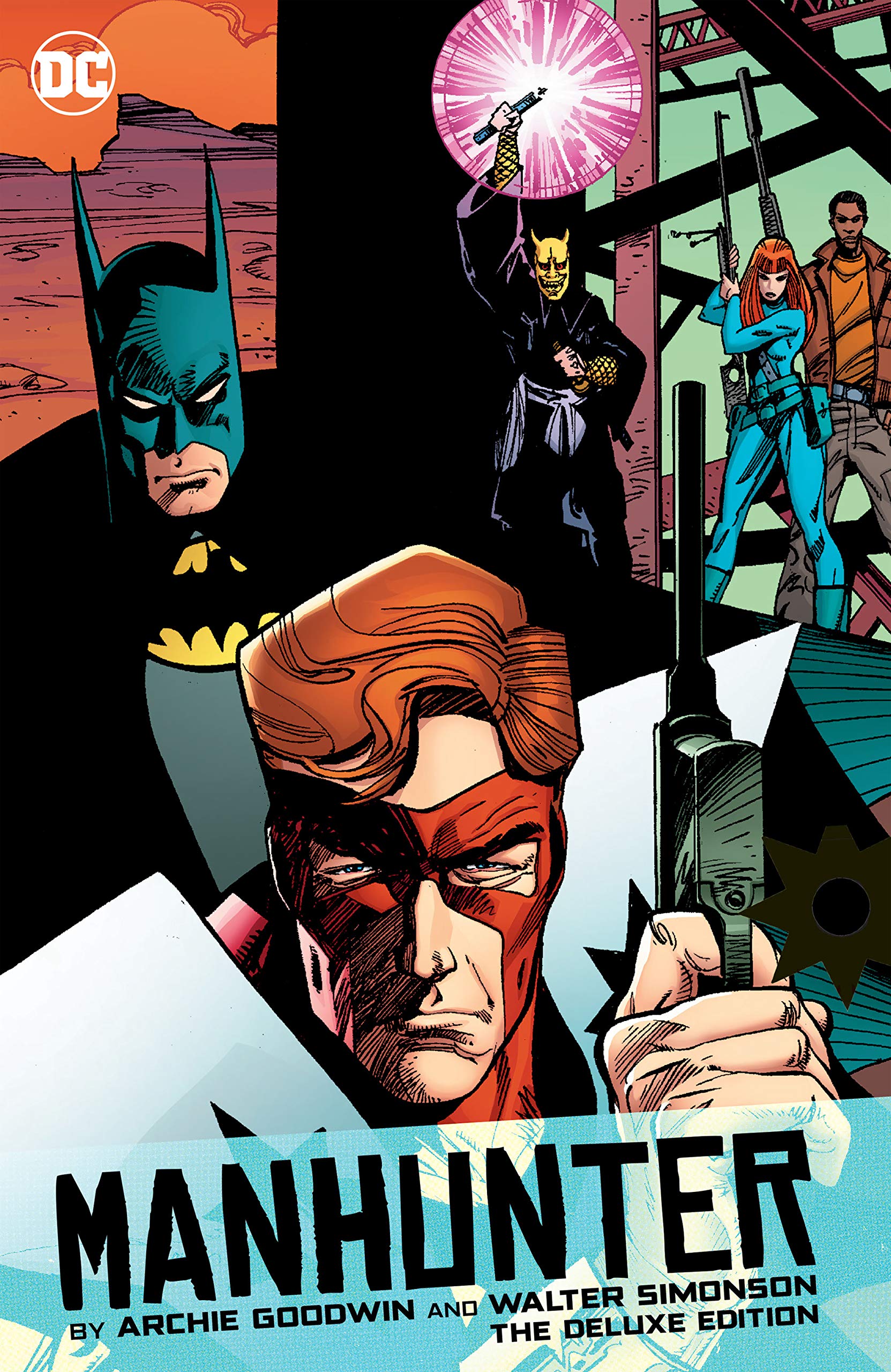
Manhunter Deluxe Edition

This is a review of Manhunter Deluxe Edition by Archie Goodwin (writer) and Walter Simonson (art). When I read Howard the Duck last month, the person who wrote the introduction made the case that the second half of that volume was the world’s first graphic novel. Since graphic novels are a format and not a genre, I disagree.

I think what he meant is that it’s the world’s first stand-alone story in comics, which I also disagree with. Howard having a nervous breakdown is a storyline contained in a larger storyline, whereas Manhunter is a stand-alone story with a beginning and end told in the course of seven back-up issues, climaxing in a full-sized issue guest-starring Batman. There is also a postscript issue that takes place decades later. The entire story – minus postscript – is less than 100 pages.

Anyhow: Manhunter is Paul Kirk, big-game hunter, who dies and is resurrected by a secret society. The Council wants Paul to be their hitman, but he soon discovers they have less than pure intentions and rebels. Here’s the twist: the Council cloned Paul, so he has multiple copies of himself running around. He’s fighting himself, literally.

Manhunter is short, but insanely influential. Paul has a healing factor that lets him recover from most of his wounds – does that sound familiar? Unlike Batman, he has no problem killing people. The postscript issue has no words at all, because Mr. Goodwin unfortunately passed away, but I was impressed by how I didn’t need words to understand the story perfectly. This is action-espionage comics done right. Recommended!

Saga of the Swamp Thing Book Four

This is a review of Saga of the Swamp Thing Book Four. This is the conclusion of Swamp Thing’s vision quest across the dark side of America  courtesy of John Constantine. The volume ends with the penultimate issue. Good and evil duke it out, and Swamp Thing’s in the thick of it! This issue guest stars Deadman, Dr. Fate, The Phantom Stranger, The Spectre, The Demon Etrigan, Baron Winters, Zatanna, Zatara, Sargon the Sorcerer, Cain, Abel, Dr. Occult, and maybe a few others I’ve forgotten. The Kitchen Sink doesn’t make an appearance, but that’s about it.

In the meantime, Swamp Thing’s partner Abigail Arcane is arrested as a sex offender after illicit photographs surface of the two of them making love. IMO, this is the scariest scene in the graphic novel.

I mean, there’s not much else to say about this volume. The art, mostly by John Totleben and Stephen Bissette, is wonderful. Writer Alan Moore was way ahead of his time. Honestly, I prefer his Swamp Thing run to his later works (Watchmen and Killing Joke), but that’s just me.

Highly recommended!

Tales of the Batman: Gerry Conway Vol. One

This is a review of Tales of the Batman: Gerry Conway Vol. 1, which consists of comics penned by famed comic writer Gerry Conway in the late 70’s/early 80’s. Unfortunately, the most impressive thing about this volume is the price tag, so wait until Comixology has one of their periodic Bat-sales to purchase.

Anyway, this graphic novel is the proverbial mixed bag. Mr. Conway writes Batman as a detective/escape artist, which means the trope of him getting bashed in the Bat-skull and then tied up in a Bat-Death Trap persists. It’s a strange thing, perhaps a call-back to the Bat-TV show. We have storylines involving Solomon Grundy – I mean Blockbuster, a Z-grade Batman villain – and another evildoer named The Black Spider, a vigilante who kills drug dealers just like the Punisher (whom Conway co-created).

The highlight of this volume is the two-issue storyline about Alfred’s (Batman’s butler) days in the French Resistance during World War Two. This story is affecting and features a proper ending; when I read a few of the older comics in this volume, it felt like I was getting the cliffs note version of the story.

I also enjoyed the stories from The Brave and The Bold, one of the first series I cut my comics-reading teeth on. The Brave and The Bold features team-ups, and in this volume Batman joins forces with Adam Strange, Wonder Woman, Firestorm, and the Guardians of the Universe. I enjoy the art of Jim Aparo, who did many of the Brave and Bold team-ups and draws a great Batman.

It’s tough to judge Mr. Conway’s work here, as he’s mostly writing fill-ins, single issues, and one-shots, but if such things are of interest, you can trace his growth as a writer within the pages of this volume. If you are a Batman fanatic or completist, go for it, otherwise you can skip this graphic novel.

Batman in the Fifties

This is a review of Batman in the Fifties. I will be honest here and say that I did not expect to enjoy this graphic novel, which was purchased in a buying frenzy a few years back. DC’s Silver Age might have laid the foundations for decades to come, but it also produced a lot of dreck. When you come down to it, Batman is a crime comic and the character doesn’t do well in science fiction stories. I can prove this, having read two volumes of The World’s Finest – which features Batman & Superman teaming up against aliens, crackpot inventors with salad colanders on their heads, and traveling back in time to become the Three Musketeers.

Imagine my shock when I found myself liking the stories in this volume. This is a curated collection, which means all the content has been hand-picked. My favorite story features The Bat Ape, with Ace the Bat Hound coming in a close second. The Bat Ape lives in a circus. When his trainer is framed for stealing the box office take for the day, the Bat Ape springs into action. He follows the Dynamic Duo to the Bat-Cave, where he dons a Batman outfit and aids Batman & Robin in corralling the real criminals! Ace the Bat Hound follows the same formula.

We also meet Batwoman, aka heiress Kathy Kane, who doesn’t quite mesh with the Dynamic Duo, but paved the way for Batgirl’s arrival in the 1960’s. We witness the origins of Mr. Freeze and the mighty Killer Moth, and learn more about the Joker’s origins (he was the Red Hood). Kudos to the creative team, Bill Finger and Bob Kane, who spent well over a decade working on the same comic, and still managed to make it entertaining.

Recommended for Batman fans!

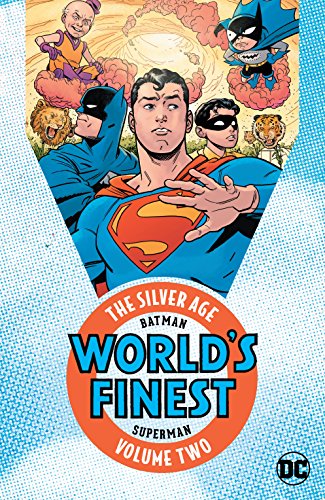
World’s Finest Silver Age Volume Two

This is a review of World’s Finest Silver Age Volume Two. You can read my review of the first volume, here. These aren’t the worst comics I’ve read by any means, which isn’t the same thing as saying they’re good. I plowed through them because I bought both volumes on sale at the same price.

If you want to see Batman, Robin & Superman team up in sci-fic inspired scenarios from the Silver Age, then this volume is for you. A few examples: Superman loses his memory and becomes the chief of a lost Indian tribe. A man with a salad colander on his head (i.e., a crackpot inventor) gains super-powers/uses an invention to torment the Dynamic Trio (there are many variations of this story). After making a million dollars, Batman becomes a big spender, buying looney inventions that don’t work. Superman makes a new friend, a bizarre little alien that goes berserk when it’s not around him. Bat-Mite and Mr. Mxyzptlk duke it out! Red kryptonite makes Superman behave strangely! Aliens of all kinds: invading earth, kidnapping Batman & Robin, asking the Dynamic Trio for help!!!

If this all sounds good, then by all means buy this volume. If it doesn’t, you’ve been warned.

Justice League of America: The Marriage of the Atom and Jean Loring

This is a review of Justice League of America: The Wedding of the Atom and Jean Loring. The JLA is a simple concept – seven of the most popular characters in the DC Universe team up – that should be a license to print money. This volume isn’t flying off anyone’s shelf, unfortunately. Most of the stories are written by Gerry Conway, who is a prolific writer. If you read superhero comics in the 1970’s and 1980’s, you’ve read him. I speak as a fan of his work when I say he’s done better work elsewhere.

The first four issues feature Jean Loring, aka the Atom’s fiancée, being abducted by aliens. This leads to her having a nervous breakdown, which is realistic. Jean randomly teleports throughout the universe, bringing natural disasters in her wake, which isn’t realistic but whatever. This storyline first appeared in the Secret Society of Super Villains, and each issue features the Atom teaming up with random heroines/heroes in his search.

After the Atom rescues his fiancée, we turn to the Justice League of America where writer Steve Englehart does a storyline featuring Star-Tsar, who may or may not be disgraced JLA mascot Snapper Carr. Snapper is like a former child celebrity gone to seed – rightly or wrongly, he blames the JLA. We also have a two-issue team-up between the JLA, the JSA (the JLA from Earth One), and the Legion of Super Heroes (far future teen heroes). If you don’t get what I’m saying, don’t worry about it. I am familiar with comics, and I had problems understanding the plot and keeping track of all the characters.

Writer Gerry Conway takes up writing duties soon afterwards, and does serviceable work. There’s no meta story to speak of, but the volume does culminate in the marriage of The Atom and Jean Loring. In between, we get a few classic JLA villains (T.O. Morrow, Doctor Destiny, etc.), Green Arrow annoying everyone, and Red Tornado – who is a robot – moping about what it means to be human. The issues are mostly a slog to read, although the writing gets better. Part of it might be the fact that the stories are 30 + pages and thus do not sync with me personally.

To me, the main point of these issues – because let’s be honest, sometimes comics are obscure for a reason – is to give us Jean Loring’s backstory for Brad Meltzer’s Identity Crisis miniseries (out in 2004!), in which she plays a role. Say what you will about Mr. Meltzer as a comic book writer, but nobody can accuse him of not doing his homework!

Recommended for JLA fans only.