Tales of the Batman: Steve Englehart

This is a review of Tales of the Batman: Steve Englehart. I bought a bunch of Batman graphic novels over the holiday season. I’ve read and liked parts of Mr. Englehart’s West Coast Avengers and Green Lantern runs in the 1980’s, so I took a chance.

Reader, I was not disappointed. Mr. Englehart wrote the Joker Fish storyline, which apparently is famous even though I’ve never heard of it. Before this point, I’d never even heard of Silver St. Cloud. I don’t quite get why this run is so obscure, because Mr. Englehart has a unique take on the character. It might be because his original run on Batman is blink-and-you’ll-miss-it short, running eight issues in the 1970’s – but he makes those issues count. Mr. Englehart introduces a new villain, Dr. Phosphorous, and brings back two older villains (Dr. Hugo Strange and Deadshot) in an interesting way.

He also writes an awesome Joker. The Joker Fish storyline starts with the Clown Prince dumping toxic chemicals into the bay, which produces smiling fish. The Joker decides to cash in by copyrighting his Joker Fish, which means anyone eating a fish sandwich will owe him $$$. He then commences killing any bureaucrat that refuses to grant him the copyright.

And then there’s Silver St. Cloud, the love interest I’d never heard of. That might be because Mr. Englehart goes where few Batman writers have dared. Silver & Bruce start to date, and when it gets serious she figures out his secret identity. She leaves him, for a variety of reasons, and doesn’t return for 30 or so years (real time, not comic time), when the storyline is resolved – sort of.

As I’ve said, portraying Batman as an adult human being with certain, uh, needs, seems to be taboo amongst Batman writers. This is sad, because if you read more than two issues of Batman it becomes obvious that he really needs to get laid. So why doesn’t he? The simple explanation is the one Mr. Englehart went with. Batman declared war on crime as a boy, on a boy’s terms, which leaves no room for love. The simpler explanation, which is the one I go with, is that Batman is mentally ill.

I mean, whatever. Mr. Englehart pulls off the feat of having Batman be in a serious relationship with a woman that feels real, and it is additive rather than reductive to his character. The culmination of their affair occurs when Batman says something stupid, because he has no idea how to talk to women. This makes senses, as anyone who spends their nights dressed up as a bat will almost certainly lack basic social skills. The storyline as written in this volume feels unfinished, and I’m almost afraid to Google Silver St. Cloud’s name, as the easiest solution is to fridge her.

An underrated run that spans over three decades.

Batman: The Long Halloween

This is a review of Batman: The Long Halloween. I read this graphic novel years ago and even owned a physical copy, which I lost during a move. The timeframe is around the same time as Batman: Year One, which I’ve never read. Batman is just starting out, aided and abetted by policeman Jim Gordon. At this point he’s basically the GCPD’s unofficially sanctioned vigilante. Just FYI: if the police department of your city has a big spotlight they use to summon a guy who dresses as a bat to fight crime, you should consider relocating to another city.

The plot: a serial killer is killing mobsters on holidays. The unknown killer, dubbed Holiday, uses a .22 equipped with a modified silencer (a baby pacifier). This upsets Batman, who wants to stop Holiday; district attorney Harvey Dent, who isn’t all that upset; and Calendar Man, a serial killer who spends the graphic novel channeling Hannibal Lecter in Arkham Asylum. The Joker is also irked, and expresses his frustration by attempting to kill everyone in Gotham City, but he’s not a big player here.

Each of the thirteen issues takes place during a holiday and usually features a member of Batman’s rogue gallery. It’s a simple framing device that works very well. Two standouts: the portrayal of Cat Woman and Two-Face are very well done; this volume is Two-Face’s origin story. The art is wonderful, and the writing is very good as well. The script has layers and is more complex than it looks, but by the end of the graphic novel I was still a little confused. I can’t say more, because spoilers.

A great read for Batman fans.

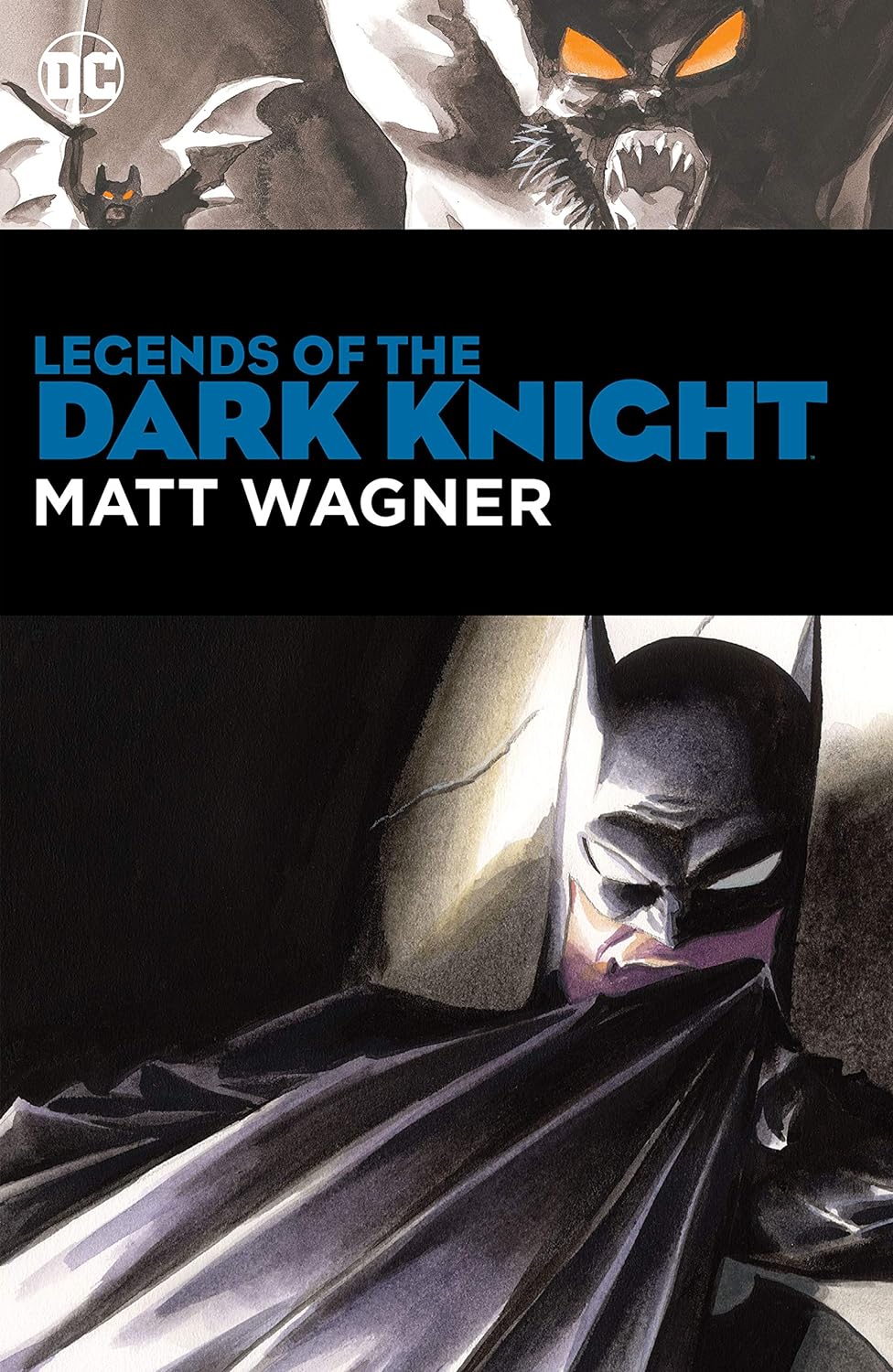
Legends of the Dark Knight: Matt Wagner


This is a review of Legends of the Dark Knight: Matt Wagner. As the book’s title tells us, this collection is written and partly drawn by comics legend Matt Wagner, creator of Grendel and the writer of Sandman Mystery Theatre. Mr. Wagner’s stories in this volume contain lots of plot, focus on side characters and side storylines, and bring a fresh perspective to The Dark Knight.

Unlike many comic scribes, who can’t, won’t, or don’t want to, Mr. Wagner goes there on a fairly regular basis. He doesn’t shy away from the dark side of human nature, writing violent, unsettling material. The other comic writer I can think of who does this is Robert Kirkman, the creator of The Walking Dead and Invincible. To me, it’s a jarring way of breaking the fourth wall.

This graphic novel contains three major storylines. The first is a Two-Face story, which is very good. There’s also a Riddler one-shot, where Ed Nigma hosts an underground game show that proves to be a big hit with the Gotham public. What interests me are the last two storylines, both of which involve Batman characters and villains from the 1940’s. The source material for these stories is contained in the Batman Golden Age volumes, some of which are reviewed here. These are retro stories that take place at the beginning of Batman’s career.

The first story involves a minor Batman villain named Hugo Strange, M.D. (medical deviant). Strange is fascinated with genetic engineering and seeks funding to continue his studies. Since he’s a mad scientist who probably locks his test subjects in the basement, nobody but mobsters will fund him. Trouble starts when it turns out that the wacky Strange does indeed lock his monstrous, mutated test subjects in the basement.

The second storyline involves a villain called the Monk. Originally a kitschy Dracula homage done by Kane & Finger, Wagner’s version of the Monk wears a bright red robe and hood, S&M style. The story is ambivalent about whether he’s really a vampire, but he’s certainly deranged. A few of the torture/dream sequences in this storyline are quite disturbing.

We also have Julie Madison, who in the 1940’s holds the distinction of being Bruce Wayne’s arm candy fiancée before she dumps him in favor of movie stardom. In these storylines, she’s really Bruce’s girlfriend, which is…look, superhero comics have always been terrible at depicting normal relationships. Historically, they’re aimed at 14-year-old boys, whose hormones are raging out of control.

IMO, having Batman behave like a normal human being is a risky proposition, because if you humanize Batman too much he falls apart as a character. That sort of happens here. Seeing Bruce lie to his girlfriend about – well, basically everything – hammers home the point that he’s an emotionally stunted man who is terrified of intimacy. The fact that he draws all the wrong conclusions when she leaves makes it worse. There’s a brief story after this one that shows us the present-day Batman, and let me tell you he is one sad motherclucker.

Recommended!

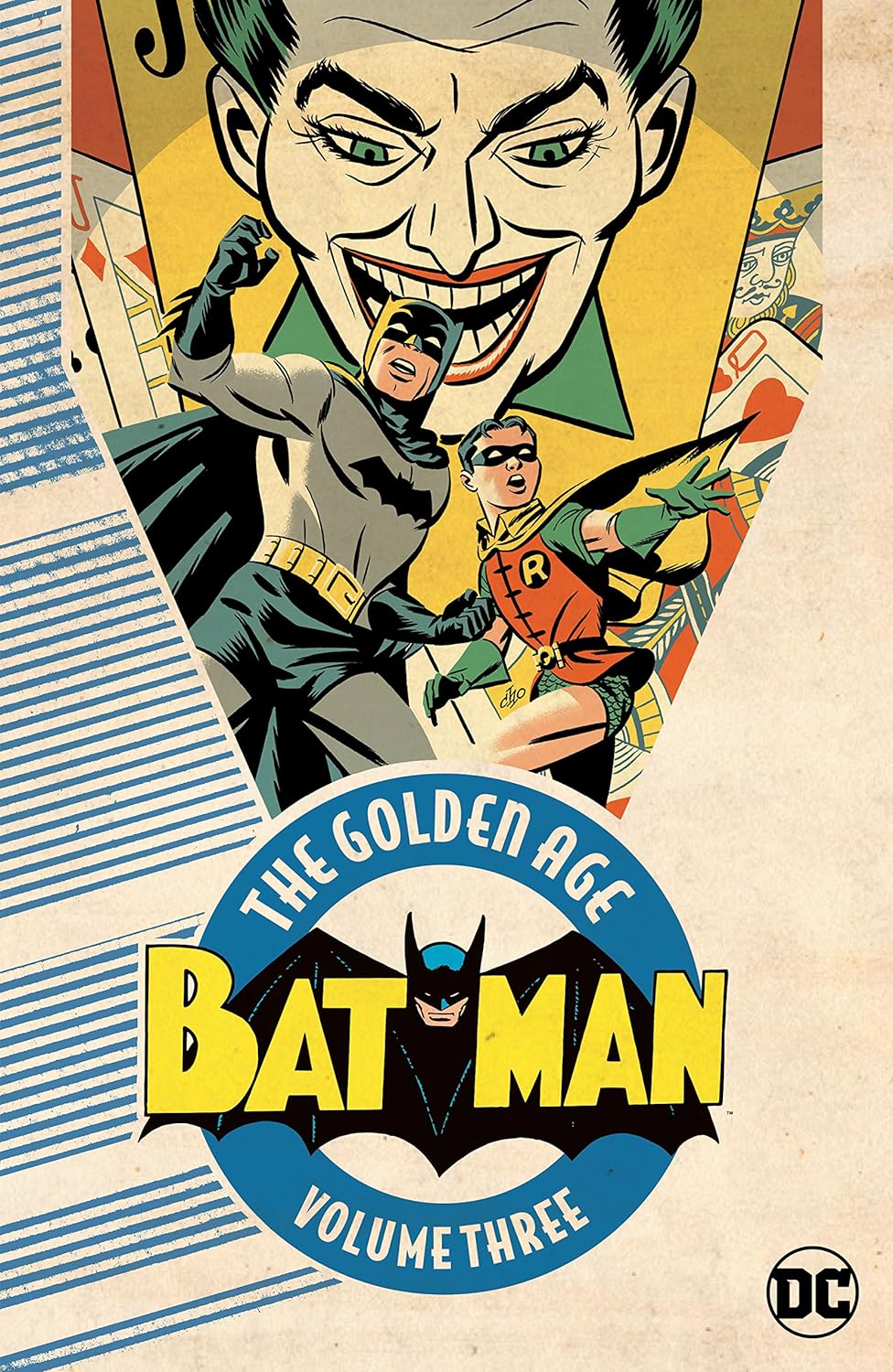
Batman The Golden Age Volume Three

This is a review of Batman The Golden Age Volume Three. You can read my reviews of Volumes One and Two here and here. Batman’s adventures continue in this volume. The Penguin makes his first appearance and evades capture three times. The Cat also appears, which is great because she’s an interesting character who adds something different to these stories.

But the real guest star of this volume is The Joker, who is basically in every other issue. The best Joker – er, Batman – story involves the Clown Prince turning himself in to the authorities and being tried and executed for his crimes. Luckily, the Joker just happens to have a serum that can raise him from the dead, if it’s injected within fifteen minutes of his death. Thus, the Joker is reborn with a clean record. Citizen Joker, lol.

I give this creative team props for consistency. All the stories so far have been one-shots, which can’t be easy. The downside is that they all blend. You’d think at some point the thugs that capture Batman would just put a bullet through his head rather than tie him up and put him in a deathtrap, which has been spoofed ad infinitum in the 1960’s Adam West Batman series, but no dice.

This is the first volume I’ve read where the creative team might break the fourth wall. Weird stuff happens, highlighted by a bizarre spanking scene. The other standout is the strange relationship between Batman and the Joker. There’s a point in most of these stories when the Joker has Batman in his power, but apparently he relishes capturing and putting Batman into deathtraps more than killing him. The Clown Prince has no such compunctions about murdering Robin, whom he almost kills – I think it’s twice – so far.

Entertaining for Batman fans, but don’t read more than two or three issues in one sitting.

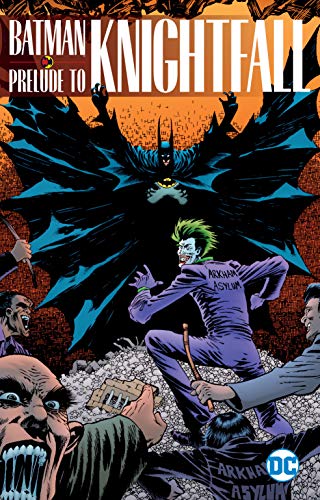
Batman: Prelude to Knightfall

This is a review of Batman: Prelude to Knightfall. I read Knightfall when it came out in the early 90’s. Since this is the prelude, I didn’t read most of the issues in this volume. The plot is simple: Bane is a superhuman steroid freak who wants to break Batman. His timing is impeccable; The Dark Knight is suffering from heavy-duty burnout, driving himself to go without sleep or food. To further wear Batman down, Bane releases all the lunatics in Arkham Asylum, where his greatest foes are housed.

The writing of this graphic novel, which features Doug Moench and Chuck Dixon, is good. The art is a little uneven, but we do get a few issues drawn by Jim Aparo, one of my favorite Batman artists. There are a few nice touches, such as Batman wearing a black Superman armband (Superman had just been ‘killed’ by Doomsday).

The creators of this volume understand Batman. At one point a cop tells The Dark Knight that he is the one who attracts all the weirdos and lunatics that plague Gotham City, an argument Batman doesn’t even try to rebut. The other eye raiser of this graphic novel is how burnt-out Bruce Wayne becomes, which adds a touch of realism. Honestly, a guy who dresses up like a bat, gets no rest, has no real friends, social life, or sex life, and is constantly injured would burn out.

Standout villains in this volume include The Black Mask, a misogynistic would-be crime boss; a pumped-up Riddler; and The General, an underage Napoleon with a penchant for assault rifles. We also meet Jean Paul Valley, aka Azrael, who gets put into a backbreaker while posing as Batman. The creators are foreshadowing future events, and not even being all that subtle about it.

Vintage Batman.

Batman The Golden Age Volume Two

This is a review of Batman The Golden Age Volume 2. Not much has changed in the Bat-Verse since my last review, here. New York City has become Gotham City. Bruce Wayne’s fiancée breaks up with him to become a famous Hollywood actress, and Bruce picks up a new love interest to ignore. The Cat (aka Catwoman) is nowhere to be seen. Still no Alfred.

Batman and Robin have a father-son relationship which is emphasized more in this volume. When Robin is almost killed by thugs Batman goes crazy, gets shot three times, and beats a confession out of the offending crime boss (which won’t stand up in court). I believe they reused the image of Batman cradling Robin in his arms in the infamous Death in the Family storyline, where the Joker beats the second Robin to death with a crowbar.

This volume features the first appearance of the Scarecrow, a thin academic dude tough enough to go toe to toe with Batman. The Scarecrow is obsessed with fear. Here he doesn’t use fear gas and makes do with a gun. We also get a fair bit of the Joker, but most of the stories involve Batman & Robin fighting criminals – fifth columnists, modern-day pirates, Mob guys, fake Indian statues, etc.

There are a few outlier stories. In one issue, Batman & Robin go to the land of fairy tales to rescue a young woman. Some of these stories can be downright bizarre, as when Batman arranges it so that a young woman’s parents will think she’s a movie star when they visit her in Gotham. There are also a few morality tales, which you don’t see in comics nowadays.

If you enjoyed the first volume, you will like this.

Batman Golden Age Volume One

This is a review of Batman Golden Age Volume One. I’m not going to explain Batman. Just watch one of the fifty or so Batman movies, many of which repeat his origin story ad infinitum. This graphic novel runs over thirty issues, which is much longer than I expected. True, the stories are only twelve or so pages apiece, but that’s a lot of Batman.

I will be honest and say that I enjoyed this more than I thought I would. However, aspects of this graphic novel have, in the words of a Goodreads reviewer, aged about as well as milk. Some of these stories are racist/contain racist stereotypes, so know that going in.

Batman is Bruce Wayne, sluggard millionaire. At night he dresses up like a bat and fights crime. It never does any good, because by the end of this graphic novel New York City is as crime-ridden as it’s ever been. The cast is bare-bones. Bruce has a fiancée, whom he never sees unless she’s being threatened by werewolves. Bruce’s sidekick is Dick Grayson, aka Robin, and their dialogue is cringeworthy. Commissioner Gordon is around, but he wants to arrest Batman!

The rogue’s gallery fares better. We see a lot of The Joker, who’s pretty scary. The pages of this graphic novel contain many cackling mad scientists and homicidal maniacs, but what sets the Joker apart is callousness coupled with randomness. The term ‘serial killer’ hadn’t been invented in 1940, but The Joker is a picture-perfect portrait of one. There’s also a thief called The Cat, aka Cat Woman, who bewitches Batman with her feminine wiles. Also present is Dr. Hugo Strange, a Batman villain we don’t see much of nowadays.

The stories move fast, with lots of action, and are totally unrealistic. There’s a fair number of whodunits, most of which are obvious, but still fun. One of the stories is a King Kong tribute, another is a Dracula riff. Bob Kane and Bill Finger produced a lot of material together!

Batmanga Vol. 1

This is a review of Batman: The Jiro Kuwata Batmanga Vol. 1. Did you know there used to be a Batman manga? I know because of Chip Kidd’s Bat-Manga, which chronicles a number of Batman’s Japanese adventures. This is not a review of Bat-Manga, as Mr. Kidd did not write or draw any of the stories featured in his book. The creator of the Batmanga stories is Jiro Kuwata.

Now that we’re clear on that, how’s the first volume? Pretty good! Batman – along with youthful sidekick Robin, the Batmobile, and his trusty batarang – keeps Gotham City safe from villains. Speaking of those villains…Mr. Kuwata makes the bold choice to add new figures to Batman’s rogue gallery, including Lord Death Man, Professor Gorilla, and The Human Ball!

This was the 60’s, when Batman comics were still goofy and you had a live-action TV show starring Adam West and Burt Ward. So if you are looking for hardboiled action, uh, I don’t know what to tell you. A fun, offbeat read that I liked.