The Boys: The Name of the Game

This is a review of The Boys: The Name of the Game, a near-future satire of superhero comics by Garth Ennis (writer) and Darrick Robertson (artist). Before diving in, know that there is a lot of gratuitous sex and violence in this series, much of it scatological. I am not going to bother listing all the trigger warnings, but here’s an example: after a pitched battle, a hamster crawls out of a fallen superhuman’s butt, and Wee Hughie (more on him later!) takes it home as a pet because he feels sorry for the little guy.

Is this graphic novel any good? Yes, it is, and I am not alone in thinking that. The Boys is a breakout hit on Amazon Prime. Just know what you are getting into, as this series is designed to offend a certain type of reader. If you are that reader, stay away.

The Boys takes place in a world where superhumans run amok. Does that sound familiar? Well, it’s the same premise as Kingdom Come, reviewed here. That’s where the similarities to Kingdom Come end, however. The superhumans themselves are like rock stars with superpowered libidos high on cocaine and ultra-powered Viagra. Think drugs, orgies, and mass destruction. And those are the sanctioned ones.

Wee Hughie is our baseline normal. We meet the Wee One when he tells his girlfriend that the grey aliens are actually pink, and are trying to turn everyone gay. He and his gal clasp hands as they confess their everlasting love. Of course, anyone who’s ever read a comic book in their life knows what happens next. Spoiler alert: she dies horribly at the hands of a superhuman.

Wee Hughie is recruited into The Boys by The Butcher, a big man who despises superhumans. The Butcher’s stated reason for hating superhumans may or may not be true, because the Butcher is a manipulative son of a bitch. He draws Hughie into the fold, bit by bit. You might even call it a seduction. The rest of the group consists of a dude named Mother’s Milk and two psychopaths, The Frenchman and The Female, who are the same character in that they seem mild but turn into killing machines when provoked. They all have super powers.

The Boys are unofficially sanctioned by the CIA to – well, that depends on who you ask. The CIA would have you believe their mission is to keep the superhuman community in check. The Butcher’s views on the topic are more of the scorched earth variety. Their ultimate foes are sanctioned superhuman team The Seven. Think the Justice League, except they have corporate sponsorships and the male members are perverts who sexually harass their new female recruit.

This is the graphic novel that sets it all up, but there’s still plenty of action. Wee Hughie kills someone with his newfound superhuman powers – granted to him when The Butcher jabs an unwanted needle into his neck – and also buys a habitat for his brand-new hamster! Recommended for fans of Garth Ennis, lovers of mayhem, and purveyors of potty humor. If you like the TV series, I am sure you will enjoy the source material, also.

Borrhomeo the Astrologer

This is a review of the short story Borrhomeo the Astrologer, written by Sheridan Le Fanu and published in his collection Green Tea and Other Weird Stories. Read my review of The Haunted House in WestminsterGreen Tea, An Account of Some Strange Disturbances in an Old House in Aungier-Street, and The Watcher herehere, here, and here. Sheridan Le Fanu was an Irish writer who wrote ghost stories in the 19th century. His most famous work is Carmilla, a vampire story that predates Dracula.

Borrhomeo is an astrologer and alchemist who lives in Milan during a plague in the 17th century. Seeking the elixir of life, he makes a deal with the devil and pays the price. Historical note: in the 17th century, astrologers and alchemists were viewed with suspicion by the Church. During bad times – and a plague qualifies – they were very often accused of witchcraft and/or being in league with Satan.

It does not seem that Le Fanu was particularly religious, so this does not feel like a morality tale. It reads more like a 19th century episode of Tales from the Crypt. Borrhomeo is promised an elixir granting him 1,000 years of life in exchange for spreading the plague to churches and other holy places. Seems like a fair bargain, right? Think again! Satan and his minions make sure that Borrhomeo is seen desecrating those holy places. He’s arrested, tortured, and given a detailed death sentence, hanging for one night and one day, followed by a three-day impalement, followed by burial.

Borrhomeo isn’t worried because he’s taken the elixir, which means they can’t kill him. That’s true, but the devil’s in the details. The elixir puts the aged alchemist into a comatose state, where he will spend those thousand years buried alive, paralyzed but able to hear and feel everything, suffocating forever. But don’t worry, kids! Borrhomeo doesn’t stay buried alive forever. After fourteen years, he’s dug up and thrown into a pit, which is then filled with rocks. The moral of the story is to not make deals with the devil.

This is a surprisingly lurid tale for its time period. It is also experimental, because Le Fanu switches from past to present tense to build suspense. Unfortunately the slush reader in me was too busy wondering if he did it on purpose to appreciate the craftsmanship. There is not a lot of psychological depth to this story, which is what Le Fanu is known for, but it is a worthwhile read nonetheless. It is interesting how the Devil tells Borrhomeo multiple times not to proceed, but that’s because Old Scratch knows his warnings will be ignored. Recommended for lovers of Gothic supernatural stories and weird fiction.

Batman The Golden Age Volume Four

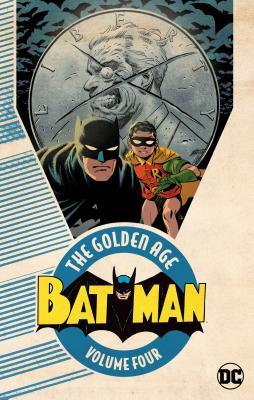
This is a review of Batman: The Golden Age Volume Four, written by Bill Finger with art by Bob Kane and published in the 1940’s. Read my reviews of the first three volumes here, here, and here. In this volume, we have Two Face’s origin story, along with appearances by Catwoman, The Scarecrow, and The Penguin. The Joker appears so often he should be given billing on the strip: Batman, Robin & The Joker has a nice ring to it!

There are also the usual thugs, fifth columnists, and gangsters, which is where we see the interesting stories. Batman’s Rogue Gallery always gets top billing, but with tales not featuring weirdo villains the creators need to come up with an angle. Thus, we have stories about the two feuding brothers whose father is killed by a bad guy, a tearjerker about the kindly neighborhood druggist, and the boy who wants to be Robin, but is hampered by the fact that he’s way too stupid to be Robin.

My personal favorite issue features Batman and Robin splitting up. Batman tells his young ward their partnership is dissolved and throws his Robin picture in the trash. A devastated Dick Grayson leaves to become a hobo – I don’t recall if he has a bindle over his shoulder, but I sure hope he does. Turns out that evildoers threatened Robin, which is why Batman decides to go it alone!

After Batman is captured and sealed in a room, a ‘la Edgar Allen Poe, Robin returns – and is captured. The thugs have a brainwave and unseal the room, which allows Batman to beat the crap out of them, and the Dynamic Duo are reunited, with Robin having no hard feelings at all. Nothing dysfunctional about that relationship!

I must say a few words about the deathtraps. During the 1930’s and 1940’s, movie serials were very popular. Serials appeared in chapters, with every chapter ending in a cliffhanger, usually involving the female lead being tied up. The same thing happens in Batman stories of that time period. The Dynamic Duo are captured, usually by being whacked over the head. Instead of killing them, the thugs put them in deathtraps. If you think about it – which you shouldn’t – there is no reason for this. Why tie someone up and shove them in a car loaded with dynamite, when you can shoot them in the head and drop them into Gotham harbor?

This is a fun read recommended for fans of golden age comics and Batman completionists.

The Watcher

This is a review of the short story The Watcher, written by Sheridan Le Fanu and published in his collection Green Tea and Other Weird Stories. Read my review of The Haunted House in WestminsterGreen Tea, and An Account of Some Strange Disturbances in an Old House in Aungier-Street here, here, and here. Sheridan Le Fanu was an Irish writer who wrote ghost stories in the 19th century. His most famous work is Carmilla, a vampire story that predates Dracula.

The Watcher takes place in Dublin in the 1790’s and features Sir James Barton, a retired navy captain. Barton settles in Dublin and begins collecting the accoutrements of a respectable life after years spent in the navy, even getting engaged to a woman half his age. The Captain is an atheist given to fits of melancholy and self-contemplation.

One night, walking down an empty stretch of street, Barton is trailed by ghostly footsteps. Soon he sees the source of those footsteps, a shrunken little man who seems to know him and sends him nasty letters. Eventually Barton falls into despair, because he thinks he’s being haunted by a demon. His social peers – it is implicit that Barton has no actual friends – think he’s suffering a nervous breakdown. They are correct. Barton becomes a recluse, hiding in a compound locked away from the outside world, and even that’s not enough to save him…

The Watcher is a portrait of guilt. It is also a study of the psychological effects of stalking, because someone or something is stalking Barton. Others see the shrunken little man, so he is real. Whether his tormentor is human or demonic doesn’t matter, because Barton comes to believe his tormentor is a demonic entity out to punish him for his sins.

Why? Well, the narrator mentions a disagreement involving a sailor’s daughter. The young woman dies, perhaps because of her father’s mistreatment, and an angry (jilted?) Barton has the sailor flogged mercilessly until he deserts and dies of his injuries. Unless the man doesn’t die. We do not know.

We do not even know if Barton did anything wrong. What’s important is that he believes he’s done something wrong. The fact that Barton is an atheist could mean he’s unprotected from evil spirits, but Le Fanu also wrote a story (Green Tea, here) where a Reverend Jennings is tormented by a ghostly monkey. If I was to play Devil’s advocate, I’d say that the demonic monkey could not harm Jennings physically, whereas Barton’s stalker was a more physical threat. It might also have something to do with the fact that Jennings does nothing to deserve what happens to him.

Le Fanu’s stories are more about the haunted than the hauntings. Focus past the wordiness, and you will be floored by the psychological realism, especially when it comes to issues like mental illness. Recommended for lovers of Victorian horror stories who like a bit of substance to their ghosts.

Room 237

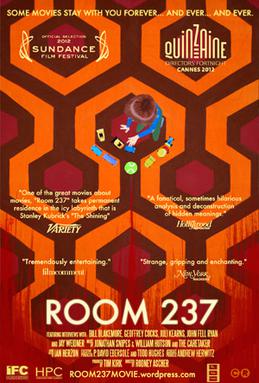
This is a review of Room 237, directed by Rodney Ascher. Room 237 is a documentary about conspiracy theories that focuses on the movie version of The Shining, directed by Stanley Kubrick. There is a miniseries of The Shining, also, but we shall not speak of that. You can find my review of the Stephen King novel, here.

Short summary: The Shining is one of the greatest horror movies of the 20th century, but it is an ordeal to watch. Kubrick described his movie as “the story of one man’s family quietly going insane together.” None of those family members are very likable or pleasant. Jack Torrance is verbally abusive, his wife Wendy’s coping mechanisms are grating, and Danny is subject to fit and seizures.

Kubrick packs a bunch of subliminal imagery into The Shining. There is Freudian stuff involving mirrors, mazes and doppelgangers, along with lots of fairy tale imagery. Some of the imagery means something, such as when Wendy wears the same clothes as the Goofy sticker on her son’s bedroom door. Some of the imagery might mean something – based on recurring bear imagery, one can make an argument that Danny was being sexually abused by his father. Some of the imagery doesn’t mean anything at all, or might mean things the author never intended.

But it is still there, and viewers pick up on it. A side-effect of all the subliminal imagery in The Shining is that it might give people the impression that there’s something happening that they are missing. I am one of those people. Some might invent narratives based on what they think is missing (I am not one of those people), and that is the subject of Room 237.

This documentary asks the question, what is the line between lucidity and lunacy? Spoiler: we don’t get an answer. Does the number 42 pop up everywhere in The Shining? Yes, that is undeniable – Jackie Robinson (No. 42), The Summer of 42, Room 237 (2x3x7). Does that mean Kubrick was commenting on the Holocaust, which is one of the theories espoused by the interviewees? Debatable!

Does the fact that Danny wears a rocket ship sweater mean Kubrick created footage faking the Moon landing? The Overlook itself is a labyrinth with an impossible window. Does that make Jack a Minotaur? If you watch The Shining forwards and backwards, what will you see? Is there a cloud with Jack’s face superimposed on it in the beginning of The Shining? I couldn’t see it, but someone else did. Was it real?

Parts of Room 237 are a slog to watch, but I have never seen a better documentary illustrating why people believe in conspiracy theories. Recommended for conspiracy theory buffs and fans of The Shining!

Punisher Epic Collection: Circle of Blood

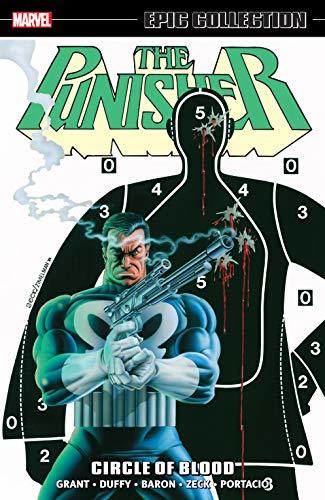
This is a review of Punisher: Circle of Blood by various writers and artists. This graphic novel is divided into three sections – the first Punisher miniseries, written by Steven Grant with art by Mike Zeck; the first ten issues of the ongoing series, written by Mike Baron with art by Klaus Janson (first few issues); and Punisher: Assassin’s Guild, written by Mary Jo Duffy with art by Jorge Zaffino.

The character of the Punisher is controversial today partly because he’s been made into a symbol of something he is not. Frank Castle (aka The Punisher) is not a cop or an ex-cop, and you can make a case that all of the writers in this graphic novel portray him as mentally ill. The Punisher’s origins stem from Men’s Adventure and Soldier-of-Fortune Magazines, as well as pulp paperbacks featuring characters like The Executioner and maybe Remo Williams, if you scrape away the martial arts weirdness.

The Punisher first appeared in the 1970’s in a Spider-Man comic. He didn’t get his first miniseries, written by Steven Grant and drawn by Mike Zeck, until the 1980’s. In it, The Punisher is released from jail by a shadow organization that supposedly shares his values. This series is way better than it should be. Yes, there are parallels to an 80’s action film, but Frank Castle (The Punisher) is portrayed as being broken in a way that is not fixable. There is a moment when Frank realizes that setting the mobs against each other means lots of innocents getting killed in the crossfire, and you can tell he’s in over his head and has no idea what to do.

The ongoing Punisher series features irredeemable villains and a tight focus on plot. There aren’t many recurring villains, for obvious reasons. The stories are all over the place and have a bizarre energy that one can only admire. In one storyline the Punisher fights insider traders, complete with ninjas and serial killers; in another, he ends up in a compound with the Rev and his sister, ala Jonestown. Frank is shot, beat up, tortured, etc., etc., etc. He survives with a few nicks and scratches, but the same can’t be said for his allies, who all die. The exception is Microchip, a middle-aged guy who doesn’t partake in field operations.

Assassin’s Guild rounds out the trilogy. The Punisher and a guild of assassins confront (i.e. kill) a ring of people who are exploiting children. This graphic novel was not approved by the Comic Code Authority and thus contains what was then considered adult content. Besides the blossoming body count, we witness the Punisher having sex and an obnoxious kid assassin who gets a kick out of offing people. Despite dated ethnic portrayals and a few tropes past their expiration date, Assassin’s Guild is genuinely disturbing and is thus worth a look.

Recommended for fans of The Punisher.

Kingdom Come

Kingdom Come is a four-issue DC comic event written by Mark Waid and drawn by Alex Ross. Kingdom Come is a Superman story. Kingdom Come is also an optimistic story, despite featuring a million-plus person body count. As event comics go, it is blessedly short and not bloated. Everything you need for a perfect reading experience is contained in this four-issue miniseries.

Kingdom Come can be viewed as a direct response to Frank Miller’s The Dark Knight Returns, which was about authoritarianism; and Alan Moore’s The Watchmen, which was about nihilism (what the author intended is irrelevant). Kingdom Come deals with authoritarianism and nihilism and rejects them both in favor of – that would be telling. I am curious as to whether the folks at Marvel sent Waid & Ross a fruitcake when Civil War came out, because they sure cribbed from it. You can even see the seeds of this graphic novel in Jonathan Hickman’s X-Men run.

The frame story concerns the Spectre choosing a new host, pastor Norman McKay. Who cares? Well, as the Spectre’s human anchor, Norman will have to judge humanity and thus holds the fate of the world in his hands. What brought about this sad state of affairs, you ask? The superhuman community is left in disarray after the Joker visits Metropolis, goes on a killing spree (which includes Lois Lane), and is killed by Magog, who is a hero. At least the public sees Magog as a hero. Magog’s exoneration makes Superman quit, and the superhuman community falls apart. What rises are a band of out-of-control young men and women with superpowers and no impulse control, ala Garth Ennis’ The Boys.

Sparks fly when a pitched battle with the Parasite leads to a nuclear explosion. Millions die, and Kansas becomes a nuclear wasteland. This leads Superman, spurred on by Wonder Woman, to return from his self-imposed exile. Many members of the superhuman community (minus Batman) join him. The superhumans who refuse to submit are placed in a prison in Kansas until they learn the error of their ways.

We know this is stupid because Batman thinks it’s stupid. You’d think a superhuman prison is something Batman might endorse, but you’d be wrong. Batman is a human being, but Superman is too busy playing god to consult any normal humans about this. Will The Man of Steel be the unwilling harbinger of the apocalypse? And where does the Big Red Cheese fit into all this?

Kingdom Come is a Superman story, but it features DC’s version of the trinity – Superman, Batman, Wonder Woman. Superman is either overly idealistic or naïve, depending on your point-of-view; Wonder Woman is too militaristic; Batman is a loner with authoritarian tendencies. Separately they are flawed; together, they cancel out each other’s weaknesses.

Kingdom Come features great writing and awesome art. Alex Ross’ character designs are breathtaking, especially with such a large cast. There are Easter eggs – both visual and written – interspersed throughout the graphic novel, which reads more like a painting than a comic. Highly recommended!

Green Tea

 This is a review of the short story Green Tea, written by Sheridan Le Fanu and published in his collection Green Tea and Other Weird Stories. Read my review of The Haunted House in Westminster here. I’ve kicked off 2025 reviewing Victorian-era ghost and horror stories.

Green Tea is set in London, where Dr. Hesselius attempts to treat Reverend Jennings, who is being tormented by a demonic monkey. Jennings’ symptoms match OCD almost perfectly, upsetting visualizations, trouble performing normal, everyday tasks, and increasingly angry, abusive thoughts.

Dr. Hesselius recognizes Mr. Jennings’ symptoms at once, although the story is coy about whether he misinterprets the cause of his patient’s malady. I am not talking about the trigger, green tea (which the doctor identifies), but whether or not his tormentor is a hallucination or a demon from Hell. It might not matter: if symptoms are treated sometimes the sufferer will be able to deal with the cause, especially if we are talking about mental illness, which is what this story is really about.

Unfortunately, Mr. Jennings dies before the doctor can even begin treatment. Dr. Hesselius is M.I.A. when his patient needs him the most. This is not because of a plot-based emergency. The doctor simply leaves town for a day or so, and Jennings – who is in crisis – does away with himself. I am unsure why Dr. Hesselius, an intellectual prodigy, didn’t leave notice of where he’d be in case of an emergency, but since I am not myself an intellectual prodigy I’m sure I wouldn’t understand the answer.

Dr. Hesselius isn’t the type to blame himself – and I don’t know how much blame he deserves, since he was willing to treat Jennings – so he blames his patient, FOR NOT WANTING TO BE CURED. This is typical, especially when mental health is concerned. It also applies to medical professionals! Ever go to a doctor and realize you know more about the nature of your disease than your physician?

Green Tea is a longer story, and the language is a bit of a slog, but it’s worth the time and effort. I wouldn’t call this story scary. I think unnerving would be the better word, especially the idea of devils appearing as animals. The scariest thing is the indifference of the doctor to poor Mr. Jennings, who must suffer alone. Recommended for lovers of horror fiction/weird fiction.

Marvel Masterworks: The Invincible Iron Man Volume Four

This is a review of Marvel Masterworks Invincible Iron Man Volume Four. You can read my reviews of the first three volumes here, here, and here. This volume is written by Stan Lee and drawn by the great Gene Colan, who also drew Tomb of Dracula. Mr. Colan’s Iron Man is dynamic – twisting, contorting, always in action.

Thus far, Iron Man has been an on/off title to read. The main culprit is the writing, which can be kindly described as inconsistent. Nonstop action is great, but the plots need to make sense. The writing has a slapdash quality that I don’t like, such as when Iron Man leaves the widget he needs to defeat the Titanium Man on his coffee table because it slipped his mind. Series regular Happy Hogan retrieves the widget, only to be mortally injured, which leads to Happy’s transformation into a monstrous etc., etc., etc. This is known as plotting on the fly, aka making it up as you go along.

Happily, the writing in this volume is better. When Archie Goodwin takes over scribing duties – which seems like it might be a few issues before he’s credited – the plots get tighter. Yes, dumb cliffhangers still abound, but that is part of the joy of reading superhero comics. The Grey Gargoyle throws a petrified Iron Man off the roof, but lucky for him, there’s a handy truck full of sand nearby to fall on.

The villains in this volume are better. Unlike Mr. Doll (featured in Volume One), they look like real threats. Look at Titanium Man! He’s scary! Look at the Grey Gargoyle! He’s mean! There’s also Whiplash, who has a, uh, steel whip. Let’s not forget ultra-secret organizations Maggia and AIM, bent on world domination. Also: Madame Masque, minus the mask.

Series regulars Happy (chauffer) and Pepper (secretary) get written out of the book for reasons I don’t understand. I think it might have to do with Happy knowing that Tony is Iron Man. Instead of fridging him, the writers allow him to elope with Pepper. They are replaced by SHIELD agent Jasper Sitwell, the most annoying man in the universe. Sitwell debuts by trying to blow Tony Stark’s head off his shoulders, although that’s not how he frames it. Overall, this volume shows a lot of improvement from the last. Recommended for Iron Man fans and lovers of superhero comics!