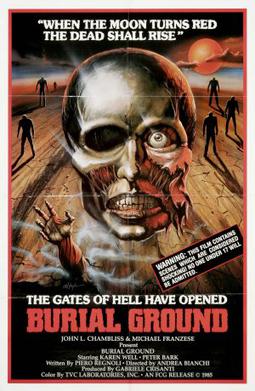
Burial Ground (1981) Review: A Eurotrash Zombie Primer

This is a review of Burial Ground (1981), an Italian Eurotrash zombie movie released in the wild and wooly days of the early 1980’s. What are Eurotrash zombies, you say? I’m glad you asked! Here are three essential factoids. 1. Eurotrash zombies are gross. Think maggots, green blood, decay. Do not watch when eating lunch. 2. Eurotrash zombies don’t crave brains, and are cannibals in the more traditional sense. Entrails? Spleen? Intestines? Yes, thank you! 3. Eurotrash zombies are crafty. They wield farm implements, use hand signals, and ride horses like they are jockeys in the Kentucky Derby.

Three couples travel to a villa for some fun in the sun, but are interrupted by a horde of zombies released from their burial ground. A word about those burial grounds, which are supposedly Etruscan. Just last month I visited Italy and visited actual Etruscan burial grounds in Orvieto. I didn’t see any zombies and the tombs don’t look anything like the ones shown in this movie. Shame, shame!

Anyway, the villa is inhabited by three couples, one child, and two servants.  The only character I will mention by name is Michael, who is supposed to be a child of about ten to twelve years old but is played by an adult actor with a growth disorder. Michael wears short pants – we call them floods in N.J. – and does not look like a child. Michael interrupts his mother during sex and asks her what she’s doing. The man she is frolicking with is not her husband, which might be why he’s confused. But I don’t think so.

Eurotrash zombies hate it when people have sex, so they shamble to the villa in record time to stop the fornicating couples. In this film, sex consists of the man lying atop the woman with his pants still on while they paw at each other. This isn’t done to appease the censors, as I don’t think there was such a thing in Italy in the early 1980’s. Burial Ground contains full nudity and an incest subplot so nauseating they had to hire an adult actor to play a child.

Our hedonistic couples are in for a long weekend, because these zombies are organized! They set a bear trap, which snares one of the women. The bear trap is a highlight of Burial Ground. It might be my imagination, but it seems like the zombies paused for a moment, proud of their handiwork, before shambling in for the kill.

The survivors gather in the villa and are picked off one by one. When the maid tries to close a window, a zombie hurls a dagger or throwing star and pins her hand to the wall. Maybe it’s a Ninja Zombie! They then use a scythe to cut off her head like an overripe grape. Later in the movie, one of the survivors tosses her corpse to the zombies. It’s every man for himself!

The most disturbing thing about Burial Ground is the character of Michael, hands down. Look, he’s an adult and I sure hope he got paid, but it’s still unsettling to watch a grown man pretend to be a kid. The incest subplot – which is why a child couldn’t play the part – multiplies the ick factor by a thousandfold.

I am unsure why Burial Ground exists. Maybe the movie was a tax write-off, or part of a money laundering scheme, or something even more sinister. Perhaps the zombie apocalypse broke out in Rome and they made this film to cover it up? Bottom line: if you can’t get enough of zombie movies, and enjoy watching them drunk or high, you will love Burial Ground.

An earlier version of this review was published on my Substack, Abandoned Places. If you like reviews of horror movies/comics/short stories, please consider subscribing!

The Adventures of Red Sonja

This is a review of The Adventures of Red Sonja Volume 1-3, written by Clair Noto, Roy Thomas, and Bruce Jones with pencils by Frank Thorne and others. These comics were released in the 1970’s from Marvel, and are an offshoot of the Conan universe. This review will focus on the Clair Noto/Roy Thomas material, as I did not care for Mr. Jones’s interpretation of the character.

Does Red Sonja have a character? Yes, she does! She also has a metal bikini, which Mr. Thomas takes credit – or blame – for, depending on your viewpoint. She is a wandering mercenary. She’s depicted as a thief in an issue written by Mr. Jones, but seems mostly to make her living as a sellsword. In one issue, she takes a traveler’s cloak with the promise to return it at the tavern, which a thief wouldn’t do.

Red Sonja is depicted as fearless, competent with a sword, and smarter than your average mercenary. She wins a duel by leaping atop the carcass of a great mammoth. When her heavier foe follows, he sinks into the mammoth like a stone. 

The writers mention in passing that Red Sonja has vowed never to sleep with a man, but don’t go into details. She has two potential love interests. Both are heirs to thrones, and both want to make her their queen. She leaves them without looking back. My impression is that she is a born wanderer.

Red Sonja has a code. She’s not an unstoppable killing machine – which would be boring– but she takes no shit. She doesn’t want to kill you, but if you provoke her she will. Case in point: she becomes a wanderer when a king tries to make her his concubine and ends up with a knife in his throat. In another story, she kills three men who best her in a bar brawl – which she does not start – and steal her money.

Red Sonja is a sword & sorcery comic that alternates between one-shots and multi-part storylines. These issues contain loads of fantasy elements, many of which veer into surrealism. In one story, Sonja is tossed into an enormous clam, and fights her way out armed only with a handful of diamonds. Nothing bizarre about that, right?

In another, she fights a man wearing a mask made of poppies, which lull his victims to sleep. Poppy Man serves a trio of vampires who have transformed his father into an enormous carnivorous plant. We also have insect queens, rocs hatching from tiny eggs crafted by centaurs, and unicorns with regenerating horns. 

The multi-part storylines can be dense plot-wise, with lots of characters coming and going. Plot twists are thrust upon the reader without warning, but that’s part of the fun of reading these comics. Recommended, especially for lovers of fantasy and sword & sorcery comics.

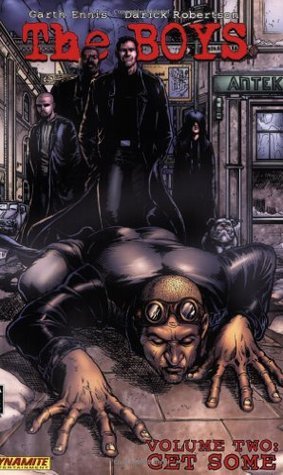
The Boys: Get Some

This is a review of The Boys: Get Some by Garth Ennis (writer) and Darick Robertson (artist). You can read my review of the first volume, here. Please be aware that this volume contains challenging material that may trigger readers. I would provide a detailed content warning, but this review is only around 500 words. The point of The Boys is to push boundaries, or to say that there are no boundaries. If you do not agree, my advice is to not engage. Also: SPOILER ALERT.

The Boys are CIA sponsored team led by the Butcher that consists of Wee Hughie, Mother’s Milk, The Woman, and The Frenchman. They exist to combat the growing superhuman problem. What’s the problem with superhumans? Well, they are written as real people with superhuman powers. Anyone older than ten can figure out why that would be a problem.

The first storyline, Get Some, opens with Butcher and Wee Hughie investigating the death of a young gay man who fell off a roof. They visit a gay bar, where the bartender tells them that the person in question had a crush on SwingWing, a superhero who embraces social justice issues and whom everyone assumes is gay.

Three-and-a-half issues later, SwingWing – who is not gay and who despises gay people – confesses, and Butcher tells him that he will let him go if SwingWing becomes his snitch. Except Butcher is lying. He removes a screw from SwingWing’s jetpack, which malfunctions a few days later, causing him to plummet to his death in a scene that is not even shown. Nobody knows what happened but Butcher and the reader, and readers not paying attention might miss it.

The second storyline, Glorious Five Year Plan, is set in Russia and introduces Love Sausage. The plot involves 150 rogue superhumans, exploding heads, and a coup backed by the Russian mob and an American corporation. Except it’s not a coup, it’s more like an elaborate sales pitch that fails when Butcher finds the remote (read: kill switch) and blows 150 superhuman heads off.

The most interesting thing about The Boys is trying to figure out what makes Butcher tick. Why does he kill SwingWing the way he does, instead of sending him to jail or just outright killing him? I don’t know. Butcher is hard to read. On the surface, Garth Ennis might not seem like a very subtle writer, but appearances can be deceiving. I had to read most of these issues twice to see what was really happening.

Do I enjoy reading The Boys? Yes, I do. I’ve been reading comics for a long time and I get the comic insider jokes, which there are lots of. I don’t endorse Ennis’ use of racist/sexist/homophobic language, although his message that a person’s actions should count more than their words comes through loud and clear. People who read this after seeing the Amazon Prime series might be in for a shock, but if you like Garth Ennis without an editor, this is the series for you.

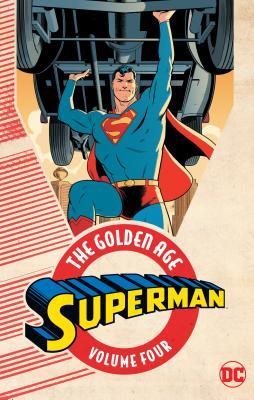
Superman Golden Age Volume Four

This is a review of Superman Golden Age Volume 4. Read my reviews of the first three volumes here, here, and here. One of the things that becomes clearer as I plow through these volumes is that Golden Age Superman is an odd duck. Exhibit A: Clark Kent and Lois Lane interview a fisherman who claims to have seen a mermaid. Since the fisherman is the type who thinks that aliens from Dimension X have reversed his brain, Lois doesn’t believe him. But Superman does. Why would he? Because Superman is the same type of weirdo as the fisherman. It all makes sense now!

Later in the same story, Superman crushes an undersea invasion of the surface world, which leads to massive casualties. At the time, there was a war going on in Europe. Reading this raises the question of what’s to stop Superman from flying into Germany and ending the war before lunch? Stories like this one are a case of hewing too close to reality. Speaking of which: a tale in this volume features an unscrupulous businessman stealing the rights from an inventor so that he gets rich and the creator doesn’t get a dime. Hey, did you know another multimillion dollar Superman movie came out?

Superman foe Lex Luthor is in four of these stories – five, if you count the Lightning Master tale. The Lightning Master sure looks like Luthor, but since the story ends with Superman executing him – Golden Age Superman does whatever he wants and faces no consequences – I assume the creators decided not to kill him. Good choice, since Luthor is the only villain who can make Superman break a sweat. Other standout villains in this volume include a hypnotist violinist and a big game hunter with a walk-in freezer who sure resembles a serial killer.

The creators have fun, which is great to see. They are writing the same three or four stories under insane deadlines, so why not? Many of the panels are funny or contain in-jokes. In one panel, Superman reads an issue of Action Comics. In another, Lois Lane – who switches from red to a canary yellow dress – is tied to a chair. Lois tips the chair over reaching a phone, where she screams at Clark Kent, who thinks she’s putting him on.

Superman’s cast continues to expand. This volume introduces Jimmy Olsen, cub reporter! Zach Snyder notwithstanding, Jimmy is still around today. Unlike Lois Lane, Jimmy has impulse control and doesn’t blindly barge into situations. On the other hand, he doesn’t have a godlike alien watching his every move. Lois steps on his back to enter a window, which says a lot about his place in the pecking order.

Credit goes to the creators for producing a wish-fulfillment comic for kids that still manages to be entertaining. I have enjoyed every one of these volumes. Recommended if you like Superman and Golden Age comics.

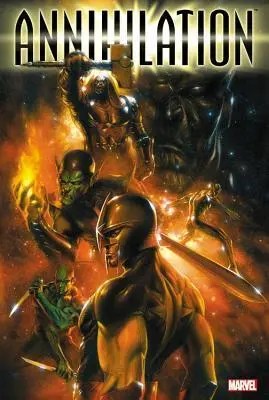
Annihilation Omnibus: Nova

This is a review of the Nova miniseries, written by Dan Abnett & Andy Lanning with art by Kev Walker, which appears in the Annihilation Omnibus. Read my review of the first volume, Drax the Destroyer, here. The Annihilation Wave is coming! What’s the Annihilation Wave, you may ask? In the Marvel Universe, there’s a place called The Negative Zone. The king of the Negative Zone is a bug thing named Annihilus, and the Annihilation Omnibus chronicles his invasion of our universe (The Positive Zone?).

This graphic novel features the adventures of Nova, aka Richard Rider, a member of the Nova Corps, which fyi isn’t ANYTHING like the Green Lantern Corps. The Nova Corps meet to discuss the impending threat of the Annihilation Wave, and five minutes later they are gone except for Richard and the Xandarian WorldMind, which uploads itself into his brain. This is good and bad – it boosts Richard’s powers, but he can’t handle all that data and eventually his monkey brain will pop like a zit.

Luckily Richard has Drax – who appeared in the first miniseries – to give him a helping hand. Drax has dropped the Destroyer moniker, but his specialty is still killing things, which is good because in this series there’s a lot of stuff to kill. Together, they escape the remains of Xandar and meet up with cosmic goodie two shoes Quasar, possessor of the coveted quantum bands. Too bad the Annihilation Wave is in hot pursuit.

Will Annihilus conquer the universe? How long can Richard hold out before his brain fries? And will the Xandarian WorldMind ever shut up? I read Annihilation years ago, and didn’t appreciate how much fun it was. That may be because most of the characters are obscure, and today – well, they’re still obscure, but that makes it more interesting. Annihilation was a huge gamble on Marvel’s part, and it paid off. Recommended for lovers of cosmic superheroics and space opera.

Vampirella Archives Volume One

This is a review of Vampirella Archives Volume One. Vampirella first appeared in her own magazine in September 1969, back when herds of comic magazines roamed the stands. Vampirella isn’t Barbarella’s long-lost sister, and she isn’t a real vampire. She’s a space alien who hails from the planet Drakulon, where blood is water. She comes to Earth on a rocket ship and finds employment as a horror hostess, a la the Crypt Keeper, telling lurid stories to twisted children.

How about a few examples? We meet Vampirella’s cousin, Evily, who in the course of doing evil throws a spell at a magic mirror, which reverses the spell and turns Evily good. Except she’s not really good, she’s just drawn that way. In the next issue Evily visits an enchanted tree, seeking – well, I’m not sure what she’s seeking – and then her body is turned to stone. At least I think that’s what happened. I’ve been reading comics for 48 years, and I’m not sure, so confusing me is quite the accomplishment right there.

How about the treasure seekers who try to steal Montezuma’s fabled treasure, guarded by the winged serpent Quetzalcoatl? The Big Q can possess anything with wings, so they shoot all the birds. And then it possesses a mosquito. At the end, we see the single survivor congratulating himself on escaping. Except he’s on an airplane, which has wings and transforms into Quetzalcoatl!

Then there’s the vampire who runs a movie studio and has his own version of the casting couch, which works until he meets a witch, who traps him inside a movie camera. Or maybe she transforms him into a movie camera? Or the caveman and cavewoman who flee an exploding volcano, overcome marauding dinosaurs, and meet their end when they mistake a dinosaur’s open mouth for a cave?

Sound dopey? Well, you’re right! These stories feature misspellings and muddled writing galore, but the best of them have an unpredictable energy. Unlike, say, Tales From the Crypt (which Vampirella is modeled on), the writers of Vampirella aren’t afraid to mix genres, with horror, science fiction, and fantasy. Vampirella’s origin story is science fiction, not horror.

A few words about the black-and-white art, which is the best part of this magazine. We have stories illustrated by artistic luminaries such as Neal Adams and Jose Gonzalez. Much of the art is cheesecake, sexy Venusians, barbarian queens, gill-women, vampires taking blood showers. In places, the illustrations remind me of Heavy Metal magazine. Recommended for fans of older horror comics and Tales from the Crypt anthology magazines.

Fatale: Death Chases Me

Fatale: Death Chases Me, written by Ed Brubaker with art by Sean Phillips, is a mash-up of noir and the supernatural. Think True Detective or Twin Peaks, although Fatale takes place in San Francisco and not the boonies. When I read this years ago, I didn’t like it quite as much as I did this time around. I didn’t understand that Jo is the main character, while also being the monster.

Let’s talk about Jo/Josephine, shall we? She doesn’t age and can enslave men to her will. She’s beautiful, sure, but there’s more to it than that. When she tells a man to put a gun to his head and pull the trigger, he does it without blinking. Jo doesn’t want this ability, nor can she control it. She thinks eye contact might be part of it, which makes sense. Jo can literally ruin lives at a glance.

Fatale takes place in the 1950’s in San Francisco, where Jo is being pursued by a group of cultists wearing red pjs. They are led by – I don’t know what it is. It seems urbane, if you can call a creature from Hell urbane. Whatever it is, it wants Jo. The cop she counted on for protection is now hopelessly corrupt, dying of cancer, and desperate enough to use her as a bargaining chip.

Many of the things Jo does are dicey. Witness the reporter who leaves his pregnant wife to do her bidding. When they have sex, she’s on top – this is a great character moment because the creators don’t make a big deal about it. He is her slave, and will do whatever she wants. There are consequences, because with Jo there are always consequences. The reporter’s pregnant wife is slain by the cult, and what happens to their unborn baby is even worse.

Jo isn’t a good person or a bad person. She is a survivor. She does what she has to, and leaves behind a trail of shattered men and broken marriages in her wake. Her so-called powers are a curse. She has transcended morality. She is what she is, the most beautiful monster you will ever see.

There are a lot of characters in Fatale. At first, I got a few of them confused. That is this graphic novel’s only weakness, if you can call it that – this is a series that rewards multiple reads. The ending leaves behind a few unresolved plot threads, but that’s okay as this is only the first arc of the series.

IMO, Fatale is the best thing Ed Brubaker has ever written. It is complemented by Sean Phillips’s gritty artwork, which features muted colors, lots of shadows, and eye-gouging monstrosities. Recommended for lovers of noir, supernatural comics, and monsters.

Annihilation Omnibus: Drax the Destroyer

This is a review of the Drax the Destroyer miniseries, written by Keith Giffen with art by Mitch Breitweiser, which appears in the Annihilation Omnibus. The Annihilation storyline revitalized Marvel’s cosmic line, leading to the resurrection of titles like Guardians of the Galaxy and the resurgence of characters like Thanos, both of whom appeared in the movies Avengers: Infinity Wars and Avengers: Endgame. I won’t say that this is the miniseries that started it all, but it’s still a fine read.

Drax the Destroyer is Marvel’s cosmic version of The Hulk, big, green, and dumb. Drax survives an exploding spaceship taking him to prison, and ends up in Coot’s Bluff, Alaska, population 2816 – a number that is soon to plunge. I do not know why Drax is bound for prison. I am a comic junkie, and I do not even know Drax’s backstory. If you look up obscure Marvel characters in the dictionary, you will see Drax’s face. His history doesn’t matter, because the purpose of this miniseries is to serve as an introduction to characters appearing in Annihilation.

Besides Drax, there are four other survivors – a Skrull named Paibok, a blue alien named Lunatik, and the Blood Brothers, who are, uh, brothers. This group can be divided into those who are smart, Paibok; those who are smart and evil, Lunatik; and those who are stupid, The Blood Brothers and Drax. The Blood Brothers start a brawl with Drax while Paibok and Lunatik enter Coot’s Bluff, kill a bunch of locals, and organize the survivors into work gangs. They want to salvage the remains of the exploding spaceship and jury rig a ship so they can leave Earth, ASAP.

Paibok kills Drax. It takes him about five seconds. The Skrull is a soldier, and he uses his abilities like a soldier would. But don’t worry! Drax is resurrected, or perhaps he resurrects himself. There are hints Drax is evolving during his scuffle with The Blood Brothers – the longer the fight drags on, the smarter he gets.

Upon Drax’s resurrection, he psychically bonds with Cammie, a local. Cammie falls under the category of smart and evil. She’s ten, but has the world-weariness of a fifty-seven-year old cashier working full-time at McDonalds, which is to say she’s stuck and hates her life. The new Drax isn’t as strong as the dumb Drax, but he’s a thousand times more lethal. He has no qualms about killing and only fights when he needs to.

This reads more like an adventure or survival comic than a superhero story in that it is devoid of any sentimentality and features a sky-high body count. None of the characters – Drax included – act like superheroes. They act according to their self-interests. Drax doesn’t kill Paibok, because he has no reason to do so. In a way, Paibok did Drax a favor – because big, green, and dumb is no way to go through life. Recommended, especially for fans of Keith Giffen and Marvel’s Cosmic Line.

Update on My WordPress Blog

Hello, everybody. I’m posting this to let everyone know I will be going back to the format of reviewing one graphic novel per week. If you want to know why, keep reading. Otherwise, see you Monday morning.

Last month, my viewership numbers plummeted because of a Google algorithm update. A number of my reviews went from being on the first page – sometimes the first result – to the equivalent of Google Siberia. SEO is important to my blog, because I am not a social media person. My work is my voice.

I do not have a huge readership, but my blog’s numbers were growing. The update wiped out almost three years of work in an instant. I decided to quit WordPress and started a Substack. And then a crawler went through my blog, and some of my reviews were hiked back up. My numbers are starting to improve.

I do not know why Google treats their content providers like this. I am providing free reviews on their platform, which people seem to enjoy. If you go on Bing – unfortunately, not many people do – many of my reviews are the first result. Thankfully, I do not depend on this blog as an income stream.

I will try to post reviews on both platforms, with my Substack containing the horror content and this blog providing comic content. And I guess we’ll see.

Here is the link to my Substack.

Marvel Masterworks: Daredevil Volume Eighteen

This is a review of Marvel Masterworks Daredevil Volume Eighteen, written by Denny O’Neil and drawn by various artists. Read my reviews of Volumes One, Two, and Three here, here, and here. Why, you may ask, did I switch from Volume Three to Volume Eighteen? Well, the third volume of Daredevil was so bad I didn’t want to read the fourth.  It happens, especially with 1960’s Marvel comics. For every classic issue of Spider-Man or The Fantastic Four, you have things like Matt’s imaginary twin brother Mike Murdock, evil landlord The Masked Marauder, and Daredevil trapped in a spaceship blasted into outer space by Electro.  Not all old comics are good.

However, these comics are good! Aside from the art – which is inconsistent – this is a very underrated run. The meat of the volume is Daredevil’s archnemesis Bullseye being shanghaied to Japan by disgraced kamikaze Lord Dark Wind, where his broken bones are replaced with metal implants. Ole Hornhead follows the trail to Japan, where he meets Yuriko, daughter of Lord Dark Wind, who helps him out.

Yuriko has a tattoo on her face, mainly because her father is crazy. After the Daredevil arc, she becomes Lady Deathstrike, courtesy of X-Men scribe Chris Claremont. I guess Claremont rescues her from obscurity, but she goes from a fleshed-out character to a psychotic cybernetic killing machine. Maybe aliens reversed her brain, because now she’s the opposite of how Denny O’Neil wrote her. But such is comics – they giveth, and they taketh away.

This volume also contains a bunch of one-shot issues. My favorite storyline is when Daredevil’s ex Heather Glenn gets drunk and reveals his secret identity at a party. Oopsie. Turns out the guy she spills the beans to is both terminally ill and running a murder squad, which happens. The Black Widow reappears in Matt’s life, and we catch a glimpse of Micah Synn, the Kraven the Hunter wannabe who will make his life miserable in the next volume. And I almost forgot about the guest appearance by Wolverine, everyone’s favorite killing machine!

Not many people recall Denny O’Neil’s Daredevil run, mostly because it’s sandwiched between two Frank Miller runs, but this is good stuff. O’Neil edited Miller’s first Daredevil run, which utilizes serialized storylines – multiple issues featuring recurring characters and a vivid setting – and uses the same techniques himself. Think James Robinson’s Starman and Alan Moore’s Swamp Thing. Recommended, especially for Daredevil fans.