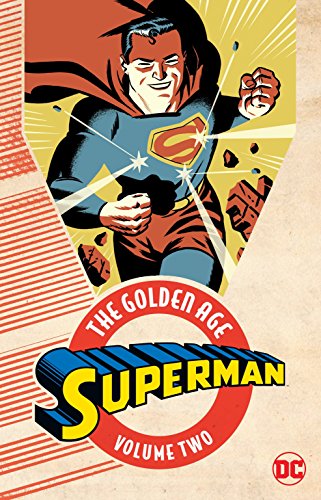
Golden Age Superman Volume Two

This is a review of Golden Age Superman Volume Two. You can read my review of the first book, here. Spoiler alert: I didn’t like this volume quite as much. Reading twenty-plus one issue stories that are identical can be mind-numbing.

A few characters return from the last volume. We have Ultra, a mad scientist who transfers his brain into the body of a beautiful young starlet. Ultra might be gorgeous, but he’s still a megolamaniac asshole who wants to conquer the earth. Strangely, Ultra is replaced by Lex Luthor, who in this volume has hair. Luthor is a mad scientist just like Ultra, so I’m unsure what happened. Why did they ditch Ultra? Maybe the public didn’t like a body swapper?

We also get Lois Lane. Lots of Lois Lane. Like Clark Kent, Lois is a reporter with no fear. Unlike Clark, she doesn’t have super powers. This means she acts in ways that can be interpreted as stupid, such as telling the gangster that she’s going to publish an exclusive exposing his evil plans. I lost track of the number of times Lois is captured and used as a hostage object in this volume. In one issue, she’s kidnapped twice!

The stories range from gangster potboilers to science fiction. Superman still can’t fly. He can be mind-controlled and knocked out by radium bombs or men with strength-sapping ray guns. There’s no suspense, which is why we have the Lois Being Kidnapped Again trope.

As I said, most of the issues blend. The exception is a story about a children’s orphanage. The owners run an operation worthy of a torture-porn movie. Watching them throw the works – buzzsaws, safes, boiling water, acid, etc. – at Superman is an eye opener. They’re nasty customers, but different from the normal gangster or megalomaniac scientist. You don’t get many pure sadists in superhero comics.

Two other things struck me about this volume. Unlike today’s Man of Tomorrow, the Superman of Yesterday didn’t have many qualms about killing. In fact, he does kill people – usually when he feels threatened (he kills the guy who hypnotizes him). He also doesn’t care about rules. There are several stories where Superman tries to gain evidence on the mobster/crooked politician/saboteur/etc., and then resorts to the tried-and-true method of threatening to crush the evildoer’s skull to a pulp if he doesn’t confess. Since this gambit always works, I’m surprised why he doesn’t just cut to the chase. It would save him time.

If you like Superman, you’ll enjoy this volume!
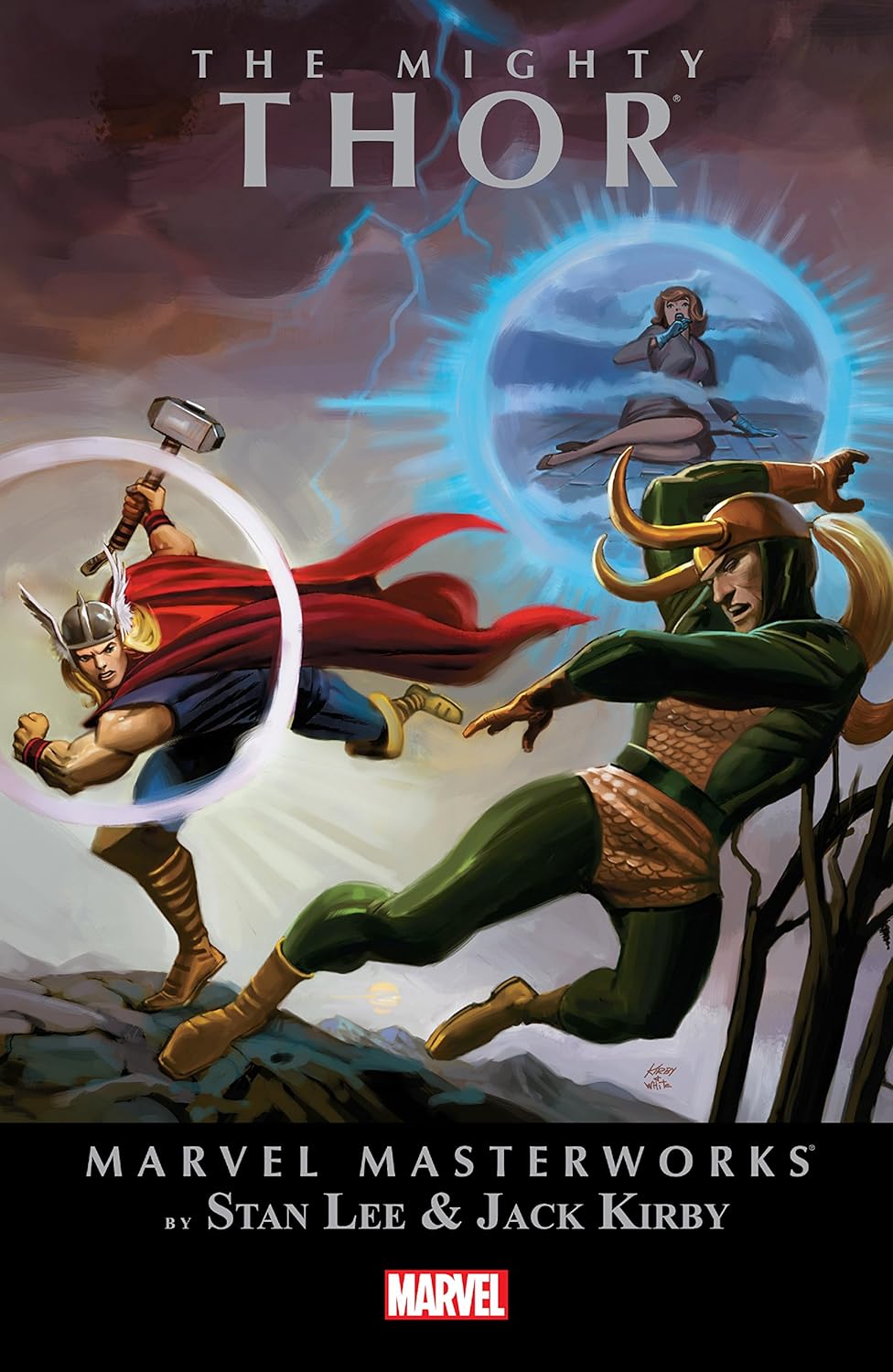
Marvel Masterworks: The Mighty Thor Volume Two

This is a review of Marvel Masterworks: The Mighty Thor Volume Two. I was nervous reading this graphic novel, because the first volume was so wretched. You can read my review, here. Disappointing, but I hoped it would get better, because Jack Kirby’s Thor run is regarded as a minor classic and I’d already bought the first ten volumes.

Lucky for me, this volume did get better! Jack Kirby does most of the penciling, and – if you believe him – the plotting and dialoguing as well. There’s a back-up feature called Tales of Asgard, that fleshes out the world of Asgard and adds new characters. Besides Thor, Loki and Odin, we now have Balder the Brave, Heimdall, Hela, etc.

The secret to Thor’s success, in a nutshell: moahr Asgard. The stories involving Thor’s homeland and his extended family are so much more interesting than the stories set on earth. In one issue, Loki unleashes a pair of demons on New York City. Odin the All-Father uses his powers to transport all the humans into Limbo as he and Balder the Brave join Thor in a battle royale!

We still have the Don Blake/Thor/Jane Foster/Odin love mélange. Don Blake loves Jane Foster, who loves the mighty Thor, who can’t love her back because the all-seeing Odin has cock-blocked him. Odin is supposed to be all-seeing, but his dislike of Jane Foster hinges on a misunderstanding.

There are still Thor stories set on earth. Cobra and Mr. Hyde appear in a few issues, leading to the tried-and-true formula of Thor dropping his hammer and transforming back into Don Blake. Some sequences strain believability, as when Don Blake tells Cobra and Mr. Hyde to look out a window, and transforms into Thor when their backs are turned. Neither villain is none the wiser. With great power comes great stupidity, apparently.

Recommended for Thor and Jack Kirby fans.

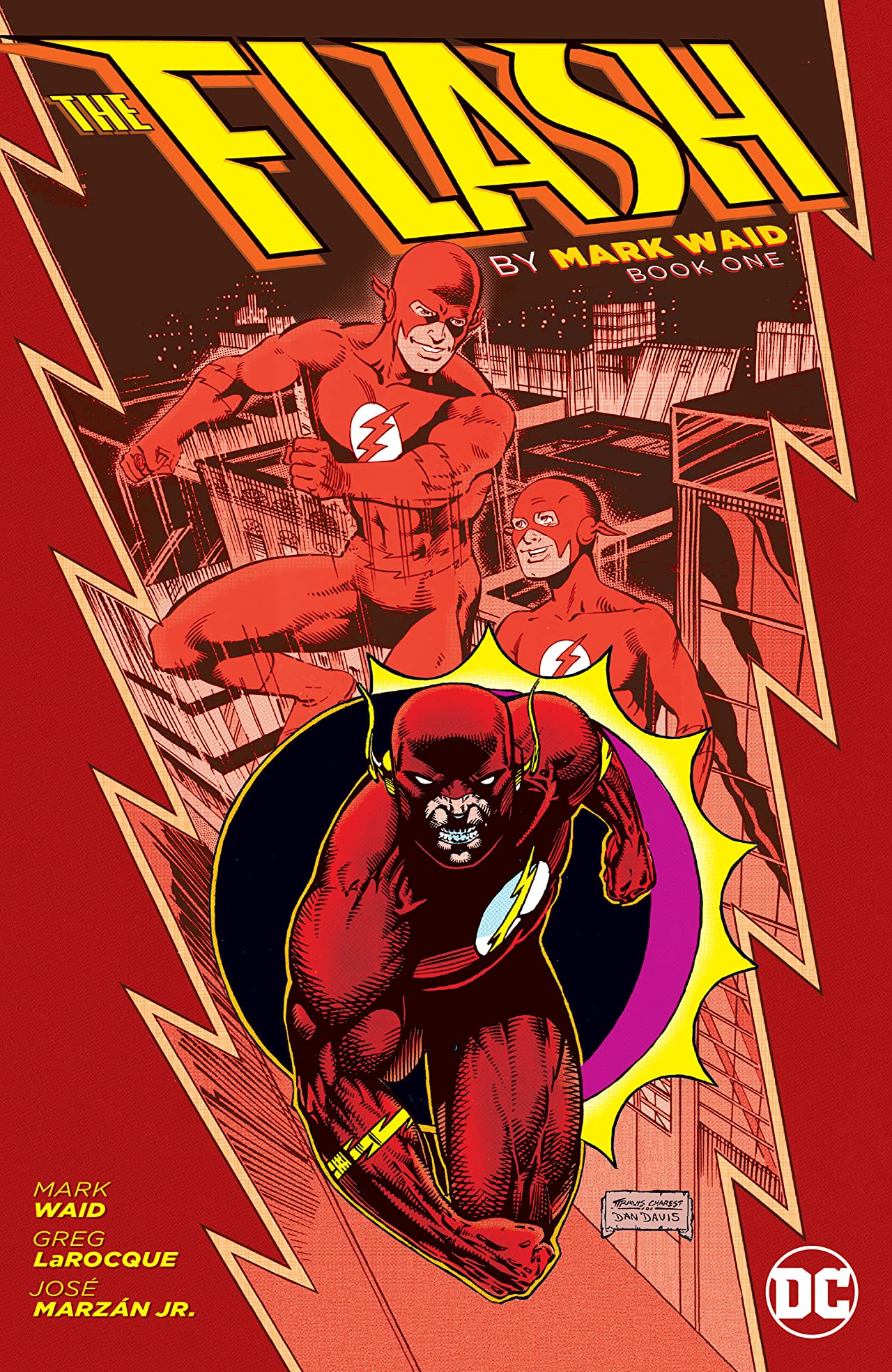
The Flash, by Mark Waid: Book One

This is a review of The Flash by Mark Waid, Volume One. I have a soft spot for The Flash. I am not sure why this character speaks to me. Maybe it’s because The Flash is the first superhero comic I ever read. Or it could be because of The Flash’s rogue’s gallery, which is one of the best in superhero comics. Or maybe it’s the costume? It certainly isn’t Barry Allen’s personality, because he didn’t have one when I started reading his adventures back in the late 1970’s. No, my Flash is Wally West.

Let me explain. There are three Flashes who have starred in their own books – Barry Allen, Jay Garrick, and Wally West. I wasn’t around in the 1940’s when Jay Garrick was active. Wally became the Flash after Barry died (1980’s), which turned out to be a temporary setback.  Originally, Wally was Kid Flash. I read Wally’s origins in the Silver Age Flash. You can see the review, here. Back then, Wally was a comic book writer’s idea of what a teenager in the 1950’s should be. The results were horrifying.

Mike Baron’s short run on Flash – read my review here – gave Wally a personality. He’s callow and self-centered, like most people who are twenty years old. Writer Mark Waid’s run takes place several years – or whatever passes for time in the DC universe – later. Wally is older and wiser. He’s still paying off debts accrued from when he won the lottery and blew it all.

Mr. Waid gives Wally a personality – blue collar, not a rocket scientist, always tries to do the right thing – and a love interest. Mr. Waid is good at evoking emotion. His style is upbeat, which in the early 1990’s was decidedly old school. Stories in this volume include an updated version of Wally’s origin; a team-up with Aquaman, The King of the Seven Seas; and a looong annual starring Eclipso, back when DC made Eclipso a super-powered serial killer. Also, a rejuvenated Abra-Kadabra, minus his skin.

Run to Comixology to get this volume!

Man-Thing Complete Collection: Volume One

This is a review of…look, if you ever told me I’d like a comic called Man-Thing, I wouldn’t have believed you. I thought Man-Thing was just a Swamp Thing rip-off, but apparently it’s the other way around. Man-Thing came first.

Man-Thing is Dr. Theodore Sallis, a chemist, who is in the Everglades working on a bio-weapon to produce the ultimate super soldier. Unfortunately, his love interest turns out to be an AIM operative. Sallis injects the formula into himself to prevent it from falling into the wrong hands, does a header into the waters of the Everglades, and is transformed into a mindless pile of swamp trash.

Unlike Swamp Thing, Man-Thing is truly mindless. He has an interesting power set. He’s strong. He can ooze through things like nets. If you cut Man-Thing, he does not bleed. He oozes swamp muck. Man-Thing is empathetic, sensing emotions, and fear is the emotion he hates most of all. Thus, Whoever Knows Fear Burns at the Touch of the Man-Thing! Literally.

Man-Thing spends all his free time shambling around the Everglades, fighting alligators and enormous snakes. I’m surprised that the Marvel team somehow knew that one day the Everglades would be overrun with discarded pet pythons, so kudos to them.

Now, you might think having a mindless protagonist with no desires at all would be tough to write about. Enter writer Steve Gerber. In this volume, Man-Thing confronts the issues plaguing 1970’s America, racism, biker gangs, Vietnam vets, peace protestors, unscrupulous land developers, and 500-year old Spanish conquistadors. Confront might be the wrong word. He kind of shambles into the picture. BTW, the swamp is also the Nexus of All Realities. I don’t know what that is, but it sounds important.

Then there’s nearby Citrusville, a dingleberry little town that is ground zero for Florida Weird. There are demons and cults and even wizards with honest to gosh wizard hats. Howard the Duck guest stars. There’s also an appearance by Wundarr, a baby blasted from an exploding planet to Earth. Wundarr comes out of his spaceship fully grown and thinks Man-Thing is his mother.

One of the funnest books I’ve read all year.

The Spectre Volume One: Crimes & Judgments

This is a review of The Spectre: Crime & Judgments, which collects the first twelve issues of John Ostrander (writer) and Tom Mandrake’s (artist) 1990’s run of the Spectre. It is no secret that I’m a huge fan of John Ostrander, the man responsible for the creation of Grimjack and the modern version of The Suicide Squad.

The Spectre is an older character who appeared in the Justice Society way back in the 1940’s. Basically, The Spectre is the Wrath of God. His purpose is to wreak vengeance on evildoers, and since he’s beaucoup powerful, he can do whatever he wants. The Spectre’s anchor/human host is Jim Corrigan, a cop killed in the 1930’s. Corrigan’s ghost still hangs around, even though sixty years have passed. Evil never sleeps, and neither does he.

My favorite issue of The Spectre features a trio of kidnappers who bury a child alive and die before they can reveal the child’s whereabouts. The Spectre storms into Hell and fights a devil for one of the kidnapper’s souls. When the kidnapper reveals the child’s whereabouts, the Spectre tosses him back into the eternal flames like a piece of garbage.

I don’t want to say a lot about the plot. If you are the type who’s easily triggered, I might skip this book. I myself had trouble reading the last four or five issues, but then again I’m a sensitive sort. The B-storyline features a character who mirrors the Spectre, in that he says he’s destroying evil. This character is also an enormous monster. Make of that what you will.

Great art, great writing. Highly recommended, especially if you like nihilistic horror.

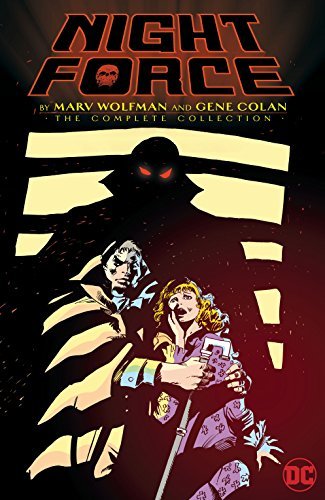
Night Force: The Complete Collection

This is the first comic I’ve ever read put out by a mainstream comic publisher (Marvel/DC) where one of the characters talks about his wife wanting an open marriage. Welcome to Night Force, one of the weirdest comics I’ve ever read.

Night Force is a horror comic put out by DC in the early 1980’s. It lasted fourteen issues before it got canceled. It’s written by Marv Wolfman and drawn by Gene Colan, a creative team with impressive credentials. Despite some issues, Tomb of Dracula is a classic. Unfortunately, Night Force is not a classic.

The plot: Baron Winters lives in a grand old mansion in Georgetown. The Baron has a pet cheetah and can’t leave his house, because reasons. However, his house has portals that allow him to travel into the past. We never find out why, because the book gets canceled and I don’t really care anyway. BTW, Georgetown is also the setting of The Exorcist. Vanessa Van Helsing, one of the characters in Night Force, is about the age Regan MacNeil would be in the early 1980’s.

Vanessa is a physical medium who can channel evil. She’s been institutionalized ever since she was a child, and spends most of this graphic novel getting beat up, kidnapped, and jabbed with hypodermic needles. She has absolutely no agency at all. Her only purpose is to be rescued, so she’s a damsel in distress on steroids.

The Russians want to kidnap Vanessa and channel her psychic powers. Baron Winters, who is Vanessa’s guardian (again: because reasons) assembles his Night Force to counter the Russkies. So who’s on the team? Jack Gold is a writer who can’t keep a job. His marriage is finito. Spurred on by the Baron, he takes a liking to Vanessa. They have sex. Since this title exists under the auspices of the Comic Code Authority, they only show the aftermath. One other thing: Vanessa is twenty years old, while Jack is at least twice that age.

Donovan Caine, the second member of Night Force, is a parapsychologist. He’s doing experiments on Vanessa for the CIA. This involves having his graduate students dress up in black robes, draw pentagrams on the ground, and perform pretend Satanic rituals. Caine wants to help Vanessa channel evil, and boy oh boy does he succeed. Unfortunately, that evil kills his wife.

Donovan Caine is important, not because he does anything (in some ways he’s as much a damsel in distress as Vanessa), but because he’s the only person in this comic who has any agency that makes sense. Caine blames the Russians for his wife’s death. He’s wrong about that. Picture this: say you know a person who can manifest evil in physical form. Say you start performing Satanic rituals to summon that evil, which indeed starts manifesting. Does that sound safe to you? Maybe you’d ask, what are your safety protocols? What, you say you don’t have any? Okaaaay.

When Vanessa is kidnapped and sent to Siberia, Caine and Gold try to bring her back. Caine hates Gold so much it’s comical, even though Gold saves his life three times (at least). The first storyline lasts seven issues and still feels truncated to me. The twist at the end is good, but also reinforces the unpleasantness of the characters.

There are two other storylines after this one. The second, which involves a criminal fighting a walking garbage mound that imprisons a bunch of people in a brownstone, is pretty good. The third and final storyline makes no sense.

My guess is that this was an experimental comic. The stuff about manifesting evil and psychic powers is interesting, but the characters are mostly unpleasant assholes, which makes it difficult to care. They’re led by the biggest asshole of all, Baron Winters. So I can honestly say I’m not sure what to make of this comic.

Secret Warriors Complete Collection Volume One

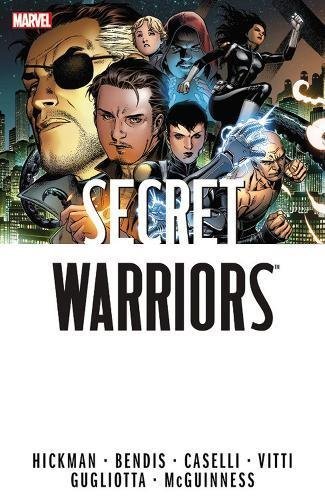
This is a review of Secret Warriors Complete Collection Volume One. The cover of this graphic novel is misleading. The writer of this volume is Jonathan Hickman, not Brian Michael Bendis. At the time Mr. Bendis was the biggest name in comics, so it makes sense they’d want him on the cover, and he did contribute material. However, Mr. Hickman wrote sixteen of the sixteen-plus (+) issues.

The question you have to ask yourself is do you like espionage comics? If yes, this is the graphic novel for you. Norman Osborne, aka The Green Goblin, has become the most powerful man in the United States. He’s in charge of HAMMER, which used to be SHIELD, a NATO based espionage outfit. That doesn’t sit well with Nick Fury, former head of SHIELD. He forms his own army, spearheaded by decommissioned SHIELD agents, the Howling Commandos (his outfit during the second World War), and three caterpillar teams. Caterpillars are kids with superpowers, btw.

HYDRA is undergoing its own renaissance, spearheaded by Baron Strucker. In this volume, HYDRA are portrayed as Nazis and ex-Nazis. Not to be undone, LEVIATHAN – a Soviet era secret organization – rises from the ashes. By the end of this graphic novel, HYDRA and LEVIATHAN have gone to war and one of Fury’s caterpillar teams has a traitor.

This volume has a large ensemble cast, but the main players are Nick Fury, Daisy Johnson (the leader of one of Fury’s caterpillar teams), and Baron Strucker. It is mostly self-contained, thank god. The twenty eight plus issues of this series are one BIG storyline, emphasis on the capital letters. The plot features lots of back and forth, twists and turns, backstabbing, wheels within wheels. Most of Mr. Hickman’s plot twists are foreshadowed.

This graphic novel takes place in the post-Secret Invasion Marvel era, called Siege, and IMO is the best thing to come out of that era. Highly recommended, especially for fans of espionage comics.

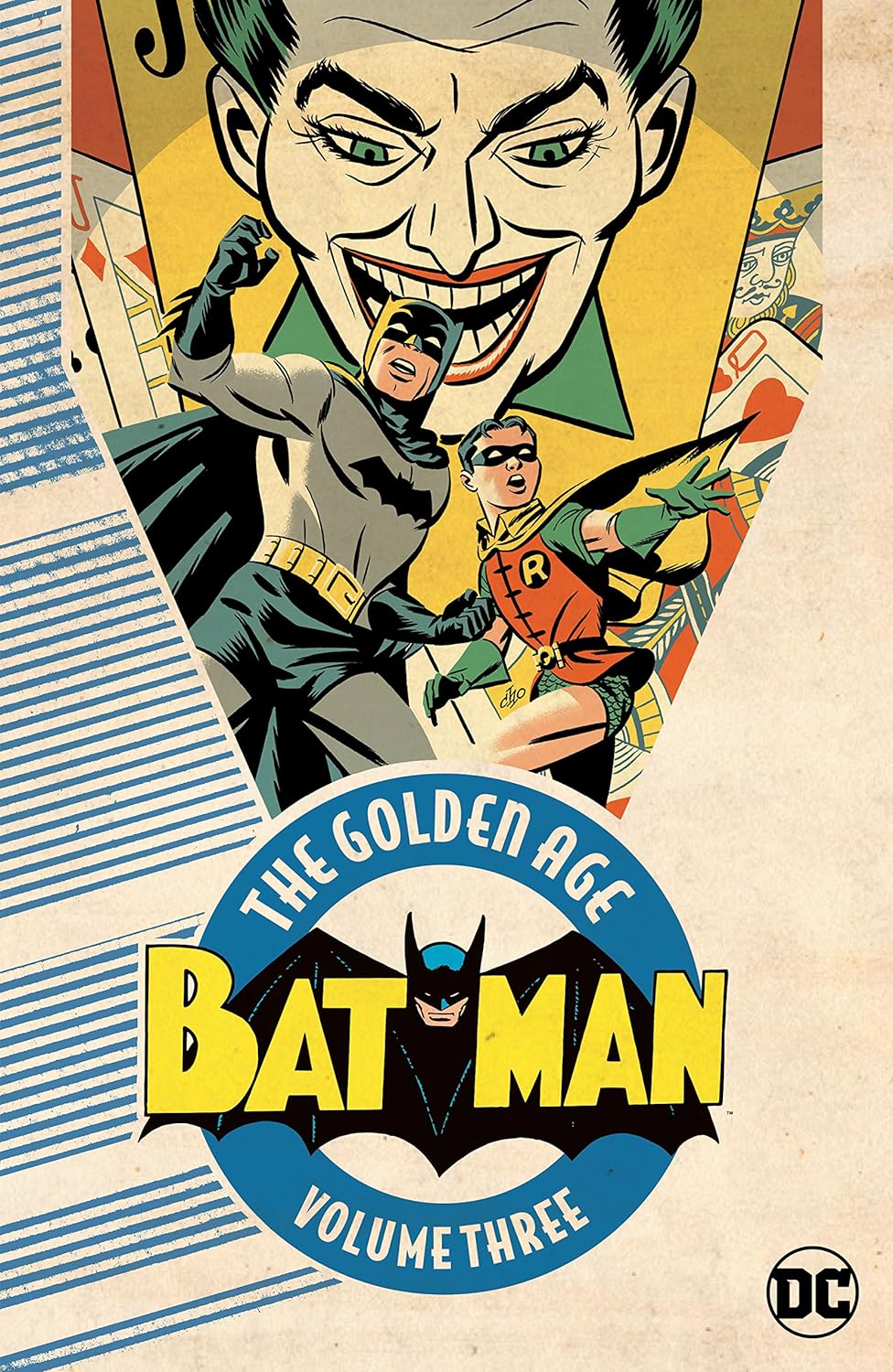
Batman The Golden Age Volume Three

This is a review of Batman The Golden Age Volume Three. You can read my reviews of Volumes One and Two here and here. Batman’s adventures continue in this volume. The Penguin makes his first appearance and evades capture three times. The Cat also appears, which is great because she’s an interesting character who adds something different to these stories.

But the real guest star of this volume is The Joker, who is basically in every other issue. The best Joker – er, Batman – story involves the Clown Prince turning himself in to the authorities and being tried and executed for his crimes. Luckily, the Joker just happens to have a serum that can raise him from the dead, if it’s injected within fifteen minutes of his death. Thus, the Joker is reborn with a clean record. Citizen Joker, lol.

I give this creative team props for consistency. All the stories so far have been one-shots, which can’t be easy. The downside is that they all blend. You’d think at some point the thugs that capture Batman would just put a bullet through his head rather than tie him up and put him in a deathtrap, which has been spoofed ad infinitum in the 1960’s Adam West Batman series, but no dice.

This is the first volume I’ve read where the creative team might break the fourth wall. Weird stuff happens, highlighted by a bizarre spanking scene. The other standout is the strange relationship between Batman and the Joker. There’s a point in most of these stories when the Joker has Batman in his power, but apparently he relishes capturing and putting Batman into deathtraps more than killing him. The Clown Prince has no such compunctions about murdering Robin, whom he almost kills – I think it’s twice – so far.

Entertaining for Batman fans, but don’t read more than two or three issues in one sitting.

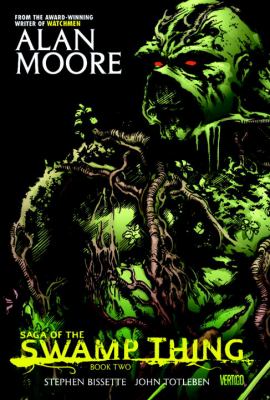
Saga of the Swamp Thing, Book Two

This is a review of Saga of the Swamp Thing Book Two. This volume continues fabled writer Alan Moore’s run on Swamp Thing, aided and abetted by wondrous artwork by John Totleben and Stephen Bissette. You can read my review of the first volume, here.

This graphic novel features Abigail Arcane, who has patched up her marital disputes with husband Matthew. Matt has ditched the sauce for more important things – he buys a house, gets a job, all that good adult shit. True, there are flies all over that house, his co-workers resemble dead serial killers, and don’t look at him too close in a mirror – but besides that, Matt is doing great. He also has godlike powers, because reasons.

Turns out Abby’s wicked uncle Arcane is infesting Matt’s body. Arcane might be dead, but death can’t hold a good villain down. Before Arcane reveals himself, we see the beginning and aftermath of a sexual encounter between him and his unknowing niece, which qualifies as incest and wins an award for one of the grossest moments in mainstream comic book history.

It also qualifies as a problematic scene. Later in the book, Swamp Thing and Abigail enter into an honest-to-God consensual relationship that feels real, something exceedingly rare in comics. Comic book relationships usually feature a lot of the other half being ditched at dinner or being held hostage by Lex Luthor, and often culminate in a fridging when the new writer wants to get rid of the character. It’s interesting that the same author wrote both scenes.

Not to overstate things, but this is a groundbreaking series. Alan Moore casts a shadow over comics that spans decades. His Watchmen miniseries was instrumental in bringing about something called the Dark Age of Comics. One can argue whether this was a good thing, but there’s no denying his influence. And this is the series where he made his bones (amongst Americans, that is).

So yeah, if you like horror comics you should read this.

The New Teen Titans: Volume One

This is a review of The New Teen Titans: Volume One. I will not lie to you, dear reader. Marv Wolfman (writer) and George Perez’s (artist) run of the New Teen Titans is one of my favorite comic runs of all time. Keep in mind I’m not saying it’s one of the best, just one of my favorites. Yes, some of the content is problematic. Read: Raven manipulating Kid Flash’s emotions. But the synergy between artist and writer works very well. Along with Chris Claremont – writer of the X-Men – Mr. Wolfman is one of the most influential mainstream comic writers of the early 1980’s.

The New Teen Titans consists of seven members: Robin #1, aka Dick Grayson; Wonder Girl, aka Donna Troy, aka Wonder Woman Lite; Kid Flash, aka Wally West, aka Midwestern Americanus. These were the three members of the original team, whose adventures in the 1970’s may be readable to other people. They are joined by Starfire, aka Koriand’r, aka escapee from a Gor novel; Raven, aka Rachel Roth; Changeling, aka Gar Logan, aka Doom Patrol castoff; and Cyborg, aka Vic Stone.

The New Teen Titans are formed by Raven, an empath, because she’s terrified of her father, who is the Devil. The demon Trigon is the lord of an alternate universe who is so over-the-top evil it’s almost comical. His daughter Raven is emotionally manipulative and emotionally withdrawn at the same time, most likely because of trauma. One of the things that escaped my notice when I was twelve years old is that Raven is also a pacifist who eschews physical violence.

The villains of this volume are Deathstroke the Terminator, a villain who’s still around today. Also the Fearsome Five, who aren’t. But the star villain of this volume is Raven’s old man, Trigon, who puts the capital E in Evil. The Titans also have the obligatory brawl with another superhero team, in this case the Justice League of America, for plot reasons I didn’t quite understand at the time (mostly because it made no sense). Years later, I finally get it. Hint: $$$.

Highly recommended.