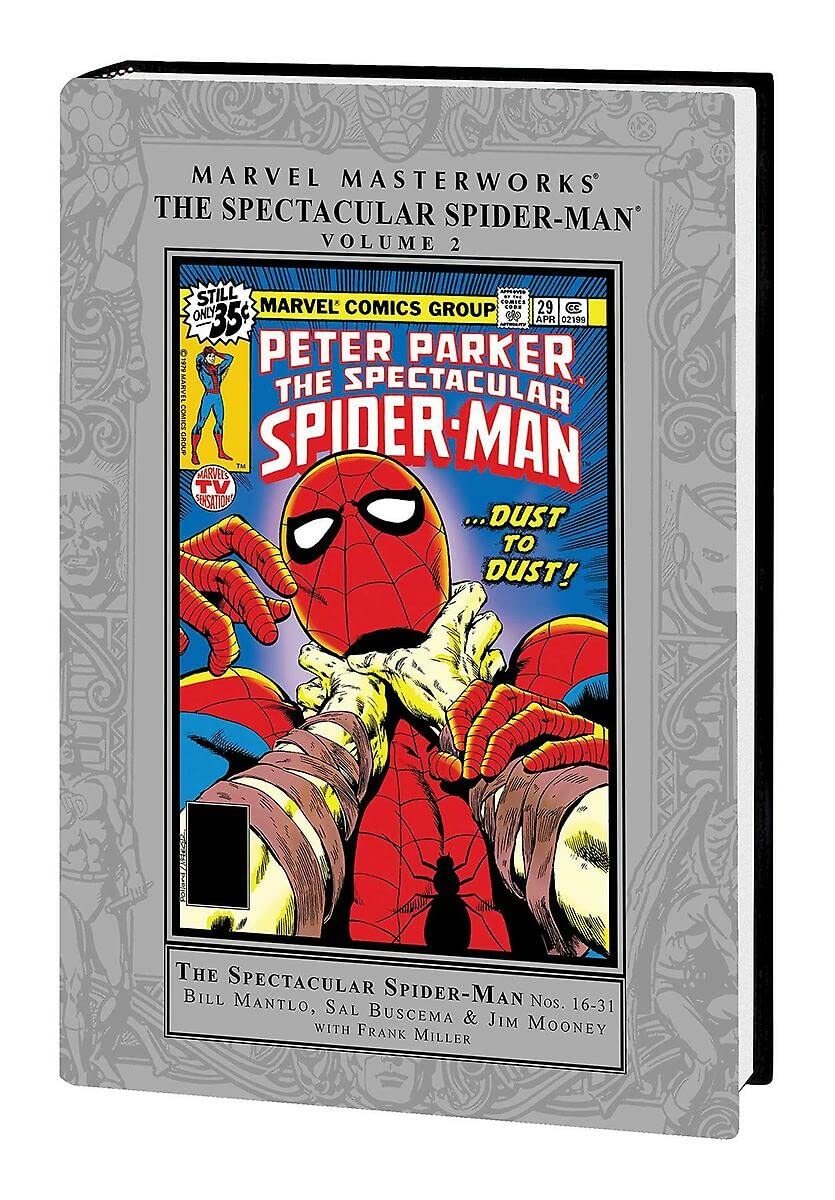
Marvel Masterworks Peter Parker The Spectacular Spider-Man Volume Two

This is a review of Marvel Masterworks Peter Parker The Spectacular Spider-Man Volume Two. I read the first volume a few years back, but didn’t review it. This Spider-Man title features the art & writing team of Sal Buscema and Bill Mantlo, although Mr. Buscema didn’t draw everything in this volume. The issues are quick reads, as are so many Marvel titles of that time period (late 1970’s).

Mr. Mantlo wrote a lot of comics, many of which I’ve read. He also created lots of characters. In two volumes of Spectacular Spider-Man, he created Razorback, The White Tiger, Carrion, Spider Amoeba, and the Hypno-Hustler. Sure, there’s a few misses (read: Hypno-Hustler), but Mr. Mantlo also created characters such as Rocket Raccoon, who went on to star in the Guardians of the Galaxy movies.

This is a normal Spider-Man title for that time period. We have shorter story arcs, and an overarching storyline involving the Maggia that percolates for most of the volume. Peter goes to California, fights a brainwashed Iceman, and then battles the Masked Marauder and his dumb android. Coincidentally, I first read about The Masked Marauder and his dumb android earlier this month in Daredevil, reviewed here, but this time the character is handled a whole lot better, because Mr. Mantlo is not pulling plot points out of his ass. We have an appearance by Daredevil and Moon Knight, and last but certainly not least – the debut of the Spider Amoeba, which to my knowledge doesn’t survive more than a single issue. This is a real shame.

Frank Miller did some of the artwork, here, which is exciting. We also have a sneaky reference to Peter Parker having sex. Since the comic creators of that time couldn’t show the characters actually having sex, they used hints and tasteful cutaway scenes, and – well – at twelve years old I wasn’t a very astute reader. I spent my first thirty-plus years reading superhero comics convinced that none of them ever had sex. My attitude can be summed up by a scene in Brian Bendis’ New Avengers run, when Wolverine refers to his son and Spider-Man says – ‘wait a minute. You’ve had sex?!’ That was my reaction, sort of, when I finally read between the lines.

This graphic novel won’t set the world on fire, but it’s a fast, fun read from an underrated writer.

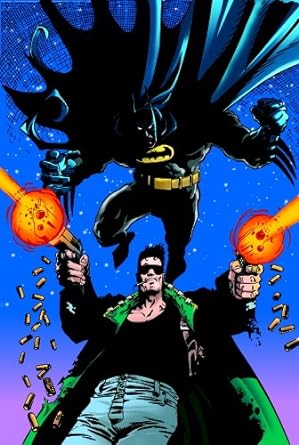
Tales of the Batman: Steve Englehart

This is a review of Tales of the Batman: Steve Englehart. I bought a bunch of Batman graphic novels over the holiday season. I’ve read and liked parts of Mr. Englehart’s West Coast Avengers and Green Lantern runs in the 1980’s, so I took a chance.

Reader, I was not disappointed. Mr. Englehart wrote the Joker Fish storyline, which apparently is famous even though I’ve never heard of it. Before this point, I’d never even heard of Silver St. Cloud. I don’t quite get why this run is so obscure, because Mr. Englehart has a unique take on the character. It might be because his original run on Batman is blink-and-you’ll-miss-it short, running eight issues in the 1970’s – but he makes those issues count. Mr. Englehart introduces a new villain, Dr. Phosphorous, and brings back two older villains (Dr. Hugo Strange and Deadshot) in an interesting way.

He also writes an awesome Joker. The Joker Fish storyline starts with the Clown Prince dumping toxic chemicals into the bay, which produces smiling fish. The Joker decides to cash in by copyrighting his Joker Fish, which means anyone eating a fish sandwich will owe him $$$. He then commences killing any bureaucrat that refuses to grant him the copyright.

And then there’s Silver St. Cloud, the love interest I’d never heard of. That might be because Mr. Englehart goes where few Batman writers have dared. Silver & Bruce start to date, and when it gets serious she figures out his secret identity. She leaves him, for a variety of reasons, and doesn’t return for 30 or so years (real time, not comic time), when the storyline is resolved – sort of.

As I’ve said, portraying Batman as an adult human being with certain, uh, needs, seems to be taboo amongst Batman writers. This is sad, because if you read more than two issues of Batman it becomes obvious that he really needs to get laid. So why doesn’t he? The simple explanation is the one Mr. Englehart went with. Batman declared war on crime as a boy, on a boy’s terms, which leaves no room for love. The simpler explanation, which is the one I go with, is that Batman is mentally ill.

I mean, whatever. Mr. Englehart pulls off the feat of having Batman be in a serious relationship with a woman that feels real, and it is additive rather than reductive to his character. The culmination of their affair occurs when Batman says something stupid, because he has no idea how to talk to women. This makes senses, as anyone who spends their nights dressed up as a bat will almost certainly lack basic social skills. The storyline as written in this volume feels unfinished, and I’m almost afraid to Google Silver St. Cloud’s name, as the easiest solution is to fridge her.

An underrated run that spans over three decades.

Hitman: A Rage in Arkham

This is a review of Hitman: A Rage in Arkham. Garth Ennis, the writer of Hitman, is notorious. In this volume, you get PG-13 Garth because this is a superhuman comic. Superhuman, not superhero. Tommy Monaghan has X-ray vision and he can read minds. He is also a hitman who does hits on superhumans. Deep down, Tommy is portrayed as a decent guy with a sense of honor, even though he’s not. You can take this as sly meta-commentary, or just treat it like good stupid fun. Since many 90’s comics can be described as just stupid, this was and continues to be a standout title.

Tommy is hired to kill the Joker in Arkham Asylum. This leads to an encounter with Batman and a ten-armed hellfiend called The Mawzer. The best part of this volume is when Monaghan does a bunch of side-jobs in Arkham for beer and pizza money. Tommy also goes on a date, and reads her mind to discover what kind of food she likes. Hey, it beats cyber-stalking. Oh, and he throws up on Batman’s shoes.

This title works best when it is the equivalent of an action movie. From my recollection, the earlier part of this series is a lot of fun but goes downhill in later volumes, but we will see. Monaghan’s sense of honor amounts to only killing what he considers to be the bad guys. He’s written as a decent guy with a tough, blue-collar job. Like most of us, he worries about money, but he wouldn’t dream of using his newly found mind-reading powers to sell Batman’s secret identity to the highest bidder.

The trick to writing Hitman – and any other title featuring The Punisher, The Vigilante, or any other character whose main occupation is murder – is to portray the character as street smart rather than a homicidal maniac/serial killer, and have the villains be so scummy they always deserve what they get. This is also the formula for the billion or so buddy cop movies I watched in the 80’s.

Recommended!

Marvel Masterworks Daredevil Volume Three

This is a review of Marvel Masterworks Daredevil Volume Three. You can read my reviews of the first two volumes here and here. Thus far, this series has been uneven. I can sum up this particular volume in four words: great art, awful writing. Matt Murdock takes his identity hijinks to the next level when he starts pretending that he has an identical twin brother named Mike Murdock.

Matt tells Foggy Nelson and Karen Page, his law partner/friend and secretary/potential lover, that Mike is Daredevil and not him. Apparently they believe him, even though Matt and Foggy roomed together in college and Matt never mentioned having a twin brother. Oh, and Matt and Mike are never in the same room. Writer Brian Michael Bendis adapted some of this material as fodder for his own Daredevil series, where DD’s secret identity is treated as an open secret and he’s portrayed as an out-and-out narcissist.

In this volume, Matt’s antics are portrayed as funny – I guess? To me, it seems a little weird to be lying to friends, coworkers, and potential lovers. This seems like the type of storyline a kid might find funny. The Cobra/Mr. Hyde storyline starts out dopey, with Daredevil swinging around Manhattan dressed as Thor, but becomes interesting when Mr. Hyde manages to deaden DD’s other senses. Unfortunately, the climax of this storyline strains credulity.

On the plus side, we have the debut of the Leap Frog, another great weirdo Daredevil villain. The Leap Frog dresses up in a green frog costume and hops around as he robs banks. He joins the Stilt Man, The Owl, The Gladiator, and The Purple Man in the pantheon of Daredevil’s rogue gallery. Verdict: you can see the holes in the writing a mile away, as the writer is so obviously phoning it in, and the art can only take this series so far.

For Daredevil completionists only.

Batman: The Long Halloween

This is a review of Batman: The Long Halloween. I read this graphic novel years ago and even owned a physical copy, which I lost during a move. The timeframe is around the same time as Batman: Year One, which I’ve never read. Batman is just starting out, aided and abetted by policeman Jim Gordon. At this point he’s basically the GCPD’s unofficially sanctioned vigilante. Just FYI: if the police department of your city has a big spotlight they use to summon a guy who dresses as a bat to fight crime, you should consider relocating to another city.

The plot: a serial killer is killing mobsters on holidays. The unknown killer, dubbed Holiday, uses a .22 equipped with a modified silencer (a baby pacifier). This upsets Batman, who wants to stop Holiday; district attorney Harvey Dent, who isn’t all that upset; and Calendar Man, a serial killer who spends the graphic novel channeling Hannibal Lecter in Arkham Asylum. The Joker is also irked, and expresses his frustration by attempting to kill everyone in Gotham City, but he’s not a big player here.

Each of the thirteen issues takes place during a holiday and usually features a member of Batman’s rogue gallery. It’s a simple framing device that works very well. Two standouts: the portrayal of Cat Woman and Two-Face are very well done; this volume is Two-Face’s origin story. The art is wonderful, and the writing is very good as well. The script has layers and is more complex than it looks, but by the end of the graphic novel I was still a little confused. I can’t say more, because spoilers.

A great read for Batman fans.

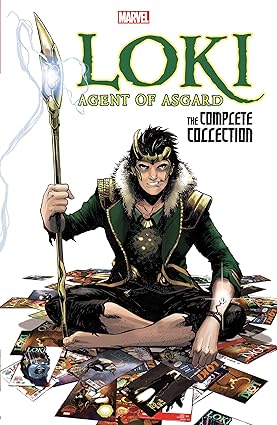
Loki Agent of Asgard: Complete Collection

This is a review of Loki Agent of Asgard: The Complete Collection. Please note that this review contains SPOILERS, so be forewarned. I recall seeing the original Avengers movie when it came out in 2012. There are a number of things I could say about that movie, but the only thing that’s related to this review is the fact that the actor who played Loki (the villain) made him interesting enough so that people liked the character, and Marvel picked up the baton from there.

The concept behind this graphic novel is that there’s a new Loki in town, and he (sometimes Loki is a she, but I’ll use he because Loki spends most of his time as a man) acts as Asgard’s agent, and for every good deed he does another one of old Loki’s heinous deeds is wiped from existence. This status quo lasts for three or four issues before the old Loki comes back.

I don’t know if this is a sly bit of meta-commentary by the authors, because at that time iconic Marvel characters were being replaced left and right, only to return after a year or two. At the time of this series’ release, Jane Foster was Thor. You should feel bad for Loki, because while Jane’s story arc lasted years, Loki’s story only lasts a few issues.

Turns out, the old Loki is from the future and the ‘new’ Loki is his younger self. Old Loki killed the real new Loki and took his place, but the current Loki has trouble accepting this. I am unsure why the current Loki thought he could move on from murdering himself, but perhaps he needs therapy. Anyway, the old Loki is so butt-hurt about being called the God of Lies (even though that’s what he is) he decides to bring on Ragnarok. Can the current Loki stop him, and does he even want to?

I admire this series for not jumping the shark. It comes close, though. My only quibble are the two tie-ins with company-wide crossovers, but in this day and age that can’t be helped. The authors do a good job of humanizing Loki, which makes us care about him and thus creates suspense. Loki is a god, which means he’s a beaucoup powerful character. You can’t kill him, any more than you can kill a story.

Recommended!

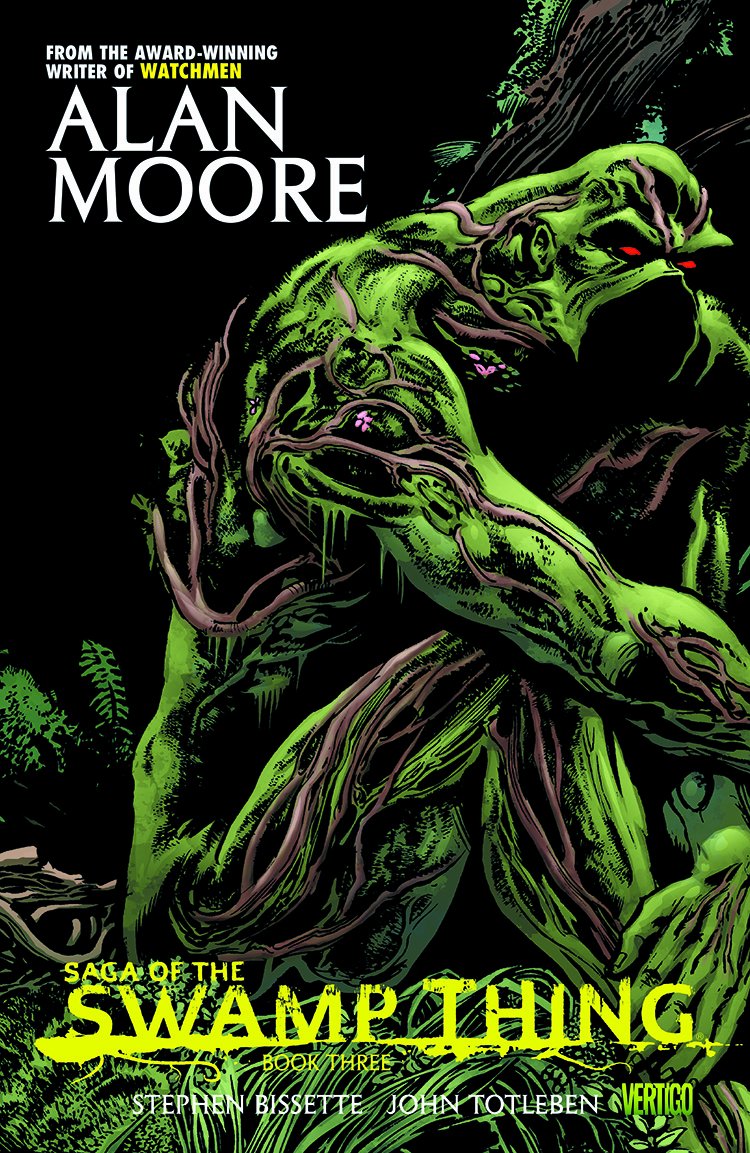
Saga of the Swamp Thing Book Three


This is a review of Saga of the Swamp Thing Volume Three, which continues Alan Moore’s groundbreaking run on the title. One of the eye-openers of this volume is reading John Totleben’s (the artist’s) introduction and realizing how much of a collaborative process comic creation is. The idea for Nukeface, one of the series more memorable characters, came from Mr. Totleben.

Swamp Thing continues be a status quo breaker. Most superhero comic series love the status quo and hate change. True, things may seem to change, but they almost always revert back to the mean. The tried and true method is to have the title character quit/die/get his or her brain swapped/be transported back in time or to another dimension. While they are on the shelf (it’s always temporary), someone else takes up the mantle.

This has happened to Spider-Man (brain swap with Dr. Octopus), Thor (unworthy of Mjolnir), Iron Man (Tony goes back on the sauce), Captain America (assassinated), Superman (killed by Doomsday), Green Lantern (quit, died), and so on. The most notable instance that I’ve read this year is the first volume of Knightfall, when Batman’s back is broken by supervillain/steroid freak Bane, and he is replaced by a guy who turned out to be so unpopular DC killed him and didn’t bother resurrecting him.

Anyway, Alan Moore’s version of Swamp Thing thrives on real change. After his tryst with Abigail Arcane, the Swampster encounters an irradiated hobo named Nukeface who calls everyone Ed. Even though Nukeface’s touch means death, he really isn’t a bad fellow. Like everyone else, Nukeface needs to eat and drink – except he eats & drinks toxic sludge.

Swamp Thing is irradiated, dies, and manages to regrow his body. Shit gets even realer with the arrival of John Constantine, a nasty Englishman who looks like a young Sting (of the Police) and is partly based on Jerry Cornelius (created by Michael Moorcock). Constantine is an occultist, and he leads Swamp Thing on a merry chase across the country, where he encounters aquatic vampires, a werewolf story (that was quite controversial at the time), and finally zombies.

A great horror comic.

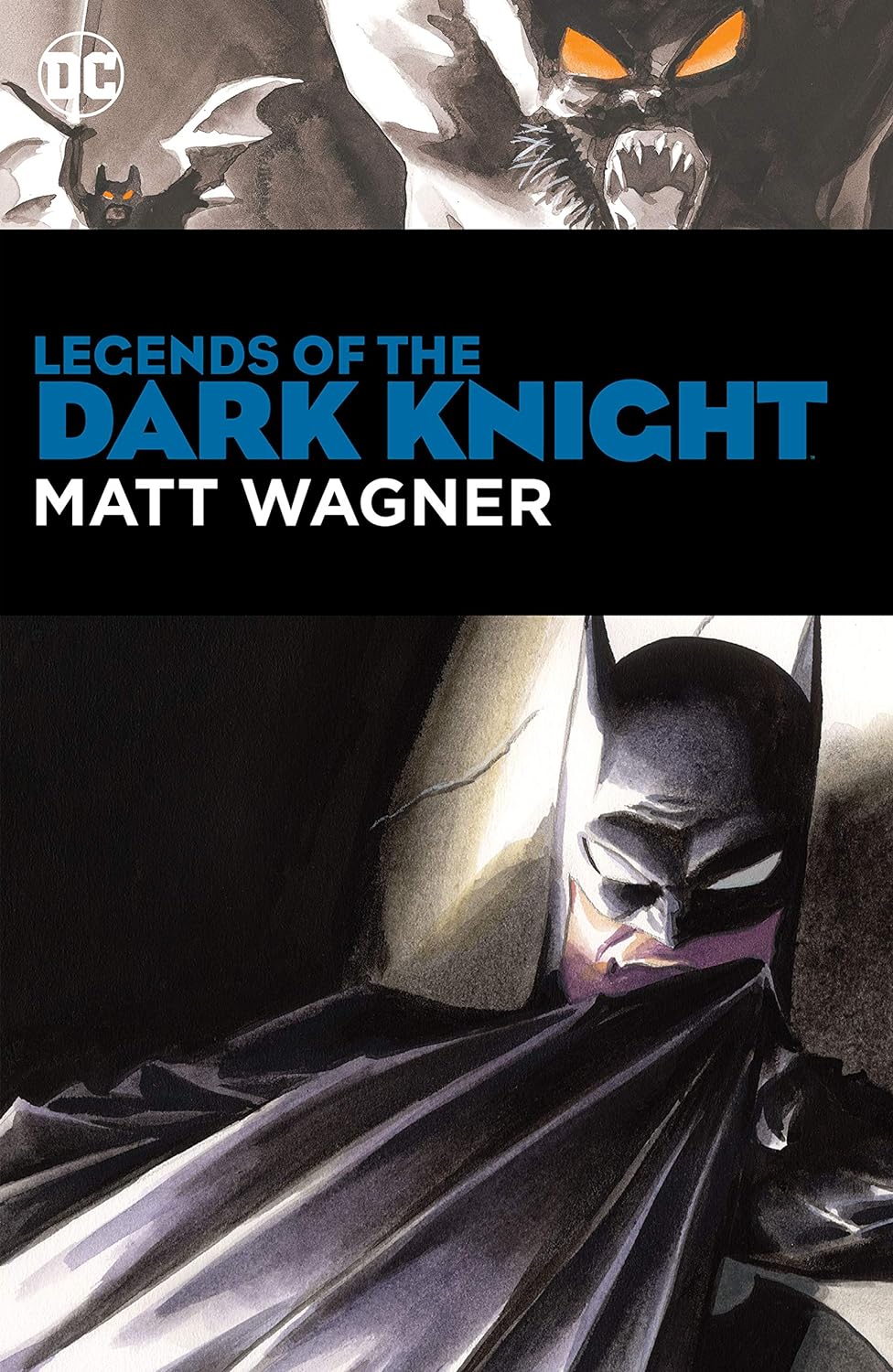
Legends of the Dark Knight: Matt Wagner


This is a review of Legends of the Dark Knight: Matt Wagner. As the book’s title tells us, this collection is written and partly drawn by comics legend Matt Wagner, creator of Grendel and the writer of Sandman Mystery Theatre. Mr. Wagner’s stories in this volume contain lots of plot, focus on side characters and side storylines, and bring a fresh perspective to The Dark Knight.

Unlike many comic scribes, who can’t, won’t, or don’t want to, Mr. Wagner goes there on a fairly regular basis. He doesn’t shy away from the dark side of human nature, writing violent, unsettling material. The other comic writer I can think of who does this is Robert Kirkman, the creator of The Walking Dead and Invincible. To me, it’s a jarring way of breaking the fourth wall.

This graphic novel contains three major storylines. The first is a Two-Face story, which is very good. There’s also a Riddler one-shot, where Ed Nigma hosts an underground game show that proves to be a big hit with the Gotham public. What interests me are the last two storylines, both of which involve Batman characters and villains from the 1940’s. The source material for these stories is contained in the Batman Golden Age volumes, some of which are reviewed here. These are retro stories that take place at the beginning of Batman’s career.

The first story involves a minor Batman villain named Hugo Strange, M.D. (medical deviant). Strange is fascinated with genetic engineering and seeks funding to continue his studies. Since he’s a mad scientist who probably locks his test subjects in the basement, nobody but mobsters will fund him. Trouble starts when it turns out that the wacky Strange does indeed lock his monstrous, mutated test subjects in the basement.

The second storyline involves a villain called the Monk. Originally a kitschy Dracula homage done by Kane & Finger, Wagner’s version of the Monk wears a bright red robe and hood, S&M style. The story is ambivalent about whether he’s really a vampire, but he’s certainly deranged. A few of the torture/dream sequences in this storyline are quite disturbing.

We also have Julie Madison, who in the 1940’s holds the distinction of being Bruce Wayne’s arm candy fiancée before she dumps him in favor of movie stardom. In these storylines, she’s really Bruce’s girlfriend, which is…look, superhero comics have always been terrible at depicting normal relationships. Historically, they’re aimed at 14-year-old boys, whose hormones are raging out of control.

IMO, having Batman behave like a normal human being is a risky proposition, because if you humanize Batman too much he falls apart as a character. That sort of happens here. Seeing Bruce lie to his girlfriend about – well, basically everything – hammers home the point that he’s an emotionally stunted man who is terrified of intimacy. The fact that he draws all the wrong conclusions when she leaves makes it worse. There’s a brief story after this one that shows us the present-day Batman, and let me tell you he is one sad motherclucker.

Recommended!

Marvel Masterworks Iron Man Volume Two

This is a review of Marvel Masterworks: Iron Man Volume Two. I expected nothing from this graphic novel. That’s because the first volume – read my review here – was a mish-mash of bad art, clichés, propaganda, and poorly developed characters.

I am happy to report that the series finds its legs in the second volume. We have the usual Marvel love triangle, this being between Tony Stark, Pepper Potts (secretary), and Happy Hogan (chauffer). We have the introduction of Marvel mainstays The Black Widow and Hawkeye, as villains. The Black Widow is a Russian spy and Hawkeye is her boy toy.

I like the characterization of Hawkeye, here. Think Captain America, without Cap’s brains and sterling moral compass. In the Black Widow’s first appearance, she’s teamed with another spy named Boris (the Black Widow’s first name is Natasha). Since I watched Rocky & Bullwinkle as a kid, I found this very funny but YMMV.

We also have our first Iron Man multi-issue storyline. If you read my review of the first volume, you’ll know that Tony Stark has shrapnel in his chest and the only thing keeping him alive is his chest plate. When Tony’s heart problems worsen, he can’t take off his Iron Man armor, and his employees/only friends Happy & Pepper begin to suspect Iron Man of doing away with him!

I should mention my favorite scene of this volume. Tony invents an anti-gravity machine, but doesn’t recall exactly how he did it. When the Black Widow visits, Tony knows she’s a Russian spy, but little Tony makes him demonstrate the anti-gravity device in an effort to impress her. Thus, it is the Black Widow and not Mr. Doll or Jack Frost who comes closest to ending Iron Man’s life. Instead of putting a bullet through Tony’s head, Natasha merely gasses him and steals the device. It’s a lot of fun watching his increasingly frantic efforts to get it back.

There’s also the time Tony leaves the briefcase with his Iron Man armor behind. The armor is stolen, and Tony must use his ugly old golden armor to fight the interloper, who goes crazy during the course of their battle. Instead of telling the world that Tony Stark is Iron Man, he tells everyone that he’s Iron Man. Whew, that’s a lucky one!

Stark is written as being careless at best, unreliable at worst. I am unsure if the word ‘narcissist’ was used much back then, but it describes Tony to a tee. He’s a self-centered workaholic who is obsessed with money and has no real relationships to speak of. Maybe it’s because he’s living on borrowed time, or maybe it’s just the way he is.

A decent volume, especially if you like Iron Man!