‘Oh, Whistle, and I’ll Come to You, My Lad’

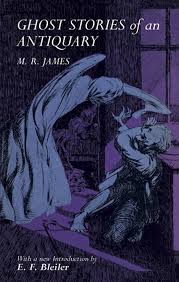
This is a review of the short story ‘Oh, Whistle, and I’ll Come to You, My Lad,’ written by M.R. James and published in his collection Ghost Stories of an Antiquary (published 1904). You can read my review of his short stories The Treasure of Abbot Thomas and Canon Alberic’s Scrap Bookhere and here.

Parkins is a Professor of Ontography who doesn’t believe in ghosts and is trying to improve his golf game. He goes on a golfing vacation, and his hotel room has two beds (foreshadowing alert!!!). One evening he comes across the ruins of an ancient temple by the beach, and finds an old whistle. When Parkins examines the whistle, he sees the following epitaph: Who is This Who is Coming? IMO, it should read Who is Coming, but the Victorians never met a word they didn’t like. The gist of the question is, if you want to find out who is coming blow the whistle.

Does this sound vaguely ominous? Would you blow the whistle? Well, Parkins does! As a doctor of Ontography, which doesn’t seem to be a real academic field, he doesn’t believe in ghosts. Ontography is the study and documentation of what is real; it is Philosophy and not Natural Science.

Basically, Parkins is a professor of the literal, which explains why he doesn’t believe in ghosts. I’m sure he doesn’t get subtext, either. This little in-joke adds another layer to the story. Too bad Parkins falls into the same trap as many others – i.e., mistaking his view of reality as actual reality. The whistle summons a thing that rises from the spare bed in the middle of the night, while Parkins lies quaking in his own bed. What will become of our plucky professor of Ontography?

James is great at creating ghosts, and this one is inspired. It seems mostly composed of bedsheets, and James himself says (through one of his characters) that the ghost’s power lies in frightening people out of their wits. To me, the scariest thing about this story – which might’ve freaked me out as a kid – lies in the violation of privacy. Parkins thinks he’s safe and alone in his bedroom, when it turns out he’s neither.

Recommended for ghost story lovers and lovers of Victorian supernatural fiction!

Canon Alberic’s Scrapbook

This is a review of the short story Canon Alberic’s Scrapbook, written by M.R. James and published in his collection Ghost Stories of an Antiquary (published 1904). You can read my review of his short story The Treasure of Abbot Thomas, here. Like the main character of this story, M.R. James was a scholar and a Cambridge man. If you like ghosts, he is a must read. Ghost Stories of an Antiquary contains many of his strongest stories.

An amateur archaeologist stops at an old church, where he spends the day looking at whatever amateur archaeologists look at. You’ll have to use your imagination, here. He’s accompanied by the church’s sacristan (a fancy name for keeper), an old man with a horrid case of nerves. Or is it nerves? Dennistoun – who lacks imagination – hears strange things in the church, but he’s not the sort to be put off by unexplained bumps or gouts of uncontrollable laughter.

Afterwards, the sacristan shows Dennistoun a scrapbook consisting of leaves scavenged from illuminated manuscripts. One picture stands out – King Solomon confronting a demon of the night. Dennistoun buys the book from the sacristan. Something follows him back to the hotel. Later that evening, he meets it. The end.

This is a creepy story. By today’s standards, the Victorian prose might seem overly ornate with flat characters, but you are here for the monsters. And James delivers. The demon in this story is described in a tactile way – spider eyes, shallow jaw, black hair, all bone and muscle. The creepiest thing is the monster’s closeness. Dennistoun sees its hand resting on the desk he’s working on, and then it rises up behind him. Talk about breathing down someone’s neck!

I like the idea of a haunted scrapbook. Using the magic of the Google, I searched for an image similar to the one found in the scrapbook. Alas, I found nothing. If anyone knows if an image answering to the description of King Solomon’s Dispute with a Demon of the Night exists, please let me know.

It is also interesting to note how clueless Dennistoun truly is. Or I suppose you could call him literal. There are ample warning signs that things are amiss – strange, unexplained laughter in the church, the old man’s eagerness to unload the scrapbook – which he ignores. I don’t blame him. Everyone knows monsters aren’t real.

Recommended for lovers of creepy and the supernatural.

The Treasure of Abbot Thomas

This is a review of the short story The Treasure of Abbot Thomas, written by M.R. James and first published in the collection Ghost Stories of an Antiquary. Going forward, I will be reviewing one horror short story/novel per week in addition to my graphic novel reviews. If there is anything specific people would like to see (more graphic novel reviews, horror movie reviews, etc.) please let me know.

A scholar and man-of-means goes on a treasure hunt that starts out exciting, if you call translating Latin texts, examining stained glass windows, and deciphering code exciting. Since he’s a scholar, it is to him! Others may not find this section to be as thrilling. The adventurous academic toddles off with his manservant to the abbey where the treasure is hidden, where he meets something he doesn’t expect, and that’s when the story picks up steam.

The main character is a scholar who is over inquisitive. James’ protagonists are not men of action. They are steeped in academia, amateur historians, antiquaries, college professors. All are curious, overstep, and pay a price. After encountering the supernatural, his protagonists always come away marked. Many die.

By today’s standards, this story is overwritten with an awkward frame, and I don’t think anyone over the age of nine will find it scary. On the other hand, it is atmospheric and spooky in parts, mainly because of the description of the monster. Mr. James reveals his creation in interesting ways, using senses besides sight and sound. The toad-guardian is described by touch (leathery) and smell (mold).

Because of pacing issues, The Treasure of Abbot Thomas isn’t one of James’ stronger stories, but it is still worth a read, especially if you enjoy ghost stories. The BBC produced a TV adaptation in the 1970’s, which is now streaming on Shudder. Recommended!