The Doll’s Ghost

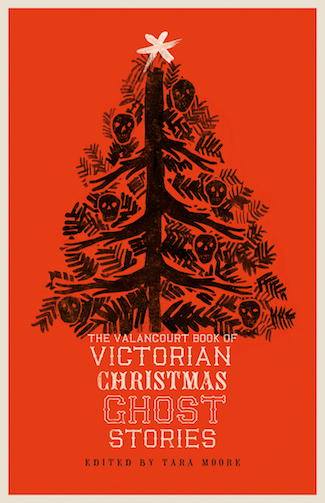
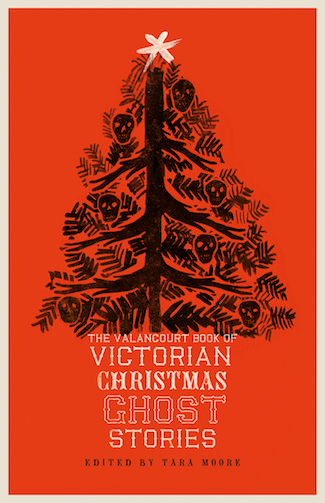
I am reviewing tales from The Valancourt Book of Victorian Christmas Ghost Stories for the month of December. Previously I’ve reviewed The Tapestried Chamber, Horror: A True Tale, Bring Me A Light!,’ and The Ghost’s Summons. This is a review of The Doll’s Ghost by Francis Marion Crawford.

The Doll’s Ghost takes place in London in the 19th century. A doll with a broken face is brought to a doll-doctor, who talks to his charges and even develops parental feelings about them. There are those who may feel that the above description alone makes the story creepy, but this tale was published in the late 19th century. The Victorians would see him as a harmless eccentric.

The doll-doctor has a twelve-year-old daughter, whom he tasks with returning the repaired doll to its family. She vanishes. The man races about London, frantic, but can’t find her until a little person who calls him Pa-Pa and bears a striking resemblance to the doll he just repaired leads him to her.

Yes, it’s the Living Doll trope! Instead of Chucky, think of Pinocchio. The author of this tale was born in Italy, so that would make sense. Anyway, this is a decent story with a plot that involves more than the main character encountering a ghost and then learning the ghost’s history.

It is also a scary story. I have mentioned the 19th century Victorian ghost being a stand-in for something else, and in this case it’s the fear of a missing/hurt child. Nowadays a story like this is tame, considering what’s out there, but by the standards of that time it was (and is) a well-made tale.

I hope people have enjoyed my short story reviews from The Valancourt Book of Victorian Ghost Stories. Next month I will be reviewing true crime books, along with my usual graphic novel reviews. If you have any suggestions as to what I should review, please let me know (my contact info. is under Review Policy). Happy Holidays to everyone!
The Ghost’s Summons

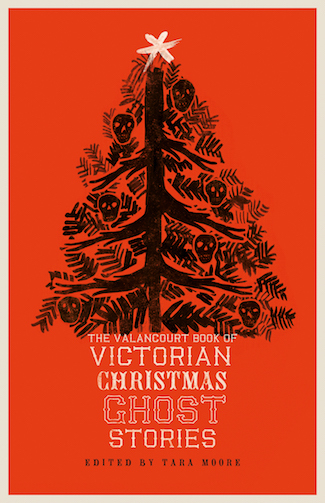
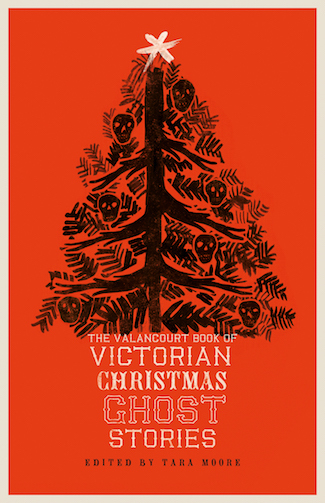
I am reviewing tales from The Valancourt Book of Victorian Christmas Ghost Stories for the month of December. Read my review of The Tapestried Chamber here, my review of Horror: A True Tale here, and my review of ‘Bring Me a Light!’ here. This is a review of The Ghost’s Summons, by Ada Buisoon.

A doctor is offered 1,000 pounds to attend a deathbed. The rub: his ‘patient’ is alive and seems to be in good physical health. His mental health is another matter, of course. The doctor agrees, because of the money. After giving his patient a sleeping draught, he replenishes the fire, pours himself a big glass of wine, and draws the curtains before retiring himself. Why the doctor feels comfortable falling asleep in a total stranger’s house is one of many details the story does not explain.

The doctor awakens at 1 a.m. to witness a specter with a severed left middle finger kill his patient! For obvious reasons, the doctor leaves the house in a hurry. When the widowed wife makes noises about contesting her husband’s will (where the 1,000 pounds is included) because her spouse wasn’t in his right mind, the doctor requests an audience.

I’m curious about his motives, here. Well, obviously his motive is money, but him coming forward raises all sorts of bizarre questions. ‘Hello, I’m the doctor your husband hired to attend him at his deathbed. I know I sort of left, uh, suddenly, when your husband died. By the way, the ghost that killed him had a severed left middle finger – just like you!’ The story ends when the doctor collects his 1,000 pounds from the ‘sinful’ (the author’s word, not mine) wife and goes on his way.

And that’s it. I suppose the takeaway is that the wife did away with her husband by – uhh, I don’t know. One of the things I have seen whilst reading these stories is that the ghost in the 19th century was often a stand-in for something else: fear of assault, wayward sexual urges, psychotic mothers-in-law, etc. Add murderous wives to the list.

The Ghost’s Summons did leave me with questions. I’d like to know if the doctor brought his pajamas with him. Maybe he took off his pants to prepare himself for slumber? Did he sleep in an armchair, or in the same bed as his patient? Like the other issues raised by this story, these questions go unanswered.

I am not being sarcastic when I say that I am unsure why this was ever published, as I don’t think it holds together. When a story has gaping plot holes with characters who act in bizarre ways that aren’t explained, the most likely explanation is bad writing. I don’t wish to malign the author, and it is possible that I’m judging this story by 21st century standards, when it was meant to be read during the witching hour with flickering candles and the wind whistling outside, etc., etc., etc. Whatever the reason, this story did not work for me.

‘BRING ME A LIGHT!’

I am reviewing tales from The Valancourt Book of Victorian Christmas Ghost Stories for the month of December. Read my review of The Tapestried Chamber here, and my review of Horror: A True Tale here. This is a review of ‘Bring Me a Light!,’ written by Jane Margaret Hooper.

A young lord inherits property, including an old house. Everyone is afraid of the house but the young lord, who snickers at the superstitious locals. This changes after the young lord spends a few hours in the house after sunset. He sees the ghost of an evil old woman setting a younger woman afire with a taper, and then passes out.

Afterwards, the young lord learns that one of his relatives killed her daughter-in-law this way. The clothes Victorian ladies wore were so flammable they could combust. I suppose the old woman had her reasons, but come on. As Bob Geldof said – ‘what reason do you need to be shown?’ For those unfamiliar with the Boomtown Rats, this line is from a song about a girl who shoots up her school. When asked why, she says ‘I don’t like Mondays.’

Sometimes we overthink things. Simply put, the old woman is a sadist who also killed her husband. She doesn’t get away with the murder of her daughter-in-law, as her son and the servants leave her alone in the house, where she has to witness the ghosts reenacting her wicked deeds for the rest of her short life.

There’s also talk of buried treasure, guarded by the ghost of the son, which seems like a silly add-on. The young lord doesn’t need money, and money isn’t crucial to the plot. I would argue that this story doesn’t have a plot. It has a situation, which is all that’s needed. The tale is designed to draw the reader in by tickling his/her curiosity, culminating in a single shocking scene which still packs a punch today. I could’ve done without the longish explanation afterwards, which dilutes the story’s power, but those Victorians sure loved them some exposition.

Bring Me A Light!’ is a nasty little story. Recommended.

Horror: A True Tale

I am reviewing tales from The Valancourt Book of Victorian Christmas Ghost Stories for the month of December in honor of the holidays. Read my review of The Tapestried Chamber, here. This is a review of Horror: A True Tale, published anonymously. Contrary to what I said in my first review, this story is set during Christmas.               

A well-to-do young woman celebrates the Yuletide holidays with her loving family. Her house is so crowded with love (and people) she has to sleep in a disused part of the house. Unfortunately, an escaped lunatic bursts into the bedroom and collapses on the bed. He grasps her sleeve so that she can’t get away. In the morning, she does gets away, but she’s aged decades from the shocking incident and her facial features are disfigured, although the lunatic didn’t touch her face. Her fiancée leaves her and she is now shunned by polite society, although it’s not clear if society shuns her, or if she does the shunning herself.           

Unlike The Tapestried Chamber, this is a scary story. People still tell variations of this tale today, mostly in urban legends – the man with a hook for a hand, the babysitter and the maniac, etc. We have a deep-rooted fear of being alone or isolated…and then realizing we aren’t really alone.                

This story has yet another layer. The narrator’s life is ruined by this event. I think it’s likely that the lunatic – who is depicted as being all-too real – did more than just grab her sleeve. The narrator seems to be stained from the experience. Is her disfigurement of the body or the mind? Did her features change that much, or did her supposed friends and family believe her to be tainted?

Anyway, this seems like a very modern story to me. It reads like an amalgam of morality tale and psychological horror, but what makes it stand out is the psychological horror. True, the language is archaic, but a sense of doom hangs over the tale. The author does a good job of foreshadowing (the butchered ewes!), and I also liked the addition of the nasty old great-aunt who might know more than she’s telling. The narrator herself is decidedly unreliable.

I doubt the Victorians viewed sexual assault as a topic for a ghost story. However, they as a society were obsessed with purity. Elements of this story seem to bear the mark of a morality tale – others try to turn the narrator from her chosen path (her sisters want her to spend the night with them!), but she ignores them and pays the price. What was her sin? Pride? Not being able to foretell the future?

Wait, I know: she slept in a bed not her own! I am being serious, here. The symbolism fits, but from a literal/logical point-of-view it makes no sense. However, horror is not about logic. Horror is all about how the world isn’t safe, how things don’t make sense, how bad things can randomly happen. Yes, it’s true: sometimes your life can be ruined by doing something as simple as sleeping in the wrong bed.

Recommended!

The Tapestried Chamber, by Walter Scott

It’s time for the holidays! In honor of this great occasion, I will be reviewing short stories from the Valancourt Book of Victorian Christmas Ghost Stories edited by Tara Moore during the month of December. Please note that the stories themselves are not set during Christmas (they are English, however). Reading/telling ghost stories during the winter holidays was a Victorian tradition, according to the introduction. Also: SPOILER ALERT.

This is a review of The Tapestried Chamber, by Walter Scott. Our hero is General Browne, who has just returned from the end of the American war. He’s a man’s man, the sort of fellow who takes ‘manly exercise.’ What is manly exercise? Squat thrusts? Breaking rocks with his bare fists? Racing across the moors naked with a tree trunk strapped to his back? I wish I knew.

The General meets his good friend, Lord Woodville, proud owner of an ancient castle. The Lord puts his old pal up for the night in an older bedroom nicknamed The Tapestried Chamber. In the morning, General Browne is in a greatly discomfited state. Turns out, he was accosted by a fiend in the shape of a woman! She crawled into bed with him and leered at him, and he was immediately unmanned. I know people who have fantasies about that sort of thing, but the Victorians were a different breed.

Turns out Lord Woodville knew the room had a bad reputation, but put the General in there anyway as an experiment. He doesn’t phrase it that way, of course. Later, on the pretext of showing the General the family portraits, he points out the portrait of the perpetrator, ‘a wretched ancestress.’ General Browne leaves the castle, presumably a broken man.

There are two characters in this story, and Lord Woodville is by far the more interesting. For those who insist his intentions were pure, answer me this: if he wanted to shatter the Tapestried Chamber’s awful reputation, why not sleep there himself? All I can say is, the General should choose better friends.

This is a fun read, but you will be disappointed if you expect to be terrified. The author entreats us to read his story out loud in the middle of the night for maximum effect. Since I read this in the dining area of a Wegman’s during lunch, I did not follow his instructions. It doesn’t matter, because I did not find this story to be scary, or even mildly creepy. If I read this story out loud in the middle of the night by the light of a flickering candle, with the wind howling outside my window…I still wouldn’t find it scary.

If you like ghost stories and are interested in witnessing the bizarre ways the Victorians expressed their smothered sexual urges, give this story a try.