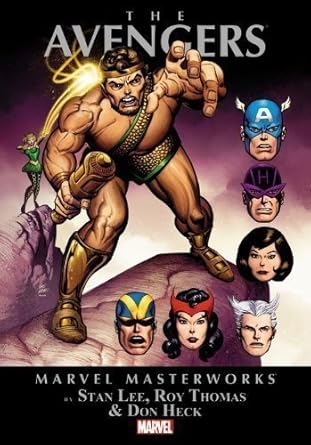
Marvel Masterworks: The Avengers Volume Four

This is a review of Marvel Masterworks: The Avengers Volume Four. See what I thought of the first three volumes here, here, and here. A quick review of the first forty issues of the Avengers –started slow, but got better once the creators started making the team members fight each other more than the villains. Jack Kirby (comic creator) is gone, Stan Lee (writer) is leaving, and Roy Thomas’ (writer) time is upon us.

This volume, the roster expands as Hank Pym – aka Ant Man, aka Goliath, aka Yellowjacket, aka Ultron’s Daddy – and The Wasp rejoin the team. The Greek God Hercules, who at one point we see playing ukulele at a tiki bar, also joins after a mild misunderstanding – Herc tries to kill them all – gets ironed out. Hawkeye wants his girlfriend The Black Widow to join the team, also, and she’d be an interesting addition, but it doesn’t happen because reasons.

The tension between Hawkeye and Captain America is gone, replaced by tension between Goliath and Hawkeye. Goliath is written as a loose cannon. Besides that, he’s sort of a dick. He is also the team’s strong-man, which is weird considering he’s a scientist. What kind of scientist, do you ask? If forced to answer, I would call Pym a physicist, just because the power to grow and shrink seems to be quantum physics. What he has, of course, is a doctorate in handwavium.

The team fights the Sons of the Serpent, a two-issue storyline that today would be an 18 part event. The Living Laser storyline features one of the first realistic depictions of a stalker in comic books I’ve ever seen. There are Ultroids in Bavarian villages and yet another battle with the Sub Mariner, who manages to uncover the Cosmic Cube.

I have a confession to make. Sometimes reading 60’s era Marvel comics (besides Jack Kirby and Steve Ditko) is a real slog, but I look forward to these volumes. After a rough first volume, this series is a must-read. Recommended!

Best/Worst Graphic Novels Read in 2024

Ahh, end of the year lists. Everybody’s doing them, so why not me? Here’s the five best and five worst graphic novels I’ve read in 2024. The rules are simple: 1. I read the graphic novel in 2024. 2. This is my first read of the graphic novel.

Batman: Dark Victory is great and would make this list, but I already read it. Graphic novels that are part of a larger series that I have not read count, even if I’ve read the earlier volumes. Example: Love & Rockets, which is on this list.

BEST (in alphabetical order):

Conan: Birth of a Legend, by Kurt Busiek and Cary Nord. This is the best take I’ve ever seen on Conan, made more impressive by the fact that it covers his lost childhood and manages not to be boring.

Daredevil Ultimate Collection: Volume Two, by Brian Michael Bendis and Alex Maleev. I view this as a noir comic rather than a superhero comic, especially since the superhero in question is written as a narcissistic donkey.

Human Diastrophism: Love & Rockets, by Gilbert Hernandez. The characters here age, change, and even die. In this volume, Luba leaves Palomar and we meet aged hitman Gorgo.

Incal: Black Incal, by Alejandro Jodorowsky and Moebius. Hallucinatory science fiction that has spawned countless imitators.

Kamandi: The Last Boy on Earth, by Jack Kirby. Inspired by Planet of the Apes, this postapocalyptic comic by Jack Kirby moves at a breakneck pace.

WORST (in alphabetical order):

I, Vampire. This series might’ve had promise, but the creators left after a few issues, and the second creative team jumped the shark, and by the time the third creative team found its footing the series ended.

Justice League of American: The Marriage of the Atom and Jean Loring. If you are interested in Brad Meltzer’s Identity Crisis, you might enjoy this . Most will find it a slog to read, with too many characters, confusing storylines, and no meta-plot.

Marvel Masterworks Daredevil: Volume Three, by Stan Lee & Gene Colan. Mike Murdock, Matt’s identical twin who is also blind and who none of Matt’s friends have ever met, takes center stage as the creators see how high they can fly before their feathers melt and they plunge into the ocean.

Marvel Masterworks Sub-Mariner: Volume Two, by Roy Thomas & Bill Everett. This is a step-up from the first volume, with some eye-opening imagery and also art by Golden Age artist Bill Everett, but it won’t be of interest to anyone but the biggest Sub-Mariner fans.

World’s Finest Silver Age Volume Two. If you want to see Indian chief Superman and a crackpot inventor with a salad colander on his head torment the Dynamic Trio, then look no further.

The Human Target

This is a review of The Human Target by Tom King (writer) and Greg Smallwood (artist). Technically, this is a twelve-issue miniseries in two volumes, and my review covers both volumes. SPOILER WARNING. I reveal the killer’s identity, so if you don’t want to know whodunit, read no further.

Let’s get this out of the way. I can see how this book would upset people. A big part of what Mr. King does is give new spins on older, more obscure characters. Other comic writers who do this are Brian Michael Bendis and, of course, Alan Moore. If you are the nostalgic type who has a stake in the JLI (Justice League International) and its characters, I would not read this. You won’t like it.

Why not? There was a show I watched as a kid called The Brady Bunch, which was a dumb kid’s show. That’s fine, because I was a dumb kid. After The Brady Bunch ended, they did a spinoff called The Brady Brides that dealt with all sorts of adult themes that never lasted longer than an episode. Marcia would have a drinking problem, and then it’s never referred to again. I loved The Brady Bunch. I think I watched a single issue of The Brady Brides, and hated it so much I never watched another.

People have nostalgia for the characters of the JLI. I read the first few years of the run, 30+ years ago. It featured a group of obscure, often goofy, characters. We have Guy Gardner, the Rambo Green Lantern; Booster Gold, who comes from the future; Fire and Ice, who hail from Brazil and Norway; Rocket Red, a Russian hero; Blue Beetle, best known for BWAH HAH HAH. No, seriously. That’s what he’s known for.

Turns out, the characters of the DC Universe harbor deep, dark secrets and untold trauma. If you’ve read Brad Meltzer’s Identity Crisis, where Ralph Dibny’s wife Sue is raped and then murdered, you’ll know what I mean. Why would people read that? I read it back in the day, but at that point I’d been reading superhero comics for decades. Basically, it’s adding a degree of noir – not realism – to your comics. If it’s done well, think Watchmen. If it’s not done well, we have ASSHOLE BATMAN and The Blue Beetle being shot in the head.

Would I read it today? Well, I read the first volume of this graphic novel, skimmed the second, and then called it quits. Skimming means I read the issues quickly, a skill perfected from years of waiting in line at the comic book store. Did I hate this graphic novel that much? No, I thought it was depressing. At its heart, The Human Target is all about watching an emotionally stunted man die.

The plot: Christopher Chance, who goes by the moniker the Human Target, impersonates Lex Luthor. That is Mr. Chance’s job, taking the bullet for his client. In this instance, it’s literal. Chance is shot impersonating Luthor, but that’s what saves his life. He spits out the poisoned coffee he drank earlier, but the poison is still in his system, which means he has twelve days to live. One of the interesting things about this graphic novel is that Luthor is one of the few characters who is what he appears to be.

Okay, then. Besides everyone, who’d want to kill Luthor? Hold on, there’s a clue. The poison has trace radiation from a certain dimension, blah blah blah. Turns out a member of the JLI poisoned the coffee, and Chance has twelve days to find the culprit. Lo and behold, the culprit turns out to be Ice, the last person you’d expect. Why? I read the book, and I don’t know why. Yes, she died (and then got better), and it was sort of Luthor’s fault, but who in the DC Universe hasn’t died? Maybe she’s unstable because she killed her father and grandfather as a child and then made up a dumb story about being raised by a lost tribe? Most superhero origins are traumatic, so what does that prove?

Ice is an enigma. In noir terms, she’s the femme fatale. Whether or not she fits into that mold, or whether she’s jammed into it, I leave to the reader. There are two ways to read Ice – the first is that she feels awful about accidentally, you know, killing Chance; the second is that she does everything she can to derail Chance’s investigation. Either interpretation seems valid to me. Or it could be both, because two things can be true at the same time. It’s hard to tell, because a lot of what she does and says is performative. The creators wouldn’t have Chance fall for the woman who kills him, right? BWAH HAH HAH!

The technical term for Chance is an alphahole. What’s that? Well, combine an alpha male with an asshole and – well, you get the idea. The alphahole is a staple in romance novels, where he has attractive qualities and is always redeemable (after he grovels). Chance is a realistic alphahole in that he has no friends, family, or lovers. No, that’s not true. Chance has one friend, who has the worst cover identity in the universe. The guy owns a pizza parlor, doesn’t know a word of Italian, and microwaves his pizza. Since Chance has killed many people and will also serve your prison sentence for you, he isn’t a nice guy. He is absolutely positively no doubt terrified of any hint of intimacy.

The Human Target is an uneasy fusion of superhero comics and noir. Plot-wise, it’s tight; character-wise, it’s all over the place. Let me be clear: I have no particular love or nostalgia for these characters. The reinterpretations didn’t work for me, and I thought Chance was an extremely depressing character. Maybe this graphic novel will work for you, but that’s my take. Anyway, next week I will have a best/worst of 2024 list for the New Year.  

The Doll’s Ghost

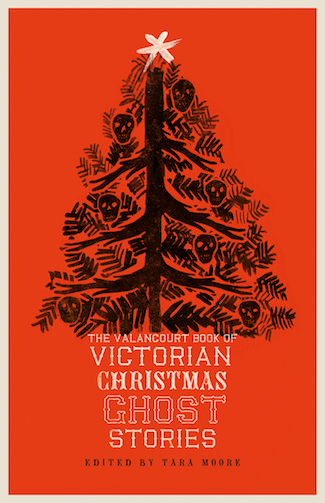
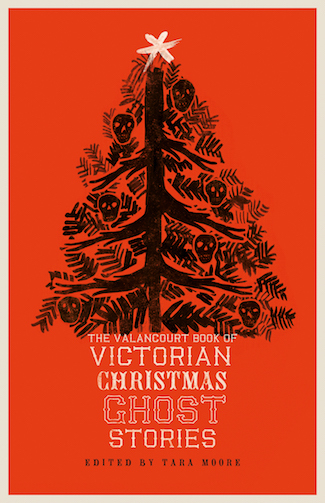
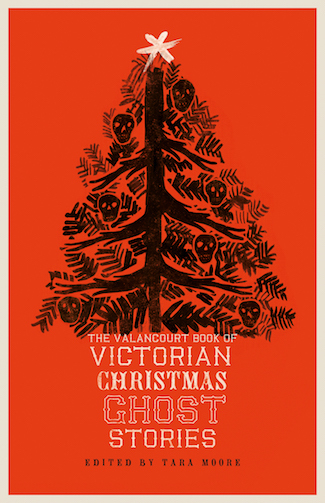
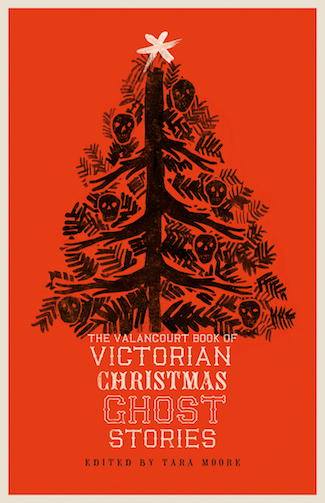
I am reviewing tales from The Valancourt Book of Victorian Christmas Ghost Stories for the month of December. Previously I’ve reviewed The Tapestried Chamber, Horror: A True Tale, Bring Me A Light!,’ and The Ghost’s Summons. This is a review of The Doll’s Ghost by Francis Marion Crawford.

The Doll’s Ghost takes place in London in the 19th century. A doll with a broken face is brought to a doll-doctor, who talks to his charges and even develops parental feelings about them. There are those who may feel that the above description alone makes the story creepy, but this tale was published in the late 19th century. The Victorians would see him as a harmless eccentric.

The doll-doctor has a twelve-year-old daughter, whom he tasks with returning the repaired doll to its family. She vanishes. The man races about London, frantic, but can’t find her until a little person who calls him Pa-Pa and bears a striking resemblance to the doll he just repaired leads him to her.

Yes, it’s the Living Doll trope! Instead of Chucky, think of Pinocchio. The author of this tale was born in Italy, so that would make sense. Anyway, this is a decent story with a plot that involves more than the main character encountering a ghost and then learning the ghost’s history.

It is also a scary story. I have mentioned the 19th century Victorian ghost being a stand-in for something else, and in this case it’s the fear of a missing/hurt child. Nowadays a story like this is tame, considering what’s out there, but by the standards of that time it was (and is) a well-made tale.

I hope people have enjoyed my short story reviews from The Valancourt Book of Victorian Ghost Stories. Next month I will be reviewing true crime books, along with my usual graphic novel reviews. If you have any suggestions as to what I should review, please let me know (my contact info. is under Review Policy). Happy Holidays to everyone!

The Incal: The Black Incal

This is a review of The Incal: The Black Incal, by Alexandro Jodorowsky and Moebius. This is a science fiction comic put out by Humanoids, an European publisher. I haven’t read many Humanoids comics. My first impression was Heavy Metal coupled with Eurotrash, a heady whiff, but that’s not true. They are having a huge Humble Bundle sale, here.

A private eye named John DiFool is hired to escort a beautiful young aristocrat to a brothel, where she mates with a man with a wolf’s head. At midnight she transforms into an old woman. Fleeing an angry WolfHead, DiFool takes refuge in futuristic sewers where he meets an alien with a knife in his back. The dying alien gives him the Incal, which at first glance resembles a glowing cigarette lighter.

With me so far? In American comics, we’d be three issues in, but this graphic novel is just getting started. DiFool escapes getting thrown into an acid lake and then retrieves his bird, who is acting like the Messiah, preaching and healing people (DiFool jammed the Incal down the bird’s throat), before witnessing the clonage of His Supreme Highness and then traveling to a huge necropolis, where robots are made from human parts. And that’s before we meet the Black Incal.

Whew, that’s a lot of plot. Also: great art by Moebius. This is a futuristic dystopia with a healthy dose of anarchy/satire. There’s also some nudity and sex scenes, which aren’t too graphic. I did not know this came out in 1980. If you read it, you’ll see its influence in the aesthetic of movies like Total Recall, The Fifth Element, and Blade Runner. In comics, think of Cynosure in John Ostrander’s Grimjack, Warren Ellis’ Transmetropolitan, Judge Dredd.

John DiFool is an EveryMan. Well, given his name I guess he’s stupider than that. I don’t know what the Incal is, but it is sentient and can talk. There isn’t much of a plot yet, just lots of spectacle and great art. Everyone wants the MacGuffin – er, I mean the Incal. This is a great science fiction comic and is thus highly recommended!

The Ghost’s Summons

I am reviewing tales from The Valancourt Book of Victorian Christmas Ghost Stories for the month of December. Read my review of The Tapestried Chamber here, my review of Horror: A True Tale here, and my review of ‘Bring Me a Light!’ here. This is a review of The Ghost’s Summons, by Ada Buisoon.

A doctor is offered 1,000 pounds to attend a deathbed. The rub: his ‘patient’ is alive and seems to be in good physical health. His mental health is another matter, of course. The doctor agrees, because of the money. After giving his patient a sleeping draught, he replenishes the fire, pours himself a big glass of wine, and draws the curtains before retiring himself. Why the doctor feels comfortable falling asleep in a total stranger’s house is one of many details the story does not explain.

The doctor awakens at 1 a.m. to witness a specter with a severed left middle finger kill his patient! For obvious reasons, the doctor leaves the house in a hurry. When the widowed wife makes noises about contesting her husband’s will (where the 1,000 pounds is included) because her spouse wasn’t in his right mind, the doctor requests an audience.

I’m curious about his motives, here. Well, obviously his motive is money, but him coming forward raises all sorts of bizarre questions. ‘Hello, I’m the doctor your husband hired to attend him at his deathbed. I know I sort of left, uh, suddenly, when your husband died. By the way, the ghost that killed him had a severed left middle finger – just like you!’ The story ends when the doctor collects his 1,000 pounds from the ‘sinful’ (the author’s word, not mine) wife and goes on his way.

And that’s it. I suppose the takeaway is that the wife did away with her husband by – uhh, I don’t know. One of the things I have seen whilst reading these stories is that the ghost in the 19th century was often a stand-in for something else: fear of assault, wayward sexual urges, psychotic mothers-in-law, etc. Add murderous wives to the list.

The Ghost’s Summons did leave me with questions. I’d like to know if the doctor brought his pajamas with him. Maybe he took off his pants to prepare himself for slumber? Did he sleep in an armchair, or in the same bed as his patient? Like the other issues raised by this story, these questions go unanswered.

I am not being sarcastic when I say that I am unsure why this was ever published, as I don’t think it holds together. When a story has gaping plot holes with characters who act in bizarre ways that aren’t explained, the most likely explanation is bad writing. I don’t wish to malign the author, and it is possible that I’m judging this story by 21st century standards, when it was meant to be read during the witching hour with flickering candles and the wind whistling outside, etc., etc., etc. Whatever the reason, this story did not work for me.

The Flash by Mark Waid, Book Two

This is a review of The Flash by Mark Waid, Book Two. You can read what I thought of the first volume, here. This review requires a bit of Flash-edification to makes sense. The original Flash is Jay Garrick (alive), Barry Allen (dead) is his successor, and Wally West (Barry’s nephew) is the current Flash (very alive). This graphic novel starts innocently enough with a team-up between Wally West and Green Lantern Hal Jordan, where they face off against villains Hector Hammond and Gorilla Grodd. Rex the Wonder Dog guest stars!

After an encounter with a new Doctor Alchemy and a schmaltzy Christmas story, we witness the return of Barry Allen, the original Flash. Barry died in the first Crisis, back in the 1980’s. His return would not be unprecedented as superheroes die, are replaced by newer models, and return from the dead all the time. And this CERTAINLY IS Barry Allen. It must be, because he knows everything about Barry’s life. It’s not like he traveled from the future – the 25th century, maybe? – and read the authorized biography of Barry Allen. Of course not.

Anyway, Uncle Barry starts acting strangely, and it’s not long before he ZOOMs off on a rampage. The crime: the city failed to honor his memory when he was dead. Jay Garrick, the original Flash, rallies the troops – oldsters Johnny Quick and Max Mercury. Except this Flash – whoever he may be – is faster than any of them.

This is one of my favorite Flash storylines, period. Mr. Waid’s writing is a fusion of Silver Age ideals (optimistic, fun to read, good vs. evil) and the emotional depth (some would say nihilism) of the Modern Age. Wally is rejected by his hero, which devastates him, and that’s only the start. When Barry goes on a rampage, Wally gets thrashed because he isn’t as fast. Let’s face it – in most cases, The Flash is the most powerful guy in the room, but here Wally is a distant #2. Can he overcome his own self-doubt and fear to finally fill his mentor’s shoes?

Highly recommended!

‘BRING ME A LIGHT!’

I am reviewing tales from The Valancourt Book of Victorian Christmas Ghost Stories for the month of December. Read my review of The Tapestried Chamber here, and my review of Horror: A True Tale here. This is a review of ‘Bring Me a Light!,’ written by Jane Margaret Hooper.

A young lord inherits property, including an old house. Everyone is afraid of the house but the young lord, who snickers at the superstitious locals. This changes after the young lord spends a few hours in the house after sunset. He sees the ghost of an evil old woman setting a younger woman afire with a taper, and then passes out.

Afterwards, the young lord learns that one of his relatives killed her daughter-in-law this way. The clothes Victorian ladies wore were so flammable they could combust. I suppose the old woman had her reasons, but come on. As Bob Geldof said – ‘what reason do you need to be shown?’ For those unfamiliar with the Boomtown Rats, this line is from a song about a girl who shoots up her school. When asked why, she says ‘I don’t like Mondays.’

Sometimes we overthink things. Simply put, the old woman is a sadist who also killed her husband. She doesn’t get away with the murder of her daughter-in-law, as her son and the servants leave her alone in the house, where she has to witness the ghosts reenacting her wicked deeds for the rest of her short life.

There’s also talk of buried treasure, guarded by the ghost of the son, which seems like a silly add-on. The young lord doesn’t need money, and money isn’t crucial to the plot. I would argue that this story doesn’t have a plot. It has a situation, which is all that’s needed. The tale is designed to draw the reader in by tickling his/her curiosity, culminating in a single shocking scene which still packs a punch today. I could’ve done without the longish explanation afterwards, which dilutes the story’s power, but those Victorians sure loved them some exposition.

Bring Me A Light!’ is a nasty little story. Recommended.

Marvel Masterworks: The Sub-Mariner Volume Two

This is a review of Marvel Masterworks: The Sub-Mariner Volume Two. You can read my review of the first volume, here. Warlord Krang, Namor’s archnemesis from the previous book, only makes a brief appearance. He’s replaced by Daredevil villain The Plunderer, aka Kazar’s Evil Brother, aka The Bad Seed, who wants to conquer the earth by arming his men with VIBRA-GUNS. Namor has a rock dropped on his head and then is buried in an avalanche, while Atlantis is destroyed for the second or third – or maybe the fourth – time. I lost count.

Prince Namor is as gullible and hot-tempered as ever. He has no control over his emotions, declaring war on the surface world in one panel and saving humans from certain death in the next. The meta-story revolves around his never-ending frustration with the surface world. He’s banned from Atlantis because of a stupid misunderstanding, and then leaves his people to fend for themselves after Atlantis is destroyed – when his subjects need him most. This is Namor’s fatal flaw, much like Magneto’s fatal flaw – his narcissism and anger ensure that it will always be about him. Namor must avenge this and wreak vengeance on that, blah blah blah. It’s a very childlike outlook.

The stories are less disjointed, but still way too reliant on coincidence, misunderstandings, and bad luck. The scene where Atlantis is destroyed is worth mentioning. The underwater city is carpet-bombed by a U.S. submarine; earlier, The Plunderer destroys a domed city full of humans. The visuals are striking, and makes me wonder if the creators were influenced by the footage and imagery of the Vietnam War. I don’t know if this is true, btw.

This volume should appeal to Sub-Mariner fans and lovers of obscure characters. Namor is interesting in that he’s a gray character – he’s fought alongside the Fantastic Four as well as Dr. Doom. Another possible draw is Bill Everett – the creator of The Sub-Mariner – doing the pencils and/or inkwork in a few of these issues. All in all, an interesting read about a flawed – but interesting – antihero.

.

Horror: A True Tale

I am reviewing tales from The Valancourt Book of Victorian Christmas Ghost Stories for the month of December in honor of the holidays. Read my review of The Tapestried Chamber, here. This is a review of Horror: A True Tale, published anonymously. Contrary to what I said in my first review, this story is set during Christmas.               

A well-to-do young woman celebrates the Yuletide holidays with her loving family. Her house is so crowded with love (and people) she has to sleep in a disused part of the house. Unfortunately, an escaped lunatic bursts into the bedroom and collapses on the bed. He grasps her sleeve so that she can’t get away. In the morning, she does gets away, but she’s aged decades from the shocking incident and her facial features are disfigured, although the lunatic didn’t touch her face. Her fiancée leaves her and she is now shunned by polite society, although it’s not clear if society shuns her, or if she does the shunning herself.           

Unlike The Tapestried Chamber, this is a scary story. People still tell variations of this tale today, mostly in urban legends – the man with a hook for a hand, the babysitter and the maniac, etc. We have a deep-rooted fear of being alone or isolated…and then realizing we aren’t really alone.                

This story has yet another layer. The narrator’s life is ruined by this event. I think it’s likely that the lunatic – who is depicted as being all-too real – did more than just grab her sleeve. The narrator seems to be stained from the experience. Is her disfigurement of the body or the mind? Did her features change that much, or did her supposed friends and family believe her to be tainted?

Anyway, this seems like a very modern story to me. It reads like an amalgam of morality tale and psychological horror, but what makes it stand out is the psychological horror. True, the language is archaic, but a sense of doom hangs over the tale. The author does a good job of foreshadowing (the butchered ewes!), and I also liked the addition of the nasty old great-aunt who might know more than she’s telling. The narrator herself is decidedly unreliable.

I doubt the Victorians viewed sexual assault as a topic for a ghost story. However, they as a society were obsessed with purity. Elements of this story seem to bear the mark of a morality tale – others try to turn the narrator from her chosen path (her sisters want her to spend the night with them!), but she ignores them and pays the price. What was her sin? Pride? Not being able to foretell the future?

Wait, I know: she slept in a bed not her own! I am being serious, here. The symbolism fits, but from a literal/logical point-of-view it makes no sense. However, horror is not about logic. Horror is all about how the world isn’t safe, how things don’t make sense, how bad things can randomly happen. Yes, it’s true: sometimes your life can be ruined by doing something as simple as sleeping in the wrong bed.

Recommended!