Sandman Deluxe Edition Book Two

This is a review of Sandman Deluxe Edition Book Two. I read the first volume back in January. I think they might have changed the order of a few of the issues here and there, but am unsure. It’s been a long time since I read the original run.

The A-storyline begins with a meeting between Dream and his family, Dream, Death, Destiny, Desire, Despair, Delirium (known as The Endless). Desire goads Dream about the lover he banished to Hell for defying him. Dream, apparently unaware that he acted badly, notifies Lucifer that he’s coming to Hell to get his ex-lover back.

Lucifer responds by…retiring. Yes, you heard that right. Lucifer resigns as the Lord of Hell, kicks everyone out, locks Hell up, and gives Dream the key. Morpheus is now the proud owner of his own Hell, which turns out to be prime real estate. Pretty soon gods and entities from other pantheons are lining up to try to persuade the Dream Lord to give them Hell.

There are also a number of single-issue stories, featuring cats once owning the universe, an imprisoned Muse, Element Girl, a very special performance of The Tempest, Augustus Caesar, and Johanna Constantine vs. the French Inquisition. Top caliber!

Highly recommended.

Grimjack Omnibus Volume One

This is a review of Grimjack Omnibus Vol. 1. Grimjack is the street name of John Gaunt, a mercenary who lives in Cynosure, a city which is also an interdimensional nexus. Gaunt and Cynosure were meant for each other, in that they are both totally screwed up.

Cynosure is a weird place, where the laws of nature change when you cross the street. Gods become mortal, and mortals gods, depending on what neighborhood you’re in. The area Gaunt lives in is dingy, gritty and dangerous, like Times Square in the 1980’s.

Grimack hangs out at a bar called Munden’s with Bob the Watch Lizard, a semi-sentient reptile that spends most of its time drunk. We also meet other members of Grimjack’s supporting cast – Roscoe, a cop who is Gaunt’s former partner; BlackJacMac, a fellow merc who is Gaunt’s best friend; Jericho Noleski, a biker cop who hangs out in the boonies; and Spook, so named because she’s a ghost who wandered into Cynosure and become corporeal.

Grimjack is almost fifty. He’s lost a step, which is bad news for a merc/gun-for-hire/head-breaker. If this volume is any indicator, Gaunt spends most of his time getting knocked down, beaten up, shot, stabbed, and bludgeoned. He’s a tough guy, so he always gets back up, but the writing on the wall becomes clearer as the issues progress. The final issue of this volume features a younger, meaner merc beating the crap out of Gaunt. He manages to rebound and even restore his rep, but at this point it’s only a matter of time.            

Grimjack was co-created by John Ostrander and Timothy Truman. Truman’s art is wonderful, and John Ostrander, who reimagined The Suicide Squad in the 1980’s, is in the running for my favorite writer of all-time.

A must-read, especially if your tastes are anything like mine.

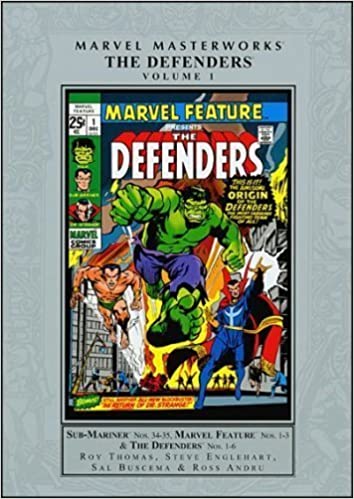
Marvel Masterworks The Defenders Vol. One

This a review of Marvel Masterworks The Defenders Vol. 1. This graphic novel looks to be an attempt to catch lightning in a bottle with some of Marvel’s offbeat (i.e., less popular) characters. The Defender’s first appearance features The Sub-Mariner, The Silver Surfer, and The Hulk. The Surfer is gone by the second storyline, mainly because Stan Lee didn’t want anyone not named Stan Lee writing the character. He’s replaced by Doctor Strange.

The first stories, written by Roy Thomas, are okay. Very workmanlike. The same plot is recycled – a demon/elder god/whatever tries to sacrifice a Defender – several times. The series finds its legs with the addition of writer Steven Englehart, who pens stories about wizards with rat friends, talkative Doomsday Machines, etc.

Mr. Englehart adds fan favorite The Valkyrie to the team, and she stays until the bitter end (when I started reading The Defenders over a decade later, she was still a member). As an added bonus, Sal Buscema does a few issues of the art. Mr. Buscema draws my favorite version of the Hulk – big, green, and dumb with purple pants.

Fun read.

Batmanga Vol. 1

This is a review of Batman: The Jiro Kuwata Batmanga Vol. 1. Did you know there used to be a Batman manga? I know because of Chip Kidd’s Bat-Manga, which chronicles a number of Batman’s Japanese adventures. This is not a review of Bat-Manga, as Mr. Kidd did not write or draw any of the stories featured in his book. The creator of the Batmanga stories is Jiro Kuwata.

Now that we’re clear on that, how’s the first volume? Pretty good! Batman – along with youthful sidekick Robin, the Batmobile, and his trusty batarang – keeps Gotham City safe from villains. Speaking of those villains…Mr. Kuwata makes the bold choice to add new figures to Batman’s rogue gallery, including Lord Death Man, Professor Gorilla, and The Human Ball!

This was the 60’s, when Batman comics were still goofy and you had a live-action TV show starring Adam West and Burt Ward. So if you are looking for hardboiled action, uh, I don’t know what to tell you. A fun, offbeat read that I liked.

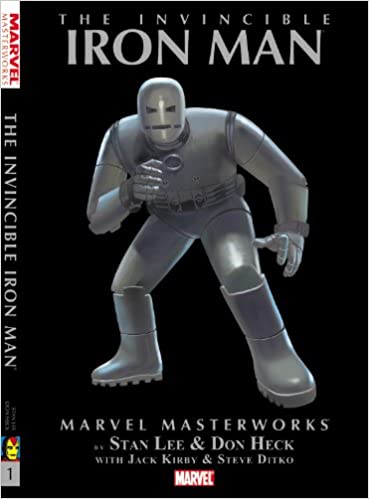
Marvel Masterworks Iron Man Vol. 1

This is a review of Marvel Masterworks: Iron Man Volume One. Tony Stark is a millionaire industrialist who designs weapons for the U.S. military. Some of his ideas might seem stupid to me (roller skates that allow troops to travel at 60 m.p.h.), but I’m not a genius like him.

Tony is touring Vietnam (1963, during the Vietnam War) when he’s hit by a landmine. The shrapnel penetrates his chest and injures his heart. He only has days to live, but that’s not a problem to a doer like Tony! He and another scientist design a suit of armor that also acts as a pacemaker under the not-so-watchful eye of the warlord who takes them prisoner. The less said about the warlord, the better. Suffice it to say he’s an offensive racial stereotype. Anyway, the chest plate acts as a pacemaker and the armor enables Tony to escape from the warlord. Thus, Iron Man is born!

I am unsure if anyone who made these comics is still alive…so let’s start with the positives. The twelve-page format works well (the page number is expanded in later issues). The stories are big, loud, dumb, and pretty entertaining. In one episode, Iron Man fights alongside Cleopatra, Queen of the Nile!  Iron Man’s villain gallery is goofy, mostly in a good way – Jack Frost, the Crimson Dynamo, The Melter. The standout is Mr. Doll, who shapes a lump of clay into effigies of his enemies, which he then squeezes. Mr. Doll was originally called Mr. Pain, but the Comics Code Authority wouldn’t stand for that!

The stories aren’t as well-written as other Marvel stories of that time period. Character development is minimal, and the stories are bare-bones basic. Things perk up when we meet two supporting cast members, Happy Hogan and Pepper Potts. Happy is a never-been prizefighter who acts as Tony’s chauffer. Pepper is Tony’s secretary. Happy and Pepper’s banter is entertaining in that they seem quite sincere in loathing each other. We never meet Tony’s parents, and as far as I can tell he has no friends, so he’s not living a very balanced life!

The beginning of this series is overtly political. Many of Tony’s enemies are communists, aka commies, aka Reds (the writers’ words, not mine). Stan Lee expresses regret for this in the introduction to this volume, which is interesting. I think he’s saying he regrets spreading propaganda, which World War II comics were.

Anyway, this volume was worth the ninety-nine cents I paid for it. It’s not perfect, but you can’t hit a home run every time!

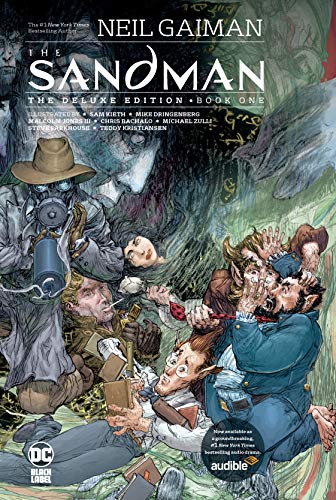
Sandman Deluxe Edition Book One

This is a review of The Sandman Deluxe Edition: Book One. I picked up the first two dozen issues of this title 30+ years ago, and then took a hiatus from reading comics. That was an interesting time in my life. But hey, who gives a shit, how’s the book?

WARNING: SPOILERS!

Pretty great, actually. Writing these fun reviews, I talk a lot about titles finding their legs. The Sandman comes flying out of the gate. The plot: Sandman, aka Morpheus, aka Dream, is captured in 1916 by a bunch of weirdo cultists who want to trap his sister Death. Dream is  imprisoned in a bubble for seventy years, and when he gets out his realm is a mess and he’s powerless.

The first story arc has Dream regain his objects of power, helmet, ruby, bag of sand. This involves John Constantine, a jaunt to Hell, and a duel with a demon. Dream meets a former lover in Hell – and it turns out he’s the one who sent her there. High quality stuff.

The Doctor Destiny (Dee) storyline is when things go off the rails. As a supervillain, Doctor Dee is nothing special. He uses Dream’s ruby to manifest nightmares. Here, Doctor Dee escapes from Arkham Asylum, picks up a woman at gunpoint, and has her drive him to the storage facility where his (Dream’s) ruby is stored. Dee and the woman talk on the way; they seem to bond. Thus, when he kills her it comes as a nasty surprise.

The next issue is even worse – or even better, depending on whether you’re a horror fan. The plot screeches to a halt as Doctor Dee torments and kills six people in a diner, a grindhouse of horror. The creative team rubs our faces in it, and then in the next issue the plot resumes and Dream gets his powers back. Consider this a warning…Sandman is a fantasy comic, but it is also horror – and many of these issues contain strong content that might be tough to read. I like horror, and I almost dropped Sandman from my pull list after the diner issue.

The second storyline involves Dream tracking down four stragglers from his realm, a serial killer convention, and a girl called Rose, who is something called a Dream Vortex. Rose is looking for her little brother, who is chained up in a basement by a pair of nasty customers. The focus of the story is more on Rose than Dream, a good choice. Honestly, Dream has no idea what makes mortals tick, which doesn’t make him the most relatable of characters. It also helps lead to his ultimate downfall, so nice foreshadowing there! The first storyline is tied to the DC Universe, the second becomes unmoored – not entirely, but this is when Dream and the DC Universe begin to part ways.

Anyway: you should read this.

Marvel Masterworks The Avengers Volume One

This is a review of Marvel Masterworks: The Avengers Vol. 1. I won’t bother explaining the Avengers, because everyone on earth has seen the movies. Instead I’ll talk about how it takes four issues for this title to find its legs. The first three issues aren’t great, but perhaps the creative team was figuring things out on the fly. The first issue introduces the team – Giant Man, The Wasp, Iron Man, Thor, and The Hulk – who band together to fight Loki, Thor’s evil step-brother. The Hulk quits next issue. I can’t recall the details, but it involves the Space Phantom impersonating various Avengers.

The Hulk sticks around for a few more issues, fighting alongside frenemy The Sub-Mariner and then aiding his former team against The Lava Men, and then he’s gone. The Hulk’s colors are green and purple, which are villainous (see: Kang the Conqueror) – make of that what you will. In this volume, he’s written as a carbon copy of the pissed-off Thing (see: first volume of The Fantastic Four).

The Hulk isn’t a good fit for The Avengers, but have no fear! Help is on the way when all-purpose villain Sub-Mariner unwittingly frees Captain America from a block of ice in the fourth issue. The title picks up when Cap joins the Avengers. Reading these issues, it’s obvious that Captain America was a favorite of the creative team. He’s a dynamic presence, and injects much-needed life into the title.

The newly formed Avengers fight The Masters of Evil, led by Captain America villain Baron Zemo, whose mask has been super-glued to his face. Thor villains The Enchantress & The Executioner check in next, along with Kang the Conqueror and Immortus, who are the same person. We also meet future member Wonder Man, who betrays and then saves the team.

Comparing this book to the first volume of the Justice League of America is an interesting exercise. The Avengers are less powerful than the JLA, but they act more like real people. They bicker all the time, and have personalities, and are thus a lot more interesting. Unlike other Marvel superteams of that era, The Avengers doesn’t have much in the way of a creative direction – the Fantastic Four are a family, the X-Men are outcasts – but it’s still a fun read.

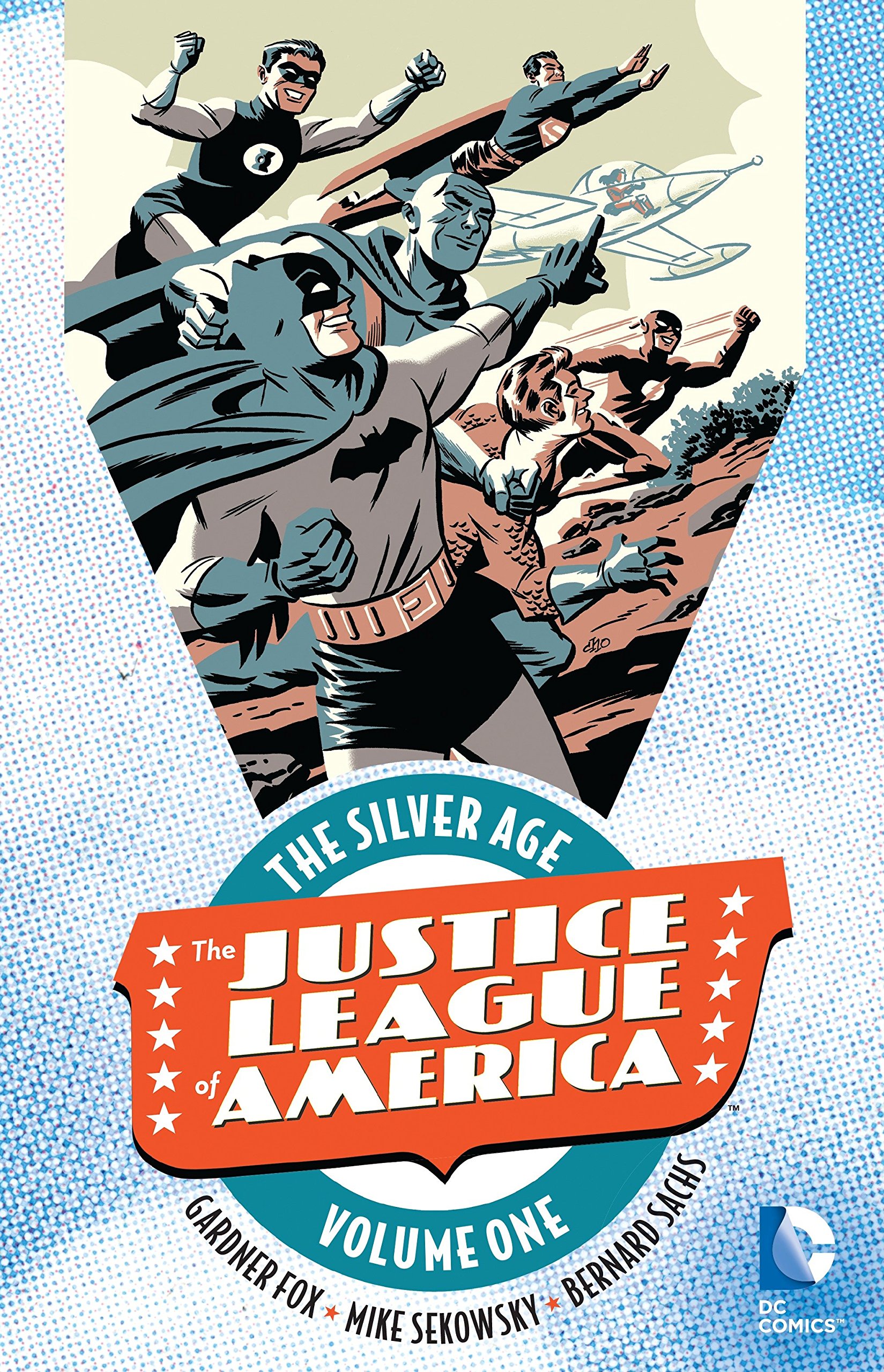
Justice League of America The Silver Age: Vol. 1

This volume collects the first twelve appearances of the Justice League of America. I’ll start by saying that the title is wrong, as the League consists of two aliens from outer space (Superman & the Martian Manhunter), an Amazon (Wonder Woman), and the ruler of the undersea kingdom Atlantis (Aquaman). That’s right, half the team isn’t even American, but why quibble? The other members are! We’re talking The Flash, Batman, Green Lantern, and Green Arrow. There’s also honorary member Snapper Carr, a teenager who snaps his fingers and says things like Daddy-O because that’s how young people talked back then.

The Justice League of America fights alien conquerors, invaders from the future, mad scientists, and gangsters. Standout villains include Starro the Conquering Starfish, Amazo the Super Android, and Kanjar Ro, the would-be alien conqueror who channels Charles Atlas. Character development is minimal, but if you like your superhero comics with a heaping dose of pulpy science fiction you’ll enjoy this.

I myself don’t have a favorite issue, because the stories are all the same. Here’s the basic template: the League splits up to confront whatever new menace they are facing. Despite their superpowers they are captured, only to turn the tables on their captors. And then it’s on to the next adventure! I liked these stories – which are all one-shots – but they do blend together. I complained about the issues in the first volume of the X-Men all being the same, but this is even worse – or better, depending on your tastes.

Random observations: Superman and Batman barely appear in this volume. I think that’s because Superman and the Martian Manhunter have similar powers, and Batman has no powers at all. Batman doesn’t even have trick arrows like Green Arrow, who is way too clean-shaven. I like my Green Arrow with a bushy, fulsome beard! The Martian Manhunter looks like the Jolly Green Giant and uses his Martian super breath at least once an issue. They also give him new abilities (Martian eyebeams!), whenever the plot requires it. The less said about Snapper Carr, the better.

Bottom line: there are worst ways to kill a few hours.

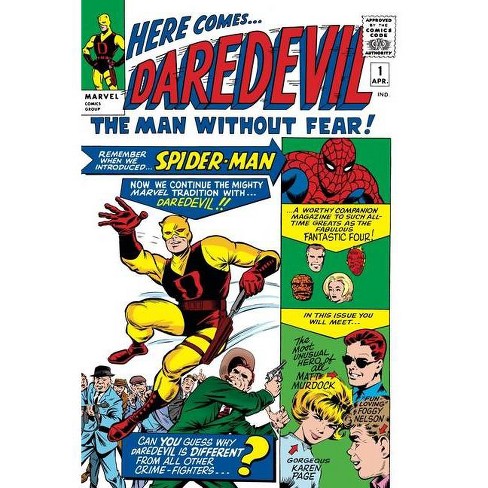
Marvel Masterworks Daredevil: Volume One

This is a review of Marvel Masterworks Daredevil: Volume One. For those not in the know, Daredevil is a masked crimefighter who dresses up in a red devil costume and swings around town on a trick billy club, which he also uses to beat up muggers. Daredevil’s alter ego is Matt Murdock, attorney. His gimmick is enhanced senses – four of his senses are hypercharged and he has a ‘radar sense,’ like a bat. Daredevil got his powers when a barrel of toxic waste hit him in the face, blinding him but enhancing his other senses, thus continuing the Marvel tradition of radiation granting superpowers instead of cancer.

Unfortunately, the first two issues of Daredevil don’t come flying out of the gate. My biggest problem with the first issue is the tone. Reading Spider-Man’s origin story, it’s obvious that Uncle Ben’s death is one of the top three traumatic events in Peter Parker’s life – the other two being Gwen Stacy’s death and the death of his Aunt May, which led to Peter making a deal with the devil and retconning his marriage out of existence.

Or it might be Peter discovering that his arch-nemesis the Green Goblin had sex with the aforementioned Gwen Stacy when she was just a teenager, leading her to give birth to secret twins before the Green Goblin threw her off the Brooklyn Bridge. Years later, those babies grew up to become little Green Goblins who delighted in tormenting a 30-something Peter Parker (in 2023, Peter is now a decade or so younger). Or maybe it was the time Peter grew four more arms, or when he transformed into a lizard-man, or when he smacked his ex-wife in the face. All of which happened. Whatever. The point is, Uncle Ben’s death is shattering and forever changes the course of Peter’s life.

When Matt Murdock’s father is murdered in the first issue, he doesn’t react at all. His attitude is like, ‘welp, time to catch the gangsters who murdered my father.’ He actually kills the guy who murdered his dad, but does it in a sneaky way (heart attack), all the while musing how it’ll save the state the expense of a trial. Sounds like a guy I’d want as my lawyer!

The second issue wastes no time bringing in the guest stars, in this case The Thing of the Fantastic Four. The FF want Matt to do an inventory of the Baxter Building, even though he’s blind and can’t see anything. Coincidentally, Electro tries to rob the Baxter Building at the same time. Electro is a member of Spider-Man’s rogue gallery, another bad sign. It’s true that two heroes can share the same villain (read: The Kingpin), but it can also be a sign of desperation.

Long story short, Electro dumps Daredevil into a rocket and blasts him into space. Daredevil’s super senses enable him to reverse the rocket and land in Central Park. This is exciting when it’s happening, but falls apart when you think about it because Daredevil’s superpower isn’t piloting rocket ships. I also started to wonder why Electro didn’t just electrocute him or stick a knife in his ribs.

This graphic novel finds its legs in later issues, when we get appearances by other members of Daredevil’s rogue gallery, The Owl, The Purple Man, and Stilt-Man. Most of the villains are outright goofy, although The Purple Man is later retconned as a serial killer. There’s also a standout issue featuring the Sub-Mariner that’s the highlight of this volume. But my favorite villain is the Eel, whose superpower is lubing himself up so he slips out of people’s grasp.

Perhaps coincidentally, the addition of artist Wally Wood coincides with the jump in the quality of this graphic novel. Mr. Wood redesigns Matt’s costume, changing the canary yellow duds to the red devil outfit we’ve all come to love. He also gives us an in-depth diagram of Matt’s billy club/cane. I learned that Daredevil’s horns double as transmitters, which I didn’t know. You learn something new every day!

Matt Murdock’s personal life isn’t as interesting, featuring a puerile love triangle between Matt, his partner Foggy, and their secretary Karen Page. Matt and Karen are in love, but Matt doesn’t say anything because he can hear heartbeats and he knows Foggy is in love with Karen, and – in his words – that wouldn’t be right. Karen doesn’t say anything because she’s unsure if Matt loves her, which he doesn’t because they’ve never even dated. As far as I can see, the only person in the love triangle who acts like an actual adult is Foggy, who proposes to Karen. I mean, this is some teenager shit– which makes sense, because the book’s aimed at teenage boys.  

I can see Matt not wanting to crap where he eats, as the earthy old aphorism goes, but he’s the guiding light of the law firm. He doesn’t really need Foggy. I guess he doesn’t want to hurt his partner’s feelings? This is truly shocking, because modern Matt Murdock has been written as a horndog if not an outright misogynist. Here, he’s likable with an endearingly goofy rogue’s gallery. Bottom line: once this graphic novel finds its legs, its very good.

Flash: Savage Velocity

Ah, the 1980’s. MTV, Ronald Reagan, Rocky Balboa, The Terminator, Freddy Krueger, buddy cop movies, Pee Wee Herman, Jason Voorhees, Ollie North, contras. Sting, singing Russians. I could go on but I won’t, because boy oh boy the 80’s sucked but the decade did produce some great comics. Thus, when Comixology held their annual end of the year sale, I picked up a copy of this book. I read some – not all – of the issues back in the day, and wanted a complete collection. The writer, Mike Baron, produced a bunch of comics in the 80’s – Nexus, Badger, The Punisher – and of course The Flash.

First things first: this is a very different Flash. Barry Allen, temporarily dead, is replaced by his youthful sidekick Wally West. Wally has been depowered– he can’t break the sound barrier, has to eat two or three times the amount of a normal person, and passes out after he uses his super speed.

Wally himself is written like a 20-year old. An immensely privileged, stupid lucky 20-year old. He buys a lottery ticket and becomes a multi-millionaire. His mom moves in with him and he can’t bring himself to throw her out. His girlfriend is a decade older than him. She’s also married, and when her husband finds out he injects himself with a steroid that gives him super strength and speed and tries to kill Wally. As happens in superhero comics.

Other standout villains in this volume include Vandal Savage, a caveman who dresses like a French lord and designs a highly addictive drug that grants its users super speed. The Chunk is a human event singularity who must consume 47x his weight or implode. The people Chunk consumes are transported to an apocalyptic hellhole. Despite this, Chunk isn’t exactly Doctor Doom, and is written more as a misguided soul than a villain.

This is a nice run by Mike Baron, who only stuck around for 14 issues plus an annual. The issues move fast, pun intended, and there’s an endearing weirdness to the stories, most of which are inspired by the 1980’s – Max Headroom, drug epidemics, the Cold War, ‘roid rage.

Wally himself isn’t portrayed in a very heroic light, whether he’s having an affair with a married woman, puttering around his Long Island mansion, or going to parties hosted by Mafia Dons. He’s written as a materialistic man incapable of saying no to any woman. Unsurprisingly, most of his relationships are shallow and dysfunctional. This was all part of DC’s grand experiment of giving their heroes personalities. It didn’t go on long, but it sure was interesting while it lasted.

I recommend this graphic novel. The first comic book I ever bought was an issue of The Flash, back in 1978 when Barry Allen wore the scarlet tights. I’ve read a lot of Flash since then, and I am here to say that Wally is a more interesting character than Barry Allen ever was. The powers that be might have brought Barry back, but Wally will always be my Flash.