The Flash: The Death of Iris West

This is a review of The Flash: The Death of Iris West. A few firsts. Flash #278, which resides in this volume, is the first superhero comic I read. Well, it might be Fantastic Four #210, which I bought around the same time, but my memory says it’s the Flash. A second first: the title of this volume is The Death of Iris West, aka Mrs. Barry Allen (as she’s referred to in this volume), aka The Flash’s wife. If you don’t want the details of her fridging, don’t read any further.

This volume doesn’t come flying out of the gates. The Flash fights a villain named The Clown. At first glance, this is a mismatch – The Flash can run faster than light and has total control of his molecular structure (I have no idea how these two powers are related). The Clown throws cream pies. Thus, it comes as a surprise when The Clown nails The Flash in the face with the aforementioned cream pie. Heck, it comes as a surprise that any fight with The Flash lasts more than two seconds. Thank god I’m not the writer, who has to think of creative ways to make the Flash’s villains seem like credible threats.

Maybe The Flashster has other things on his mind. He’s been neglecting his lovely wife, Iris, who responds by pulling out the stops – romantic candlelight dinners, new hairdo, etc. The Flash claims he’d like to spend more time with his wife, but Gorilla Grodd has a hangnail or whatever, and he needs to deal with that. Then there’s the 16-year-old psychic teen with a crush on The Flash. Since Barry is thirty and could be her dad, this seems creepy, especially considering what happens to his wife.

I am not saying I didn’t enjoy this volume, because I did. The art is good, and I like writer Cary Bates’ scripts. It wasn’t Mr. Bates decision to kill Iris Allen. This was an editorial call, done to boost sales (I read this in an interview with Cary Bates). There’s no build-up or foreshadowing to Iris West’s death. Barry and Iris go to a costume party, which is crashed by ex-convict-Clockwork-Orange-fan-psychic-vampire Clive Yorkin. BTW, Yorkin is one of the best things about this volume. The Flash, shot up with angel dust, makes the mistaken assumption that Yorkin killed his wife. He’s wrong. The killer is Professor Zoom, denizen of the 25th century, who takes up supervillaining as a hobby because he’s bored.

If you’re a Flash fan, this is an important chapter in Barry Allen’s life, even though I’ve lost track of the number of times his character has been rebooted. If you’re not a Flash fan, it might take a few issues to figure out what’s going on. Still an enjoyable read.
Batman: Prelude to Knightfall

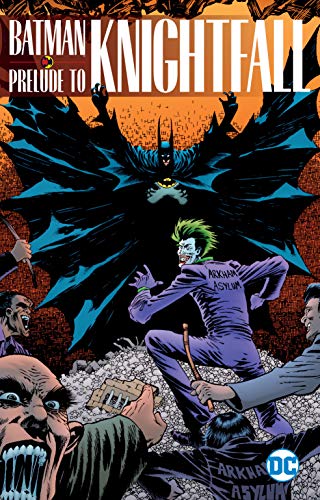
This is a review of Batman: Prelude to Knightfall. I read Knightfall when it came out in the early 90’s. Since this is the prelude, I didn’t read most of the issues in this volume. The plot is simple: Bane is a superhuman steroid freak who wants to break Batman. His timing is impeccable; The Dark Knight is suffering from heavy-duty burnout, driving himself to go without sleep or food. To further wear Batman down, Bane releases all the lunatics in Arkham Asylum, where his greatest foes are housed.

The writing of this graphic novel, which features Doug Moench and Chuck Dixon, is good. The art is a little uneven, but we do get a few issues drawn by Jim Aparo, one of my favorite Batman artists. There are a few nice touches, such as Batman wearing a black Superman armband (Superman had just been ‘killed’ by Doomsday).

The creators of this volume understand Batman. At one point a cop tells The Dark Knight that he is the one who attracts all the weirdos and lunatics that plague Gotham City, an argument Batman doesn’t even try to rebut. The other eye raiser of this graphic novel is how burnt-out Bruce Wayne becomes, which adds a touch of realism. Honestly, a guy who dresses up like a bat, gets no rest, has no real friends, social life, or sex life, and is constantly injured would burn out.

Standout villains in this volume include The Black Mask, a misogynistic would-be crime boss; a pumped-up Riddler; and The General, an underage Napoleon with a penchant for assault rifles. We also meet Jean Paul Valley, aka Azrael, who gets put into a backbreaker while posing as Batman. The creators are foreshadowing future events, and not even being all that subtle about it.

Vintage Batman.

Excalibur Epic Collection: The Sword is Drawn

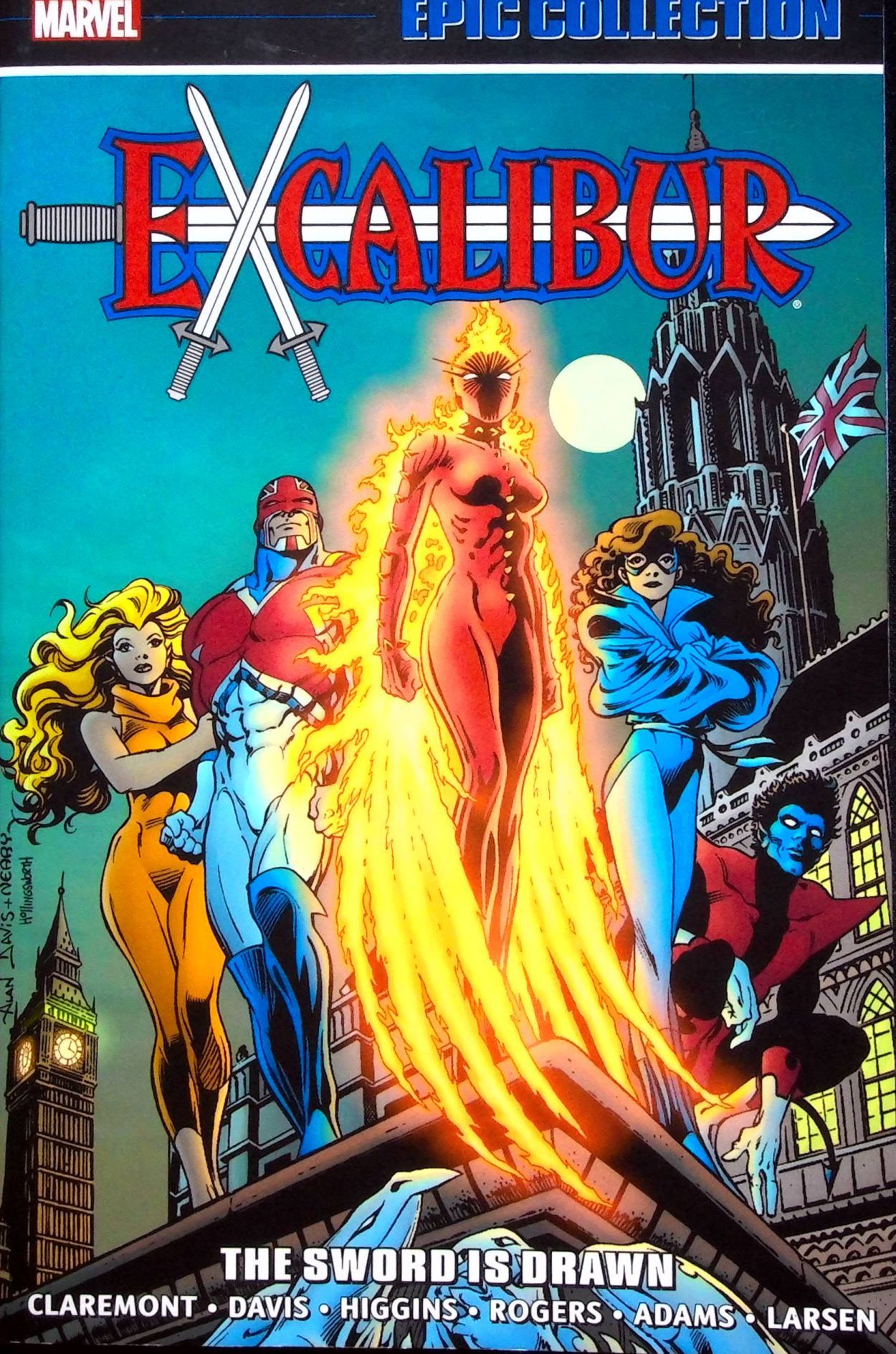
This is a review of Excalibur Epic Collection: The Sword is Drawn. This graphic novel is written by Chris Claremont, who wrote Excalibur along with most of the X-Output in the 1980’s. I read a lot of Chris Claremont comics growing up.

Excalibur consists of five members, three former X-Men (Nightcrawler, Shadowcat, the Rachel Summers Phoenix) along with British superheroes Meggan and Captain Britain. All but Captain Britain are mutants – or muties, in Claremont Parlance. Sidenote: I don’t consider an X-title finished unless some stupid human says muties. The events of Excalibur take place after the Mutant Massacre, a famous (or infamous) crossover that shook up the X-Books.

Excalibur has all the elements of a Chris Claremont book: ensemble cast, soap opera histrionics, and short, punchy storylines. Characters say things like – “I know you’re a hero. But let’s see if you’re a man!” It’s amazing that a title whose feature characters are Nightcrawler and Kitty Pryde lasted over a hundred issues. I think it likely that the wonderful art by Alan Davis – who went on to write the book after Claremont left – has something to do with that.

Excalibur’s origin story lasts exactly one issue, and then we are off to the races. Honestly, the team has no real reason for existence, but who cares? Whatever they did worked. Excalibur has no problem finding its legs. The title comes roaring out of the gate, as the members fight bounty hunters from outer space, interdimensional werewolves, Arcade, and the Nazi versions of themselves. There’s also a two-issue crossover with the X-Men, an Inferno storyline in which Excalibur is so superfluous none of the crossover’s major players even know they are there.

I’d be remiss if I didn’t mention this. The first time I read Excalibur, I was still a kid and some of this title’s more, uh, grown-up elements flew over my head. The creators like dress-up and cosplay, because this title features lots of costumes -some sexy, more often outright bizarre. There are also a few gratuitous underwear shots, mostly female. As a kid I didn’t mind; as an adult, it’s embarrassing. If you find this offensive, I’d avoid this graphic novel.

A good read for fans of the 1980’s X-Men.

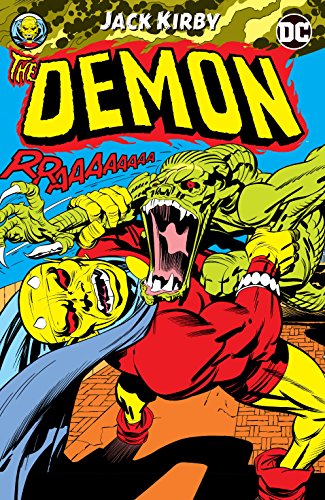
The Demon

This is a review of The Demon, a comic series written, drawn and edited by Jack Kirby. The Demon is one of the projects Mr. Kirby worked on when he went to DC in the 1970s. I read part of the first issue in an anthology, somewhere, but that’s it.

Short summary: The Demon is Merlin the Magician’s pet monster. The first time we meet him is during the fall of Camelot, where he fights the demon hordes of Morgan Le Fay, and then we fast-forward to modern day (1970’s) New York City. Jason Blood is a demonologist; unbeknownst to him, he’s also a Demon.

This is a short run, sixteen issues. The art is great. My favorite character design is Klarion the Witch Boy. In his first appearance, Klarion is more of a pest. He doesn’t turn evil until his second appearance, which is one of my problems with this series. More on that later.

Make no mistake about it, this is a horror comic. I wouldn’t call it disturbing, exactly, but I was surprised at the level of violence. In one issue, Baron von Evilstein is going to cut Blood’s head off. In another, a demon marks Blood’s forehead with a white-hot poker. A Frankenstein’s monster is tormented and killed by his ‘master.’ The bad guys and girls are really bad, and the stories don’t always have happy endings.

This series is written & drawn by Jack Kirby, which means it’s good. All I can say is that it didn’t hit me where I live, and I am not sure why. It might have been good if Mr. Kirby had an editor, because the stories feel slightly unfocused. Klarion the Witch Boy’s transformation into a villain is one example.

Here’s another: in the first few issues, The Demon is more threatening. One of the high points of the early issues is Blood’s ‘nightmare,’ where he’s chained to The Demon. This sequence – Blood wondering if he’s losing his humanity, or maybe he’s already lost it – is the real thing. Unfortunately, The Demon mellows as the series progresses and misplaces its crazy energy. Bottom line: to me, this title loses its legs, and that’s something an editor can help with. It’s still worth a read, especially if you’re a Jack Kirby fan.

Marvel Masterworks: The Sub-Mariner Volume One

This is a review of Marvel Masterworks: The Sub-Mariner Volume One, starring the Sub-Mariner, aka Prince Namor, aka the guy with wings on his ankles. The first storyline spans over twelve issues, so points for ambition. The art is mostly done by Gene Colan, an artist I adore, but I wasn’t crazy about his inker. My main issue is Stan Lee’s script, which repeats itself and is all over the place.

The plot involves Warlord Krang’s attempts to seize the throne of Atlantis. He does this while Namor is off gallivanting on the surface world. Namor must find the Trident of Neptune, aka the MacGuffin, to regain his throne. For some reason Krang – who has Namor in his power – lets him go. Since finding the trident involves punching things, Namor is in his element.

After finding the trident and winning his crown back, the Sub-Mariner banishes Warlord Krang, who simply bides his time and awaits another opportunity. That opportunity comes when Krang tells Dorma, Namor’s beloved, that he’ll kill Namor if she doesn’t marry him, and this evil plan – uh, works. For some reason Dorma believes Warlord Krang. She and Namor are made for each other, in that they are both unbelievably gullible.

At one point Namor even wonders if he’s fit to rule, a rare moment of self-reflection. The answer is no. For all his faults Warlord Krang – Namor’s foe in this volume – would make a much stronger ruler. This is mainly because Namor has no control over his emotions. If the Hulk is a toddler, the Sub-Mariner is a 12-year old going through puberty.

Like many Marvel strongmen, he’s vulnerable to mind control, brainwashing, and amnesia. He doesn’t listen and refuses to admit when he needs help. This gets taken to ridiculous extremes in this volume, as Namor is manipulated by both the Puppet Master and the head of the Secret Empire.

The two people the Sub-Mariner most resembles are Dr. Doom and the Marvel version of Dracula. Namor is better than them in that he’s not as ruthless and doesn’t murder people for fun. He carries a streak of nobility that neither villain possesses. There are several points in this volume where Namor avoids hurting or killing humans. That’s great, but judging by this volume, he’s not an interesting enough character to sustain his own title.

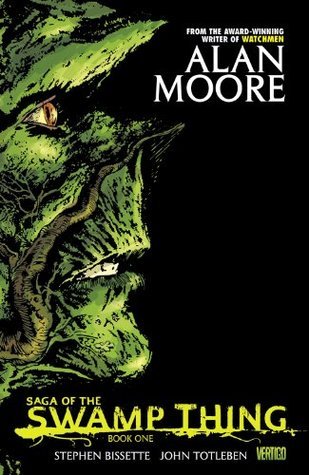
Saga of the Swamp Thing, Book One

 This is a review of Saga of the Swamp Thing Book One. This volume marks the start of writer Alan Moore’s fabled run on Swamp Thing, and features great art by John Totleben and Stephen Bissette. The first issue starts with a bang, literally. Alec Holland, the man behind the moss-encrusted monstrosity of a man, is shot in the head by a kill squad sent by the Sunderland Corporation. Yes, Alec Holland is dead, but Swamp Thing is another matter.

Swamp Thing’s body is examined via autopsy by Jason Woodrue, aka the supervillain The Floronic Man. Woodrue realizes that the Swampster needs none of the internal organs that are in his body. He also discovers that the Swamp Thing doesn’t need to breathe oxygen because he’s a plant. Most importantly, you can’t kill a plant by shooting it in the head. Sure enough, Swamp Thing awakens, reads his own file, and wreaks vengeance on Sunderland. Woodrue himself goes crazy and declares war on the human race, as one does.

 Afterwards, we meet The Monkey King, a demon that feeds on fear. The Monkey King is hiding in a home for troubled children, where Swamp Thing supporting character Abigail Arcane works. This story guest stars Jason Blook, aka Etrigan The Demon (created by Jack Kirby).

A must read!

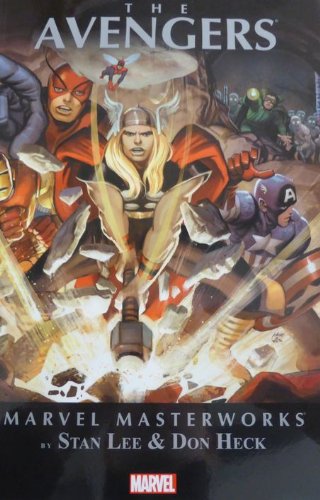
Marvel Masterworks: The Avengers Volume Two

This is a review of Marvel Masterworks: The Avengers Volume Two. You can read my review of the first volume, here. This series has the distinction of being the only title I’ve reviewed so far that finds its legs twice.

I will be honest: the first few issues of this volume are pretty wretched, mostly because of the art. But the stories aren’t great, either. In one issue the Avengers fight a Spider-Man robot in Mexico; Spider-Robot has been sent from the future by Kang the Conqueror. The Wasp is shot at the very end of an issue, mostly for shock value (it happens off-panel), and the Avengers’ search for the specialist to save her leads them to space aliens living in the North Pole. The Wasp is back the very next issue, none the worse for wear, and nobody refers to this issue again, although it does foreshadow the first signs of mental instability in Hank Pym.

The Masters of Evil make another appearance, giving Jack Kirby a chance to tie up the Baron Zemo storyline, and then the book’s creators shake the book up. They disband the old team, which wasn’t working, and give us a new lineup – Captain America, Quicksilver, The Scarlet Witch, and Hawkeye. This is a much more interesting lineup and pays dividends immediately. This volume also gives us the first appearance of The Swordsman, an intriguing character.

Uneven, but good.

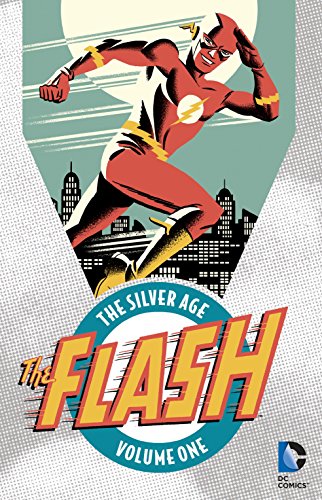
Flash Silver Age Volume One

This is a review of Flash: The Silver Age Volume One. I am behind on my reading, because last week I self-diagnosed with COVID. The good news is that after a miserable few days, I am ramping up my reading again. Anyway, The Flash is the first superhero comic I ever read. It wasn’t my first comic – I read a bunch of those Archie digests you used to be able to find at supermarkets – but I have a soft spot in my heart for the character.

The Flash is Barry Allen, police scientist. One night Barry is proudly examining his collection of chemicals (he’s that type of guy), when a bolt of lightning strikes, saturating him with a hodgepodge of those selfsame chemicals. Instead of being transported to the burn unit, Barry discovers that he has super speed. He dons a red costume with yellow lightning bolts, and the Flash is born!

 So far, so good. How are the stories? Well, they’re less stupid than the Batman & Superman stories of that time period, but that’s a low bar to hurdle. What we get is a heaping dose of junk science, wherein Barry’s speed allows him to do anything you can imagine. Forget faster than light travel; The Flash can break the time barrier!

 The Flash’s rogue gallery is a menagerie of bizarre characters. Thus far, the people’s champion is Gorilla Grodd, a super-intelligent talking gorilla with awesome mental powers. There’s also Captain Cold, The Pied Piper, The Weather Wizard, and Mr. Element. We have a fair number of invaders from outer space stories, along with tales that are plain weird. In one issue, the Flash fights a group of sentient thunderheads by cloud-skipping from cloud to cloud.

I’d be remiss in not mentioning Kid Flash, DC’s version of a teenager of the late 50’s. Wearing a bow-tie to school, calling every adult sir or ma’am, young Wally West is doomed to never have sex. I confess that I’m sort of surprised that Barry himself ever gets sex. When we first meet him, he’s in the police cafeteria drinking milk, which is as perfect a character moment as you will ever see. Barry is always late for his dinner dates with his girlfriend Iris, so she thinks he’s the slowest man on earth. Of course, she adores the Flash. The hero’s love interest disliking or being meh about him while adoring his alter ego is a tired trope, but to be fair, this was the 60’s.

A good read for Flash fans.

Marvel Masterworks: Captain America Volume One

This is a review of Marvel Masterworks: Captain America Volume One. This graphic novel is the work of Jack Kirby, which means its good. Stan Lee is listed as the writer, but I read an interview with Kirby wherein he claims to have done both the art and writing. Having read a bunch of Marvel material in the 60’s, I think there might be something to his claims.

Captain America was a war hero/propaganda figure in the 1940’s. When the war ended, he was frozen in a block of ice for twenty years. If you want more, read this volume or watch any of the Captain America/Avengers movies. The stories are split between the 1940’s and the present day (in this case, 1965). In the 40’s, Captain America and his youthful sidekick Bucky win World War Two. In the 60’s, Captain America is a member of the Avengers. Twenty years have passed, but Cap’s rogue gallery remains mostly the same, Baron Zemo and The Red Skull.

Many of the stories in this volume are multiparters, but there isn’t an overarching story arc. The stories feature lots of action, and stretch Cap to his limits. My favorite story set in the past is when the Red Skull captures & brainwashes Cap, and sends him to London to kill the Allied Supreme Commander.

There are a bunch of great stories set in the present. Cap fights a Nazi doomsday weapon, the Red Skull returns with the cosmic cube (a weapon that gives the user control over reality), and there’s a radioactive biohazard story featuring Batroc the Leaper, which feels timely today (substitute COVID).

Captain America doesn’t have much of a cast in the present day, mostly because of the split between the past and the present. Special shout-out to the Red Skull, Cap’s opposite and ultimate nemesis.

Great work from Jack Kirby.

Batman The Golden Age Volume Two

This is a review of Batman The Golden Age Volume 2. Not much has changed in the Bat-Verse since my last review, here. New York City has become Gotham City. Bruce Wayne’s fiancée breaks up with him to become a famous Hollywood actress, and Bruce picks up a new love interest to ignore. The Cat (aka Catwoman) is nowhere to be seen. Still no Alfred.

Batman and Robin have a father-son relationship which is emphasized more in this volume. When Robin is almost killed by thugs Batman goes crazy, gets shot three times, and beats a confession out of the offending crime boss (which won’t stand up in court). I believe they reused the image of Batman cradling Robin in his arms in the infamous Death in the Family storyline, where the Joker beats the second Robin to death with a crowbar.

This volume features the first appearance of the Scarecrow, a thin academic dude tough enough to go toe to toe with Batman. The Scarecrow is obsessed with fear. Here he doesn’t use fear gas and makes do with a gun. We also get a fair bit of the Joker, but most of the stories involve Batman & Robin fighting criminals – fifth columnists, modern-day pirates, Mob guys, fake Indian statues, etc.

There are a few outlier stories. In one issue, Batman & Robin go to the land of fairy tales to rescue a young woman. Some of these stories can be downright bizarre, as when Batman arranges it so that a young woman’s parents will think she’s a movie star when they visit her in Gotham. There are also a few morality tales, which you don’t see in comics nowadays.

If you enjoyed the first volume, you will like this.