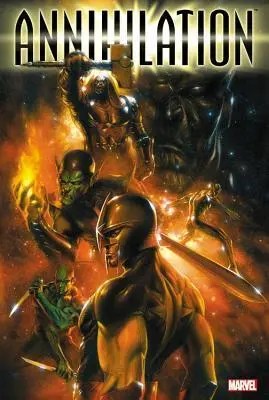
Annihilation Omnibus: Ronan

This is a review of the Ronan miniseries, written by Simon Furman with art by Jorge Lucas, which appears in the Annihilation Omnibus. You can read my reviews of Drax the Destroyer, Nova, The Silver Surfer, and The Super Skrull here, here, here, and here

Short summary: the Marvel universe is being invaded by The Annihilation Wave, a space armada hailing from the Negative Zone led by Annihilus, a beaucoup powerful bug warlord. Will this be the last time I have to post this summary? Stay tuned! 

Ronan the Accuser is a Kree. He’s blue, like a Smurf; unlike a Smurf, he’s built like a pro wrestler and wields an enormous hammer. Ronan is an Accuser, which means he passes summary judgment on, well, just about everybody, but especially the Kree. Think judge, jury, and executioner and you’ll get the idea. 

Ronan has been accused of treason! It’s obvious he’s innocent, because people with binary points of view – besides being scary – don’t sell out their ideals, which are baked in. After a rigged trial, Ronan is exiled from Kree Space. 

Ronan’s new goal in life is to track down the alien who gave false testimony and make her reveal who betrayed him. This leads him to Godthab Omega, a gritty planet held together by dirt, spit, and barbed wire. Besides the settlers, this world is occupied by a band of women named the Graces. They are led by Gamora, the self-proclaimed Deadliest Woman in the Universe. 

But wait, there’s more! A cosmic entity named Glorian manipulates Ronan and Gamora into fighting, and uses the power run-off from their battle to terraform the world into something beautiful. Now Godthab Omega has way more trees, which is so nice! This attracts the attention of the Annihilation Wave, because reasons. 

Wow, lots more plot than I expected! Lots of names to look up, too, but that’s my problem not yours. So is this miniseries any good? There is a lot of material crammed into four issues, but if you like space opera set in gritty worlds this is entertaining. 

There is also a touch of humor, which may or may not be intentional. Gamora, the most dangerous woman in the universe, goes into combat wearing a thong. If it was me, I’d wear battle armor, but I’m not the most dangerous woman in the universe. Maybe it’s a battle thong?

I will give Ronan this. He might be a big blue goon, but he sure isn’t a chauvinist. He pulls no punches when battling Gamora as they joyously pummel the crap out of each other. The miniseries moves the larger Annihilation plot forward while also changing Ronan as a character.* Since the big galoot is a mover & shaker in the Annihilation miniseries, which I will review next week, this is a must-read! 

*Addendum: the next time we see Ronan, he tells a Kree commander he’s relieved of duty right before smashing his skull in with his hammer, so maybe he hasn’t changed all that much.
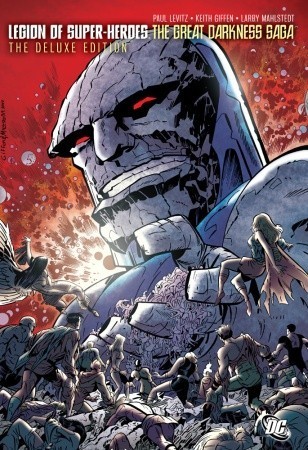
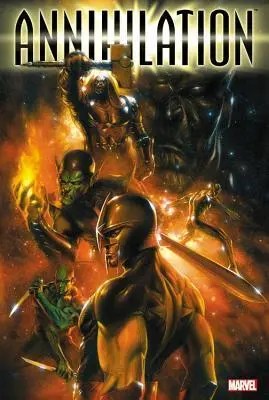
Legion of Super Heroes: The Great Darkness Saga

This is a review of the Legion of Super-Heroes: The Great Darkness Saga, written by Paul Levitz with art by Keith Giffen. You can read my review of Superboy and the Legion of Super Heroes Volume One here

The Legion of Super Heroes are a group of 30th century youngsters with superpowers who have teamed up to defend the universe. Back in the Silver Age they were all teenagers. Thus, the monikers Cosmic Boy, Saturn Girl, Light Lass, etc. The stories in this volume, written in the late 1980s, treat them more as New Adults (early twenties). Think space opera combined with superpowers and dopey melodrama.

By dopey melodrama I’m talking romance, because let’s face it, everyone loves romance!!! How about an example? Light Lass convinces her beau Timber Wolf – who has a face that could scare a block of concrete – to undergo cosmetic surgery. 

Soon afterwards Timber Wolf is shanghaied into a disastrous intel mission on the Khund (not-nice aliens) homeworld. They are rescued in the nick of time by a team led by Saturn Girl, which crashes on an asteroid. By the way, Saturn Girl is Light Lass’ sister-in-law. 

Hey, why doesn’t Light Lass lead the rescue party? Wonder what’s up with that? Our hapless heroes are rescued by another search party led by Light Lass, who sees Saturn Girl and Timber Wolf hugging. Light Lass quits the Legion, giving Timber Wolf an ultimatum – stay or go with her. What will he do? 

In the meantime, Princess Projectra and Karate Kid return to her homeland and are almost burned at the stake. Brainiac Five accidentally resurrects an old Legion foe, Computo, which marks his one billionth screw-up since he joined the team. Everyone forgives him, because they’re used to it. And someone stirs in a deserted old planet in backwater space.

The Legion receives a much-needed shot in the arm when Keith Giffen comes onto the title as artist and co-plotter. We have new Legionnaires – Blok, who is a living rock; Invisible Kid, whose little sister is host to genocidal computer Computo; and The White Witch, a sorceress. 

This volume features the Great Darkness Saga, a five issue storyline that involves the awakening of cosmic menace Darkseid in the 30th century. I am not giving anything away because the cover of this volume shows us Darkseid, who terraforms an entire planet into his effigy. 

Darkseid sends out degraded versions of cloned heroes as his emissaries – to collect items of power, and then people. The Legion is overmatched, especially when Darkseid learns of the existence of the planet Daxam, which orbits a red sun. He warps the planet under a yellow sun, which means billions of super-powered Daxamites under his control! Can the universe survive? Well, yeah, but it’s a big story.  

Nowadays, the Great Darkness Saga would be a special event with multiple issues in twelve different titles. Instead it’s just there – the best Legion of Super Heroes storyline ever created, one of the top superhero comic storylines of the 20th century, and a high point of both of the creators’ careers. If you like superhero comics combined with space opera it doesn’t get any better than this.

Annihilation Omnibus: Super Skrull

This is a review of the Super Skrull miniseries, written by Javier Grillo-Marxuach with art by Gregory Titus, which appears in the Annihilation Omnibus. You can read my reviews of Drax the Destroyer, Nova, and The Silver Surfer here, here, and here

Short summary: the Marvel universe is being invaded by The Annihilation Wave, a space armada hailing from the Negative Zone led by Annihilus, a beaucoup powerful bug warlord. Will the Marvel universe survive? What do you think? 

First, some background: The Super Skrull, aka Kl’rt, is a Fantastic Four villain who has been around since the 1960’s. I believe he was featured in the 1967 Hanna-Barbera Fantastic Four cartoon! Kl’rt is super strong, can absorb almost limitless amounts of energy, can project invisible force fields, and has a malleable molecular structure. He’s also totally ruthless, can shape change into anything he wants, and has hypnotic abilities to boot. 

If you think it makes no sense that he’d lose to the Fantastic Four 97,654 times, you would be correct. Apparently, the Fantastic Four are stronger because they fight together as a family, which is comic book logic at its finest. Since the Super Skrull is a popular villain, the powers-that-be at Marvel keep on bringing him back. 

In this miniseries, the Super Skrull wants to stop something called The Death Star – er, Harvester of Sorrow, a living world-destroying weapon which is scything through the Skrull Empire like a hot knife through butter. Kl’rt is fanatically loyal to the Skrull Empire, but the Skrull Empire no longer exists. Now it’s just a collection of warlords.

The Super Skrull pleads for aid with one of those warlords, who laughs at him. Because of his past failures, Kl’rt is viewed as a joke by his fellow Skrulls and is openly jeered. This is not smart, as many Skrulls discover moments before they die.

An angry Kl’rt kills scores of his countrymen, but is hopelessly outgunned. He’s rescued from certain death by R’kin, a scrappy Skrull youth who idolizes him. If Kl’rt was a hero, he and young R’kin would bond and perhaps he’d mentor the youth! 

The thing is, Kl’rt isn’t a hero. He is a supervillain who uses any means at his disposal (torture, murder, mutilation, etc.) to get what he wants, leaving behind a trail of broken, twisted, charred – you get the idea. Annihilation as a whole features characters who range from morally gray (reborn Drax) to black (Super Skrull) to mass murderers (old Drax) to genocidal (Silver Surfer).  Nova is the only uninteresting protagonist of the bunch, because he’s a dyed-in-the wool goody-two-shoes. 

Anyway, the Super Skrull and R’kin travel to the Negative Zone. They pick up a hardscrabble army on a prison planet, as well as a virus bioweapon to destroy the Harvester of Sorrow. There’s even a hint of romance between Kl’rt and living robot Praxagora, which is bizarre as they are totally different life forms, but love conquers all boundaries! Alas, they are betrayed. 

Instead of killing the Super Skrull, his enemies haul him into the Harvester of Sorrow. Would you bring someone who can absorb/expel almost limitless amounts of energy into your living bio-weapon? Anyone with a functioning brain knows what happens next.

Super Skrull is my favorite Annihilation miniseries. Partly that’s because it is a self-contained storyline with a beginning and an end. Partly it’s because of the Super Skrull himself, who is a character with a short but very intense shelf life. Sometimes it’s fun to watch a villain romp, but you don’t want him to overstay his welcome, and this miniseries doesn’t do that. Recommended for lovers of space opera comics and obscure Marvel characters.

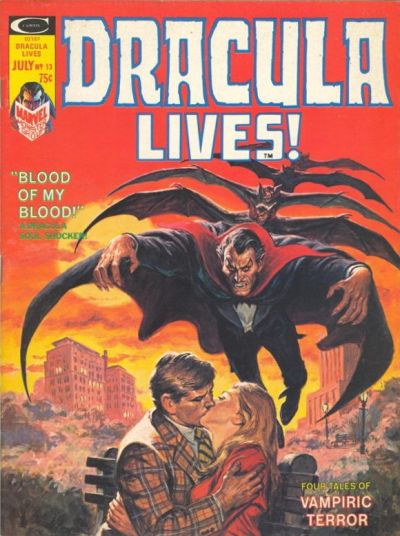
Dracula Lives!

This is a review of Dracula Lives!, a black-and-white horror magazine published by Marvel in the 1970s. These thirteen issues are best viewed as a companion piece to the horror comic, Tomb of Dracula, also produced by Marvel. You can read my reviews of Tomb of Dracula Volumes One and Two here and here

Dracula Lives! is written by comic luminaries such as Roy Thomas, Tony Isabella, Doug Moench, and Steve Gerber. There is a rotating ensemble of illustrators, and in general the art surpasses the writing. The magazine features (mostly) three original Dracula stories per issue, along with trivia and short fiction. We are treated to ‘adult’ content in the form of semi-nudity, most of it female. Dracula himself is naked in a few panels, but we do not see the Vampire Lord’s junk. 

The stories are a mixed bag. Dracula’s origin is recounted. The best part of this tale is the art by the great Neal Adams, with the origin itself being boilerplate villain melodrama. Dracula gains vengeance on his enemies and declares everlasting war on the human race, blah-blah-blah. This story exists because the powers-that-be wanted to give Dracula an origin story, which he doesn’t need.

We have tales featuring a washed-up old horror film actor who believes he’s Dracula, Dracula stalking the halls of the Vatican, and the Count’s ongoing battle with the sorcerer Cagliostro during the French Revolution. Dracula bites a junky in New York City and has to go cold turkey! Dracula encounters a Voodoo Queen in New Orleans! Dracula enjoys the hospitality of Countess Bathory and Marie Antoinette! Dracula vs. The Silver Chastiser, Champion of the Puritans! That last one’s not true, but there is a story with Solomon Kane (a Robert E. Howard character) and werewolves that’s pretty good.

My favorite story is set during the second World War. The Nazis occupy Dracula’s castle and discover that a vampire stalks the halls of the ancient keep. This tale did not go the way I expected, and is the only one of the batch that I found genuinely unsettling. Close second goes to a story written by Gerry Conway about death stalking Dracula. Mr. Conway is a very workmanlike writer, but he can pull a gem out of his hat. 

These stories mostly appear in the first few issues of the magazine. As time goes on, the tie-ins with Tomb of Dracula end, which is both a good thing and a bad thing. No longer having to piece together storylines from multiple titles is a relief, but the magazine loses its identity and becomes a Tales from the Crypt anthology vehicle. Promising storylines are dropped. Dracula vs. Cagliostro goes bye-bye just as it was getting interesting.

In general, the material in later issues is more generic. A New York City street cop encounters Dracula on his last night on the job. A gunslinger stalks Dracula in Europe. A man tries and fails to protect his blind wife from Dracula. A fair bit of the prose in this series is truly purple, which befits a character of Dracula’s stature. In one of the stories, a woman calls Dracula pompous as she sticks a dagger into his belly. When it has no effect, she tells him she didn’t mean it.

Towards the end of Dracula Lives! run, we are treated to two installments of Lilith, Dracula’s Little Girl hanging out in Greenwich Village. Lilith, Mass Murderer is more accurate. After she murdered 75 people on an airplane (in Tomb of Dracula), I have issues taking her seriously as a protagonist. 

Perhaps that’s a Me problem, but I don’t think so. Do you know how much fan mail and how many marriage proposals Ted Bundy got in prison? Lilith may be a mass-murderer, but she sure looks good in those black tights! If you are attractive, you can get away with a lot of shit.

The serialization of Bram Stoker’s Dracula novel, which also takes place in later issues, fares much better. This is a competent retelling of the novel that features great artwork by Dick Giordano. Since Dracula is a melodramatic potboiler, it works very well in graphic format. Too bad they never finished it.  

As far as I know, the issues of Dracula Lives! have never been collected on their own. You can buy the individual issues or purchase them along with the Tomb of Dracula Complete Collection volumes . If you enjoy 1970’s monster magazines and can’t get enough of Dracula, it’s worth the price.

Tomb of Dracula Complete Collection Volume Two

This is a review of Tomb of Dracula Complete Collection Volume Two. You can read my review of the first volume, here. The premise of this graphic novel is simple. The Lord of Vampires awakens in the Swingin’ Seventies and moves to London, where he feasts upon an endless supply of nubile young women.

Dracula is opposed by a group of fearless vampire hunters – Buffy, er Rachel Van Helsing, crossbow wielder; Blade, vampire hunter; Taj Nital, who does not speak; Quincy Harker, mastermind; and last but least, Frank Drake, total loser. Please note that this comic series was released decades before Buffy.

Highlights of this volume include a visit from green-pants-lover Werewolf by Night. After that, Dracula and Rachel Van Helsing embark on the Hike from Hell in the Alps. The WTF Award goes to Rachel, who waits eight hours until nightfall to try and stake Dracula and misses. We also see the Lord of the Vampires being attacked by a psycho mountain goat.

After that, Dracula is captured by Dr. Sun – a pickled brain in a jar –  and must fight the good doctor’s proxy, a vampire biker dude who has all of Dracula’s memories. Dr. Sun is obsessed with vampires, because he needs an unending supply of human blood to survive. Instead of transferring his brain into the Lord of the Vampires, he decides to, uhhh…

…what the hell is Dr. Sun doing, anyway? I read this, and I honestly don’t know. Maybe I should read it again? Hell, no! Once is enough. Whatever he does, it fails. Let’s just say that the Dr. Sun storyline reads more like science fiction than horror and is the weakest storyline thus far, and leave it at that.

Dracula returns to London and a story set in a haunted mansion that reads like a parody of a Gothic novel. We have our Gothic heroine, Shiela (that’s how it’s spelled) Whittier, who is tormented by a poltergeist/father figure/BDSM daddy. She is rescued by Dracula, who is a thousand times worse. Things end badly for her, just as things end badly for most of the human cast of this book. Unlike Dracula, they are not immortal.

This volume also collects the Vampire Lord’s guest appearance in Frankenstein’s Monster. Yes, the Frankenstein Monster had his own comic in the 1970’s! Why doesn’t anyone remember it? Well, it might be because it wasn’t very good.

The Monster is adopted by a Gypsy (this is the term used in the comic, not a slur) woman at the behest of her grandmother, who turns out to be a vampire. She awakens Dracula and kills a villager. The villagers kill the Gypsies. The Monster rumbles into the village and kills villagers. The villagers try to burn the Monster at the stake.

The Monster leaves the village to kill Dracula after telling the villagers they shouldn’t judge people by appearances. The villagers think maybe they were wrong about the Monster, except in the previous issue he killed a bunch of them. The Monster kills Dracula, who turns into a skeleton so that the next rube can pull the stake from his heart.

We also meet Dracula’s Little Girl, Lilith, who is the daughter of the Vampire Lord’s first wife. Dracula claims he hates Lilith because he hated her mother – in a flashback, we see him slapping his first wife. This is untrue. Dracula hates Lilith because she is a woman, and in this comic he is written as a misogynist who views women as either playthings or a food source. That being said, Lilith is vicious. She is not worse than Dracula – that’s impossible – but she gives him a run for the money.

I will be honest, here. Gene Colan’s phantasmagoric art on Tomb of Dracula is incredible. With the exception of the “team-up” between Dracula and Spider-Man that takes place on a cruise ship and is a lot of fun, the writing is depressing. There is a lot of violence against women, much of it casual – women are slapped, punched, gaslighted, and treated as objects. 

To me, Tomb of Dracula gives off the same vibe as The Walking Dead. If I read too many issues at once, I want to rip my eyes out of my sockets. Perhaps I am feeling this way because I DID read too many issues at once. It’s hard for me to tell at this point. If you like vampire stories, Gene Colan’s art, or are a Dracula groupie, this is worth a read.

Annihilation Omnibus: Silver Surfer

This is a review of the Silver Surfer miniseries, written by Keith Giffen with art by Renato Arlem, which appears in the Annihilation Omnibus. You can read my reviews of Drax the Destroyer and Nova here and here

The Annihilation Wave is coming, so lock your doors! On second thought, don’t bother. Since The Annihilation Wave is a space armada hailing from the Negative Zone led by bug warlord Annihilus, it won’t do any good. Annihilus is invading us because our universe is expanding and the Negative Zone is shrinking. This is a crazy reason to declare war on a universe, but you don’t get to be a bug warlord by being sane.

This miniseries features the Silver Surfer, a silver dude who flies around on his cosmic surfboard. I kid you not. He’s also known as Norrin Radd, ex-Herald of Galactus. Who is Galactus, you ask? Why, he’s a big purple and pink dude who travels the universe devouring planets. The Silver Surfer was his original herald, which means he found worlds for Galactus to eat.

In other words, the Surfer is an accessory to genocide, mass murder, Armageddon – whatever you want to call it. He leads Galactus to Earth and then has a change of heart and turns against him. The Purple World Eater doesn’t take this well and gives the Surfer the boot. That’s why he’s an ex-herald.

Whew, that’s a lot of exposition! Anyway, the Surfer is being stalked by Annihilus’ minions, a bunch of big grey hardbody dudes with space-dogs led by Ravenous. Annihilus wants to harness the Power Cosmic, and since Galactus goes through heralds like socks, Ravenous and his boys have been busy. 

After beating up on Ravenous but not killing him, the Surfer once again becomes Galactus’ herald. But not before the Silver One has a crisis of faith. What is the difference between the Annihilation Wave and what Galactus does?

The difference, apparently, is that what Galactus does is part of the Galactic Order. How do we know this? Well, Galactus tells us. I mean, if I was Galactus, I might say the same thing, but I digress. We also see Thanos, who I think starred in some movie, meet up with Annihilus. Afterwards, Thanos has a pow-wow with Tenebrous and Aegis, two beings on par with Galactus. Seems like trouble might be brewing!

The Silver Surfer is an interesting character, quiet, introspective, thoughtful. Perhaps these qualities are what make him a good herald? I dunno. Anyway, this storyline seems mostly about advancing the plot for the upcoming Annihilation miniseries, so it’s not as interesting as the others. But you do need to read it, if you want to read Annihilation, which I think is a good idea. Recommended for lovers of space opera comics and dudes on cosmic surfboards.

The Adventures of Red Sonja

This is a review of The Adventures of Red Sonja Volume 1-3, written by Clair Noto, Roy Thomas, and Bruce Jones with pencils by Frank Thorne and others. These comics were released in the 1970’s from Marvel, and are an offshoot of the Conan universe. This review will focus on the Clair Noto/Roy Thomas material, as I did not care for Mr. Jones’s interpretation of the character.

Does Red Sonja have a character? Yes, she does! She also has a metal bikini, which Mr. Thomas takes credit – or blame – for, depending on your viewpoint. She is a wandering mercenary. She’s depicted as a thief in an issue written by Mr. Jones, but seems mostly to make her living as a sellsword. In one issue, she takes a traveler’s cloak with the promise to return it at the tavern, which a thief wouldn’t do.

Red Sonja is depicted as fearless, competent with a sword, and smarter than your average mercenary. She wins a duel by leaping atop the carcass of a great mammoth. When her heavier foe follows, he sinks into the mammoth like a stone. 

The writers mention in passing that Red Sonja has vowed never to sleep with a man, but don’t go into details. She has two potential love interests. Both are heirs to thrones, and both want to make her their queen. She leaves them without looking back. My impression is that she is a born wanderer.

Red Sonja has a code. She’s not an unstoppable killing machine – which would be boring– but she takes no shit. She doesn’t want to kill you, but if you provoke her she will. Case in point: she becomes a wanderer when a king tries to make her his concubine and ends up with a knife in his throat. In another story, she kills three men who best her in a bar brawl – which she does not start – and steal her money.

Red Sonja is a sword & sorcery comic that alternates between one-shots and multi-part storylines. These issues contain loads of fantasy elements, many of which veer into surrealism. In one story, Sonja is tossed into an enormous clam, and fights her way out armed only with a handful of diamonds. Nothing bizarre about that, right?

In another, she fights a man wearing a mask made of poppies, which lull his victims to sleep. Poppy Man serves a trio of vampires who have transformed his father into an enormous carnivorous plant. We also have insect queens, rocs hatching from tiny eggs crafted by centaurs, and unicorns with regenerating horns. 

The multi-part storylines can be dense plot-wise, with lots of characters coming and going. Plot twists are thrust upon the reader without warning, but that’s part of the fun of reading these comics. Recommended, especially for lovers of fantasy and sword & sorcery comics.

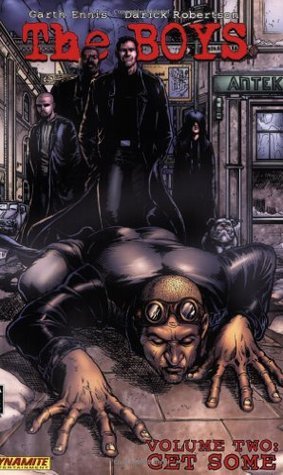
The Boys: Get Some

This is a review of The Boys: Get Some by Garth Ennis (writer) and Darick Robertson (artist). You can read my review of the first volume, here. Please be aware that this volume contains challenging material that may trigger readers. I would provide a detailed content warning, but this review is only around 500 words. The point of The Boys is to push boundaries, or to say that there are no boundaries. If you do not agree, my advice is to not engage. Also: SPOILER ALERT.

The Boys are CIA sponsored team led by the Butcher that consists of Wee Hughie, Mother’s Milk, The Woman, and The Frenchman. They exist to combat the growing superhuman problem. What’s the problem with superhumans? Well, they are written as real people with superhuman powers. Anyone older than ten can figure out why that would be a problem.

The first storyline, Get Some, opens with Butcher and Wee Hughie investigating the death of a young gay man who fell off a roof. They visit a gay bar, where the bartender tells them that the person in question had a crush on SwingWing, a superhero who embraces social justice issues and whom everyone assumes is gay.

Three-and-a-half issues later, SwingWing – who is not gay and who despises gay people – confesses, and Butcher tells him that he will let him go if SwingWing becomes his snitch. Except Butcher is lying. He removes a screw from SwingWing’s jetpack, which malfunctions a few days later, causing him to plummet to his death in a scene that is not even shown. Nobody knows what happened but Butcher and the reader, and readers not paying attention might miss it.

The second storyline, Glorious Five Year Plan, is set in Russia and introduces Love Sausage. The plot involves 150 rogue superhumans, exploding heads, and a coup backed by the Russian mob and an American corporation. Except it’s not a coup, it’s more like an elaborate sales pitch that fails when Butcher finds the remote (read: kill switch) and blows 150 superhuman heads off.

The most interesting thing about The Boys is trying to figure out what makes Butcher tick. Why does he kill SwingWing the way he does, instead of sending him to jail or just outright killing him? I don’t know. Butcher is hard to read. On the surface, Garth Ennis might not seem like a very subtle writer, but appearances can be deceiving. I had to read most of these issues twice to see what was really happening.

Do I enjoy reading The Boys? Yes, I do. I’ve been reading comics for a long time and I get the comic insider jokes, which there are lots of. I don’t endorse Ennis’ use of racist/sexist/homophobic language, although his message that a person’s actions should count more than their words comes through loud and clear. People who read this after seeing the Amazon Prime series might be in for a shock, but if you like Garth Ennis without an editor, this is the series for you.

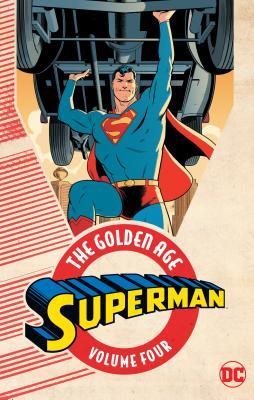
Superman Golden Age Volume Four

This is a review of Superman Golden Age Volume 4. Read my reviews of the first three volumes here, here, and here. One of the things that becomes clearer as I plow through these volumes is that Golden Age Superman is an odd duck. Exhibit A: Clark Kent and Lois Lane interview a fisherman who claims to have seen a mermaid. Since the fisherman is the type who thinks that aliens from Dimension X have reversed his brain, Lois doesn’t believe him. But Superman does. Why would he? Because Superman is the same type of weirdo as the fisherman. It all makes sense now!

Later in the same story, Superman crushes an undersea invasion of the surface world, which leads to massive casualties. At the time, there was a war going on in Europe. Reading this raises the question of what’s to stop Superman from flying into Germany and ending the war before lunch? Stories like this one are a case of hewing too close to reality. Speaking of which: a tale in this volume features an unscrupulous businessman stealing the rights from an inventor so that he gets rich and the creator doesn’t get a dime. Hey, did you know another multimillion dollar Superman movie came out?

Superman foe Lex Luthor is in four of these stories – five, if you count the Lightning Master tale. The Lightning Master sure looks like Luthor, but since the story ends with Superman executing him – Golden Age Superman does whatever he wants and faces no consequences – I assume the creators decided not to kill him. Good choice, since Luthor is the only villain who can make Superman break a sweat. Other standout villains in this volume include a hypnotist violinist and a big game hunter with a walk-in freezer who sure resembles a serial killer.

The creators have fun, which is great to see. They are writing the same three or four stories under insane deadlines, so why not? Many of the panels are funny or contain in-jokes. In one panel, Superman reads an issue of Action Comics. In another, Lois Lane – who switches from red to a canary yellow dress – is tied to a chair. Lois tips the chair over reaching a phone, where she screams at Clark Kent, who thinks she’s putting him on.

Superman’s cast continues to expand. This volume introduces Jimmy Olsen, cub reporter! Zach Snyder notwithstanding, Jimmy is still around today. Unlike Lois Lane, Jimmy has impulse control and doesn’t blindly barge into situations. On the other hand, he doesn’t have a godlike alien watching his every move. Lois steps on his back to enter a window, which says a lot about his place in the pecking order.

Credit goes to the creators for producing a wish-fulfillment comic for kids that still manages to be entertaining. I have enjoyed every one of these volumes. Recommended if you like Superman and Golden Age comics.

Annihilation Omnibus: Nova

This is a review of the Nova miniseries, written by Dan Abnett & Andy Lanning with art by Kev Walker, which appears in the Annihilation Omnibus. Read my review of the first volume, Drax the Destroyer, here. The Annihilation Wave is coming! What’s the Annihilation Wave, you may ask? In the Marvel Universe, there’s a place called The Negative Zone. The king of the Negative Zone is a bug thing named Annihilus, and the Annihilation Omnibus chronicles his invasion of our universe (The Positive Zone?).

This graphic novel features the adventures of Nova, aka Richard Rider, a member of the Nova Corps, which fyi isn’t ANYTHING like the Green Lantern Corps. The Nova Corps meet to discuss the impending threat of the Annihilation Wave, and five minutes later they are gone except for Richard and the Xandarian WorldMind, which uploads itself into his brain. This is good and bad – it boosts Richard’s powers, but he can’t handle all that data and eventually his monkey brain will pop like a zit.

Luckily Richard has Drax – who appeared in the first miniseries – to give him a helping hand. Drax has dropped the Destroyer moniker, but his specialty is still killing things, which is good because in this series there’s a lot of stuff to kill. Together, they escape the remains of Xandar and meet up with cosmic goodie two shoes Quasar, possessor of the coveted quantum bands. Too bad the Annihilation Wave is in hot pursuit.

Will Annihilus conquer the universe? How long can Richard hold out before his brain fries? And will the Xandarian WorldMind ever shut up? I read Annihilation years ago, and didn’t appreciate how much fun it was. That may be because most of the characters are obscure, and today – well, they’re still obscure, but that makes it more interesting. Annihilation was a huge gamble on Marvel’s part, and it paid off. Recommended for lovers of cosmic superheroics and space opera.