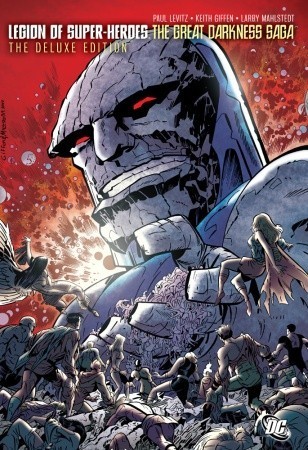
Legion of Super Heroes: The Great Darkness Saga

This is a review of the Legion of Super-Heroes: The Great Darkness Saga, written by Paul Levitz with art by Keith Giffen. You can read my review of Superboy and the Legion of Super Heroes Volume One here

The Legion of Super Heroes are a group of 30th century youngsters with superpowers who have teamed up to defend the universe. Back in the Silver Age they were all teenagers. Thus, the monikers Cosmic Boy, Saturn Girl, Light Lass, etc. The stories in this volume, written in the late 1980s, treat them more as New Adults (early twenties). Think space opera combined with superpowers and dopey melodrama.

By dopey melodrama I’m talking romance, because let’s face it, everyone loves romance!!! How about an example? Light Lass convinces her beau Timber Wolf – who has a face that could scare a block of concrete – to undergo cosmetic surgery. 

Soon afterwards Timber Wolf is shanghaied into a disastrous intel mission on the Khund (not-nice aliens) homeworld. They are rescued in the nick of time by a team led by Saturn Girl, which crashes on an asteroid. By the way, Saturn Girl is Light Lass’ sister-in-law. 

Hey, why doesn’t Light Lass lead the rescue party? Wonder what’s up with that? Our hapless heroes are rescued by another search party led by Light Lass, who sees Saturn Girl and Timber Wolf hugging. Light Lass quits the Legion, giving Timber Wolf an ultimatum – stay or go with her. What will he do? 

In the meantime, Princess Projectra and Karate Kid return to her homeland and are almost burned at the stake. Brainiac Five accidentally resurrects an old Legion foe, Computo, which marks his one billionth screw-up since he joined the team. Everyone forgives him, because they’re used to it. And someone stirs in a deserted old planet in backwater space.

The Legion receives a much-needed shot in the arm when Keith Giffen comes onto the title as artist and co-plotter. We have new Legionnaires – Blok, who is a living rock; Invisible Kid, whose little sister is host to genocidal computer Computo; and The White Witch, a sorceress. 

This volume features the Great Darkness Saga, a five issue storyline that involves the awakening of cosmic menace Darkseid in the 30th century. I am not giving anything away because the cover of this volume shows us Darkseid, who terraforms an entire planet into his effigy. 

Darkseid sends out degraded versions of cloned heroes as his emissaries – to collect items of power, and then people. The Legion is overmatched, especially when Darkseid learns of the existence of the planet Daxam, which orbits a red sun. He warps the planet under a yellow sun, which means billions of super-powered Daxamites under his control! Can the universe survive? Well, yeah, but it’s a big story.  

Nowadays, the Great Darkness Saga would be a special event with multiple issues in twelve different titles. Instead it’s just there – the best Legion of Super Heroes storyline ever created, one of the top superhero comic storylines of the 20th century, and a high point of both of the creators’ careers. If you like superhero comics combined with space opera it doesn’t get any better than this.
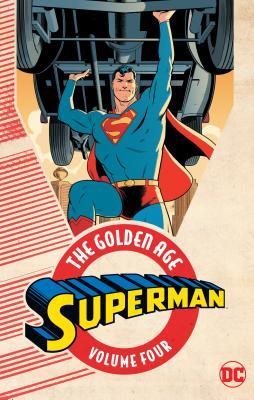
Superman Golden Age Volume Four

This is a review of Superman Golden Age Volume 4. Read my reviews of the first three volumes here, here, and here. One of the things that becomes clearer as I plow through these volumes is that Golden Age Superman is an odd duck. Exhibit A: Clark Kent and Lois Lane interview a fisherman who claims to have seen a mermaid. Since the fisherman is the type who thinks that aliens from Dimension X have reversed his brain, Lois doesn’t believe him. But Superman does. Why would he? Because Superman is the same type of weirdo as the fisherman. It all makes sense now!

Later in the same story, Superman crushes an undersea invasion of the surface world, which leads to massive casualties. At the time, there was a war going on in Europe. Reading this raises the question of what’s to stop Superman from flying into Germany and ending the war before lunch? Stories like this one are a case of hewing too close to reality. Speaking of which: a tale in this volume features an unscrupulous businessman stealing the rights from an inventor so that he gets rich and the creator doesn’t get a dime. Hey, did you know another multimillion dollar Superman movie came out?

Superman foe Lex Luthor is in four of these stories – five, if you count the Lightning Master tale. The Lightning Master sure looks like Luthor, but since the story ends with Superman executing him – Golden Age Superman does whatever he wants and faces no consequences – I assume the creators decided not to kill him. Good choice, since Luthor is the only villain who can make Superman break a sweat. Other standout villains in this volume include a hypnotist violinist and a big game hunter with a walk-in freezer who sure resembles a serial killer.

The creators have fun, which is great to see. They are writing the same three or four stories under insane deadlines, so why not? Many of the panels are funny or contain in-jokes. In one panel, Superman reads an issue of Action Comics. In another, Lois Lane – who switches from red to a canary yellow dress – is tied to a chair. Lois tips the chair over reaching a phone, where she screams at Clark Kent, who thinks she’s putting him on.

Superman’s cast continues to expand. This volume introduces Jimmy Olsen, cub reporter! Zach Snyder notwithstanding, Jimmy is still around today. Unlike Lois Lane, Jimmy has impulse control and doesn’t blindly barge into situations. On the other hand, he doesn’t have a godlike alien watching his every move. Lois steps on his back to enter a window, which says a lot about his place in the pecking order.

Credit goes to the creators for producing a wish-fulfillment comic for kids that still manages to be entertaining. I have enjoyed every one of these volumes. Recommended if you like Superman and Golden Age comics.

The Boys: The Name of the Game

This is a review of The Boys: The Name of the Game, a near-future satire of superhero comics by Garth Ennis (writer) and Darrick Robertson (artist). Before diving in, know that there is a lot of gratuitous sex and violence in this series, much of it scatological. I am not going to bother listing all the trigger warnings, but here’s an example: after a pitched battle, a hamster crawls out of a fallen superhuman’s butt, and Wee Hughie (more on him later!) takes it home as a pet because he feels sorry for the little guy.

Is this graphic novel any good? Yes, it is, and I am not alone in thinking that. The Boys is a breakout hit on Amazon Prime. Just know what you are getting into, as this series is designed to offend a certain type of reader. If you are that reader, stay away.

The Boys takes place in a world where superhumans run amok. Does that sound familiar? Well, it’s the same premise as Kingdom Come, reviewed here. That’s where the similarities to Kingdom Come end, however. The superhumans themselves are like rock stars with superpowered libidos high on cocaine and ultra-powered Viagra. Think drugs, orgies, and mass destruction. And those are the sanctioned ones.

Wee Hughie is our baseline normal. We meet the Wee One when he tells his girlfriend that the grey aliens are actually pink, and are trying to turn everyone gay. He and his gal clasp hands as they confess their everlasting love. Of course, anyone who’s ever read a comic book in their life knows what happens next. Spoiler alert: she dies horribly at the hands of a superhuman.

Wee Hughie is recruited into The Boys by The Butcher, a big man who despises superhumans. The Butcher’s stated reason for hating superhumans may or may not be true, because the Butcher is a manipulative son of a bitch. He draws Hughie into the fold, bit by bit. You might even call it a seduction. The rest of the group consists of a dude named Mother’s Milk and two psychopaths, The Frenchman and The Female, who are the same character in that they seem mild but turn into killing machines when provoked. They all have super powers.

The Boys are unofficially sanctioned by the CIA to – well, that depends on who you ask. The CIA would have you believe their mission is to keep the superhuman community in check. The Butcher’s views on the topic are more of the scorched earth variety. Their ultimate foes are sanctioned superhuman team The Seven. Think the Justice League, except they have corporate sponsorships and the male members are perverts who sexually harass their new female recruit.

This is the graphic novel that sets it all up, but there’s still plenty of action. Wee Hughie kills someone with his newfound superhuman powers – granted to him when The Butcher jabs an unwanted needle into his neck – and also buys a habitat for his brand-new hamster! Recommended for fans of Garth Ennis, lovers of mayhem, and purveyors of potty humor. If you like the TV series, I am sure you will enjoy the source material, also.

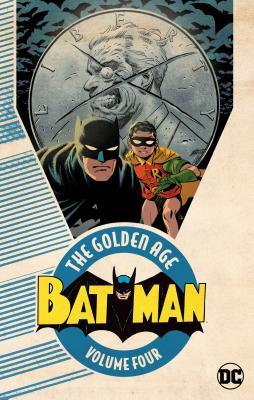
Batman The Golden Age Volume Four

This is a review of Batman: The Golden Age Volume Four, written by Bill Finger with art by Bob Kane and published in the 1940’s. Read my reviews of the first three volumes here, here, and here. In this volume, we have Two Face’s origin story, along with appearances by Catwoman, The Scarecrow, and The Penguin. The Joker appears so often he should be given billing on the strip: Batman, Robin & The Joker has a nice ring to it!

There are also the usual thugs, fifth columnists, and gangsters, which is where we see the interesting stories. Batman’s Rogue Gallery always gets top billing, but with tales not featuring weirdo villains the creators need to come up with an angle. Thus, we have stories about the two feuding brothers whose father is killed by a bad guy, a tearjerker about the kindly neighborhood druggist, and the boy who wants to be Robin, but is hampered by the fact that he’s way too stupid to be Robin.

My personal favorite issue features Batman and Robin splitting up. Batman tells his young ward their partnership is dissolved and throws his Robin picture in the trash. A devastated Dick Grayson leaves to become a hobo – I don’t recall if he has a bindle over his shoulder, but I sure hope he does. Turns out that evildoers threatened Robin, which is why Batman decides to go it alone!

After Batman is captured and sealed in a room, a ‘la Edgar Allen Poe, Robin returns – and is captured. The thugs have a brainwave and unseal the room, which allows Batman to beat the crap out of them, and the Dynamic Duo are reunited, with Robin having no hard feelings at all. Nothing dysfunctional about that relationship!

I must say a few words about the deathtraps. During the 1930’s and 1940’s, movie serials were very popular. Serials appeared in chapters, with every chapter ending in a cliffhanger, usually involving the female lead being tied up. The same thing happens in Batman stories of that time period. The Dynamic Duo are captured, usually by being whacked over the head. Instead of killing them, the thugs put them in deathtraps. If you think about it – which you shouldn’t – there is no reason for this. Why tie someone up and shove them in a car loaded with dynamite, when you can shoot them in the head and drop them into Gotham harbor?

This is a fun read recommended for fans of golden age comics and Batman completionists.

Kingdom Come

Kingdom Come is a four-issue DC comic event written by Mark Waid and drawn by Alex Ross. Kingdom Come is a Superman story. Kingdom Come is also an optimistic story, despite featuring a million-plus person body count. As event comics go, it is blessedly short and not bloated. Everything you need for a perfect reading experience is contained in this four-issue miniseries.

Kingdom Come can be viewed as a direct response to Frank Miller’s The Dark Knight Returns, which was about authoritarianism; and Alan Moore’s The Watchmen, which was about nihilism (what the author intended is irrelevant). Kingdom Come deals with authoritarianism and nihilism and rejects them both in favor of – that would be telling. I am curious as to whether the folks at Marvel sent Waid & Ross a fruitcake when Civil War came out, because they sure cribbed from it. You can even see the seeds of this graphic novel in Jonathan Hickman’s X-Men run.

The frame story concerns the Spectre choosing a new host, pastor Norman McKay. Who cares? Well, as the Spectre’s human anchor, Norman will have to judge humanity and thus holds the fate of the world in his hands. What brought about this sad state of affairs, you ask? The superhuman community is left in disarray after the Joker visits Metropolis, goes on a killing spree (which includes Lois Lane), and is killed by Magog, who is a hero. At least the public sees Magog as a hero. Magog’s exoneration makes Superman quit, and the superhuman community falls apart. What rises are a band of out-of-control young men and women with superpowers and no impulse control, ala Garth Ennis’ The Boys.

Sparks fly when a pitched battle with the Parasite leads to a nuclear explosion. Millions die, and Kansas becomes a nuclear wasteland. This leads Superman, spurred on by Wonder Woman, to return from his self-imposed exile. Many members of the superhuman community (minus Batman) join him. The superhumans who refuse to submit are placed in a prison in Kansas until they learn the error of their ways.

We know this is stupid because Batman thinks it’s stupid. You’d think a superhuman prison is something Batman might endorse, but you’d be wrong. Batman is a human being, but Superman is too busy playing god to consult any normal humans about this. Will The Man of Steel be the unwilling harbinger of the apocalypse? And where does the Big Red Cheese fit into all this?

Kingdom Come is a Superman story, but it features DC’s version of the trinity – Superman, Batman, Wonder Woman. Superman is either overly idealistic or naïve, depending on your point-of-view; Wonder Woman is too militaristic; Batman is a loner with authoritarian tendencies. Separately they are flawed; together, they cancel out each other’s weaknesses.

Kingdom Come features great writing and awesome art. Alex Ross’ character designs are breathtaking, especially with such a large cast. There are Easter eggs – both visual and written – interspersed throughout the graphic novel, which reads more like a painting than a comic. Highly recommended!

Superboy and the Legion of Super Heroes Volume One

This is a review of Superboy and the Legion of Super Heroes Volume One, written by Paul Levitz and featuring art from a number of artists, including Mike Grell. The Legion of Super Heroes is a Silver Age invention, with an ensemble cast of 30th century teenaged superheroes and superheroines, including Superboy (who flies in from the 20th century).

This volume features three interesting storylines. The first is the wedding of Saturn Girl and Lightning Lad, whose nuptials are disturbed by the Time Trapper. The Trapper alters history but nobody knows it except Superboy, who travels to the 30th century from a time period BEFORE history was changed. The second story features Grimbor the Chainsman, whose goal in life is tying up members of the Legion. Surprisingly, good ole’ Grimbor hasn’t been used all that much lately.

The third is a storyline about the framing of Ultra Boy, a character who possesses Superboy’s abilities but can only use one of his powers at a time. Ultra Boy visits former lover, An Ryd. Yes, that’s her name. Ultra Boy seems confused as to why she would choose a cheap motel room for their meeting. Unfortunately for him, An Ryd has no interests but self-interests and sells him out. I have no idea if she’s an objectivist, but this story makes it clear that Ultra Boy is really stupid. Poor An Ryd is murdered and Ultra Boy wakes, framed for her murder.

When his Legion buddies ask him to explain, Ultra Boy of course acts like a criminal and runs away. Left on his own, there is little doubt Ultra Boy would be in solitary for a hundred years, but luckily there exist Legion members with three-digit IQs. The culprit – not the murderer – is revealed, and Ultra Boy is vindicated!

There are a bunch of interesting things about this storyline, chief among them being that Ultra Boy cannot decipher social cues, especially sexual social cues. His girlfriend, Phantom Girl, looks very wholesome and even wears her hair in ponytails. There’s also the heavily muscled older male science officer who seems to take Ultra Boy’s betrayal personally. All stuff I would have missed back in my teens.

Anyway, did I mention that Saturn Girl and Lightning Lad get hitched? They have to quit the team because the Legion’s charter forbids married members. One of the reasons I enjoyed these issues so much is that nobody ever asks the obvious question, such as ‘why not change the charter then?’ The members themselves act more like new adults than teenagers, but there’s still a lot of posturing, chest-beating, and stupid drama.

 Paul Levitz is the gold standard for the Legion of Super Heroes, and these stories are better than most of the comics being published around that time period (late 70’s, early 80’s). Recommended for Legion of Super Heroes fans and also fans of space opera, because a few of these stories (Time Trapper) feature interesting science fiction concepts.

The Flash Silver Age Volume Three

This is a review of The Flash Silver Age Volume Three, written by John Broome and drawn by Carmine Infantino. Read my reviews of Volumes One and Two here and here. The Flash is of course the Fastest Man on Earth. Mild-mannered police scientist Barry Allen is struck by lightning, which grants him super speed. He can outrun bullets, time travel, and control every atom in his body! He has a fiancée, hen reporter (not a typo, Google it!)  Iris Allen; a young protégé, Kid Flash; a weird friend, The Elongated Man; PLUS a bow-tie, and he’s ready to go!

Know that this volume contains many erudite rogues, the type of blue-collar supervillain who will haul beer crates during the day and invent a perpetual motion machine during lunch break. Instead of selling their inventions and living the rest of their lives in luxury, they use their inventions to rob jewelry stores. They’re all the same character in that they are doing it for the kicks and not the money. We have an episode with the Mirror Master – I think it was the Mirror Master – breaking out of jail because his rogue rating went down in the prison newspaper, which I’m guessing is put out by his fellow cons. His rogue rating goes up and then tanks when the Flash flattens him.

There are also a few science fiction stories. I respect the fact that Mr. Broome always invents an explanation for his ridiculous Silver Age stories. In one story, the Flash time travels to the future to videotape the end of the earth for his girlfriend. He touches something, which is stupid, and ends up with Hands of Death ™. Everything he touches withers and dies. How to cure this? Just eat grain and oats, which I guess is immune to aging but will absorb the toxins in his hands and thus create an antidote when consumed. Simple!

The Flash’s supporting cast continues to expand. We meet Iris Allen’s brilliant professor father, who I’m sure wanders around asking people what day of the week it is, but almost deduces Flash’s secret identity using Einstein’s Theory of Relativity. When Barry uses super speed, time slows down around him, and his watch slows down. That’s why he’s always late. He’s not a lazy bum after all! And we have The Reverse Flash, who hails from the 25th century and is destined to become the Flash’s greatest foe.

These comics were written in the 1960s for children and young teens, and now they are being made into TV shows and movies that make millions of dollars. How influential are these comics? Well, if the creative team wasn’t doing work-for-hire, they would’ve been millionaires before they died. The lesson: own your own intellectual property! If you are a fan of the Flash and Silver Age comics you will enjoy this.

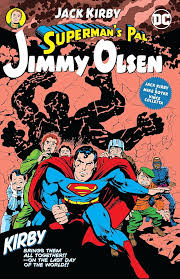
Superman’s Pal, Jimmy Olsen

This is a review of Superman’s Pal, Jimmy Olsen written and drawn by Jack Kirby. When people discuss Mr. Kirby’s DC work, they will usually talk about Kamandi or The Demon, reviewed here and here. I’ve never heard a word about this graphic novel, which is a shame. This book, which showcases Superman alongside an ensemble cast, is first-rate science fiction.

What about that ensemble cast, anyway? We have Clark Kent, the Newsboy Legion, the Golden Guardian, who is a clone – no, not of Captain America – as well as that freckled young cub reporter, Jimmy Olsen himself. The Newsboy Legion features five kids who have a vehicle called the Whiz Wagon, based on the Fantasti-Car, that can fly and is also amphibious. The kids are interchangeable, except for the one who dresses in scuba gear all the time, which won’t bode well after he hits puberty.

The plot revolves around The Hairies, a secret group of super-intelligent vat grown humans who live inside a mountain and drive around in a missile carrier disguised as a monster. They’re guarded by a biker gang and are doing top secret experiments on the human genome, backed by the U.S. government and Superman. In the 1970’s, that wasn’t considered unethical; today, there would be collective apoplexy.

Jimmy Olsen and the annoying – I mean youthful – members of the Newsboy Legion investigate. They tangle with the biker gang, and Jimmy automatically becomes head honcho when he punches out their leader. Jimmy Olsen, Biker, is only one of the many startling transformations in store for the reader. We also have Rampaging Jimmy Olsen, transformed by science into a mean green killing machine that doesn’t resemble the Incredible Hulk – NO, NOT AT ALL – and Neanderthal Jimmy Olsen.

Sound weird? Wait until the scene where everyone drops acid, including Superman, that Head Square Himself. Oh, Kirby gives us some nonsense about a solar phone, but this is his version of an acid trip. Anyway, Olsen and company discover that The Hairies are fiddling with human DNA, making all matters of chimera, including tiny Jimmy Olsens! At one point we look through a microscope to see the tiny Olsens, each wearing a pair of tighty whities.

Darkseid, rightfully deciding the world isn’t ready for that much Jimmy Olsen, sends the most incompetent cat’s paw in the DC Universe to destroy the Hairies. Media mogul Morgan Edge spends all his time trying to kill Jimmy Olsen and the Newsboy Legion. While they are annoying, he could just fire them instead, but I guess I’m missing something.

Other stories include a villain who lives in a volcano, a Scottish Lake Monster, and a miniature planet full of Count Dracula lookalikes that makes TOTAL SENSE when explained. We also have a story starring Don Rickles and his twin, which may have been funny when it was released, but somehow I doubt it.

Nobody in this graphic novel has anything resembling a personality, but that’s my only quibble. Mr. Kirby was a genius, and is allowed a misstep here and there. Highly recommended!

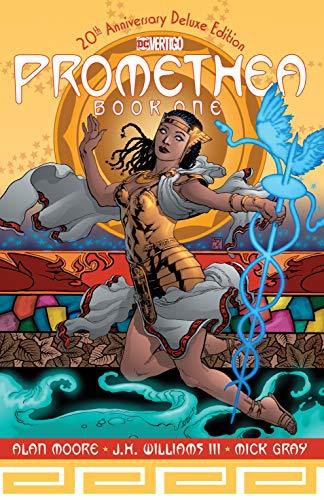
Promethea 20th Anniversary Deluxe Edition Volume One

This is a review of Promethea 20th Anniversary Deluxe Edition Volume One by Alan Moore (writer) and J.H. Williams III (art). Content warning: there is a consensual sex scene between two adults in this volume that people may find upsetting because of the gap in their ages. The setting is gritty near-future New York City, but this is fantasy and not science fiction – unless you consider magic to be science.

Promethea is a living story who flies and wields a glowing blue caduceus composed of a pair of talking snakes. Her alter ego, a college student named Sophie Bangs, is writing a term paper about Promethea and unwittingly becomes her new host after meeting Barbara Shelley (the old host). They encounter a Smee, which Promethea destroys, but this is just a warning shot. Sophie needs to learn magic, fast, before Hell’s legions come calling. Throughout the ages, there have been other Promethea hosts. Sophie travels to the Immateria to meet them, but still needs a teacher in the material world.

There is a lot of exposition about magic here, so be prepared. An entire issue is spent on the topic.  Unfortunately, after reading this I still do not understand magic, but I will say it seems very complex. Promethea spends most of her time flying around blasting people with her magic caduceus, and I’m unsure what is so complex about that, but I’m no wizard.

Sophie approaches Jack Faust, who is a wizard. He agrees to teach her magic on one condition. He wants sex…with Promethea. Keep in mind that we’ve seen the tragic fate of people who dare to love Promethea, and it’s not pretty. Neither is Jack Faust, who is portrayed as old, unattractive, and creepy, complete with a gross apartment. They have sex, which takes up an entire issue (20+ pages for non-comic readers).

I will be honest here. If I knew about the sex scene, I wouldn’t have reviewed this graphic novel. I am not defending or condemning, except to say that this scene has an ick factor through the roof and will upset people. I am sure Mr. Moore knew this. Since Jack Faust is a magician, Moore could have portrayed him as young and handsome (Faust even mentions using a glamour), but he makes the choice not to. Unfortunately, the sex scene is what most people will recall after reading this and will thus dominate the discussion, making it difficult to talk about the graphic novel’s other virtues and flaws.

Yes, what about those virtues and flaws? As I stated, there’s too much exposition about magic. The storytelling is great, because plotting has always been a strength of Mr. Moore’s. The art is phantasmagoric; too bad I can’t post visuals. I read this graphic novel virtually, but if it seems like something you might enjoy, I suggest that you buy the actual physical book.  

And that’s my review.

The Human Target

This is a review of The Human Target by Tom King (writer) and Greg Smallwood (artist). Technically, this is a twelve-issue miniseries in two volumes, and my review covers both volumes. SPOILER WARNING. I reveal the killer’s identity, so if you don’t want to know whodunit, read no further.

Let’s get this out of the way. I can see how this book would upset people. A big part of what Mr. King does is give new spins on older, more obscure characters. Other comic writers who do this are Brian Michael Bendis and, of course, Alan Moore. If you are the nostalgic type who has a stake in the JLI (Justice League International) and its characters, I would not read this. You won’t like it.

Why not? There was a show I watched as a kid called The Brady Bunch, which was a dumb kid’s show. That’s fine, because I was a dumb kid. After The Brady Bunch ended, they did a spinoff called The Brady Brides that dealt with all sorts of adult themes that never lasted longer than an episode. Marcia would have a drinking problem, and then it’s never referred to again. I loved The Brady Bunch. I think I watched a single issue of The Brady Brides, and hated it so much I never watched another.

People have nostalgia for the characters of the JLI. I read the first few years of the run, 30+ years ago. It featured a group of obscure, often goofy, characters. We have Guy Gardner, the Rambo Green Lantern; Booster Gold, who comes from the future; Fire and Ice, who hail from Brazil and Norway; Rocket Red, a Russian hero; Blue Beetle, best known for BWAH HAH HAH. No, seriously. That’s what he’s known for.

Turns out, the characters of the DC Universe harbor deep, dark secrets and untold trauma. If you’ve read Brad Meltzer’s Identity Crisis, where Ralph Dibny’s wife Sue is raped and then murdered, you’ll know what I mean. Why would people read that? I read it back in the day, but at that point I’d been reading superhero comics for decades. Basically, it’s adding a degree of noir – not realism – to your comics. If it’s done well, think Watchmen. If it’s not done well, we have ASSHOLE BATMAN and The Blue Beetle being shot in the head.

Would I read it today? Well, I read the first volume of this graphic novel, skimmed the second, and then called it quits. Skimming means I read the issues quickly, a skill perfected from years of waiting in line at the comic book store. Did I hate this graphic novel that much? No, I thought it was depressing. At its heart, The Human Target is all about watching an emotionally stunted man die.

The plot: Christopher Chance, who goes by the moniker the Human Target, impersonates Lex Luthor. That is Mr. Chance’s job, taking the bullet for his client. In this instance, it’s literal. Chance is shot impersonating Luthor, but that’s what saves his life. He spits out the poisoned coffee he drank earlier, but the poison is still in his system, which means he has twelve days to live. One of the interesting things about this graphic novel is that Luthor is one of the few characters who is what he appears to be.

Okay, then. Besides everyone, who’d want to kill Luthor? Hold on, there’s a clue. The poison has trace radiation from a certain dimension, blah blah blah. Turns out a member of the JLI poisoned the coffee, and Chance has twelve days to find the culprit. Lo and behold, the culprit turns out to be Ice, the last person you’d expect. Why? I read the book, and I don’t know why. Yes, she died (and then got better), and it was sort of Luthor’s fault, but who in the DC Universe hasn’t died? Maybe she’s unstable because she killed her father and grandfather as a child and then made up a dumb story about being raised by a lost tribe? Most superhero origins are traumatic, so what does that prove?

Ice is an enigma. In noir terms, she’s the femme fatale. Whether or not she fits into that mold, or whether she’s jammed into it, I leave to the reader. There are two ways to read Ice – the first is that she feels awful about accidentally, you know, killing Chance; the second is that she does everything she can to derail Chance’s investigation. Either interpretation seems valid to me. Or it could be both, because two things can be true at the same time. It’s hard to tell, because a lot of what she does and says is performative. The creators wouldn’t have Chance fall for the woman who kills him, right? BWAH HAH HAH!

The technical term for Chance is an alphahole. What’s that? Well, combine an alpha male with an asshole and – well, you get the idea. The alphahole is a staple in romance novels, where he has attractive qualities and is always redeemable (after he grovels). Chance is a realistic alphahole in that he has no friends, family, or lovers. No, that’s not true. Chance has one friend, who has the worst cover identity in the universe. The guy owns a pizza parlor, doesn’t know a word of Italian, and microwaves his pizza. Since Chance has killed many people and will also serve your prison sentence for you, he isn’t a nice guy. He is absolutely positively no doubt terrified of any hint of intimacy.

The Human Target is an uneasy fusion of superhero comics and noir. Plot-wise, it’s tight; character-wise, it’s all over the place. Let me be clear: I have no particular love or nostalgia for these characters. The reinterpretations didn’t work for me, and I thought Chance was an extremely depressing character. Maybe this graphic novel will work for you, but that’s my take. Anyway, next week I will have a best/worst of 2024 list for the New Year.