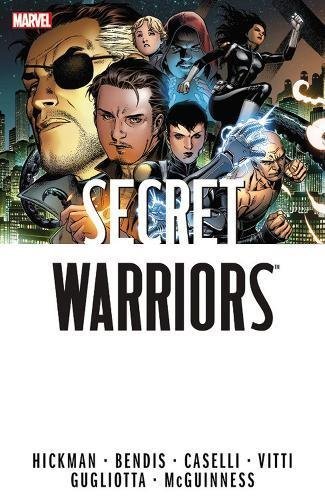
Secret Warriors Complete Collection Volume One

This is a review of Secret Warriors Complete Collection Volume One. The cover of this graphic novel is misleading. The writer of this volume is Jonathan Hickman, not Brian Michael Bendis. At the time Mr. Bendis was the biggest name in comics, so it makes sense they’d want him on the cover, and he did contribute material. However, Mr. Hickman wrote sixteen of the sixteen-plus (+) issues.

The question you have to ask yourself is do you like espionage comics? If yes, this is the graphic novel for you. Norman Osborne, aka The Green Goblin, has become the most powerful man in the United States. He’s in charge of HAMMER, which used to be SHIELD, a NATO based espionage outfit. That doesn’t sit well with Nick Fury, former head of SHIELD. He forms his own army, spearheaded by decommissioned SHIELD agents, the Howling Commandos (his outfit during the second World War), and three caterpillar teams. Caterpillars are kids with superpowers, btw.

HYDRA is undergoing its own renaissance, spearheaded by Baron Strucker. In this volume, HYDRA are portrayed as Nazis and ex-Nazis. Not to be undone, LEVIATHAN – a Soviet era secret organization – rises from the ashes. By the end of this graphic novel, HYDRA and LEVIATHAN have gone to war and one of Fury’s caterpillar teams has a traitor.

This volume has a large ensemble cast, but the main players are Nick Fury, Daisy Johnson (the leader of one of Fury’s caterpillar teams), and Baron Strucker. It is mostly self-contained, thank god. The twenty eight plus issues of this series are one BIG storyline, emphasis on the capital letters. The plot features lots of back and forth, twists and turns, backstabbing, wheels within wheels. Most of Mr. Hickman’s plot twists are foreshadowed.

This graphic novel takes place in the post-Secret Invasion Marvel era, called Siege, and IMO is the best thing to come out of that era. Highly recommended, especially for fans of espionage comics.
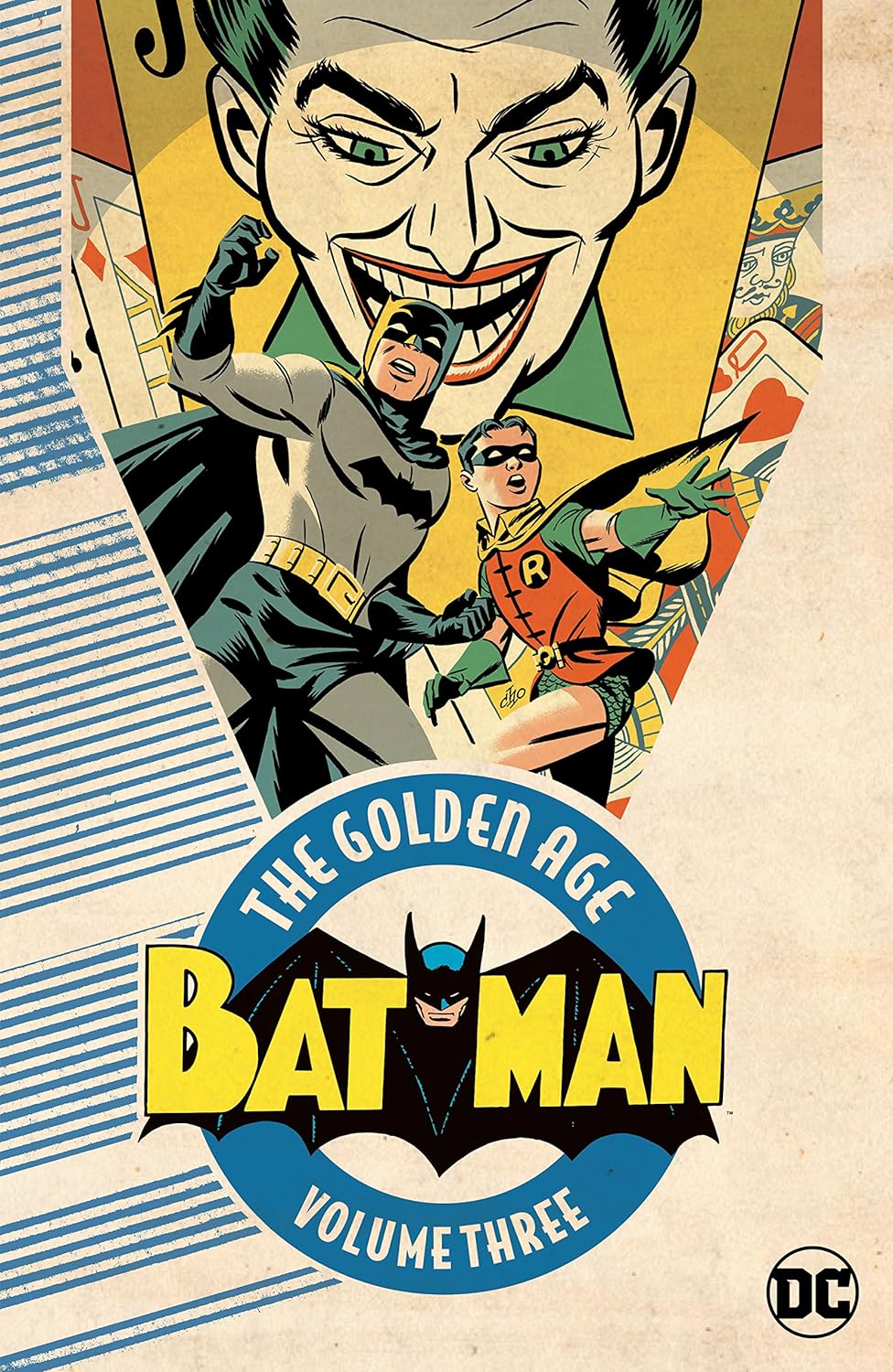
Batman The Golden Age Volume Three

This is a review of Batman The Golden Age Volume Three. You can read my reviews of Volumes One and Two here and here. Batman’s adventures continue in this volume. The Penguin makes his first appearance and evades capture three times. The Cat also appears, which is great because she’s an interesting character who adds something different to these stories.

But the real guest star of this volume is The Joker, who is basically in every other issue. The best Joker – er, Batman – story involves the Clown Prince turning himself in to the authorities and being tried and executed for his crimes. Luckily, the Joker just happens to have a serum that can raise him from the dead, if it’s injected within fifteen minutes of his death. Thus, the Joker is reborn with a clean record. Citizen Joker, lol.

I give this creative team props for consistency. All the stories so far have been one-shots, which can’t be easy. The downside is that they all blend. You’d think at some point the thugs that capture Batman would just put a bullet through his head rather than tie him up and put him in a deathtrap, which has been spoofed ad infinitum in the 1960’s Adam West Batman series, but no dice.

This is the first volume I’ve read where the creative team might break the fourth wall. Weird stuff happens, highlighted by a bizarre spanking scene. The other standout is the strange relationship between Batman and the Joker. There’s a point in most of these stories when the Joker has Batman in his power, but apparently he relishes capturing and putting Batman into deathtraps more than killing him. The Clown Prince has no such compunctions about murdering Robin, whom he almost kills – I think it’s twice – so far.

Entertaining for Batman fans, but don’t read more than two or three issues in one sitting.

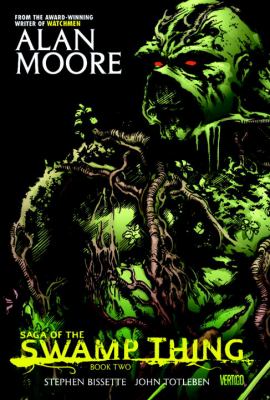
Saga of the Swamp Thing, Book Two

This is a review of Saga of the Swamp Thing Book Two. This volume continues fabled writer Alan Moore’s run on Swamp Thing, aided and abetted by wondrous artwork by John Totleben and Stephen Bissette. You can read my review of the first volume, here.

This graphic novel features Abigail Arcane, who has patched up her marital disputes with husband Matthew. Matt has ditched the sauce for more important things – he buys a house, gets a job, all that good adult shit. True, there are flies all over that house, his co-workers resemble dead serial killers, and don’t look at him too close in a mirror – but besides that, Matt is doing great. He also has godlike powers, because reasons.

Turns out Abby’s wicked uncle Arcane is infesting Matt’s body. Arcane might be dead, but death can’t hold a good villain down. Before Arcane reveals himself, we see the beginning and aftermath of a sexual encounter between him and his unknowing niece, which qualifies as incest and wins an award for one of the grossest moments in mainstream comic book history.

It also qualifies as a problematic scene. Later in the book, Swamp Thing and Abigail enter into an honest-to-God consensual relationship that feels real, something exceedingly rare in comics. Comic book relationships usually feature a lot of the other half being ditched at dinner or being held hostage by Lex Luthor, and often culminate in a fridging when the new writer wants to get rid of the character. It’s interesting that the same author wrote both scenes.

Not to overstate things, but this is a groundbreaking series. Alan Moore casts a shadow over comics that spans decades. His Watchmen miniseries was instrumental in bringing about something called the Dark Age of Comics. One can argue whether this was a good thing, but there’s no denying his influence. And this is the series where he made his bones (amongst Americans, that is).

So yeah, if you like horror comics you should read this.

The New Teen Titans: Volume One

This is a review of The New Teen Titans: Volume One. I will not lie to you, dear reader. Marv Wolfman (writer) and George Perez’s (artist) run of the New Teen Titans is one of my favorite comic runs of all time. Keep in mind I’m not saying it’s one of the best, just one of my favorites. Yes, some of the content is problematic. Read: Raven manipulating Kid Flash’s emotions. But the synergy between artist and writer works very well. Along with Chris Claremont – writer of the X-Men – Mr. Wolfman is one of the most influential mainstream comic writers of the early 1980’s.

The New Teen Titans consists of seven members: Robin #1, aka Dick Grayson; Wonder Girl, aka Donna Troy, aka Wonder Woman Lite; Kid Flash, aka Wally West, aka Midwestern Americanus. These were the three members of the original team, whose adventures in the 1970’s may be readable to other people. They are joined by Starfire, aka Koriand’r, aka escapee from a Gor novel; Raven, aka Rachel Roth; Changeling, aka Gar Logan, aka Doom Patrol castoff; and Cyborg, aka Vic Stone.

The New Teen Titans are formed by Raven, an empath, because she’s terrified of her father, who is the Devil. The demon Trigon is the lord of an alternate universe who is so over-the-top evil it’s almost comical. His daughter Raven is emotionally manipulative and emotionally withdrawn at the same time, most likely because of trauma. One of the things that escaped my notice when I was twelve years old is that Raven is also a pacifist who eschews physical violence.

The villains of this volume are Deathstroke the Terminator, a villain who’s still around today. Also the Fearsome Five, who aren’t. But the star villain of this volume is Raven’s old man, Trigon, who puts the capital E in Evil. The Titans also have the obligatory brawl with another superhero team, in this case the Justice League of America, for plot reasons I didn’t quite understand at the time (mostly because it made no sense). Years later, I finally get it. Hint: $$$.

Highly recommended.

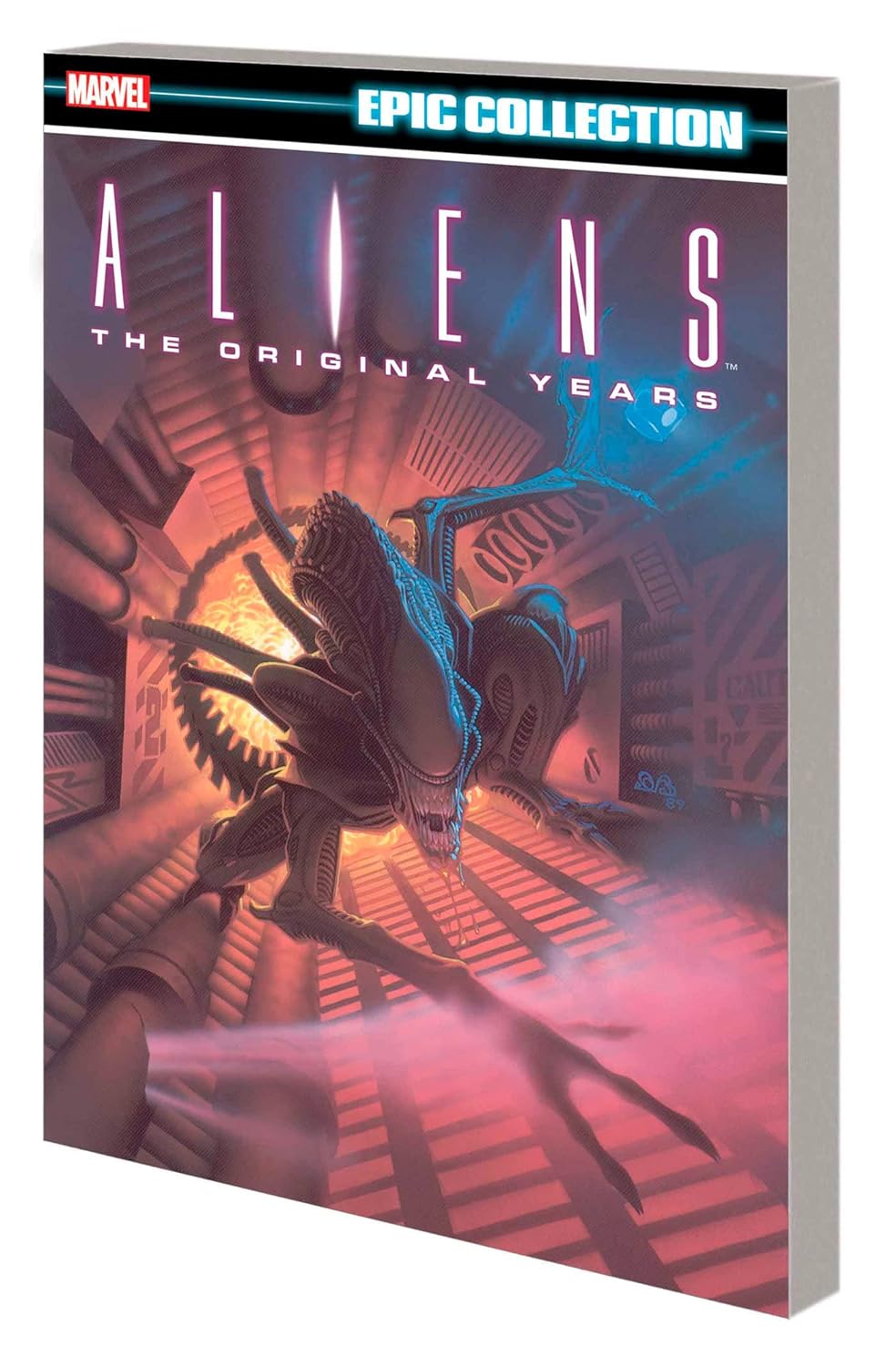
Aliens Epic Collection: The Original Years

This is a review of Aliens Epic Collection: The Original Years, the meat of which consists of three miniseries published after the release of James Cameron’s Aliens movie in 1986. The main characters are Newt and Hicks, two characters from Aliens. These miniseries were published before the release of the third Alien movie, in which it’s revealed that Newt and Hicks are dead. They had to change their names in reprints of these series.

The plot: Newt and Hicks are back on earth. Fifteen years have passed since Aliens, with no sign of Ripley. Both Newt and Hicks have wounds, physical and psychological. Hicks’ face has been half burnt off by the aliens, and he now spends most of his free time drinking and brawling. Newt is in a mental hospital for shock. When Hicks has a chance to go back to Acheron (where the first two Alien movies took place), he jumps at the chance because reasons. He breaks Newt out of the mental hospital and takes her with him because they’re going to lobotomize her.

Turns out that everyone wants to get them some alien – corporations, the military, scientists, wacky religious cults. They get their wish when earth is overrun with xenomorphs. In the second miniseries, Newt and Hicks meet a military man who thinks he can train the aliens like dogs and use them to retake earth. That goes about as well as expected. In the final miniseries of the volume, Ripley returns with a plan to end the alien menace once and for all. Will it work, or is it just another crackpot scheme?

I read a few of these issues back when they were published. I might even have collected them, although I can’t say I remember. To be truthful, I recalled very little about these comics. If I did, it’s likely I wouldn’t have bought this collection. I do not write these reviews to be negative. Unfortunately, these comics just aren’t very good. The pacing of the individual issues feels off, and many of the characters are clichés and/or caricatures. Sam Keith does the art for Aliens: Earth War, and his pencils look great, but his character designs are very different from the first two miniseries. In some cases, his characters look like different people.

If you loved the Alien movies, you could read this. Or you could just rewatch the movies.

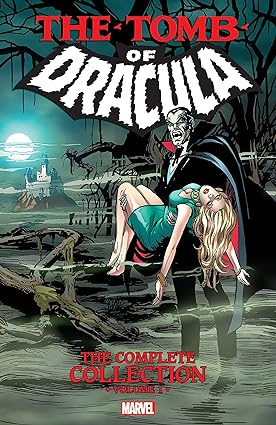
Tomb of Dracula Complete Collection: Volume One

This is a review of Tomb of Dracula Complete Collection Volume One. Reading the first volume of this series is a milestone for me, because my OCD fixated on this book, which means I read the first six issues repeatedly, with no prospect of ever finishing. But finish I did! Now how’s that book I finally read?

Very good, with the exception of some creaky material that hasn’t aged well (cringeworthy dialogue, racial stereotypes, make it up as you go along vampire lore). Dracula rises from his tomb in the first issue, courtesy of all-round idiot Clifton Graves. Graves becomes Dracula’s slave, and is so obnoxious and fawning that Dracula gets sick of him and lets him die in an exploding boat. But Grave’s best pal Frank Drake is worse. Frank is related to Dracula, and his solution to life’s problems is a left hook. Luckily, the focus of the book is Dracula himself and the ensemble cast. BTW, this series takes place in London in the 1970’s.

We have Dracula, self-proclaimed Lord of the Vampires, who is irredeemable. Depending on what issue you read, he’s either 100 or 500 years old. Then there are the ones who hunt him: Frank Drake, master of fisticuffs; Rachel van Helsing, who wields a crossbow, the most useless vampire hunting weapon in existence; Taj, who does not speak; Blade, a vampire hunter who’s part vampire himself. They’re led by Quincy Harker, who has a daughter named Edith. Long-time readers should be able to guess which cast member gets killed in the first volume.

The art, done by Gene Colan, is one of the best things about this series. Mr. Colan’s character designs are striking, and his art has lots of fun details (Dracula’s cufflinks are little bats). The writing gets off to a rocky start, with three authors (Gerry Conway, Archie Goodwin, Gardner Fox) scripting the first six issues. Marv Wolfman took over the writing duties starting with Issue #7, and after that the book finds its legs. One of the things I like about this series is that even though it’s part of the Marvel Universe, it feels mostly self-contained. Dracula doesn’t feel like some rubber-suited supervillain.

A must read for Dracula and horror fans.

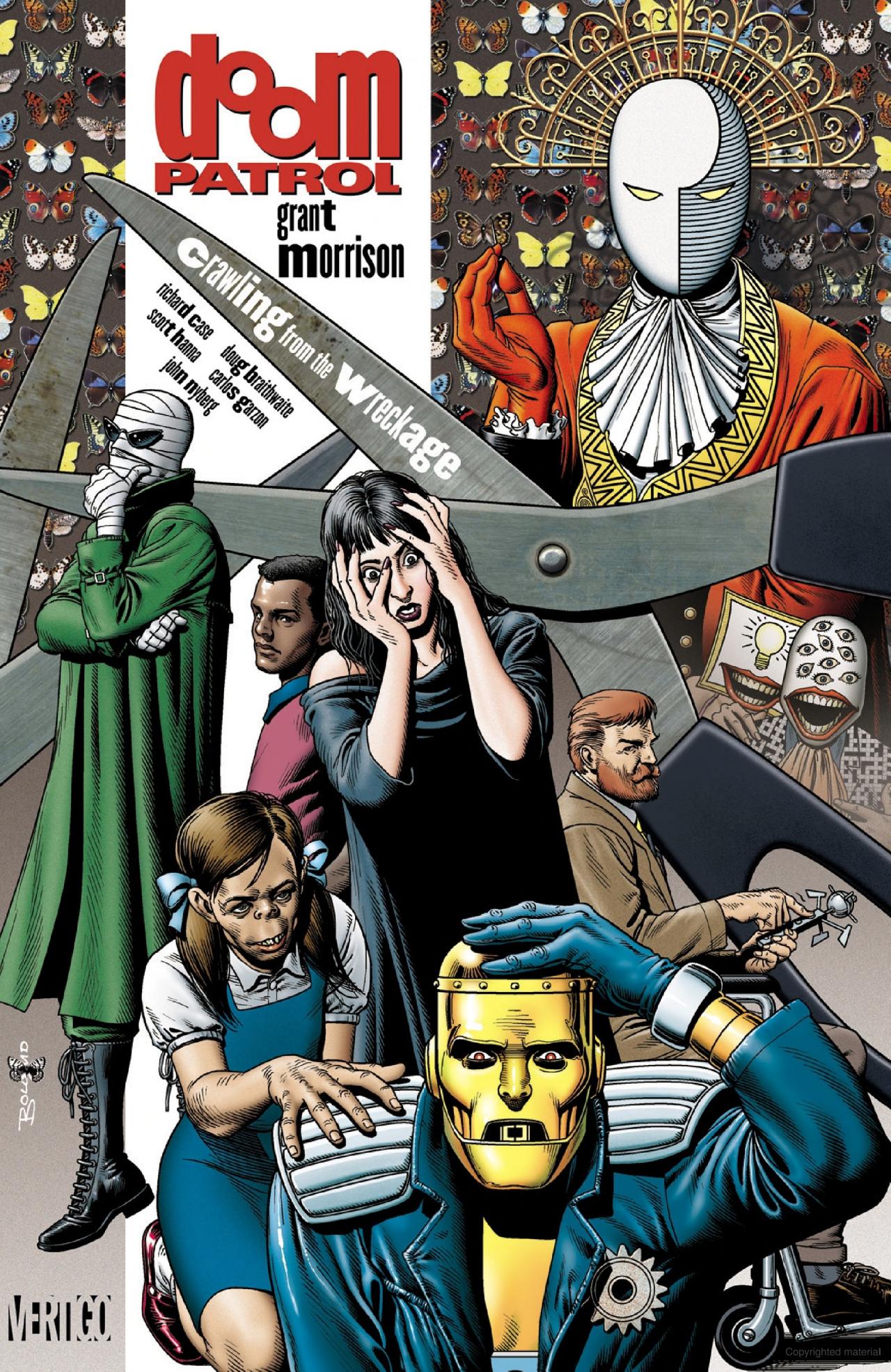
Doom Patrol: Crawling from the Wreckage

This is a review of Doom Patrol: Crawling from the Wreckage, written by Grant Morrison in the late 80’s/early 90’s. The Doom Patrol have been around since the 1960’s and are the ugly stepsisters of superhero teams. They aren’t powerful, or good looking, or important; they’re an obscure bunch of weirdos in tights. Luckily, the late 80’s were sort of the heyday for obscure weirdos – in comics, anyway.

A confession: I adored this version of the Doom Patrol. By the time this series came out, I’d read thousands of comics. This one was just different. It felt like someone took a Philosophy/Modern Art class (focused on surrealism & Dada) and jammed it all into a comic book.

Cliff Steele, aka Robotman, is the normal member of the group. He’s just a Regular Joe, stuck in a robot body. It’s not even an interesting robot body, but that will change. There’s also Rebis, an amalgamation of man, woman, and negative being, who has covered their body in bandages. Finally, Crazy Jane (the writer’s name, not mine), who has a superpower to go along with every one of her 64 personalities.

The Doom Patrol’s first encounter is with the Scissor Men, emissaries of the imaginary city Orqwith. Orqwith is staging a hostile takeover of earth, overwriting it into its own image. And then there’s Red Jack, aka Jack the Ripper, aka God, who likes collecting butterflies and looks like an escapee from a deck of playing cards. The writing is great, the art a little less so. Still, a strong start to one of my favorite series.

Wolverine Epic Collection: Madripoor Nights

This is a review of Wolverine Epic Collection: Madripoor Nights. Wolverine, aka Logan, is one of Marvel’s most popular characters. Something about a guy with nonexistent social skills and a nasty temper resonates with comic readers. Wolverine is a mutant whose abilities include enhanced senses and the ability to heal from almost any wound. He also has metal bones and a set of matching claws that retract and unfurl at his command.

Wolverine is a member of the X-Men, but became so popular Marvel gave him his own series. The setting is Madripoor, a carbon copy of Casablanca. Logan hangs out in a bar dressed in a white tux and eyepatch and tells everyone to call him Patch. He thinks he’s incognito, which is stupid because he’s so recognizable, but it turns out everyone was just pretending not to know him, because you don’t upset a guy with nonexistent social skills and a rotten temper.

 The first storyline features a character called Tyger, who wants to be a crime lord. To do so she must kill the current crime lord, who commands a pet succubus and a guy with knives for hands. Wolverine helps Tyger because her brain was scrambled by villains in an issue of the X-Men. Other storylines include a sword that possesses its wielder, an encounter with Mr. Fixit (aka The Hulk), and fledgling crime lord Tyger’s first gang war!

One of the good things about this series is that the writer (Chris Claremont) does a fine job of producing credible villains. As the years passed, Wolverine has gotten more and more powerful, until he became an unstoppable killing machine. Nothing can kill Wolverine, which is dull as dirt. In this graphic novel, Logan gets his ass kicked all over Madripoor.

Anyway, good series with lots of action. Recommended.

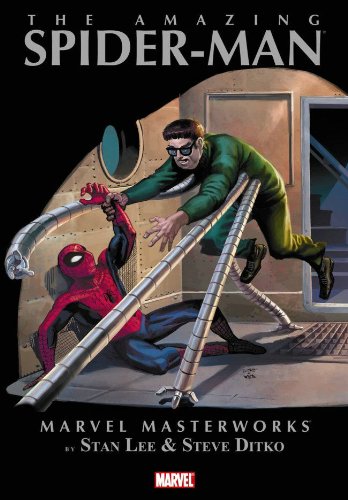
Marvel Masterworks: The Amazing Spider-Man Volume Two

This is a review of Marvel Masterworks: Amazing Spider-Man Volume 2. You can read my review of the first volume, here. In this volume, the classic Ditko/Lee run continues. The rogue’s gallery fleshes out, as we meet Mysterio, Kraven the Hunter, and The Green Goblin. Spider-Man has a great rogue’s gallery, right up there with Batman and The Flash.

Speaking of rogue’s galleries, who is Spidey’s arch-nemesis? I myself think it’s Doctor Octopus, but the Green Goblin is a fine choice also. Spider-Man’s first two encounters with the Green Goblin end in a draw, whereas by that point Spidey had beaten Doctor Octopus multiple times already. OTOH, Spider-Man has a longer history with Doc Ock, because Norman Osborne spent over a decade on the shelf (read: dead) before the powers-that-be resurrected him. Bottom line: they’re both good choices.

Peter’s personal life changes. He starts dating, Betty Brant and Liz Allan. Aunt May, who at this point is only 40,000 years old, has a heart attack. Peter also quits being Spider-Man for a few issues. Spider-Man throwing his costume in the trash has happened often enough that at this point it’s a cliché, but it wasn’t back then. Bottom line: this is a creative team working at the top of their game. A must-read for fans of Spider-Man and fans of superhero comics.

The Flash: The Death of Iris West

This is a review of The Flash: The Death of Iris West. A few firsts. Flash #278, which resides in this volume, is the first superhero comic I read. Well, it might be Fantastic Four #210, which I bought around the same time, but my memory says it’s the Flash. A second first: the title of this volume is The Death of Iris West, aka Mrs. Barry Allen (as she’s referred to in this volume), aka The Flash’s wife. If you don’t want the details of her fridging, don’t read any further.

This volume doesn’t come flying out of the gates. The Flash fights a villain named The Clown. At first glance, this is a mismatch – The Flash can run faster than light and has total control of his molecular structure (I have no idea how these two powers are related). The Clown throws cream pies. Thus, it comes as a surprise when The Clown nails The Flash in the face with the aforementioned cream pie. Heck, it comes as a surprise that any fight with The Flash lasts more than two seconds. Thank god I’m not the writer, who has to think of creative ways to make the Flash’s villains seem like credible threats.

Maybe The Flashster has other things on his mind. He’s been neglecting his lovely wife, Iris, who responds by pulling out the stops – romantic candlelight dinners, new hairdo, etc. The Flash claims he’d like to spend more time with his wife, but Gorilla Grodd has a hangnail or whatever, and he needs to deal with that. Then there’s the 16-year-old psychic teen with a crush on The Flash. Since Barry is thirty and could be her dad, this seems creepy, especially considering what happens to his wife.

I am not saying I didn’t enjoy this volume, because I did. The art is good, and I like writer Cary Bates’ scripts. It wasn’t Mr. Bates decision to kill Iris Allen. This was an editorial call, done to boost sales (I read this in an interview with Cary Bates). There’s no build-up or foreshadowing to Iris West’s death. Barry and Iris go to a costume party, which is crashed by ex-convict-Clockwork-Orange-fan-psychic-vampire Clive Yorkin. BTW, Yorkin is one of the best things about this volume. The Flash, shot up with angel dust, makes the mistaken assumption that Yorkin killed his wife. He’s wrong. The killer is Professor Zoom, denizen of the 25th century, who takes up supervillaining as a hobby because he’s bored.

If you’re a Flash fan, this is an important chapter in Barry Allen’s life, even though I’ve lost track of the number of times his character has been rebooted. If you’re not a Flash fan, it might take a few issues to figure out what’s going on. Still an enjoyable read.