Marvel Masterworks: Defenders Volume Two

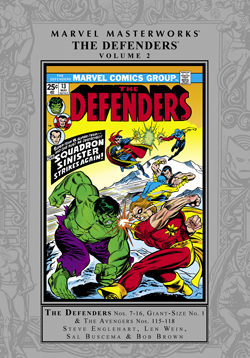
This is a review of Marvel Masterworks Defenders Volume Two. The high point of this graphic novel is the six-issue Avengers/Defenders war, in which the two teams duke it out to retrieve what looks like a plumber’s helper. The plot has a slapdash energy that I liked, even though I’ve seen it a million times before. Other storylines include a romp in the past with the Black Knight, along with The Hulk fighting the Abominable Snowman. Also: The Squadron Supreme sells earth to aliens!

Being Marvel’s one and only non-team, The Defenders’ roster changes with the winds, but semi-regular members include Doctor Strange, The Valkyrie, and The Hulk. In the volume I read, Hawkeye and Nighthawk come to visit, but only Nighthawk stays. 1970’s superhero comics mostly consist of a bunch of one or two issue storylines and have a villain of the month quality – Loki, Mordred, The Squadron Supreme, Magneto, etc.

These issues read fine, but are mostly forgettable. Writer Steve Englehart leaves, and writer Len Wein arrives. Both Mr. Englehart and Mr. Wein do good work here, but both have done better elsewhere. This is perfectly decent comics schlock that doesn’t take itself too seriously.

Batman: Dark Victory

This is a review of Batman: Dark Victory, which is a direct sequel to Batman: The Long Halloween, reviewed here. Batman is younger in this graphic novel, but by the end of it he seems to have aged a hundred years. At the start of the story, Catwoman is flirting with him; by the end, he’s stepping on her neck. This is something I didn’t notice on my first read, years ago. The progression from Young Batman to mega-bleak Asshole Batman is depressing to behold.

Batman is a loner, but there are three people in this storyline he considers confiding to. The first, Harvey Dent, would have been an enormous mistake. From reading Long Halloween, it’s my opinion that Harvey was way off-kilter before getting the acid treatment. The second, Catwoman, is more interesting. Tom King played with this concept in his Batman run. The third is Dick Grayson, whose acrobat parents were murdered by mobsters in this very volume.

Bruce chooses to confide in Dick Grayson. My guess is that it’s partly because he empathizes with Dick’s anger and grief, and partly to keep Dick – who’s determined to solve his parents’ murders on his own – alive. I get that, but bringing a twelve or thirteen-year old into your war against crime (Dick Grayson is the first Robin) isn’t what a rational person does.

I’ve read a lot of Batman comics, and believe me Dick takes a beating. The second Robin, Jason Todd, was bludgeoned to death by a crowbar-wielding Joker, in a shameful 900-Number Scandal (call this number to vote if you want him to die!). They brought Jason back as the Red Hood, but when I read the original comic, he sure looked dead to me.

This doesn’t have much to do with the plot of Dark Victory, which is a lot easier to follow than The Long Halloween. Dark Victory lives up to its name, and includes one shock murder in the final act that I think is effective, because it knocks the magic pixie dust out of Batman’s eyes and shows that Dent is truly irredeemable.

Bottom line, this is one of the top ten Batman storylines I’ve ever read, but finish The Long Halloween first. Highly recommended.

Marvel Masterworks: Doctor Strange Volume One

  This is a review of Marvel Masterworks Doctor Strange Volume One. IMO, there are three classic Marvel titles to emerge from the early 1960’s. The first is Jack Kirby’s Fantastic Four, the second is Steve Ditko’s Spider-Man, and the third is Mr. Ditko’s Doctor Strange. I suppose you can also include Jack Kirby’s Captain America and SHIELD runs, which I believe took place in the same time period. The rest of the Marvel output from the early 1960’s is uneven (Daredevil and The Avengers), and some of it is just plain bad – early Thor and Iron Man were wretched.

Anyway, Doctor Strange is a standout. The reason for this is Steve Ditko, whose art for this series is bizarre, distinctive, and surreal. Besides the artwork, it wouldn’t surprise me if Ditko did much of the plotting, leaving Stan Lee to write the dialogue. I believe Steve Ditko to deserve the lion’s share of the credit for the quality of this title, but YMMV. The stories here range from five to twenty pages. The shorter stories are marvels of efficiency. Not a panel is wasted.

Doctor Strange lives in a mansion in Greenwich Village. He is Earth’s Sorcerer Supreme, a phrase that’s never really explained. The less said about his origin story – which is a take on a hoary old trope most people don’t use anymore – the better. Strange is written as an interesting mix of arrogance and humility – he will help anyone who asks, but there’s something that sets him apart from the rest of humanity. He’s not the type you’d like to have a drink with at a bar.

Doctor Strange’s foes include Baron Mordo, the Mindless Ones, and the Dread Dormammu. Strange has a cloak of levitation, and he can summon the all-seeing Eye of Agamotto and the Crimson Bands of Cytorrak. He’s a solitary figure, keeping to himself and not really fitting in with the rest of the Marvel Universe at that time. There’s an issue guest-starring Thor and also an issue where he shares the limelight with Spider-Man, but mostly the good doctor is a loner.

Highly recommended!

Green Lantern: The Silver Age Volume One

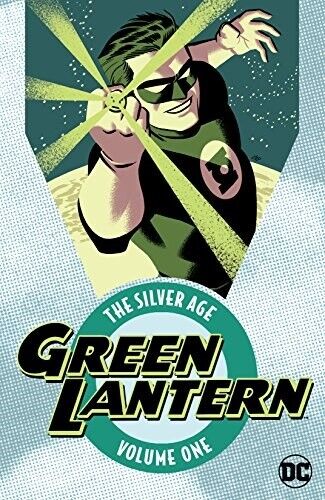
This is a review of Green Lantern: The Silver Age Volume One. For the most part, this is fun comic book science fiction. The writer introduces many characters and concepts – the Green Lantern Corps, Sinestro, Hector Hammond, The Weaponeers of Qward – and lays the groundwork for future stories here. There’s a story about a group of people who live underground hooked up to the Matrix – er, machines, but their minds wander about in a dream city.

Green Lantern is Hal Jordan, hotshot test pilot. He’s summoned to the spaceship of a dying alien, who gives him his power ring. This ring can manifest anything into existence, as long as you have enough willpower. I’m unsure what ‘willpower’ means in this context. Does it mean resisting second helpings or double desserts, or maybe holding it in when you have to use the bathroom? After reading this volume, I figured it means being decisive and quick-thinking, but what do I know?

Anyway, Hal becomes the equivalent of a cosmic cop. He fights evil with his power ring, which has a single vulnerability – it can’t affect the color yellow. Of course, Hal’s boss/love interest Carol Ferris falls in love with Green Lantern, while giving Hal the cold shoulder. BTW, Hal is the type of employee who gives Human Resource Departments migraines.

The episode I’ll always remember is when Green Lantern, trying to avoid Carol’s marriage proposal (it’s Leap Year, which means it’s okay for Carol to propose!), creates an enormous green monster with his power ring so he’ll have something to fight. When he bumps his head, the jolly green giant almost destroys the earth. Boy, they don’t make comics like that anymore!

My issue with this graphic novel has to do with Green Lantern’s sidekick, Thomas Kalmaku, who goes by a nickname that I will not use here. Thomas is written as a racial stereotype who’s used mostly for comic relief. Back then, people might have thought that was funny, but today it’s cringeworthy, and mars an otherwise good graphic novel.

Rom: The Original Marvel Years Omnibus Volume One

 This is part one of a review of Rom: The Original Marvel Years Omnibus Volume One. Because this is a longer graphic novel (thirty issues), I’m going to review it in two parts. One of my goals for the New Year is to read longer material. I started reviewing graphic novels in 2023 because at this point in my life I have trouble finishing longer books. Reading two issues per day isn’t a lot of work, but it’s additive. In 2023, I read and reviewed fifty-four graphic novels.

On to the review. Rom was a toy released by Parker Brothers in the late 1970’s. The toy company went to Marvel, who have written material for properties such as The Micronauts, Planet of the Apes, and G.I. Joe, for help in fleshing out the character. Writer Bill Mantlo and artist Sal Buscema filled in the blanks, and the rest is history.

Rom is a Spaceknight, hailing from the planet Galador, and he’s fighting a war against the evil Dire Wraiths. The Wraiths are shape-changers like Skrulls, but they depend on magic as much as science. They’re written as being evil with a capital ‘E.’ In one of the first issues, they shoot a dog. They let a man die on the operating table. You get the idea.

Rom – who has been pursuing the Dire Wraiths for two hundred years – crash lands on earth. He sets foot in West Virginia, and is almost run off the road by Brandy Clark, his future love interest. Rom uses his analyzer to determine that Brandy isn’t a Dire Wraith. When Brandy sees Rom seemingly kill humans, she’s a tad upset, but Rom explains to her that they are actually Dire Wraiths in disguise. He isn’t killing them, but banishing them to Limbo with his Neutralizer.

I am guessing the banishing to Limbo bit has to do with an edict Jim Shooter, the editor-in-chief of Marvel at the time, made about Marvel heroes not killing. This is used to great advantage here. Rom’s Neutralizer banishes the Dire Wraiths to Limbo, but to human eyes it looks like he’s killing human beings. All that’s left of the Dire Wraiths is a pile of ashes. Nobody believes Rom but Brandy and her boyfriend, Steve.

Rom, Brandy, and Steve soon become enmeshed in a bizarre love triangle. Rom is a cyborg; his nervous system has been bonded to his armor. This makes him very powerful, but since he’s partly human he’s also very, uh, lonely. Unfortunately, at this point he’s mostly robot. Rom soon falls in love with Brandy, who senses Rom’s noble spirit, and Steve doesn’t like any of it. Unlike Rom, Steve has a functioning penis, so you’d think there wouldn’t be much suspense as to how this love triangle ends, but appearances can be deceiving.

I stopped reading when Brandy is about to marry a Dire Wraith disguised as Steve, and Rom strides into the church. Sort of like that scene in The Graduate, except instead of Dustin Hoffman a eight-foot silver robot bursts into the church. Anyway, really good stuff. Highly recommended.

Part Two coming soon!

Marvel Masterworks Peter Parker The Spectacular Spider-Man Volume Two

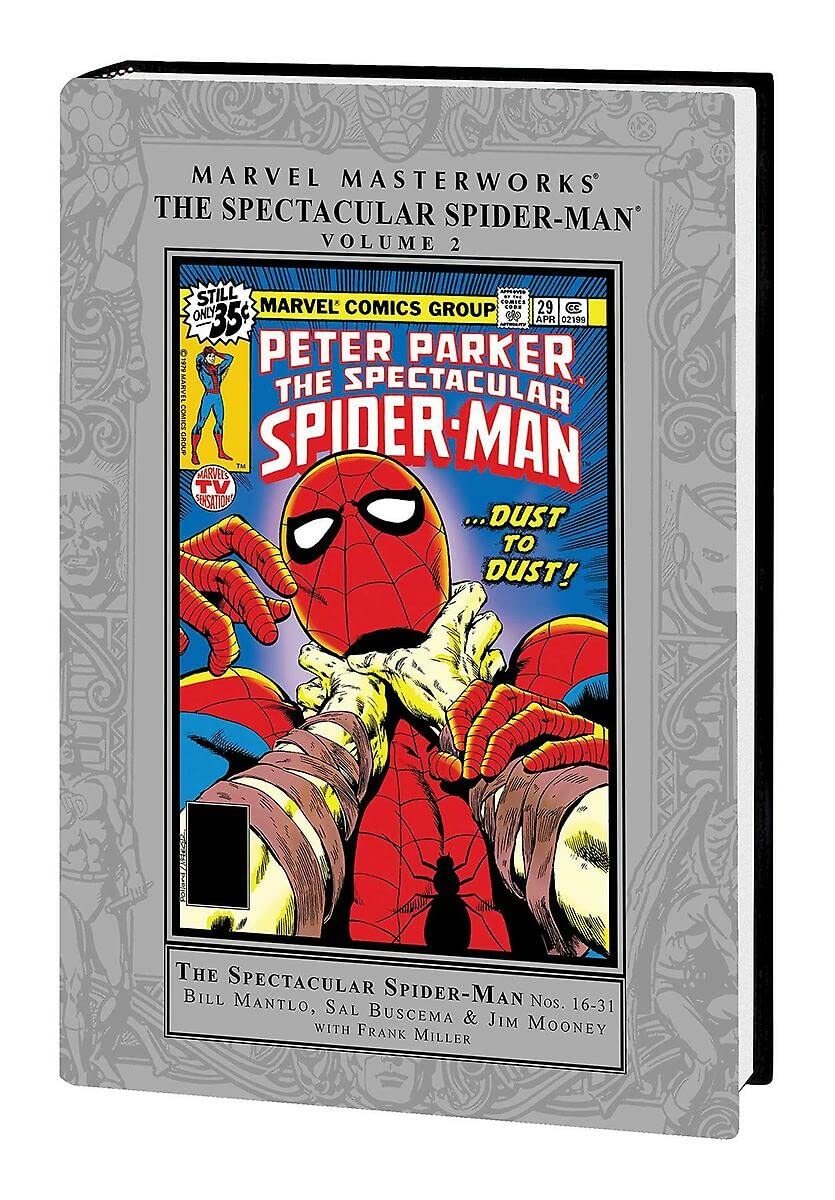
This is a review of Marvel Masterworks Peter Parker The Spectacular Spider-Man Volume Two. I read the first volume a few years back, but didn’t review it. This Spider-Man title features the art & writing team of Sal Buscema and Bill Mantlo, although Mr. Buscema didn’t draw everything in this volume. The issues are quick reads, as are so many Marvel titles of that time period (late 1970’s).

Mr. Mantlo wrote a lot of comics, many of which I’ve read. He also created lots of characters. In two volumes of Spectacular Spider-Man, he created Razorback, The White Tiger, Carrion, Spider Amoeba, and the Hypno-Hustler. Sure, there’s a few misses (read: Hypno-Hustler), but Mr. Mantlo also created characters such as Rocket Raccoon, who went on to star in the Guardians of the Galaxy movies.

This is a normal Spider-Man title for that time period. We have shorter story arcs, and an overarching storyline involving the Maggia that percolates for most of the volume. Peter goes to California, fights a brainwashed Iceman, and then battles the Masked Marauder and his dumb android. Coincidentally, I first read about The Masked Marauder and his dumb android earlier this month in Daredevil, reviewed here, but this time the character is handled a whole lot better, because Mr. Mantlo is not pulling plot points out of his ass. We have an appearance by Daredevil and Moon Knight, and last but certainly not least – the debut of the Spider Amoeba, which to my knowledge doesn’t survive more than a single issue. This is a real shame.

Frank Miller did some of the artwork, here, which is exciting. We also have a sneaky reference to Peter Parker having sex. Since the comic creators of that time couldn’t show the characters actually having sex, they used hints and tasteful cutaway scenes, and – well – at twelve years old I wasn’t a very astute reader. I spent my first thirty-plus years reading superhero comics convinced that none of them ever had sex. My attitude can be summed up by a scene in Brian Bendis’ New Avengers run, when Wolverine refers to his son and Spider-Man says – ‘wait a minute. You’ve had sex?!’ That was my reaction, sort of, when I finally read between the lines.

This graphic novel won’t set the world on fire, but it’s a fast, fun read from an underrated writer.

Tales of the Batman: Steve Englehart

This is a review of Tales of the Batman: Steve Englehart. I bought a bunch of Batman graphic novels over the holiday season. I’ve read and liked parts of Mr. Englehart’s West Coast Avengers and Green Lantern runs in the 1980’s, so I took a chance.

Reader, I was not disappointed. Mr. Englehart wrote the Joker Fish storyline, which apparently is famous even though I’ve never heard of it. Before this point, I’d never even heard of Silver St. Cloud. I don’t quite get why this run is so obscure, because Mr. Englehart has a unique take on the character. It might be because his original run on Batman is blink-and-you’ll-miss-it short, running eight issues in the 1970’s – but he makes those issues count. Mr. Englehart introduces a new villain, Dr. Phosphorous, and brings back two older villains (Dr. Hugo Strange and Deadshot) in an interesting way.

He also writes an awesome Joker. The Joker Fish storyline starts with the Clown Prince dumping toxic chemicals into the bay, which produces smiling fish. The Joker decides to cash in by copyrighting his Joker Fish, which means anyone eating a fish sandwich will owe him $$$. He then commences killing any bureaucrat that refuses to grant him the copyright.

And then there’s Silver St. Cloud, the love interest I’d never heard of. That might be because Mr. Englehart goes where few Batman writers have dared. Silver & Bruce start to date, and when it gets serious she figures out his secret identity. She leaves him, for a variety of reasons, and doesn’t return for 30 or so years (real time, not comic time), when the storyline is resolved – sort of.

As I’ve said, portraying Batman as an adult human being with certain, uh, needs, seems to be taboo amongst Batman writers. This is sad, because if you read more than two issues of Batman it becomes obvious that he really needs to get laid. So why doesn’t he? The simple explanation is the one Mr. Englehart went with. Batman declared war on crime as a boy, on a boy’s terms, which leaves no room for love. The simpler explanation, which is the one I go with, is that Batman is mentally ill.

I mean, whatever. Mr. Englehart pulls off the feat of having Batman be in a serious relationship with a woman that feels real, and it is additive rather than reductive to his character. The culmination of their affair occurs when Batman says something stupid, because he has no idea how to talk to women. This makes senses, as anyone who spends their nights dressed up as a bat will almost certainly lack basic social skills. The storyline as written in this volume feels unfinished, and I’m almost afraid to Google Silver St. Cloud’s name, as the easiest solution is to fridge her.

An underrated run that spans over three decades.

Hitman: A Rage in Arkham

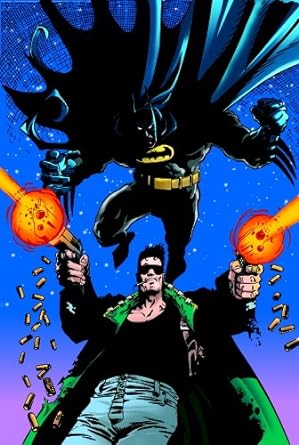
This is a review of Hitman: A Rage in Arkham. Garth Ennis, the writer of Hitman, is notorious. In this volume, you get PG-13 Garth because this is a superhuman comic. Superhuman, not superhero. Tommy Monaghan has X-ray vision and he can read minds. He is also a hitman who does hits on superhumans. Deep down, Tommy is portrayed as a decent guy with a sense of honor, even though he’s not. You can take this as sly meta-commentary, or just treat it like good stupid fun. Since many 90’s comics can be described as just stupid, this was and continues to be a standout title.

Tommy is hired to kill the Joker in Arkham Asylum. This leads to an encounter with Batman and a ten-armed hellfiend called The Mawzer. The best part of this volume is when Monaghan does a bunch of side-jobs in Arkham for beer and pizza money. Tommy also goes on a date, and reads her mind to discover what kind of food she likes. Hey, it beats cyber-stalking. Oh, and he throws up on Batman’s shoes.

This title works best when it is the equivalent of an action movie. From my recollection, the earlier part of this series is a lot of fun but goes downhill in later volumes, but we will see. Monaghan’s sense of honor amounts to only killing what he considers to be the bad guys. He’s written as a decent guy with a tough, blue-collar job. Like most of us, he worries about money, but he wouldn’t dream of using his newly found mind-reading powers to sell Batman’s secret identity to the highest bidder.

The trick to writing Hitman – and any other title featuring The Punisher, The Vigilante, or any other character whose main occupation is murder – is to portray the character as street smart rather than a homicidal maniac/serial killer, and have the villains be so scummy they always deserve what they get. This is also the formula for the billion or so buddy cop movies I watched in the 80’s.

Recommended!

Marvel Masterworks Daredevil Volume Three

This is a review of Marvel Masterworks Daredevil Volume Three. You can read my reviews of the first two volumes here and here. Thus far, this series has been uneven. I can sum up this particular volume in four words: great art, awful writing. Matt Murdock takes his identity hijinks to the next level when he starts pretending that he has an identical twin brother named Mike Murdock.

Matt tells Foggy Nelson and Karen Page, his law partner/friend and secretary/potential lover, that Mike is Daredevil and not him. Apparently they believe him, even though Matt and Foggy roomed together in college and Matt never mentioned having a twin brother. Oh, and Matt and Mike are never in the same room. Writer Brian Michael Bendis adapted some of this material as fodder for his own Daredevil series, where DD’s secret identity is treated as an open secret and he’s portrayed as an out-and-out narcissist.

In this volume, Matt’s antics are portrayed as funny – I guess? To me, it seems a little weird to be lying to friends, coworkers, and potential lovers. This seems like the type of storyline a kid might find funny. The Cobra/Mr. Hyde storyline starts out dopey, with Daredevil swinging around Manhattan dressed as Thor, but becomes interesting when Mr. Hyde manages to deaden DD’s other senses. Unfortunately, the climax of this storyline strains credulity.

On the plus side, we have the debut of the Leap Frog, another great weirdo Daredevil villain. The Leap Frog dresses up in a green frog costume and hops around as he robs banks. He joins the Stilt Man, The Owl, The Gladiator, and The Purple Man in the pantheon of Daredevil’s rogue gallery. Verdict: you can see the holes in the writing a mile away, as the writer is so obviously phoning it in, and the art can only take this series so far.

For Daredevil completionists only.

Batman: The Long Halloween

This is a review of Batman: The Long Halloween. I read this graphic novel years ago and even owned a physical copy, which I lost during a move. The timeframe is around the same time as Batman: Year One, which I’ve never read. Batman is just starting out, aided and abetted by policeman Jim Gordon. At this point he’s basically the GCPD’s unofficially sanctioned vigilante. Just FYI: if the police department of your city has a big spotlight they use to summon a guy who dresses as a bat to fight crime, you should consider relocating to another city.

The plot: a serial killer is killing mobsters on holidays. The unknown killer, dubbed Holiday, uses a .22 equipped with a modified silencer (a baby pacifier). This upsets Batman, who wants to stop Holiday; district attorney Harvey Dent, who isn’t all that upset; and Calendar Man, a serial killer who spends the graphic novel channeling Hannibal Lecter in Arkham Asylum. The Joker is also irked, and expresses his frustration by attempting to kill everyone in Gotham City, but he’s not a big player here.

Each of the thirteen issues takes place during a holiday and usually features a member of Batman’s rogue gallery. It’s a simple framing device that works very well. Two standouts: the portrayal of Cat Woman and Two-Face are very well done; this volume is Two-Face’s origin story. The art is wonderful, and the writing is very good as well. The script has layers and is more complex than it looks, but by the end of the graphic novel I was still a little confused. I can’t say more, because spoilers.

A great read for Batman fans.