The Flash by Mark Waid, Book Two

This is a review of The Flash by Mark Waid, Book Two. You can read what I thought of the first volume, here. This review requires a bit of Flash-edification to makes sense. The original Flash is Jay Garrick (alive), Barry Allen (dead) is his successor, and Wally West (Barry’s nephew) is the current Flash (very alive). This graphic novel starts innocently enough with a team-up between Wally West and Green Lantern Hal Jordan, where they face off against villains Hector Hammond and Gorilla Grodd. Rex the Wonder Dog guest stars!

After an encounter with a new Doctor Alchemy and a schmaltzy Christmas story, we witness the return of Barry Allen, the original Flash. Barry died in the first Crisis, back in the 1980’s. His return would not be unprecedented as superheroes die, are replaced by newer models, and return from the dead all the time. And this CERTAINLY IS Barry Allen. It must be, because he knows everything about Barry’s life. It’s not like he traveled from the future – the 25th century, maybe? – and read the authorized biography of Barry Allen. Of course not.

Anyway, Uncle Barry starts acting strangely, and it’s not long before he ZOOMs off on a rampage. The crime: the city failed to honor his memory when he was dead. Jay Garrick, the original Flash, rallies the troops – oldsters Johnny Quick and Max Mercury. Except this Flash – whoever he may be – is faster than any of them.

This is one of my favorite Flash storylines, period. Mr. Waid’s writing is a fusion of Silver Age ideals (optimistic, fun to read, good vs. evil) and the emotional depth (some would say nihilism) of the Modern Age. Wally is rejected by his hero, which devastates him, and that’s only the start. When Barry goes on a rampage, Wally gets thrashed because he isn’t as fast. Let’s face it – in most cases, The Flash is the most powerful guy in the room, but here Wally is a distant #2. Can he overcome his own self-doubt and fear to finally fill his mentor’s shoes?

Highly recommended!
‘BRING ME A LIGHT!’

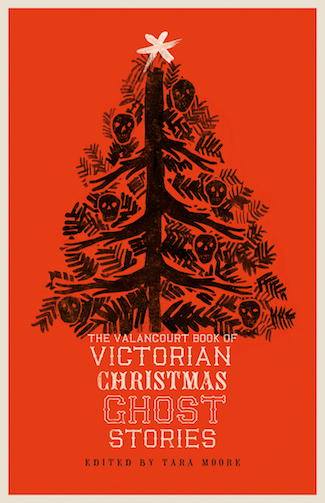
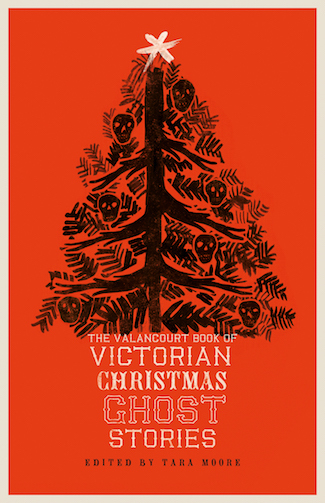
I am reviewing tales from The Valancourt Book of Victorian Christmas Ghost Stories for the month of December. Read my review of The Tapestried Chamber here, and my review of Horror: A True Tale here. This is a review of ‘Bring Me a Light!,’ written by Jane Margaret Hooper.

A young lord inherits property, including an old house. Everyone is afraid of the house but the young lord, who snickers at the superstitious locals. This changes after the young lord spends a few hours in the house after sunset. He sees the ghost of an evil old woman setting a younger woman afire with a taper, and then passes out.

Afterwards, the young lord learns that one of his relatives killed her daughter-in-law this way. The clothes Victorian ladies wore were so flammable they could combust. I suppose the old woman had her reasons, but come on. As Bob Geldof said – ‘what reason do you need to be shown?’ For those unfamiliar with the Boomtown Rats, this line is from a song about a girl who shoots up her school. When asked why, she says ‘I don’t like Mondays.’

Sometimes we overthink things. Simply put, the old woman is a sadist who also killed her husband. She doesn’t get away with the murder of her daughter-in-law, as her son and the servants leave her alone in the house, where she has to witness the ghosts reenacting her wicked deeds for the rest of her short life.

There’s also talk of buried treasure, guarded by the ghost of the son, which seems like a silly add-on. The young lord doesn’t need money, and money isn’t crucial to the plot. I would argue that this story doesn’t have a plot. It has a situation, which is all that’s needed. The tale is designed to draw the reader in by tickling his/her curiosity, culminating in a single shocking scene which still packs a punch today. I could’ve done without the longish explanation afterwards, which dilutes the story’s power, but those Victorians sure loved them some exposition.

Bring Me A Light!’ is a nasty little story. Recommended.

Marvel Masterworks: The Sub-Mariner Volume Two

This is a review of Marvel Masterworks: The Sub-Mariner Volume Two. You can read my review of the first volume, here. Warlord Krang, Namor’s archnemesis from the previous book, only makes a brief appearance. He’s replaced by Daredevil villain The Plunderer, aka Kazar’s Evil Brother, aka The Bad Seed, who wants to conquer the earth by arming his men with VIBRA-GUNS. Namor has a rock dropped on his head and then is buried in an avalanche, while Atlantis is destroyed for the second or third – or maybe the fourth – time. I lost count.

Prince Namor is as gullible and hot-tempered as ever. He has no control over his emotions, declaring war on the surface world in one panel and saving humans from certain death in the next. The meta-story revolves around his never-ending frustration with the surface world. He’s banned from Atlantis because of a stupid misunderstanding, and then leaves his people to fend for themselves after Atlantis is destroyed – when his subjects need him most. This is Namor’s fatal flaw, much like Magneto’s fatal flaw – his narcissism and anger ensure that it will always be about him. Namor must avenge this and wreak vengeance on that, blah blah blah. It’s a very childlike outlook.

The stories are less disjointed, but still way too reliant on coincidence, misunderstandings, and bad luck. The scene where Atlantis is destroyed is worth mentioning. The underwater city is carpet-bombed by a U.S. submarine; earlier, The Plunderer destroys a domed city full of humans. The visuals are striking, and makes me wonder if the creators were influenced by the footage and imagery of the Vietnam War. I don’t know if this is true, btw.

This volume should appeal to Sub-Mariner fans and lovers of obscure characters. Namor is interesting in that he’s a gray character – he’s fought alongside the Fantastic Four as well as Dr. Doom. Another possible draw is Bill Everett – the creator of The Sub-Mariner – doing the pencils and/or inkwork in a few of these issues. All in all, an interesting read about a flawed – but interesting – antihero.

.

Horror: A True Tale

I am reviewing tales from The Valancourt Book of Victorian Christmas Ghost Stories for the month of December in honor of the holidays. Read my review of The Tapestried Chamber, here. This is a review of Horror: A True Tale, published anonymously. Contrary to what I said in my first review, this story is set during Christmas.               

A well-to-do young woman celebrates the Yuletide holidays with her loving family. Her house is so crowded with love (and people) she has to sleep in a disused part of the house. Unfortunately, an escaped lunatic bursts into the bedroom and collapses on the bed. He grasps her sleeve so that she can’t get away. In the morning, she does gets away, but she’s aged decades from the shocking incident and her facial features are disfigured, although the lunatic didn’t touch her face. Her fiancée leaves her and she is now shunned by polite society, although it’s not clear if society shuns her, or if she does the shunning herself.           

Unlike The Tapestried Chamber, this is a scary story. People still tell variations of this tale today, mostly in urban legends – the man with a hook for a hand, the babysitter and the maniac, etc. We have a deep-rooted fear of being alone or isolated…and then realizing we aren’t really alone.                

This story has yet another layer. The narrator’s life is ruined by this event. I think it’s likely that the lunatic – who is depicted as being all-too real – did more than just grab her sleeve. The narrator seems to be stained from the experience. Is her disfigurement of the body or the mind? Did her features change that much, or did her supposed friends and family believe her to be tainted?

Anyway, this seems like a very modern story to me. It reads like an amalgam of morality tale and psychological horror, but what makes it stand out is the psychological horror. True, the language is archaic, but a sense of doom hangs over the tale. The author does a good job of foreshadowing (the butchered ewes!), and I also liked the addition of the nasty old great-aunt who might know more than she’s telling. The narrator herself is decidedly unreliable.

I doubt the Victorians viewed sexual assault as a topic for a ghost story. However, they as a society were obsessed with purity. Elements of this story seem to bear the mark of a morality tale – others try to turn the narrator from her chosen path (her sisters want her to spend the night with them!), but she ignores them and pays the price. What was her sin? Pride? Not being able to foretell the future?

Wait, I know: she slept in a bed not her own! I am being serious, here. The symbolism fits, but from a literal/logical point-of-view it makes no sense. However, horror is not about logic. Horror is all about how the world isn’t safe, how things don’t make sense, how bad things can randomly happen. Yes, it’s true: sometimes your life can be ruined by doing something as simple as sleeping in the wrong bed.

Recommended!

B.P.R.D.: The Dead

This is a review of B.P.R.D.: The Dead. A short recap: this is the fourth volume of the series. You can read my reviews of the first three volumes here, here, and here. B.P.R.D. stands for Bureau of Paranormal Research and Defense, whose members number Liz Sherman (Firestarter), Roger the Golem, Johann (medium), and Abe Sapien (fishman).

In this volume, the B.P.R.D. gets a new member! Ben Daimio has a simple origin story – he wakes up in a body bag. Daimio’s dislikes include being dead, people with triple-digit IQs, and Liz Sherman. To be fair, in Liz’s case the feeling is mutual. Daimio’s face is mutilated, which might give horror fans a clue as to his real origins.

The B.P.R.D. are trying to contain the frog monsters from the previous volume, who are spreading like wildfire. Since the froggies are heading west, so does the team. They move to a base in Colorado, only to discover it’s occupied by more than stray critters and mice. Gunter is a German scientist who says he’s been trapped in the base since it closed in the 1950’s. Of course he’s lying; Gunter has seen Raiders of the Lost Ark and knows all the cool holy relics are stored in military compounds.

Missing from the action is Abe Sapien, who stays behind in Rhode Island, where he meets his wife – or maybe it’s his ex-wife. It’s complicated. Anyway, she’s dead now, but unlike most of the monsters in this volume, she doesn’t want to bring about Ragnarok. She just wants her husband (that’s Abe, sort of) to stay with her.

Back in Colorado, Johann starts acting strangely as the citadel’s ghosts – all German scientists – awaken. Gunter has a plan that involves the Spear of Destiny and opening a gateway to Heaven. Unfortunately, Gunter didn’t watch the part of Raiders when they tried to use to ark. His plan works, sort of. He creates a Gunter angel, and his flapping skin forms the creature’s wings.

Great work from Mike Mignola (story), John Arcudi (story), and Guy Davis (art). A special shout-out goes to Guy Davis’ wonderfully creepy monster designs. Recommended for fans of Hellboy, horror comics, and the X-Files.

The Tapestried Chamber, by Walter Scott

It’s time for the holidays! In honor of this great occasion, I will be reviewing short stories from the Valancourt Book of Victorian Christmas Ghost Stories edited by Tara Moore during the month of December. Please note that the stories themselves are not set during Christmas (they are English, however). Reading/telling ghost stories during the winter holidays was a Victorian tradition, according to the introduction. Also: SPOILER ALERT.

This is a review of The Tapestried Chamber, by Walter Scott. Our hero is General Browne, who has just returned from the end of the American war. He’s a man’s man, the sort of fellow who takes ‘manly exercise.’ What is manly exercise? Squat thrusts? Breaking rocks with his bare fists? Racing across the moors naked with a tree trunk strapped to his back? I wish I knew.

The General meets his good friend, Lord Woodville, proud owner of an ancient castle. The Lord puts his old pal up for the night in an older bedroom nicknamed The Tapestried Chamber. In the morning, General Browne is in a greatly discomfited state. Turns out, he was accosted by a fiend in the shape of a woman! She crawled into bed with him and leered at him, and he was immediately unmanned. I know people who have fantasies about that sort of thing, but the Victorians were a different breed.

Turns out Lord Woodville knew the room had a bad reputation, but put the General in there anyway as an experiment. He doesn’t phrase it that way, of course. Later, on the pretext of showing the General the family portraits, he points out the portrait of the perpetrator, ‘a wretched ancestress.’ General Browne leaves the castle, presumably a broken man.

There are two characters in this story, and Lord Woodville is by far the more interesting. For those who insist his intentions were pure, answer me this: if he wanted to shatter the Tapestried Chamber’s awful reputation, why not sleep there himself? All I can say is, the General should choose better friends.

This is a fun read, but you will be disappointed if you expect to be terrified. The author entreats us to read his story out loud in the middle of the night for maximum effect. Since I read this in the dining area of a Wegman’s during lunch, I did not follow his instructions. It doesn’t matter, because I did not find this story to be scary, or even mildly creepy. If I read this story out loud in the middle of the night by the light of a flickering candle, with the wind howling outside my window…I still wouldn’t find it scary.

If you like ghost stories and are interested in witnessing the bizarre ways the Victorians expressed their smothered sexual urges, give this story a try.

Scalped: Book One

This is a review of Scalped: Book One by Jason Aaron and P.M. Guera. Dashiell Bad Horse is an undercover FBI agent. His mission: take down Lincoln Red Crow, who runs the reservation where he was born. Dash gets into it with Red Crow’s thugs; this is an audition of sorts, and it works. Red Crow is impressed, and takes Dash into his employment. First, he tells Bad Horse about what it was like having sex with his mother. I couldn’t figure out why he’d say something like that, and then realized that this is Red Crow’s way of making small talk. It’s also his way of saying, ‘I own your ass.’

Soon Bad Horse is a cop, busting meth houses, spying on his ex-girlfriend and beating up her boyfriends (she call them fuck buddies, but never mind), and providing security for the soon-to-be opened casino. His single encounter with his mother, who is an activist, does not go well. Conditions at the reservation are depicted as being awful. I do not know how accurate this depiction is. I will say that this book contains multiple triggers – blood, swearing, racial epithets, blood, partial nudity, drug use, blood, gunfights, fistfights, sex, murder, lots and lots of blood. If this offends you, do not read this. I guarantee you will get upset.

Scalped is a well-done graphic novel that reads like an action movie and blends two genres – noir and Westerns. P.M. Guera’s gritty art captures the spirit of the book. Mr. Aaron’s approach is blunt, but there’s lots of stuff going on beneath the surface. Everyone has an agenda, and nobody is exactly who they seem to be.

One can debate whether this is the creators’ story to tell. In this case, I am not the person to ask, but I do feel like I have something to contribute to the discussion. I have genuine OCD. I’m not ‘a little OCD,’ I am diagnosed and it’s really messed with my life. When I see fiction about OCD, my first thought is whether the author has OCD. if the author does have OCD, more power to them! If not, things become murky.

My own viewpoint – I’m speaking for myself here, as I am no gatekeeper – is that if you are writing about OCD and you don’t have it, do your homework and get it right. Otherwise, you will be misrepresenting a devastating mental illness, and perhaps indirectly hurting the people who have it. In fact, there are folks who will get mad even if you do your homework and get it right. That’s because you are profiting off something that has made many lives miserable.

If you are shocked that people might feel this way, whether it be about OCD or daily life on an Indian reservation, think of it this way. What if someone you didn’t know made a movie using the details of your life without your permission, made a million dollars, got some of the details wrong, and then told you they were doing you a favor by raising the public’s awareness of you?

Would you thank them, or sue them?

Marvel Masterworks: The Mighty Thor Volume Three

Version 1.0.0

This is a review of Marvel Masterworks Thor: Volume 3. Thor keeps getting better, which is a relief, because the first volume was one of the worst graphic novels I’ve ever read. When Jack Kirby took over Thor the second book improved, and now the third volume is hitting its stride courtesy of his great art and clever plotting. Read my reviews of the first two graphic novels here and here.

Jane Foster is in peril a lot in this volume. She’s kidnapped by Loki, menaced by the Grey Gargoyle, and then manhandled by the Executioner and the Enchantress. Don Blake gives the magic beans away by telling Jane he’s Thor, but All-Father Odin conveniently strips him of his powers so he can’t change forms, and she starts thinking he’s soft in the head. All part of Odin’s master plan to cock-block his mighty son!

Thor’s adopted brother, Loki, doesn’t want to mess with Thor’s love-life. He wants to kill him by proxy, using his sorcery to empower Crusher Creel, aka the Absorbing Man. When that fails, he makes a baseless claim against his half-brother. Even though Loki does nothing but lie, and Odin sacrificed an eye for divine wisdom (including the ability to see anything), the All-Father seems strangely clueless in regards to his sons. He sentences them to an ordeal in Skornheim. Loki wins, because he cheats. Loki always cheats, but he shouldn’t bother because Odin already knows he cheated. My theory is that it’s a bizarre sham put on by the All-Father, who must be bored out of his mind. What’s a war god to do in times of peace?

The best part of this volume is when Loki activates The Destroyer, which is more powerful than Thor, and then realizes that if The Destroyer kills Thor, Odin will blast him to atoms. This leads to a sequence where Loki tries in vain to awaken a sleeping Odin and ends up saving Thor’s life. The back-up feature, Tales of Asgard, is great also, heralding the first appearance of the mighty Volstagg, who has served as comic relief for lo these many decades.

Good stuff, especially if you like Jack Kirby and Thor!

Superman Golden Age Volume Three

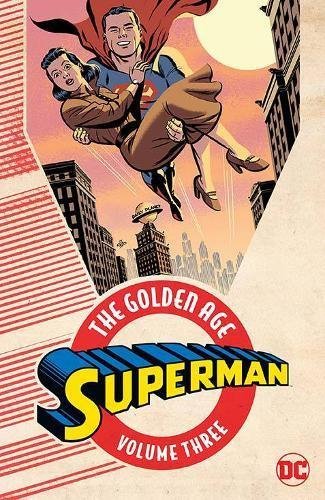
This is a review of Golden Age Superman Volume 3. Read my reviews of the first two graphic novels, here and here. I purchased five of these volumes when they were on sale; just be aware that reading one volume is enough, because they’re all the same. Here we have more of Superman as Big Brother, solving the world’s problems. Supes fights thugs using thug tactics, so arguably he’s the biggest thug of all, but at least he has a personality. Modern day Superman is pretty vanilla, and it’s difficult to explain why a fellow with godlike powers isn’t running things.

The Superman of yesteryear was even more powerful than the modern version, in that he has no qualms about playing God. Luckily, he doesn’t want to be bothered ruling the world. He also has superpowers that have either gone by the wayside, or he no longer uses. Yes, Superman is a master of hypnosis! The makers of the movie Superman Two also read this volume, apparently.

There are three standout stories here. In the first, a mad scientist uses science to make men giants. Superman is buried under an avalanche, which slows him down. The best part of this story is when the mad scientist threatens to make Lois a giantess! The Macrophiliacs in my audience will be disappointed to know he doesn’t succeed.

The second story involves giants, also. Enormous animals are overrunning the suburbs, and Lois and Clark go to investigate! I figured this one out halfway, but it has a clever twist. The third tale involves Superman trying to reform a spoiled heiress. He’s hired by the heiress’ father, the man who spoiled his daughter, but why quibble details? The unbelievable climax requires a deus ex machina in the form of a bursting dam.

I’d be remiss if I didn’t mention Lois Lane. Superman follows Lois around like a lost puppy, or perhaps a stalker, but I’ve lost count of how many times he’s saved her life. Is Lois really that stupid? Well, yes and no. Lois is a plot device, representing Superman’s vulnerability. Since Supes himself is invulnerable, we have Lois held hostage/tied up/transformed into a giantess/thrown off a cliff-building-airplane-etc. in almost every issue.

Recommended for comic history buffs and Superman fanatics!  

B.P.R.D.: A Plague of Frogs

This is a review of B.P.R.D. Volume Three: Plague of Frogs. This graphic novel marks a turning-point in B.P.R.D. history (Bureau of Paranormal Research and Defense), as the series turns from a Hellboy-inspired monster-of-the-week comic into a violent, apocalyptic slugfest. Read my reviews of the first two volumes here and here.

A fungal growth is discovered at Cavendish Hall, the site of Hellboy’s first published adventure (Seed of Destruction). The fungus is taken to a lab, where it experiences a growth spurt, blossoming into what resembles an enormous white, fleshy penis. Which is interesting, because that’s what it is – the delivery system for the bacteria, or virus, or fungus. Once infected, the victim transforms into an enormous, rampaging frog-monster. Luckily, the fungi is safe behind sturdy glass and every precaution is being taken so there’s no way the glass can break and – oopsie daisy!

Looking for clues, the B.P.R.D. visits the town of Crab Point MI, home of the New Temple of Mysteries. They get more than they bargained for, as Crab Point is overrun with rampaging frogs. Roger the golem is killed by a frog-monster, in a brutal scene that goes on for pages. Roger is a construct and thus isn’t alive to begin with, but the reader’s face is rubbed in it. Liz Sherman, the sole offensive member of the group, sort of gains control of her pyrokinetic abilities. Johan Kraus possesses a dead dog. Fishman Abe Sapien is speared in the back by a crazy prophet and has a vision quest wherein his origins are revealed, back in the days of Honest Abe Lincoln.

This is one of the best horror comic storylines I’ve ever read. It continues the Hellboy tradition of having B.P.R.D. missions go horribly wrong. The first example I can recall is Hellboy donning a jet pack, so that he can soar through the air – and watching him plummet hundreds of feet to the earth. Although Roger is revived, this volume sounds the clarion bell: NO ONE IS SAFE. Prophetic words.

Recommended for Hellboy and horror comic fans!