Nosferatu the Vampyre (1979)

This is a review of Nosferatu The Vampyre (1979), directed by Werner Herzog and starring Klaus Kinski and Isabelle Adjani. I rewatched this movie to see how it compared to the newest version of Nosferatu, now in theaters, but that’s another post. The plot: Jonathan Harker leaves his wife Lucy, traveling from Wismar, Germany to Transylvania to consummate a real estate deal with an eccentric count. Beforehand, he stops at the local inn, where in time-honored fashion the locals beseech him not to go.                

Spoiler: Harker goes. He walks to Borgo Pass, where a buggy with black horses takes him to the castle, which is a ruin. He’s met by Count Dracula himself, played by noted thespian and homicidal maniac Klaus Kinksi. Mr. Kinski is grotesque. He can pass for human – barely. His features are rodentlike, including a pair of jutting incisors. It’s a wonderful makeup job. The good Count only appears at night, speaks in a low voice, and seems depressed. Who wouldn’t be depressed, living in a shitty old castle for hundreds of years?                

After signing the contract, Dracula leaves Harker behind and travels to Wismar by ship, bringing rats, stormy weather, and the plague. Harker manages to escape, but part of him dies on the journey home. When he exits Dracula’s castle he is still human, but he loses his humanity on the journey back. The man is gone, replaced by something else.                

Dracula arrives in Wismar. The plague hits. The action shifts from Harker to his wife, Lucy. Dracula wants Lucy, but gives her agency. By agency, I mean he doesn’t just take her when she rejects him. The choice is hers. This is one of the more interesting parts of the movie. Does Dracula leave her be because of an obscure vampire rule? He has taken hundreds of men, women, and children against their will. What makes Lucy different? I will be honest with you, reader. I have no idea.

The plague worsens. The Count’s coming brings death and mayhem, and he can’t even bring himself to care. He’s dead, after all. The living do care. There is a scene towards the end, when Lucy walks amongst the revelers celebrating their last supper after the plague has ravaged the city. You can tell what she’s thinking: this can’t go on. Will goodness triumph, or will darkness cover all? Since this is a Werner Herzog movie, who knows?

Nosferatu might not move quickly enough for people, especially horror fans. It’s slow and brooding. The scenery is wonderful, lots of forests, canals, mountains, and old, decrepit castles. This is a monster movie that seems real. It has focus, and part of that is because of the level of detail. People have argued that the scenes inside Dracula’s castle are dreamlike, but I disagree. When Harker awakens after his night with the count, he finds the breakfast table crowded with food, including an unplucked chicken.

The problem is that reality is awful. Nobody knows this more than the Count, who I would argue is looking for an excuse to die. By not taking Lucy, he gives her the means to end his existence – if she has the belly for it. Spoiler: she does.

Recommended!
Guilty Creatures: Sex, God, and Murder in Tallahassee, Florida

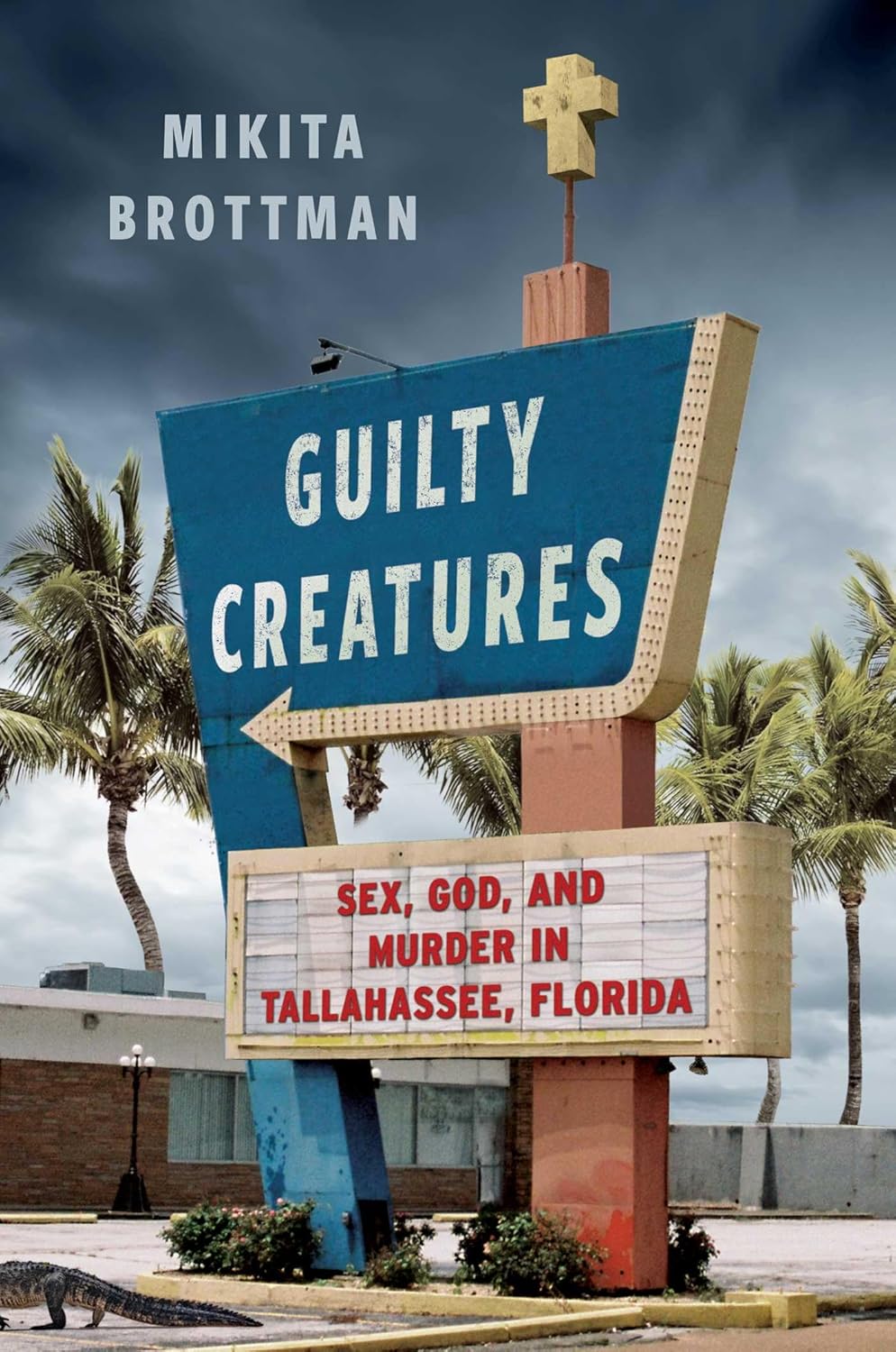
This is a review of Guilty Creatures: Sex, God, and Murder in Tallahassee, Florida by Mikita Brottman. Please note that this review contains spoilers. The facts of this case are well-known, but the Devil – as they say – is in the details. If you don’t want to know, or don’t want to read about a fairly gruesome murder, read no further.

This book is about two couples who live in a religious community in the suburbs of Tallahassee. Mike – who did not grow up wealthy – spends most of his time working and neglects his wife (Denise), so she starts hanging out with his best friend Brian, who is having his own problems with his wife (Kathy). Brian and Denise start an affair. She doesn’t want to get divorced, so they start talking about devising a ‘test of God’s will.’

This ‘test’ involves Brian luring Mike out to a lake to go duck hunting and then pushing him off the boat. If he sinks, it’s God’s will. Since Brian and Denise believe that a person wearing duck waders will always sink, it’s not much of a test. Mike doesn’t sink, so he passes. Brian shoots him in the head anyway, drags his body into his truck, stuffs his corpse into a dog crate to control the bleeding, and then drives home. After which, he goes to Home Depot to purchase a shovel, tarp, & weights, and buries his best friend’s body in an unmarked grave.

The obvious question is, why didn’t Mike and Denise get divorced? People end relationships all the time and for all sorts of reasons, but mostly it boils down to money and compatibility, or lack thereof. People who aren’t God’s chosen are allowed to drift apart or even dislike each other. Sometime people discover they aren’t compatible, because reasons (insert your own). It’s when you deny those reasons because you are thinking about God’s will or God’s plan that you can run into problems.

Before Mike is murdered, he takes out two life insurance policies. Denise cashes in on both of them, and this is what catches the eyes of the authorities. Brian divorces his wife and marries Denise a few years later. The authorities suspect, people talk, and Mike’s mother won’t give up trying to find her boy. But none of that is the reason they are in prison today.

Brian and Denise get to a point where they can’t stand each other. Yes, there’s that compatibility thing again. When Denise divorces Brian, he kidnaps her at gunpoint and threatens to kill himself. This is a serious crime, especially in Florida. Denise asks the prosecutor for a life sentence, which is when Brian confesses. He gets a lenient sentence of twenty years behind bars. Denise, who was not involved in the actual execution of the murder, gets thirty years. Did she deserve thirty years? I do not know. This is a fairly recent case, which means that most of the people involved – families and friends – are still around, so it wouldn’t be right to speculate.

Ms. Brottman does a good job recounting the source material and getting the known facts of the case correct. She is a therapist, and will sometimes psychoanalyze her characters. Because ultimately that’s what they are, characters she invented. Please note that I am not saying Ms. Brottman made them up. We all have biases and prejudices, so our view of certain people is always going to be fictional to a degree.

For example, Brian is depicted as a jealous manchild with too much money. He doesn’t need to work, and fills the empty holes in his life with porn. There is less information about Denise, which makes her more of a tabula rasa. When a person seems like a blank slate, people will project. Some observers of the trial viewed Denise as an evil mastermind or puppet master. Maybe that’s true, or maybe she just wanted to block the whole thing out. She didn’t share Brian’s desire to confess, that’s for sure, and she’s not a big crier. So what?

I have no idea about ‘tests’ or ‘God’s will.’ To me, this book seems to be about obsession and human frailty. The author quotes the Bible and James M. Cain, the author of Double Indemnity and The Postman Always Rings Twice. Ultimately, this is a story about a pair of lost souls who are drawn to – and ultimately destroy – each other.

Promethea 20th Anniversary Deluxe Edition Volume One

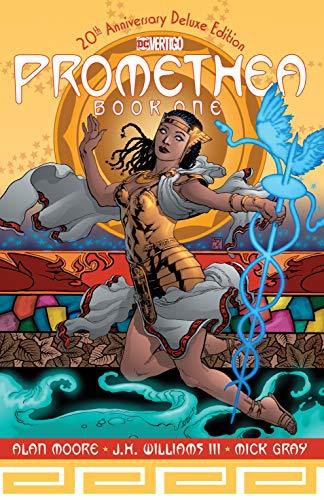
This is a review of Promethea 20th Anniversary Deluxe Edition Volume One by Alan Moore (writer) and J.H. Williams III (art). Content warning: there is a consensual sex scene between two adults in this volume that people may find upsetting because of the gap in their ages. The setting is gritty near-future New York City, but this is fantasy and not science fiction – unless you consider magic to be science.

Promethea is a living story who flies and wields a glowing blue caduceus composed of a pair of talking snakes. Her alter ego, a college student named Sophie Bangs, is writing a term paper about Promethea and unwittingly becomes her new host after meeting Barbara Shelley (the old host). They encounter a Smee, which Promethea destroys, but this is just a warning shot. Sophie needs to learn magic, fast, before Hell’s legions come calling. Throughout the ages, there have been other Promethea hosts. Sophie travels to the Immateria to meet them, but still needs a teacher in the material world.

There is a lot of exposition about magic here, so be prepared. An entire issue is spent on the topic.  Unfortunately, after reading this I still do not understand magic, but I will say it seems very complex. Promethea spends most of her time flying around blasting people with her magic caduceus, and I’m unsure what is so complex about that, but I’m no wizard.

Sophie approaches Jack Faust, who is a wizard. He agrees to teach her magic on one condition. He wants sex…with Promethea. Keep in mind that we’ve seen the tragic fate of people who dare to love Promethea, and it’s not pretty. Neither is Jack Faust, who is portrayed as old, unattractive, and creepy, complete with a gross apartment. They have sex, which takes up an entire issue (20+ pages for non-comic readers).

I will be honest here. If I knew about the sex scene, I wouldn’t have reviewed this graphic novel. I am not defending or condemning, except to say that this scene has an ick factor through the roof and will upset people. I am sure Mr. Moore knew this. Since Jack Faust is a magician, Moore could have portrayed him as young and handsome (Faust even mentions using a glamour), but he makes the choice not to. Unfortunately, the sex scene is what most people will recall after reading this and will thus dominate the discussion, making it difficult to talk about the graphic novel’s other virtues and flaws.

Yes, what about those virtues and flaws? As I stated, there’s too much exposition about magic. The storytelling is great, because plotting has always been a strength of Mr. Moore’s. The art is phantasmagoric; too bad I can’t post visuals. I read this graphic novel virtually, but if it seems like something you might enjoy, I suggest that you buy the actual physical book.  

And that’s my review.

Hell’s Half-Acre: The Untold Story of the Benders, a Serial Killer Family on the American Frontier

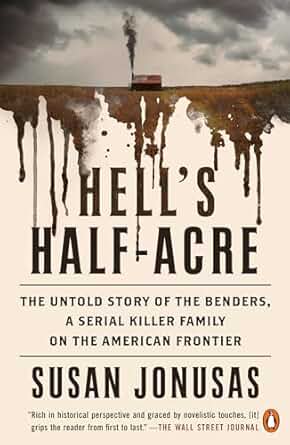
This is a review of Hell’s Half-Acre: The Untold Story of the Benders, a Serial Killer Family on the American Frontier, by Susan Jonusas. This review contains spoilers. I am not an expert on the Benders, and this book is my main (only) source of information. Gossip and conjecture aside, we do not know a lot about this family.

We do know that the Benders came to Kansas in 1870, when the new state was flooded with settlers. The family consisted of Ma and Pa Bender, a couple in their fifties who spoke mostly German. Kate Bender and John Gebhardt, in their early 20’s, might have been their children, or they might not have been even related. Eyewitnesses claim they saw ‘physical intimacy’ between them, so perhaps they were husband and wife. Or maybe those eyewitnesses were making things up after the fact.

The Benders lived in a one-room log cabin and sold groceries to travelers. Sometimes they killed those travelers by hitting them over the head with a hammer and slitting their throats. They buried their victims in the apple orchard and took their goods. After eleven murders – including a child, who was buried alive – the Benders fled Kansas and headed west, where they vanished into the frontier. They were never captured.

I do not think the term ‘serial killer’ describes the Benders. I’d call them opportunistic killers who murdered for financial gain. They didn’t have a ‘type,’ and neither I nor anyone else know if they derived psychological or sexual satisfaction from the murders. Yes, their modus operandi was brutal, but it was also efficient and minimized risk to the killers.

The killings spurred a press feeding frenzy, making it hard to separate fact from fantasy. In the aftermath of the murders, every person in Kansas seems to have encountered the Benders. To her credit, the author avoids speculation, although she does attribute thoughts and feelings to her characters, I’m assuming for dramatic effect.

The Benders were not criminal masterminds. They escaped justice by vanishing into the western frontier, which doesn’t exist anymore. Their pursuit was haphazard and disorganized, and that is putting it kindly. There wasn’t much in the way of law enforcement on the frontier, and people were all too willing to take the law into their own hands. One of the more vivid sequences of the book describes the lynching of a group of violent drunks and the attempted lynching of a neighbor of the Benders.

Hell’s Half-Acre is a good book that suffers from a paucity of content. Ms. Jonusas cannot interview eyewitnesses, so she relies on primary sources while avoiding speculation. This works for and against the author. The book reads as historically accurate but is sometimes limited in scope. The description of the discovery of the bodies at the Benders’ cabin is a visceral eye-opener. The same holds for the description of what passed for a manhunt.

After that, the Benders simply vanish and the book loses steam, shifting to the arrest, trial, and eventual acquittal of two women accused of being Ma and Kate Bender, years later. The trial scenes go on too long and belong in another book, but it isn’t the author’s fault that the ending is anticlimactic. Sometimes stories fade out instead of ending with a bang.

The Benders are fascinating in the same way as car crashes – people gawk with their mouths open, but stay safely in their cars. The fate of the central players of this drama remains unresolved, and not knowing adds a certain mystique to what is a sad and gruesome story. In the end, the Benders’ final fate is lost to history.

B.P.R.D.: The Black Flame

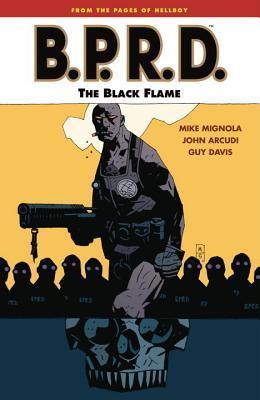
This is a review of B.P.R.D.: The Black Flame, the fifth volume of this series. Read my reviews of the first, second, third, and fourth volumes to catch up. B.P.R.D. stands for Bureau of Paranormal Research and Defense, and its members consist of Liz (firestarter), Roger (golem incubated in horse manure), Johann (friendly ghost), Abe (fishman), and Ben (dead man walking).

In this volume, the war on frogs continues. By frogs, I mean enormous frogmen. Roger the golem has become a tough guy, just like his idol Captain Ben Daimio. Both have heads hard as rocks, so they have a lot in common. Liz meets a mysterious figure in her dreams who stuffs cryptic warning notes down her throat, which she spits out upon awakening. Abe Sapien mopes about his undead wife, and then rejoins the team. Not a lot happens with Johann in this volume, but his time is coming. Oh, and a team member dies.

However, the star of this volume has to be Landis Pope, a corporate CEO who dons a cape and tights – a fantasy of corporate CEOs everywhere, although it’s unclear if they’d be superheroes or villains – and starts referring to himself as The Black Flame. He trains a pair of captured frogmen to talk and releases them into the frogs’ lair in the hopes that they will worship him.

Or something like that. Mr. Pope is out of his mind, so it’s tough to tell what he wants. Why would any sane human being want to wipe out humanity and rule over a bunch of frogmen? The Black Flame’s plan works, sort of. The frogs tell their frog friends, who use him to summon a creature that looks like it’s out of Pink Floyd’s The Wall movie (art courtesy of the great Guy Davis). Afterwards, the Frog Men keep the Black Flame alive as their prisoner, just in case the monster he’s just summoned wants lunch.

I suppose there’s a lesson to be learned from this, but I’m unsure what it is. Frogmen are smarter than you think, maybe? Anyway, another great entry in a great series, and as such highly recommended.

Best/Worst Graphic Novels Read in 2024

Ahh, end of the year lists. Everybody’s doing them, so why not me? Here’s the five best and five worst graphic novels I’ve read in 2024. The rules are simple: 1. I read the graphic novel in 2024. 2. This is my first read of the graphic novel.

Batman: Dark Victory is great and would make this list, but I already read it. Graphic novels that are part of a larger series that I have not read count, even if I’ve read the earlier volumes. Example: Love & Rockets, which is on this list.

BEST (in alphabetical order):

Conan: Birth of a Legend, by Kurt Busiek and Cary Nord. This is the best take I’ve ever seen on Conan, made more impressive by the fact that it covers his lost childhood and manages not to be boring.

Daredevil Ultimate Collection: Volume Two, by Brian Michael Bendis and Alex Maleev. I view this as a noir comic rather than a superhero comic, especially since the superhero in question is written as a narcissistic donkey.

Human Diastrophism: Love & Rockets, by Gilbert Hernandez. The characters here age, change, and even die. In this volume, Luba leaves Palomar and we meet aged hitman Gorgo.

Incal: Black Incal, by Alejandro Jodorowsky and Moebius. Hallucinatory science fiction that has spawned countless imitators.

Kamandi: The Last Boy on Earth, by Jack Kirby. Inspired by Planet of the Apes, this postapocalyptic comic by Jack Kirby moves at a breakneck pace.

WORST (in alphabetical order):

I, Vampire. This series might’ve had promise, but the creators left after a few issues, and the second creative team jumped the shark, and by the time the third creative team found its footing the series ended.

Justice League of American: The Marriage of the Atom and Jean Loring. If you are interested in Brad Meltzer’s Identity Crisis, you might enjoy this . Most will find it a slog to read, with too many characters, confusing storylines, and no meta-plot.

Marvel Masterworks Daredevil: Volume Three, by Stan Lee & Gene Colan. Mike Murdock, Matt’s identical twin who is also blind and who none of Matt’s friends have ever met, takes center stage as the creators see how high they can fly before their feathers melt and they plunge into the ocean.

Marvel Masterworks Sub-Mariner: Volume Two, by Roy Thomas & Bill Everett. This is a step-up from the first volume, with some eye-opening imagery and also art by Golden Age artist Bill Everett, but it won’t be of interest to anyone but the biggest Sub-Mariner fans.

World’s Finest Silver Age Volume Two. If you want to see Indian chief Superman and a crackpot inventor with a salad colander on his head torment the Dynamic Trio, then look no further.

The Human Target

This is a review of The Human Target by Tom King (writer) and Greg Smallwood (artist). Technically, this is a twelve-issue miniseries in two volumes, and my review covers both volumes. SPOILER WARNING. I reveal the killer’s identity, so if you don’t want to know whodunit, read no further.

Let’s get this out of the way. I can see how this book would upset people. A big part of what Mr. King does is give new spins on older, more obscure characters. Other comic writers who do this are Brian Michael Bendis and, of course, Alan Moore. If you are the nostalgic type who has a stake in the JLI (Justice League International) and its characters, I would not read this. You won’t like it.

Why not? There was a show I watched as a kid called The Brady Bunch, which was a dumb kid’s show. That’s fine, because I was a dumb kid. After The Brady Bunch ended, they did a spinoff called The Brady Brides that dealt with all sorts of adult themes that never lasted longer than an episode. Marcia would have a drinking problem, and then it’s never referred to again. I loved The Brady Bunch. I think I watched a single issue of The Brady Brides, and hated it so much I never watched another.

People have nostalgia for the characters of the JLI. I read the first few years of the run, 30+ years ago. It featured a group of obscure, often goofy, characters. We have Guy Gardner, the Rambo Green Lantern; Booster Gold, who comes from the future; Fire and Ice, who hail from Brazil and Norway; Rocket Red, a Russian hero; Blue Beetle, best known for BWAH HAH HAH. No, seriously. That’s what he’s known for.

Turns out, the characters of the DC Universe harbor deep, dark secrets and untold trauma. If you’ve read Brad Meltzer’s Identity Crisis, where Ralph Dibny’s wife Sue is raped and then murdered, you’ll know what I mean. Why would people read that? I read it back in the day, but at that point I’d been reading superhero comics for decades. Basically, it’s adding a degree of noir – not realism – to your comics. If it’s done well, think Watchmen. If it’s not done well, we have ASSHOLE BATMAN and The Blue Beetle being shot in the head.

Would I read it today? Well, I read the first volume of this graphic novel, skimmed the second, and then called it quits. Skimming means I read the issues quickly, a skill perfected from years of waiting in line at the comic book store. Did I hate this graphic novel that much? No, I thought it was depressing. At its heart, The Human Target is all about watching an emotionally stunted man die.

The plot: Christopher Chance, who goes by the moniker the Human Target, impersonates Lex Luthor. That is Mr. Chance’s job, taking the bullet for his client. In this instance, it’s literal. Chance is shot impersonating Luthor, but that’s what saves his life. He spits out the poisoned coffee he drank earlier, but the poison is still in his system, which means he has twelve days to live. One of the interesting things about this graphic novel is that Luthor is one of the few characters who is what he appears to be.

Okay, then. Besides everyone, who’d want to kill Luthor? Hold on, there’s a clue. The poison has trace radiation from a certain dimension, blah blah blah. Turns out a member of the JLI poisoned the coffee, and Chance has twelve days to find the culprit. Lo and behold, the culprit turns out to be Ice, the last person you’d expect. Why? I read the book, and I don’t know why. Yes, she died (and then got better), and it was sort of Luthor’s fault, but who in the DC Universe hasn’t died? Maybe she’s unstable because she killed her father and grandfather as a child and then made up a dumb story about being raised by a lost tribe? Most superhero origins are traumatic, so what does that prove?

Ice is an enigma. In noir terms, she’s the femme fatale. Whether or not she fits into that mold, or whether she’s jammed into it, I leave to the reader. There are two ways to read Ice – the first is that she feels awful about accidentally, you know, killing Chance; the second is that she does everything she can to derail Chance’s investigation. Either interpretation seems valid to me. Or it could be both, because two things can be true at the same time. It’s hard to tell, because a lot of what she does and says is performative. The creators wouldn’t have Chance fall for the woman who kills him, right? BWAH HAH HAH!

The technical term for Chance is an alphahole. What’s that? Well, combine an alpha male with an asshole and – well, you get the idea. The alphahole is a staple in romance novels, where he has attractive qualities and is always redeemable (after he grovels). Chance is a realistic alphahole in that he has no friends, family, or lovers. No, that’s not true. Chance has one friend, who has the worst cover identity in the universe. The guy owns a pizza parlor, doesn’t know a word of Italian, and microwaves his pizza. Since Chance has killed many people and will also serve your prison sentence for you, he isn’t a nice guy. He is absolutely positively no doubt terrified of any hint of intimacy.

The Human Target is an uneasy fusion of superhero comics and noir. Plot-wise, it’s tight; character-wise, it’s all over the place. Let me be clear: I have no particular love or nostalgia for these characters. The reinterpretations didn’t work for me, and I thought Chance was an extremely depressing character. Maybe this graphic novel will work for you, but that’s my take. Anyway, next week I will have a best/worst of 2024 list for the New Year.  

The Doll’s Ghost

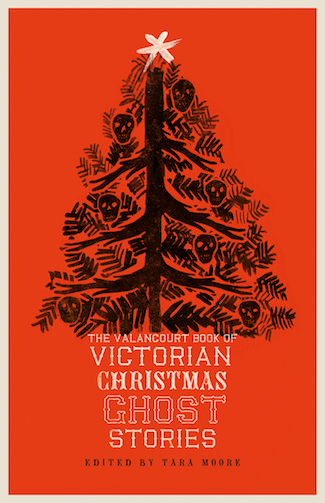
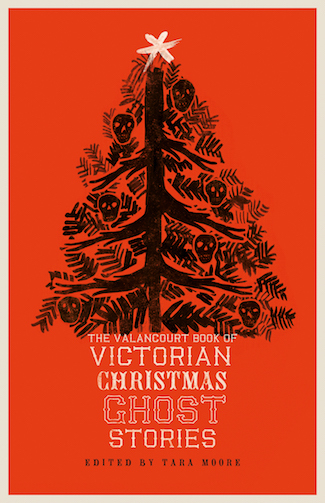
I am reviewing tales from The Valancourt Book of Victorian Christmas Ghost Stories for the month of December. Previously I’ve reviewed The Tapestried Chamber, Horror: A True Tale, Bring Me A Light!,’ and The Ghost’s Summons. This is a review of The Doll’s Ghost by Francis Marion Crawford.

The Doll’s Ghost takes place in London in the 19th century. A doll with a broken face is brought to a doll-doctor, who talks to his charges and even develops parental feelings about them. There are those who may feel that the above description alone makes the story creepy, but this tale was published in the late 19th century. The Victorians would see him as a harmless eccentric.

The doll-doctor has a twelve-year-old daughter, whom he tasks with returning the repaired doll to its family. She vanishes. The man races about London, frantic, but can’t find her until a little person who calls him Pa-Pa and bears a striking resemblance to the doll he just repaired leads him to her.

Yes, it’s the Living Doll trope! Instead of Chucky, think of Pinocchio. The author of this tale was born in Italy, so that would make sense. Anyway, this is a decent story with a plot that involves more than the main character encountering a ghost and then learning the ghost’s history.

It is also a scary story. I have mentioned the 19th century Victorian ghost being a stand-in for something else, and in this case it’s the fear of a missing/hurt child. Nowadays a story like this is tame, considering what’s out there, but by the standards of that time it was (and is) a well-made tale.

I hope people have enjoyed my short story reviews from The Valancourt Book of Victorian Ghost Stories. Next month I will be reviewing true crime books, along with my usual graphic novel reviews. If you have any suggestions as to what I should review, please let me know (my contact info. is under Review Policy). Happy Holidays to everyone!

The Incal: The Black Incal

This is a review of The Incal: The Black Incal, by Alexandro Jodorowsky and Moebius. This is a science fiction comic put out by Humanoids, an European publisher. I haven’t read many Humanoids comics. My first impression was Heavy Metal coupled with Eurotrash, a heady whiff, but that’s not true. They are having a huge Humble Bundle sale, here.

A private eye named John DiFool is hired to escort a beautiful young aristocrat to a brothel, where she mates with a man with a wolf’s head. At midnight she transforms into an old woman. Fleeing an angry WolfHead, DiFool takes refuge in futuristic sewers where he meets an alien with a knife in his back. The dying alien gives him the Incal, which at first glance resembles a glowing cigarette lighter.

With me so far? In American comics, we’d be three issues in, but this graphic novel is just getting started. DiFool escapes getting thrown into an acid lake and then retrieves his bird, who is acting like the Messiah, preaching and healing people (DiFool jammed the Incal down the bird’s throat), before witnessing the clonage of His Supreme Highness and then traveling to a huge necropolis, where robots are made from human parts. And that’s before we meet the Black Incal.

Whew, that’s a lot of plot. Also: great art by Moebius. This is a futuristic dystopia with a healthy dose of anarchy/satire. There’s also some nudity and sex scenes, which aren’t too graphic. I did not know this came out in 1980. If you read it, you’ll see its influence in the aesthetic of movies like Total Recall, The Fifth Element, and Blade Runner. In comics, think of Cynosure in John Ostrander’s Grimjack, Warren Ellis’ Transmetropolitan, Judge Dredd.

John DiFool is an EveryMan. Well, given his name I guess he’s stupider than that. I don’t know what the Incal is, but it is sentient and can talk. There isn’t much of a plot yet, just lots of spectacle and great art. Everyone wants the MacGuffin – er, I mean the Incal. This is a great science fiction comic and is thus highly recommended!

The Ghost’s Summons

I am reviewing tales from The Valancourt Book of Victorian Christmas Ghost Stories for the month of December. Read my review of The Tapestried Chamber here, my review of Horror: A True Tale here, and my review of ‘Bring Me a Light!’ here. This is a review of The Ghost’s Summons, by Ada Buisoon.

A doctor is offered 1,000 pounds to attend a deathbed. The rub: his ‘patient’ is alive and seems to be in good physical health. His mental health is another matter, of course. The doctor agrees, because of the money. After giving his patient a sleeping draught, he replenishes the fire, pours himself a big glass of wine, and draws the curtains before retiring himself. Why the doctor feels comfortable falling asleep in a total stranger’s house is one of many details the story does not explain.

The doctor awakens at 1 a.m. to witness a specter with a severed left middle finger kill his patient! For obvious reasons, the doctor leaves the house in a hurry. When the widowed wife makes noises about contesting her husband’s will (where the 1,000 pounds is included) because her spouse wasn’t in his right mind, the doctor requests an audience.

I’m curious about his motives, here. Well, obviously his motive is money, but him coming forward raises all sorts of bizarre questions. ‘Hello, I’m the doctor your husband hired to attend him at his deathbed. I know I sort of left, uh, suddenly, when your husband died. By the way, the ghost that killed him had a severed left middle finger – just like you!’ The story ends when the doctor collects his 1,000 pounds from the ‘sinful’ (the author’s word, not mine) wife and goes on his way.

And that’s it. I suppose the takeaway is that the wife did away with her husband by – uhh, I don’t know. One of the things I have seen whilst reading these stories is that the ghost in the 19th century was often a stand-in for something else: fear of assault, wayward sexual urges, psychotic mothers-in-law, etc. Add murderous wives to the list.

The Ghost’s Summons did leave me with questions. I’d like to know if the doctor brought his pajamas with him. Maybe he took off his pants to prepare himself for slumber? Did he sleep in an armchair, or in the same bed as his patient? Like the other issues raised by this story, these questions go unanswered.

I am not being sarcastic when I say that I am unsure why this was ever published, as I don’t think it holds together. When a story has gaping plot holes with characters who act in bizarre ways that aren’t explained, the most likely explanation is bad writing. I don’t wish to malign the author, and it is possible that I’m judging this story by 21st century standards, when it was meant to be read during the witching hour with flickering candles and the wind whistling outside, etc., etc., etc. Whatever the reason, this story did not work for me.