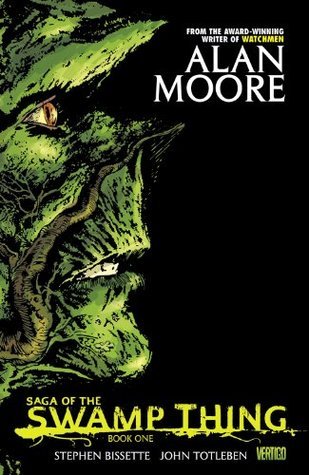
Saga of the Swamp Thing, Book One

 This is a review of Saga of the Swamp Thing Book One. This volume marks the start of writer Alan Moore’s fabled run on Swamp Thing, and features great art by John Totleben and Stephen Bissette. The first issue starts with a bang, literally. Alec Holland, the man behind the moss-encrusted monstrosity of a man, is shot in the head by a kill squad sent by the Sunderland Corporation. Yes, Alec Holland is dead, but Swamp Thing is another matter.

Swamp Thing’s body is examined via autopsy by Jason Woodrue, aka the supervillain The Floronic Man. Woodrue realizes that the Swampster needs none of the internal organs that are in his body. He also discovers that the Swamp Thing doesn’t need to breathe oxygen because he’s a plant. Most importantly, you can’t kill a plant by shooting it in the head. Sure enough, Swamp Thing awakens, reads his own file, and wreaks vengeance on Sunderland. Woodrue himself goes crazy and declares war on the human race, as one does.

 Afterwards, we meet The Monkey King, a demon that feeds on fear. The Monkey King is hiding in a home for troubled children, where Swamp Thing supporting character Abigail Arcane works. This story guest stars Jason Blook, aka Etrigan The Demon (created by Jack Kirby).

A must read!

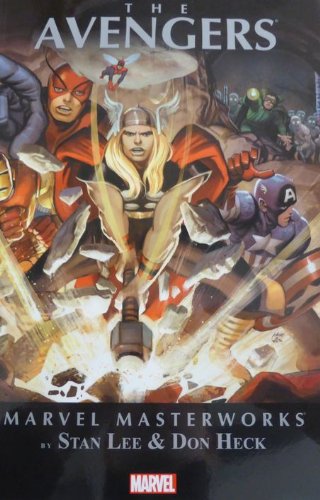
Marvel Masterworks: The Avengers Volume Two

This is a review of Marvel Masterworks: The Avengers Volume Two. You can read my review of the first volume, here. This series has the distinction of being the only title I’ve reviewed so far that finds its legs twice.

I will be honest: the first few issues of this volume are pretty wretched, mostly because of the art. But the stories aren’t great, either. In one issue the Avengers fight a Spider-Man robot in Mexico; Spider-Robot has been sent from the future by Kang the Conqueror. The Wasp is shot at the very end of an issue, mostly for shock value (it happens off-panel), and the Avengers’ search for the specialist to save her leads them to space aliens living in the North Pole. The Wasp is back the very next issue, none the worse for wear, and nobody refers to this issue again, although it does foreshadow the first signs of mental instability in Hank Pym.

The Masters of Evil make another appearance, giving Jack Kirby a chance to tie up the Baron Zemo storyline, and then the book’s creators shake the book up. They disband the old team, which wasn’t working, and give us a new lineup – Captain America, Quicksilver, The Scarlet Witch, and Hawkeye. This is a much more interesting lineup and pays dividends immediately. This volume also gives us the first appearance of The Swordsman, an intriguing character.

Uneven, but good.

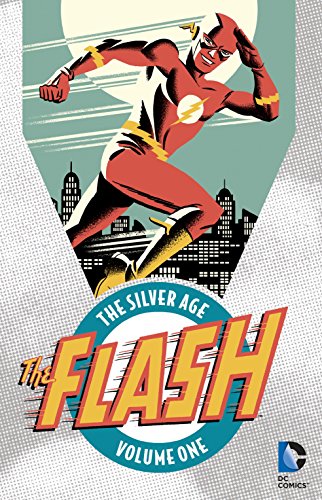
Flash Silver Age Volume One

This is a review of Flash: The Silver Age Volume One. I am behind on my reading, because last week I self-diagnosed with COVID. The good news is that after a miserable few days, I am ramping up my reading again. Anyway, The Flash is the first superhero comic I ever read. It wasn’t my first comic – I read a bunch of those Archie digests you used to be able to find at supermarkets – but I have a soft spot in my heart for the character.

The Flash is Barry Allen, police scientist. One night Barry is proudly examining his collection of chemicals (he’s that type of guy), when a bolt of lightning strikes, saturating him with a hodgepodge of those selfsame chemicals. Instead of being transported to the burn unit, Barry discovers that he has super speed. He dons a red costume with yellow lightning bolts, and the Flash is born!

 So far, so good. How are the stories? Well, they’re less stupid than the Batman & Superman stories of that time period, but that’s a low bar to hurdle. What we get is a heaping dose of junk science, wherein Barry’s speed allows him to do anything you can imagine. Forget faster than light travel; The Flash can break the time barrier!

 The Flash’s rogue gallery is a menagerie of bizarre characters. Thus far, the people’s champion is Gorilla Grodd, a super-intelligent talking gorilla with awesome mental powers. There’s also Captain Cold, The Pied Piper, The Weather Wizard, and Mr. Element. We have a fair number of invaders from outer space stories, along with tales that are plain weird. In one issue, the Flash fights a group of sentient thunderheads by cloud-skipping from cloud to cloud.

I’d be remiss in not mentioning Kid Flash, DC’s version of a teenager of the late 50’s. Wearing a bow-tie to school, calling every adult sir or ma’am, young Wally West is doomed to never have sex. I confess that I’m sort of surprised that Barry himself ever gets sex. When we first meet him, he’s in the police cafeteria drinking milk, which is as perfect a character moment as you will ever see. Barry is always late for his dinner dates with his girlfriend Iris, so she thinks he’s the slowest man on earth. Of course, she adores the Flash. The hero’s love interest disliking or being meh about him while adoring his alter ego is a tired trope, but to be fair, this was the 60’s.

A good read for Flash fans.

Marvel Masterworks: Captain America Volume One

This is a review of Marvel Masterworks: Captain America Volume One. This graphic novel is the work of Jack Kirby, which means its good. Stan Lee is listed as the writer, but I read an interview with Kirby wherein he claims to have done both the art and writing. Having read a bunch of Marvel material in the 60’s, I think there might be something to his claims.

Captain America was a war hero/propaganda figure in the 1940’s. When the war ended, he was frozen in a block of ice for twenty years. If you want more, read this volume or watch any of the Captain America/Avengers movies. The stories are split between the 1940’s and the present day (in this case, 1965). In the 40’s, Captain America and his youthful sidekick Bucky win World War Two. In the 60’s, Captain America is a member of the Avengers. Twenty years have passed, but Cap’s rogue gallery remains mostly the same, Baron Zemo and The Red Skull.

Many of the stories in this volume are multiparters, but there isn’t an overarching story arc. The stories feature lots of action, and stretch Cap to his limits. My favorite story set in the past is when the Red Skull captures & brainwashes Cap, and sends him to London to kill the Allied Supreme Commander.

There are a bunch of great stories set in the present. Cap fights a Nazi doomsday weapon, the Red Skull returns with the cosmic cube (a weapon that gives the user control over reality), and there’s a radioactive biohazard story featuring Batroc the Leaper, which feels timely today (substitute COVID).

Captain America doesn’t have much of a cast in the present day, mostly because of the split between the past and the present. Special shout-out to the Red Skull, Cap’s opposite and ultimate nemesis.

Great work from Jack Kirby.

Batman The Golden Age Volume Two

This is a review of Batman The Golden Age Volume 2. Not much has changed in the Bat-Verse since my last review, here. New York City has become Gotham City. Bruce Wayne’s fiancée breaks up with him to become a famous Hollywood actress, and Bruce picks up a new love interest to ignore. The Cat (aka Catwoman) is nowhere to be seen. Still no Alfred.

Batman and Robin have a father-son relationship which is emphasized more in this volume. When Robin is almost killed by thugs Batman goes crazy, gets shot three times, and beats a confession out of the offending crime boss (which won’t stand up in court). I believe they reused the image of Batman cradling Robin in his arms in the infamous Death in the Family storyline, where the Joker beats the second Robin to death with a crowbar.

This volume features the first appearance of the Scarecrow, a thin academic dude tough enough to go toe to toe with Batman. The Scarecrow is obsessed with fear. Here he doesn’t use fear gas and makes do with a gun. We also get a fair bit of the Joker, but most of the stories involve Batman & Robin fighting criminals – fifth columnists, modern-day pirates, Mob guys, fake Indian statues, etc.

There are a few outlier stories. In one issue, Batman & Robin go to the land of fairy tales to rescue a young woman. Some of these stories can be downright bizarre, as when Batman arranges it so that a young woman’s parents will think she’s a movie star when they visit her in Gotham. There are also a few morality tales, which you don’t see in comics nowadays.

If you enjoyed the first volume, you will like this.

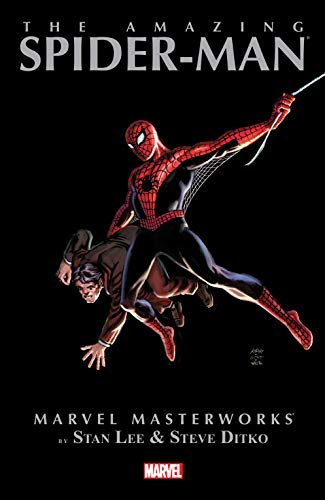
Marvel Masterworks: The Amazing Spider-Man Volume One

This is a review of Marvel Masterworks: Amazing Spider-Man Volume One. I am a Steve Ditko fan. I’ve always liked his art. I read an interview with Jack Kirby, and he spoke glowingly of Ditko, and Kirby’s wife Roz said that many of Kirby’s characters looked Polish, which I thought was funny. Ditko and Kirby were the architects of what is now a multibillion dollar company (Marvel Studios). Kirby’s fingerprints are all over Marvel – The Fantastic Four, The X-Men, SHIELD, The Avengers. Ditko contributed Spider-Man and Doctor Strange. His run on Spider-Man is one of the great superhero runs of the 20th century.

I’m not going to rehash Spider-Man’s origin – if you want that, just watch one of the many movies – but I will say that the reason Spider-Man is so great is that he’s the Every Man. Peter Parker is gifted with amazing powers. Since he needs money (who doesn’t?), he does what 99% of the human race would do and cashes in. Karmic payback comes when the burglar he could have stopped kills his Uncle Ben, and we’re off to the races.

The first volume introduces many of the members of Spider-Man’s rogue gallery, The Chameleon, The Vulture, The Sandman, The Lizard, Electro, and The Enforcers. Also present is Doctor Otto Octavius, aka Dr. Octopus, whom I’ve always viewed as Spider-Man’s greatest foe. I believe The Green Goblin makes an appearance in Volume Two.

What really makes Spider-Man great is the fact that Peter Parker is a loser. I don’t recall if he references the ole’ Parker luck, but it’s true. His luck stinks. Peter’s Aunt May has been in bad health for over sixty years. He’s broke and he can’t get a date. His peers mock him. In other words, he’s one of us, but when he puts on that Spider-Man costume with the underarm webbing, magic happens.

A must-read.

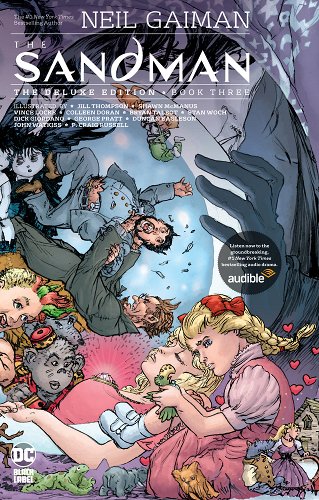
Sandman Deluxe Edition Book Three

This is a review of Sandman Deluxe Edition Book Three. You can read my reviews of the first and second volumes here and here. This is the midpoint of the Sandman series; it’s all downhill from here. The first storyline, A Game of You, deconstructs the chosen one storyline in fantasy stories. Barbie, a minor character in A Doll’s House, is a princess who visits The Land in her dreams. She is a visitor and not a resident, which turns out to be important.

In her waking hours, Barbie lives in an apartment complex in New York City that must be rent controlled. I say this because Barbie has no visible means of support except alimony checks from her ex. The shit hits the fan when Barbie’s loyal retainer from the Land – an enormous talking dog named Martin Tenbones – is shot down in the streets by the police while attempting to retrieve her, a not-so-subtle foreshadowing of the carnage to follow.

The Land is being threatened by a cuckoo, a diabolical bird that lays its egg in other bird’s nests. When the baby cuckoo hatches, it shoves the other hatchlings out of the nest where they die of starvation while the mother bird ignores them and feeds the intruder. Dream isn’t in this one much. He shows up at the end, to put a bow on things.

Brief Lives, the second storyline, involves Dream and his sister Delirium’s search for their estranged brother, Destruction. This is the longest storyline so far, or at least it feels like it. Their search takes them to a goddess working at a strip club; to the dreams of the cat goddess Bast; to Dream’s estranged son, Orpheus. This is the storyline that marks the beginning of the end, as Destruction is apply named.

I don’t quite understand Dream’s motivations in this one, as he seems aware of the potential consequences of his actions. Their path to Destruction is littered with the bodies of Destruction’s friends and lovers, which causes Dream to temporarily abandon his quest, but he resumes it and finds what he’s looking for, and I don’t know why.

Highly recommended.

Marvel Masterworks: The Mighty Thor Volume One

I have been reading comics since 1978, and I’m here to tell you that there’s a lot of bad comics out there. By bad, I mean racist, sexist, misogynistic, homophobic, full of clichés, nonsensical, and violent. Don’t get me wrong. There are also good comics, but Marvel Masterworks: The Mighty Thor Volume One does not number among them.

Here’s the good: Jack Kirby drew some of these issues. That sums up the good. I rate Thor above the first volume of Iron Man, but that’s not a high fence to hurdle. Thor’s creators were still figuring him out as a character, which means his powers fluctuate according to the needs of the plot. In one issue Thor destroys half the earth, and in the next he’s laid low by a mobster. Thor’s personality is also in flux, in that he doesn’t have one. Sixty years later and he still doesn’t!                                                                                         

These stories reminded me of the first volume of Iron Man, a never-ending series of twelve page one-shots. The most memorable villain in this volume is Thor’s evil step-brother Loki, who gets chained up as much as Wonder Woman. Other villains include The Cobra, Mr. Hyde, a lone Lava Man, and The Radioactive Man. Most of the plots revolve around 1. Thor losing his mighty hammer and transforming back into Donald Blake, usually in the middle of a fight; 2. Thor mooning over Jane Foster.

Thor’s alter ego, Dr. Don Blake, can’t express his love to his nurse Jane Foster because he’s lame and there’s no way she could love a cripple. That’s what he tells himself, anyway. When Blake musters up the courage to tell her he’s secretly Thor, his father the mighty Odin cock-blocks him.

Two things stand out in this graphic novel. The first is an extended fantasy sequence wherein Jane Foster imagines domestic bliss as Mrs. Thor, wherein she polishes his hammer, irons his cloak, and gives him a nice, short haircut so he doesn’t look like one of those beatniks. I hope the creators were laughing their asses off when they created that sequence, because I sure was.

I can sum up the second standout in two words: chromosomatic gland. Loki hits Thor’s chromosomatic gland, which reverses Thor’s brain and leads to him raising his hand against the mighty Odin and then destroying the earth with his crazed half-brother. The issue ends with Odin hitting Thor’s chromosomatic gland and re-reversing his brain, which leads to our beloved hero regaining his nobility. Of course, the earth is still destroyed, but Odin undoes all the damage and erases everyone’s memories of the event. I’m unsure if he raises all the people his sons killed from the dead, but am assuming the creators would say nobody died.

This issue might be the worst comic I’ve ever read, and (as mentioned) I’ve read a lot of comics. I wouldn’t be surprised if this is where they got the idea of retconning Spider-Man’s marriage.

For Thor junkies only.

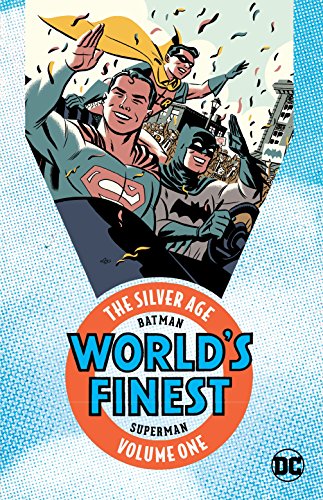
World’s Finest Silver Age Volume One

This is a review of World’s Finest Silver Age Volume One, featuring the adventures of Superman, Batman, and Robin. Special shout-out to Lois Lane, who appears in most of these issues. These comics were produced in the fifties. They’re not good but if you’re a Batman/Superman fan I’m sure you’ll like them.

Or maybe you won’t. The plots are relentlessly weird – in one issue Batman, Superman, and Robin travel back in time and become the Three Musketeers, complete with tricorn hats and ruffled shirts! In another Batman and Robin gain Superman’s powers, while The Man of Steel must contend with being a mere mortal! In yet another story, Batman and Superman switch secret identities in order to fool Lois Lane, who has gone from hating Clark Kent to thinking he’s Superman!

Reading these comics is like having a midlife crisis – stay with me, here. Say you decide to take your vacation at a nudist camp. Your kids are horrified, the neighbors are bemused, but you need to show everyone you still got it. Except when you go, it sucks. Everyone is flabby, middle-aged, and out-of-shape (just like you!), mosquitos are everywhere, you burn yourself sunbathing on the beach, get poison ivy playing nude volleyball, and end up with food poisoning.

When you go back home, you’d just as soon forget the whole thing, but there’s that one person who took photos and videos of everything and posted them on Instagram & Facebook and now he keeps on cc:ing you and won’t go away. That’s what reading these issues is like.

Batman & Robin and Superman were created in the late 30’s. By the 1950’s, they’d reached middle-age and their creators were regularly jumping the shark, pick your reason. Which is to say: these comics aren’t good, which isn’t the same thing as saying I didn’t like them. Because I did like them, even though they were bad and when I finish this graphic novel I won’t remember any of them.

YMMV.

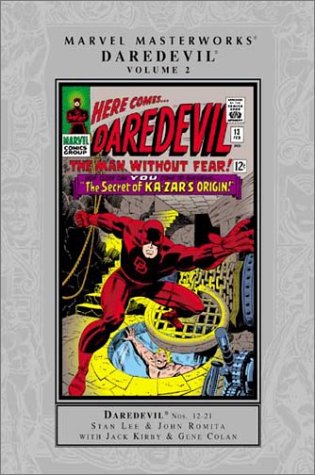
Marvel Masterworks Daredevil Volume Two

This is a review of Marvel Masterworks Daredevil Volume 2. I read the first volume back in January. The second volume contains the SINGLE GREATEST DAREDEVIL STORYLINE OF ALL TIME. Emotionally, I was unprepared. If you read my review of the first volume, found here, you know of the love triangle between Matt Murdock (aka Daredevil), his partner Foggy Nelson, and their secretary Karen Page. Perhaps ‘love triangle’ is misleading, as there’s no actual love or sex involved.

No, what we have is three adults acting like lovesick teenagers, which admittedly was Daredevil’s audience at that time. Things are at an impasse until the entrance of supervillain Masked Marauder, a purple-plumed goon who gets the bright idea of dressing his menagerie of thugs up as Daredevil and having them attack Spider-Man, so the two heroes will fight while he robs banks or whatever.

His plan works. Spider-Man bursts into the law offices of Nelson & Murdock and dangles Foggy out the window because he thinks he’s Daredevil. Foggy is not Daredevil, but he starts hinting to his secretary Karen Page that he is in order to impress her. It’s a version of the ole’ ‘I was in the CIA but can’t talk about it’ bit.

Foggy takes it a step further and buys a Daredevil costume. Unfortunately, he buys the costume at the shop of The Gladiator, frustrated tailor and budding supervillain, who suggests that Foggy hire a pretend thug to beat up when he’s dressed as Daredevil, in order to impress Karen. With me so far?

The Gladiator’s plan is to eviscerate Foggy, because reasons. Unaware, Foggy and Karen take a cab to a deserted wharf, where the Gladiator awaits. Will the real Daredevil arrive in time? Will true love – or whatever this is – triumph?

I have been reading superhero comics for decades, and I haven’t read many dopier storylines, but somehow the creators (Stan Lee & John Romita) pull it off. Foggy is on the portly side, and thus can barely fit into his Daredevil costume, just one of all sorts of magical details contained within. My second favorite storyline features The Owl, a supervillain who builds an enormous mechanical owl to attack Daredevil. Later in the volume, Daredevil rides that owl like a bronco.

My biggest issue with these issues is that this version of Daredevil is dead and buried. I do think writer Mark Waid’s version of Daredevil hearkens back to these issues, but for better or worse, artist/writer Frank Miller left an indelible mark on the character.

Read this!