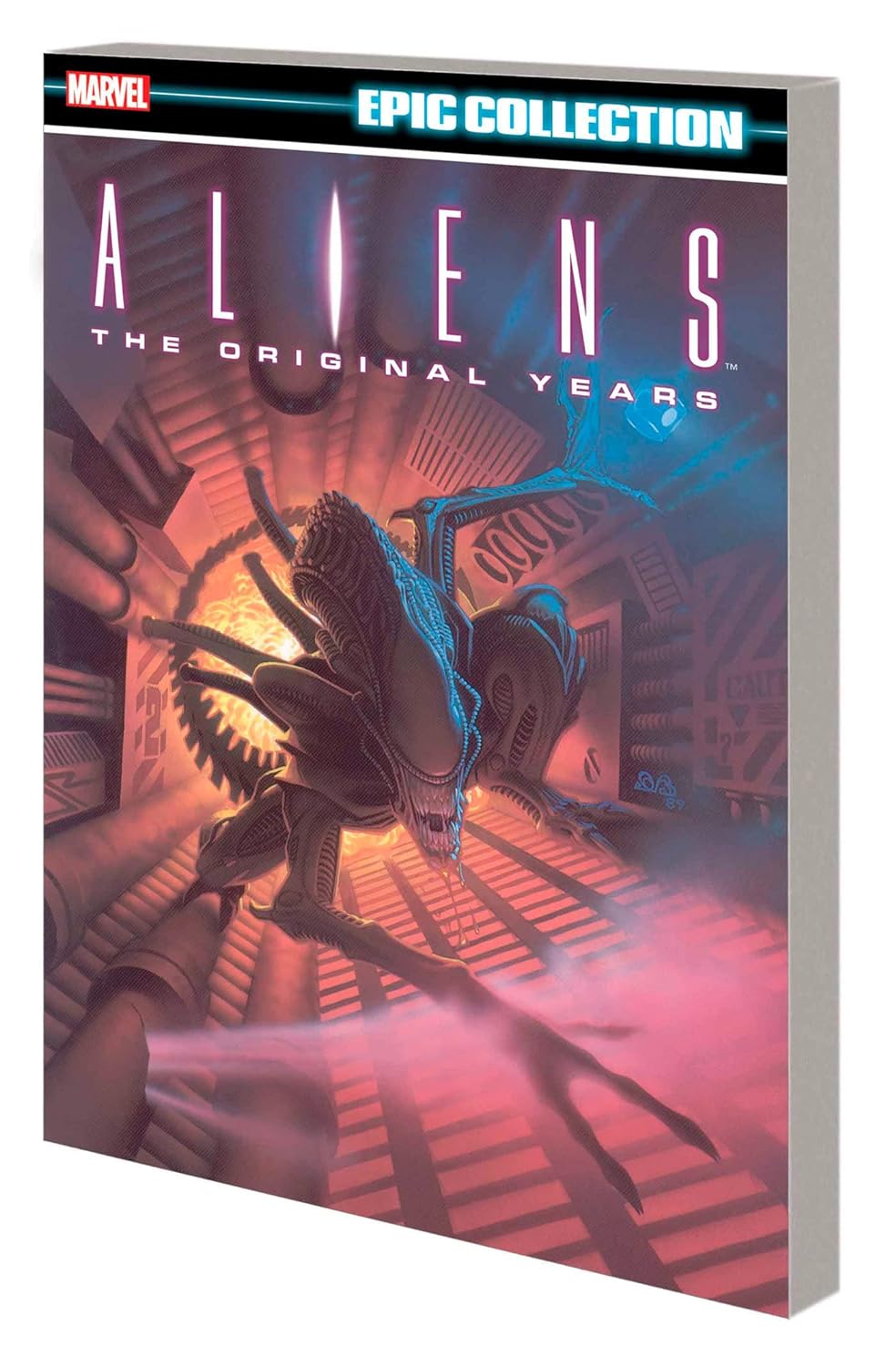
Aliens Epic Collection: The Original Years

This is a review of Aliens Epic Collection: The Original Years, the meat of which consists of three miniseries published after the release of James Cameron’s Aliens movie in 1986. The main characters are Newt and Hicks, two characters from Aliens. These miniseries were published before the release of the third Alien movie, in which it’s revealed that Newt and Hicks are dead. They had to change their names in reprints of these series.

The plot: Newt and Hicks are back on earth. Fifteen years have passed since Aliens, with no sign of Ripley. Both Newt and Hicks have wounds, physical and psychological. Hicks’ face has been half burnt off by the aliens, and he now spends most of his free time drinking and brawling. Newt is in a mental hospital for shock. When Hicks has a chance to go back to Acheron (where the first two Alien movies took place), he jumps at the chance because reasons. He breaks Newt out of the mental hospital and takes her with him because they’re going to lobotomize her.

Turns out that everyone wants to get them some alien – corporations, the military, scientists, wacky religious cults. They get their wish when earth is overrun with xenomorphs. In the second miniseries, Newt and Hicks meet a military man who thinks he can train the aliens like dogs and use them to retake earth. That goes about as well as expected. In the final miniseries of the volume, Ripley returns with a plan to end the alien menace once and for all. Will it work, or is it just another crackpot scheme?

I read a few of these issues back when they were published. I might even have collected them, although I can’t say I remember. To be truthful, I recalled very little about these comics. If I did, it’s likely I wouldn’t have bought this collection. I do not write these reviews to be negative. Unfortunately, these comics just aren’t very good. The pacing of the individual issues feels off, and many of the characters are clichés and/or caricatures. Sam Keith does the art for Aliens: Earth War, and his pencils look great, but his character designs are very different from the first two miniseries. In some cases, his characters look like different people.

If you loved the Alien movies, you could read this. Or you could just rewatch the movies.
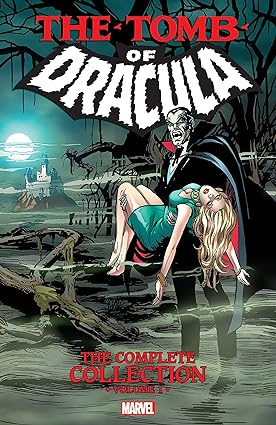
Tomb of Dracula Complete Collection: Volume One

This is a review of Tomb of Dracula Complete Collection Volume One. Reading the first volume of this series is a milestone for me, because my OCD fixated on this book, which means I read the first six issues repeatedly, with no prospect of ever finishing. But finish I did! Now how’s that book I finally read?

Very good, with the exception of some creaky material that hasn’t aged well (cringeworthy dialogue, racial stereotypes, make it up as you go along vampire lore). Dracula rises from his tomb in the first issue, courtesy of all-round idiot Clifton Graves. Graves becomes Dracula’s slave, and is so obnoxious and fawning that Dracula gets sick of him and lets him die in an exploding boat. But Grave’s best pal Frank Drake is worse. Frank is related to Dracula, and his solution to life’s problems is a left hook. Luckily, the focus of the book is Dracula himself and the ensemble cast. BTW, this series takes place in London in the 1970’s.

We have Dracula, self-proclaimed Lord of the Vampires, who is irredeemable. Depending on what issue you read, he’s either 100 or 500 years old. Then there are the ones who hunt him: Frank Drake, master of fisticuffs; Rachel van Helsing, who wields a crossbow, the most useless vampire hunting weapon in existence; Taj, who does not speak; Blade, a vampire hunter who’s part vampire himself. They’re led by Quincy Harker, who has a daughter named Edith. Long-time readers should be able to guess which cast member gets killed in the first volume.

The art, done by Gene Colan, is one of the best things about this series. Mr. Colan’s character designs are striking, and his art has lots of fun details (Dracula’s cufflinks are little bats). The writing gets off to a rocky start, with three authors (Gerry Conway, Archie Goodwin, Gardner Fox) scripting the first six issues. Marv Wolfman took over the writing duties starting with Issue #7, and after that the book finds its legs. One of the things I like about this series is that even though it’s part of the Marvel Universe, it feels mostly self-contained. Dracula doesn’t feel like some rubber-suited supervillain.

A must read for Dracula and horror fans.

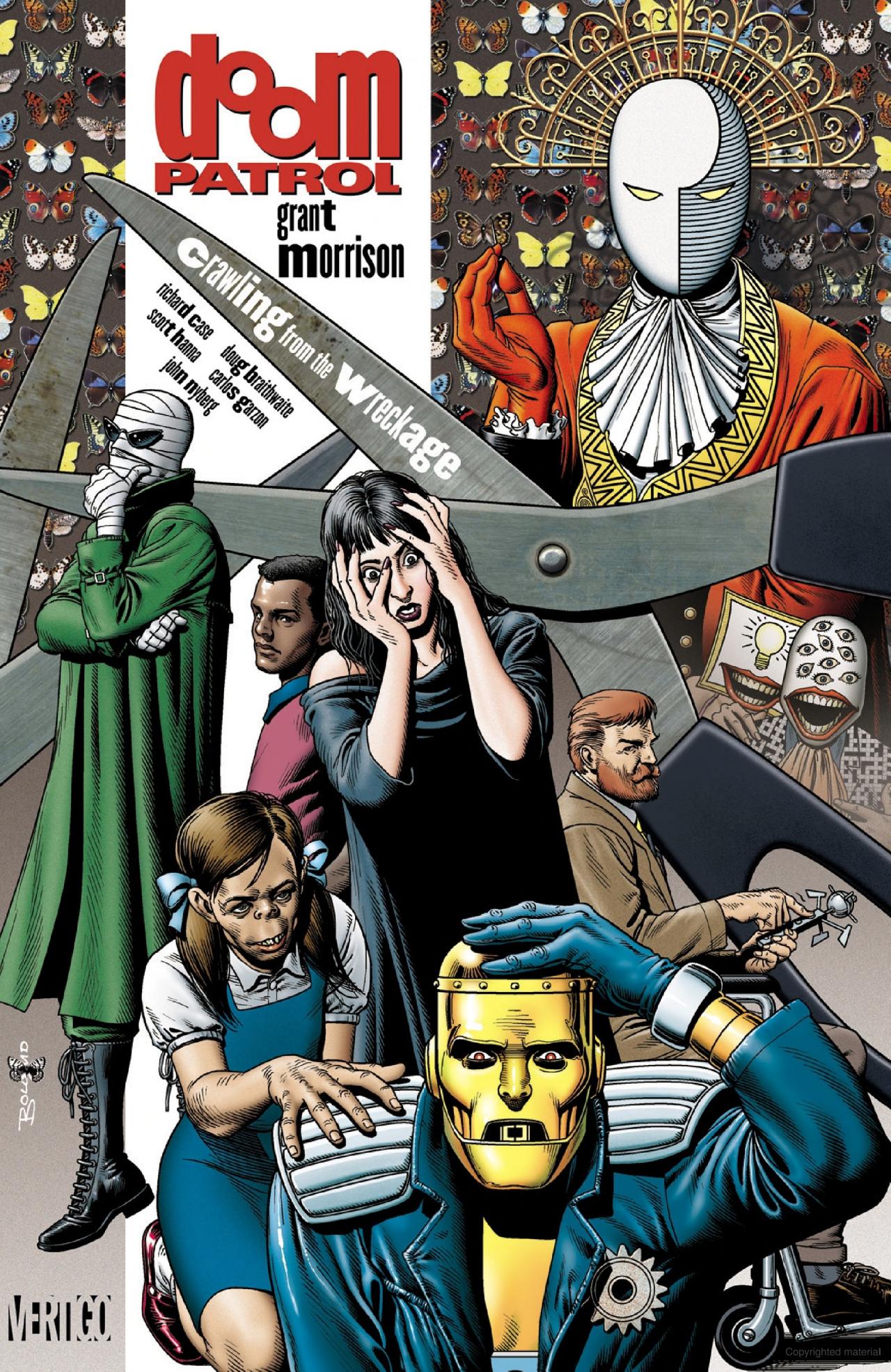
Doom Patrol: Crawling from the Wreckage

This is a review of Doom Patrol: Crawling from the Wreckage, written by Grant Morrison in the late 80’s/early 90’s. The Doom Patrol have been around since the 1960’s and are the ugly stepsisters of superhero teams. They aren’t powerful, or good looking, or important; they’re an obscure bunch of weirdos in tights. Luckily, the late 80’s were sort of the heyday for obscure weirdos – in comics, anyway.

A confession: I adored this version of the Doom Patrol. By the time this series came out, I’d read thousands of comics. This one was just different. It felt like someone took a Philosophy/Modern Art class (focused on surrealism & Dada) and jammed it all into a comic book.

Cliff Steele, aka Robotman, is the normal member of the group. He’s just a Regular Joe, stuck in a robot body. It’s not even an interesting robot body, but that will change. There’s also Rebis, an amalgamation of man, woman, and negative being, who has covered their body in bandages. Finally, Crazy Jane (the writer’s name, not mine), who has a superpower to go along with every one of her 64 personalities.

The Doom Patrol’s first encounter is with the Scissor Men, emissaries of the imaginary city Orqwith. Orqwith is staging a hostile takeover of earth, overwriting it into its own image. And then there’s Red Jack, aka Jack the Ripper, aka God, who likes collecting butterflies and looks like an escapee from a deck of playing cards. The writing is great, the art a little less so. Still, a strong start to one of my favorite series.

Wolverine Epic Collection: Madripoor Nights

This is a review of Wolverine Epic Collection: Madripoor Nights. Wolverine, aka Logan, is one of Marvel’s most popular characters. Something about a guy with nonexistent social skills and a nasty temper resonates with comic readers. Wolverine is a mutant whose abilities include enhanced senses and the ability to heal from almost any wound. He also has metal bones and a set of matching claws that retract and unfurl at his command.

Wolverine is a member of the X-Men, but became so popular Marvel gave him his own series. The setting is Madripoor, a carbon copy of Casablanca. Logan hangs out in a bar dressed in a white tux and eyepatch and tells everyone to call him Patch. He thinks he’s incognito, which is stupid because he’s so recognizable, but it turns out everyone was just pretending not to know him, because you don’t upset a guy with nonexistent social skills and a rotten temper.

 The first storyline features a character called Tyger, who wants to be a crime lord. To do so she must kill the current crime lord, who commands a pet succubus and a guy with knives for hands. Wolverine helps Tyger because her brain was scrambled by villains in an issue of the X-Men. Other storylines include a sword that possesses its wielder, an encounter with Mr. Fixit (aka The Hulk), and fledgling crime lord Tyger’s first gang war!

One of the good things about this series is that the writer (Chris Claremont) does a fine job of producing credible villains. As the years passed, Wolverine has gotten more and more powerful, until he became an unstoppable killing machine. Nothing can kill Wolverine, which is dull as dirt. In this graphic novel, Logan gets his ass kicked all over Madripoor.

Anyway, good series with lots of action. Recommended.

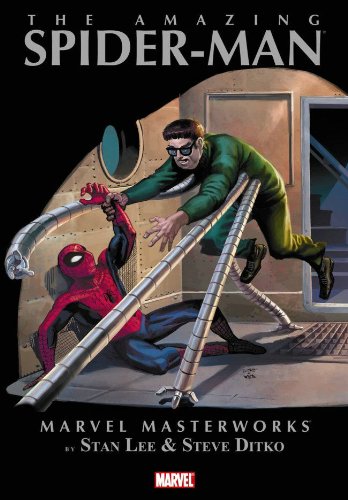
Marvel Masterworks: The Amazing Spider-Man Volume Two

This is a review of Marvel Masterworks: Amazing Spider-Man Volume 2. You can read my review of the first volume, here. In this volume, the classic Ditko/Lee run continues. The rogue’s gallery fleshes out, as we meet Mysterio, Kraven the Hunter, and The Green Goblin. Spider-Man has a great rogue’s gallery, right up there with Batman and The Flash.

Speaking of rogue’s galleries, who is Spidey’s arch-nemesis? I myself think it’s Doctor Octopus, but the Green Goblin is a fine choice also. Spider-Man’s first two encounters with the Green Goblin end in a draw, whereas by that point Spidey had beaten Doctor Octopus multiple times already. OTOH, Spider-Man has a longer history with Doc Ock, because Norman Osborne spent over a decade on the shelf (read: dead) before the powers-that-be resurrected him. Bottom line: they’re both good choices.

Peter’s personal life changes. He starts dating, Betty Brant and Liz Allan. Aunt May, who at this point is only 40,000 years old, has a heart attack. Peter also quits being Spider-Man for a few issues. Spider-Man throwing his costume in the trash has happened often enough that at this point it’s a cliché, but it wasn’t back then. Bottom line: this is a creative team working at the top of their game. A must-read for fans of Spider-Man and fans of superhero comics.

The Flash: The Death of Iris West

This is a review of The Flash: The Death of Iris West. A few firsts. Flash #278, which resides in this volume, is the first superhero comic I read. Well, it might be Fantastic Four #210, which I bought around the same time, but my memory says it’s the Flash. A second first: the title of this volume is The Death of Iris West, aka Mrs. Barry Allen (as she’s referred to in this volume), aka The Flash’s wife. If you don’t want the details of her fridging, don’t read any further.

This volume doesn’t come flying out of the gates. The Flash fights a villain named The Clown. At first glance, this is a mismatch – The Flash can run faster than light and has total control of his molecular structure (I have no idea how these two powers are related). The Clown throws cream pies. Thus, it comes as a surprise when The Clown nails The Flash in the face with the aforementioned cream pie. Heck, it comes as a surprise that any fight with The Flash lasts more than two seconds. Thank god I’m not the writer, who has to think of creative ways to make the Flash’s villains seem like credible threats.

Maybe The Flashster has other things on his mind. He’s been neglecting his lovely wife, Iris, who responds by pulling out the stops – romantic candlelight dinners, new hairdo, etc. The Flash claims he’d like to spend more time with his wife, but Gorilla Grodd has a hangnail or whatever, and he needs to deal with that. Then there’s the 16-year-old psychic teen with a crush on The Flash. Since Barry is thirty and could be her dad, this seems creepy, especially considering what happens to his wife.

I am not saying I didn’t enjoy this volume, because I did. The art is good, and I like writer Cary Bates’ scripts. It wasn’t Mr. Bates decision to kill Iris Allen. This was an editorial call, done to boost sales (I read this in an interview with Cary Bates). There’s no build-up or foreshadowing to Iris West’s death. Barry and Iris go to a costume party, which is crashed by ex-convict-Clockwork-Orange-fan-psychic-vampire Clive Yorkin. BTW, Yorkin is one of the best things about this volume. The Flash, shot up with angel dust, makes the mistaken assumption that Yorkin killed his wife. He’s wrong. The killer is Professor Zoom, denizen of the 25th century, who takes up supervillaining as a hobby because he’s bored.

If you’re a Flash fan, this is an important chapter in Barry Allen’s life, even though I’ve lost track of the number of times his character has been rebooted. If you’re not a Flash fan, it might take a few issues to figure out what’s going on. Still an enjoyable read.

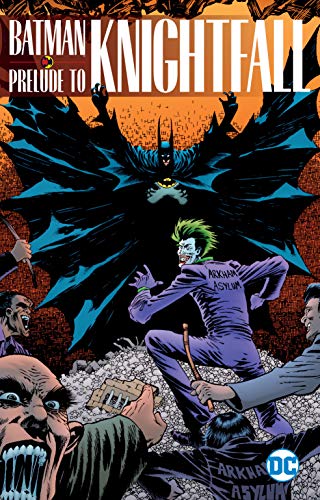
Batman: Prelude to Knightfall

This is a review of Batman: Prelude to Knightfall. I read Knightfall when it came out in the early 90’s. Since this is the prelude, I didn’t read most of the issues in this volume. The plot is simple: Bane is a superhuman steroid freak who wants to break Batman. His timing is impeccable; The Dark Knight is suffering from heavy-duty burnout, driving himself to go without sleep or food. To further wear Batman down, Bane releases all the lunatics in Arkham Asylum, where his greatest foes are housed.

The writing of this graphic novel, which features Doug Moench and Chuck Dixon, is good. The art is a little uneven, but we do get a few issues drawn by Jim Aparo, one of my favorite Batman artists. There are a few nice touches, such as Batman wearing a black Superman armband (Superman had just been ‘killed’ by Doomsday).

The creators of this volume understand Batman. At one point a cop tells The Dark Knight that he is the one who attracts all the weirdos and lunatics that plague Gotham City, an argument Batman doesn’t even try to rebut. The other eye raiser of this graphic novel is how burnt-out Bruce Wayne becomes, which adds a touch of realism. Honestly, a guy who dresses up like a bat, gets no rest, has no real friends, social life, or sex life, and is constantly injured would burn out.

Standout villains in this volume include The Black Mask, a misogynistic would-be crime boss; a pumped-up Riddler; and The General, an underage Napoleon with a penchant for assault rifles. We also meet Jean Paul Valley, aka Azrael, who gets put into a backbreaker while posing as Batman. The creators are foreshadowing future events, and not even being all that subtle about it.

Vintage Batman.

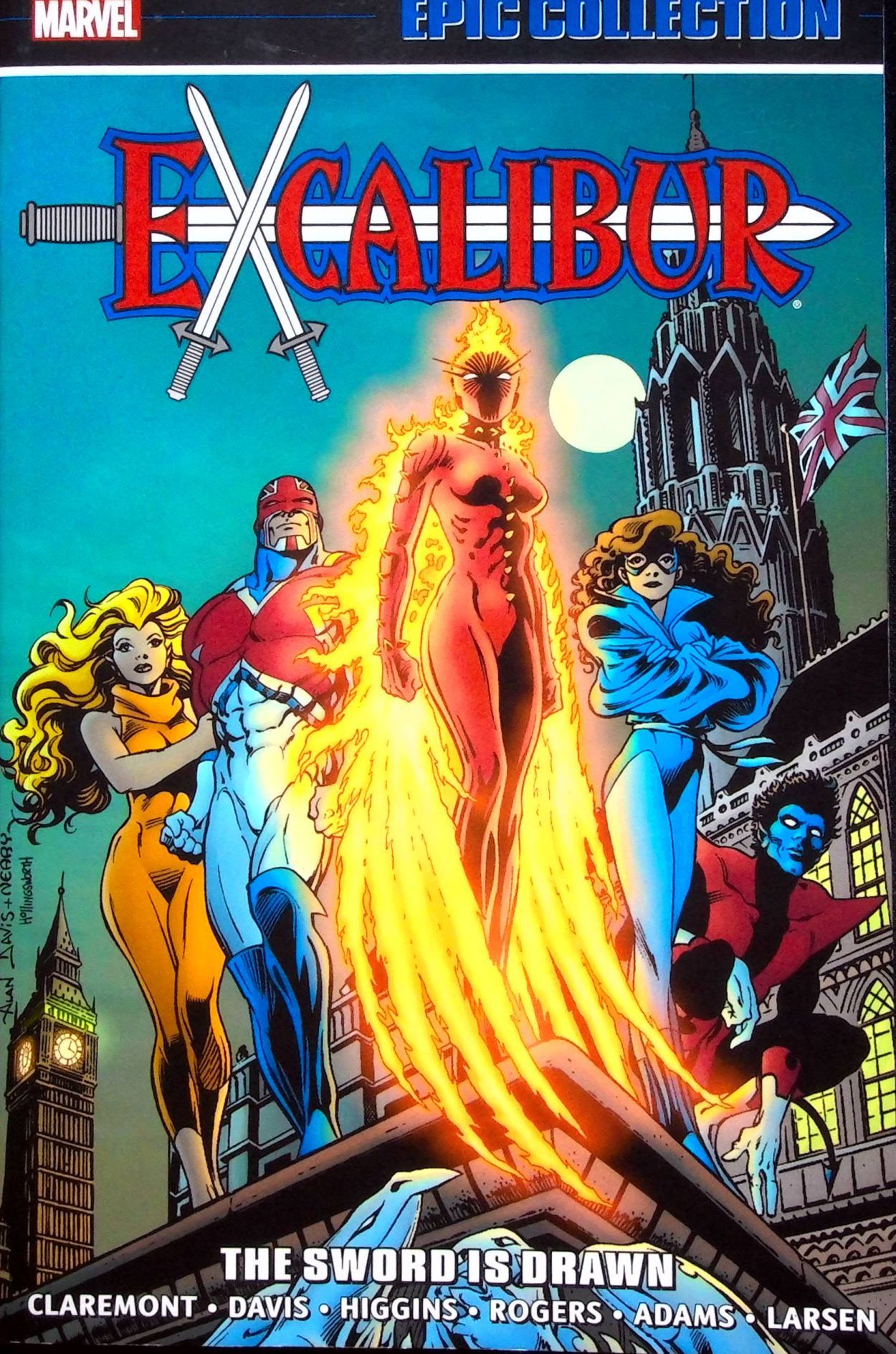
Excalibur Epic Collection: The Sword is Drawn

This is a review of Excalibur Epic Collection: The Sword is Drawn. This graphic novel is written by Chris Claremont, who wrote Excalibur along with most of the X-Output in the 1980’s. I read a lot of Chris Claremont comics growing up.

Excalibur consists of five members, three former X-Men (Nightcrawler, Shadowcat, the Rachel Summers Phoenix) along with British superheroes Meggan and Captain Britain. All but Captain Britain are mutants – or muties, in Claremont Parlance. Sidenote: I don’t consider an X-title finished unless some stupid human says muties. The events of Excalibur take place after the Mutant Massacre, a famous (or infamous) crossover that shook up the X-Books.

Excalibur has all the elements of a Chris Claremont book: ensemble cast, soap opera histrionics, and short, punchy storylines. Characters say things like – “I know you’re a hero. But let’s see if you’re a man!” It’s amazing that a title whose feature characters are Nightcrawler and Kitty Pryde lasted over a hundred issues. I think it likely that the wonderful art by Alan Davis – who went on to write the book after Claremont left – has something to do with that.

Excalibur’s origin story lasts exactly one issue, and then we are off to the races. Honestly, the team has no real reason for existence, but who cares? Whatever they did worked. Excalibur has no problem finding its legs. The title comes roaring out of the gate, as the members fight bounty hunters from outer space, interdimensional werewolves, Arcade, and the Nazi versions of themselves. There’s also a two-issue crossover with the X-Men, an Inferno storyline in which Excalibur is so superfluous none of the crossover’s major players even know they are there.

I’d be remiss if I didn’t mention this. The first time I read Excalibur, I was still a kid and some of this title’s more, uh, grown-up elements flew over my head. The creators like dress-up and cosplay, because this title features lots of costumes -some sexy, more often outright bizarre. There are also a few gratuitous underwear shots, mostly female. As a kid I didn’t mind; as an adult, it’s embarrassing. If you find this offensive, I’d avoid this graphic novel.

A good read for fans of the 1980’s X-Men.

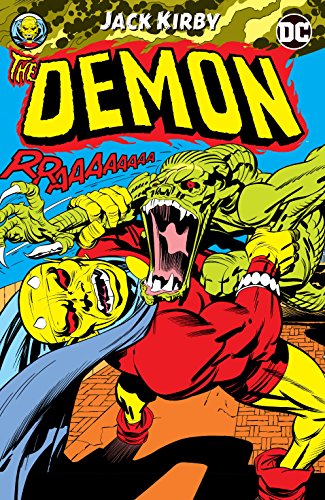
The Demon

This is a review of The Demon, a comic series written, drawn and edited by Jack Kirby. The Demon is one of the projects Mr. Kirby worked on when he went to DC in the 1970s. I read part of the first issue in an anthology, somewhere, but that’s it.

Short summary: The Demon is Merlin the Magician’s pet monster. The first time we meet him is during the fall of Camelot, where he fights the demon hordes of Morgan Le Fay, and then we fast-forward to modern day (1970’s) New York City. Jason Blood is a demonologist; unbeknownst to him, he’s also a Demon.

This is a short run, sixteen issues. The art is great. My favorite character design is Klarion the Witch Boy. In his first appearance, Klarion is more of a pest. He doesn’t turn evil until his second appearance, which is one of my problems with this series. More on that later.

Make no mistake about it, this is a horror comic. I wouldn’t call it disturbing, exactly, but I was surprised at the level of violence. In one issue, Baron von Evilstein is going to cut Blood’s head off. In another, a demon marks Blood’s forehead with a white-hot poker. A Frankenstein’s monster is tormented and killed by his ‘master.’ The bad guys and girls are really bad, and the stories don’t always have happy endings.

This series is written & drawn by Jack Kirby, which means it’s good. All I can say is that it didn’t hit me where I live, and I am not sure why. It might have been good if Mr. Kirby had an editor, because the stories feel slightly unfocused. Klarion the Witch Boy’s transformation into a villain is one example.

Here’s another: in the first few issues, The Demon is more threatening. One of the high points of the early issues is Blood’s ‘nightmare,’ where he’s chained to The Demon. This sequence – Blood wondering if he’s losing his humanity, or maybe he’s already lost it – is the real thing. Unfortunately, The Demon mellows as the series progresses and misplaces its crazy energy. Bottom line: to me, this title loses its legs, and that’s something an editor can help with. It’s still worth a read, especially if you’re a Jack Kirby fan.

Marvel Masterworks: The Sub-Mariner Volume One

This is a review of Marvel Masterworks: The Sub-Mariner Volume One, starring the Sub-Mariner, aka Prince Namor, aka the guy with wings on his ankles. The first storyline spans over twelve issues, so points for ambition. The art is mostly done by Gene Colan, an artist I adore, but I wasn’t crazy about his inker. My main issue is Stan Lee’s script, which repeats itself and is all over the place.

The plot involves Warlord Krang’s attempts to seize the throne of Atlantis. He does this while Namor is off gallivanting on the surface world. Namor must find the Trident of Neptune, aka the MacGuffin, to regain his throne. For some reason Krang – who has Namor in his power – lets him go. Since finding the trident involves punching things, Namor is in his element.

After finding the trident and winning his crown back, the Sub-Mariner banishes Warlord Krang, who simply bides his time and awaits another opportunity. That opportunity comes when Krang tells Dorma, Namor’s beloved, that he’ll kill Namor if she doesn’t marry him, and this evil plan – uh, works. For some reason Dorma believes Warlord Krang. She and Namor are made for each other, in that they are both unbelievably gullible.

At one point Namor even wonders if he’s fit to rule, a rare moment of self-reflection. The answer is no. For all his faults Warlord Krang – Namor’s foe in this volume – would make a much stronger ruler. This is mainly because Namor has no control over his emotions. If the Hulk is a toddler, the Sub-Mariner is a 12-year old going through puberty.

Like many Marvel strongmen, he’s vulnerable to mind control, brainwashing, and amnesia. He doesn’t listen and refuses to admit when he needs help. This gets taken to ridiculous extremes in this volume, as Namor is manipulated by both the Puppet Master and the head of the Secret Empire.

The two people the Sub-Mariner most resembles are Dr. Doom and the Marvel version of Dracula. Namor is better than them in that he’s not as ruthless and doesn’t murder people for fun. He carries a streak of nobility that neither villain possesses. There are several points in this volume where Namor avoids hurting or killing humans. That’s great, but judging by this volume, he’s not an interesting enough character to sustain his own title.