The Flash Silver Age Volume Two

This is a review of The Flash Silver Age Vol. 2. I’m not going to mention that I have a special place in my heart for the Flash, as I’m sure I’ve mentioned that in every Flash review I’ve ever written. Instead, I’ll talk about how DC’s Silver Age comics aren’t to my tastes – most of the ones I’ve read are written in a style I have trouble connecting with. True, comics of that day were written for kids, but many of them are just glorified science fiction tales with eye-rolling pseudoscience.

Luckily, this volume isn’t like that. True, the stories are formulaic and the ‘science’ is dopey, but that’s fine. The author usually manages to give them an interesting twist: witness Charm School Gorilla Grodd. Grodd is an evil super-intelligent, super-powered gorilla who wants to conquer the world. In this volume, the Great Ape uses his mental powers to make himself irresistible to everyone, including the Flash. We have the Elongated Man, whose stretching powers derive from drinking soda pop. And then there’s Kid Flash, the bowtie wearing teen who emulates his idol, the head square himself, Barry Allen (who is the Flash).

In this volume we meet Digger Harkness, aka Captain Boomerang. Digger covers for his crimes by getting a couple of geriatric criminals to pose as his dear old mother and father. Later, he creates a boomerang that can time travel – not bad for a guy who probably dropped out of school in the fifth grade – and unwittingly causes an alien invasion, as one does. Instead of shooting The Flash in the head, Captain Boomerang enjoys tying the Scarlet Speedster to enormous boomerangs which he blasts into outer space.

This volume also has Bill “Beefy” Lawson. Beefy is all his nickname implies. We meet him at a class reunion; unfortunately it’s only a single issue. DC really missed out by not giving good ole’ Beefy his own series – he could use the moves he learned on the football gridiron to take down evildoers. I’m firmly convinced the creators of Married With Children read this particular issue, because Beefy is a perfect stand-in for Al Bundy.

There are a number of team-ups in this volume. Flash teams with Kid Flash, the Elongated Man, Green Lantern, and Jay Garrick, the Flash of Earth 2. I am unsure if the writer came up with the alternate earth gimmick, but it’s sure turned out to be a cash cow for the comics industry.

Recommended!

Marvel Masterworks: The Fantastic Four Volume Three

Version 1.0.0

This is a review of Marvel Masterworks: The Fantastic Four Volume Three. After reading Jack Kirby’s Kamandi, this volume felt like a letdown. Mr. Kirby’s art looks rushed in places here, there’s no meta story, and the issues have a ‘villain of the month’ quality. We have a single science fiction tale about a young godling, but the rest is mostly battles with the team’s growing rogue’s gallery – Doctor Doom, The Mole Man, The Red Ghost and his Super Apes, etc, etc., etc.

The highlight of this volume is the Thing’s battle with the Hulk. The not-so-jolly-green-giant invades Manhattan, because reasons. Most of the Fantastic Four is either sick or injured by the Hulk, so it falls to the Thing to fight the jade giant. And fight him he does, in a great battle sequence that lasts nearly an entire issue and ends with the Thing getting knocked on his ass. Never fear, the rest of the Fantastic Four and the Avengers join the fray in the next issue. It’s a great two-parter.

Other developments worth mentioning: the creators give Sue Storm the ability to cast invisible force fields, which gives them more to do with her character. Prince Namor arrives to propose to Sue, except his idea of proposing involves kidnapping and imprisoning her in an enormous bubble until she agrees to marry him. Reed Richards, feeling his manhood threatened, rushes to fight the Sub-Mariner, which is interesting because he’s usually written as a pretty mild guy. Afterwards, Sue puts Namor in the Friend Zone – actually he should be in the Don’t-Come-Within-Two-Hundred-Feet of my House Zone, but whatever.

This volume is a slight step back from the first two books, but the Hulk two-parter is a classic and worth the price of admission. Recommended.

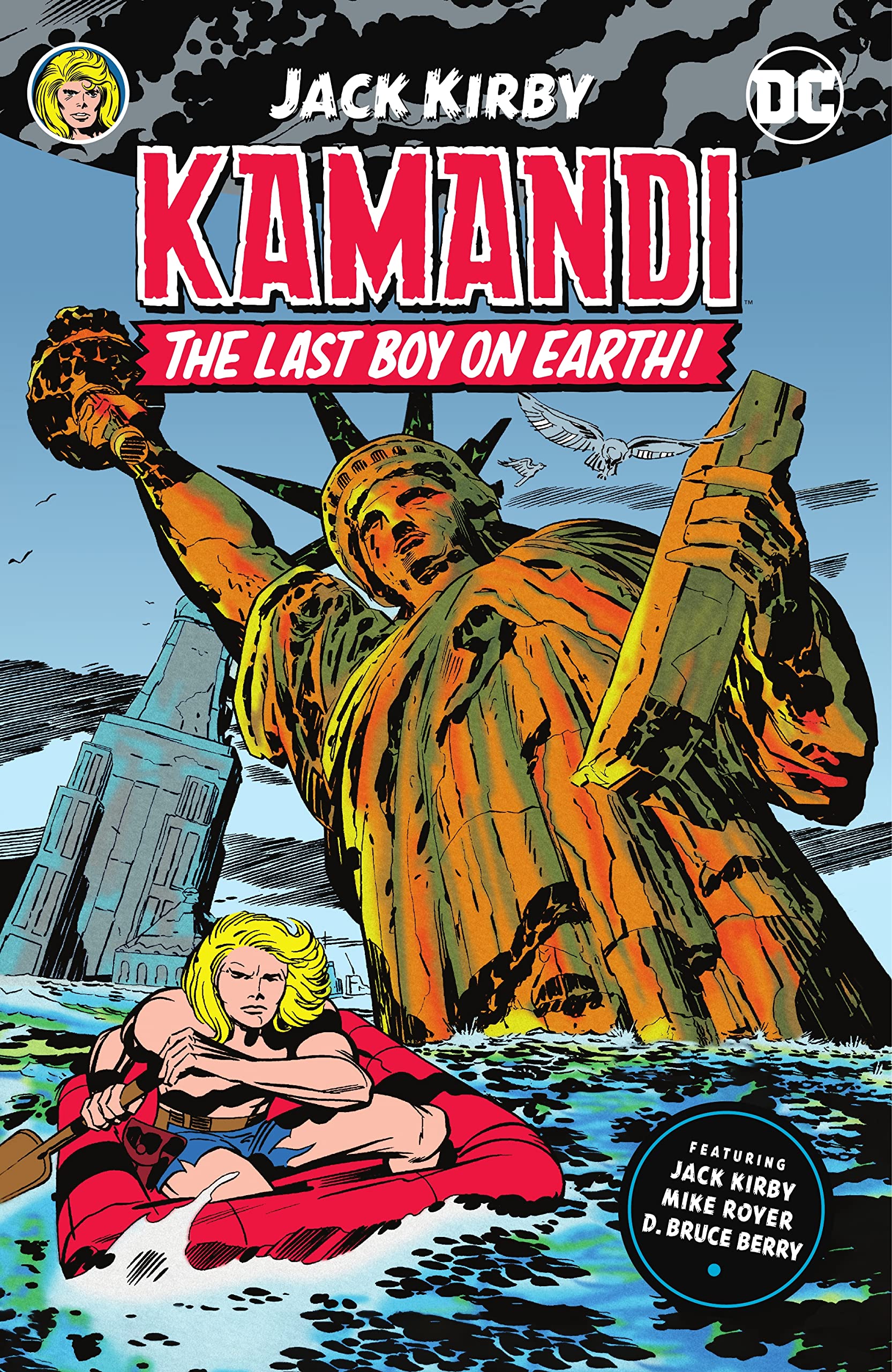
Kamandi: The Last Boy on Earth Volume One

This is a review of Kamandi: The Last Boy on Earth Volume One. Jack Kirby (the creator of Kamandi) wrote a lot of material for DC. Thus far I’ve read The Demon and OMAC, but this graphic novel blows them out of the water. Kamandi is a riff on the original Planet of the Apes movie that came out in the late 1960’s, but Mr. Kirby runs with it. In Kamandi, there are super-intelligent lions, tigers, cheetahs, groundhogs, bats, etc. Humans are now on the low end of the totem pole, and are treated like animals or even exotic pets. Some enterprising animals have even taught humans how to talk!

Kamandi, who owns a single pair of blue cargo shorts, lives in a bunker (Command 1 – get it?) with his grandfather. One day he leaves the shelter to see how earth fares after being ravaged by an unnamed natural disaster. He finds out that things are much, much worse than he thought. Thus begins a bizarre road trip.

This is not superhero comic. Kamandi has no special powers, and gets the crap kicked out of him on a regular basis. Indeed, there’s a scene where he goes berserk because he realizes that he’s stuck in this world with no way out. He’s rescued by one of his friends – Kamandi makes lots of friends, both animal and human, but the friendships never last long. He’s always wandering away, being captured by rampaging gorillas, or falling out of the hot-air balloon he’s using to escape.

This graphic novel moves quickly, has a rotating cast, and in many ways reads like a war comic. It’s really a post-apocalyptic comic. Substitute zombies for the different animals, and you’ll see what I mean. My favorite storyline in this volume is when a group of conservationist lions put Kamandi and his female companion, Flower, into their version of a nature preserve. Unfortunately, there are cougar poachers who want a piece of him. This issue is the best single comic I’ve read in years.

Highly recommended!

Rom: The Original Marvel Years Omnibus Volume One (Part Two)

 This is part two of my review of Rom: The Original Marvel Years Omnibus Volume One. You can read my review of the first part here. I have most of the original issues of Rom stored in an attic somewhere, but one of the advantages of aging gracefully is the fact that I don’t recall what I ate for breakfast two days ago.

The upshot: I don’t remember most of this series, although I do recall enjoying it. First off, this is a horror comic disguised as a superhero comic. Rom has a meta-story that lasts 70+ issues, albeit with a number of side stories. Unlike superhero comics, it has a beginning and a definite end. The monsters, the sense of paranoia that permeates this book, and the weird conspiracy theories remind me of The X-Files, but unlike the X-Files Rom hasn’t jumped the shark…yet.

The other reason this is a horror comic is the body count. The creators (Mantlo & Buscema) use a cast of mostly new characters. There are cameos by Marvel heroes – in this volume we get the Torpedo, the X-Men, Power Man & Iron Fist, Nova, and the Fantastic Four – but they make sense in the context of the larger storyline, which is earth’s invasion by the Dire Wraiths. Bottom line: many of the characters are new, and the creative team has no qualms about killing them. This can be unsettling, because cast changes in superhero comics tend to remain static. In practical terms, this means that nobody is safe.

The highlights of this volume are Rom’s battle with Hybrid, the offspring of a human mother and a Dire Wraith father. Hybrid – who is also a mutant, and whose character design is totally grotesque – wastes no time killing his parents. His battle with Rom is interrupted by the arrival of the X-Men, searching for the new mutant. A number of misunderstandings ensue, which leads to the X-Men attacking Rom.

The second highlight is Rom’s return to his home planet of Galador, which leads to an encounter with Galactus, who wants to eat the planet. Rom strikes a deal with the planet-eater and leads Galactus to the Dark Nebula (the Dire Wraiths’ home planet), but who will consume who?

Mention should also be made of the arrival of The Torpedo, the Grade Z hero Rom chooses to protect his adopted home town of Clairton, WV from the Wraiths. So far, his record is 0-1, as Clairton is overwhelmed by a mystical fog in Rom’s absence. The Torpedo seems like a nice guy, and he does his best, but sometimes that’s not enough…

Highly recommended!

Tales of the Batman: Len Wein

This is a review of Tales of the Batman: Len Wein. The comics in this volume are amongst the first Batman material I ever read, over forty years ago. I enjoyed the five-part Ra’s Al Ghul story in a mass market paperback before there was such a thing as graphic novels. The Joker’s Birthday Bash story is the first Batman comic I ever bought. For some reason, I thought the writer was Gerry Conway but it’s Len Wein.

Anyway, this is a hefty volume. Over thirty issues of 70’s Batman goodness, which if you like the Dark Knight turns out to be pretty good deal. I’d suggest waiting until Comixology has another sale, though, as these volumes are pricey.

The stories are mostly one-shots, and feature Batman’s rogue gallery as well as villains from other titles. Hawkman villain the Gentleman Ghost makes an appearance here, as well as Captain Boomerang (a Flash foe). Two-Face, The Joker, Kite Man, Calendar Man, Firebug, Signal Man, etc., etc., etc. also make appearances. Selina Kyle, aka Catwoman, is present, but this time it’s mostly as Bruce Wayne’s love interest.

Selina and Bruce manage to have sex, off-screen, a fact I missed because I was twelve years old. This leads into a two-part story where it turns out Selina is dying of some rare unnamed disease she caught as Catwoman, which okay. The only cure is an urn full of even rarer Egyptian herbs, because the ancient Egyptians knew so much more about medicine than us. When the herbs are stolen from the museum, Selina becomes suspect #1. You know, the usual nonsense.

I like Mr. Wein’s portrayal of Batman. Instead of being portrayed as a sociopathic asshole, the Dark Knight manages to achieve balance in both sides of his busy life. His powers of detection are highlighted, as well as his escape artist skills. There are a number of instances where Batman is knocked out and put into a death trap, which he always manages to escape. I’m assuming the villains who choose to tie him up instead of just putting a bullet through his head either have a bondage fetish or watched too many episodes of the 60’s TV show.

Recommended for Batman fans!

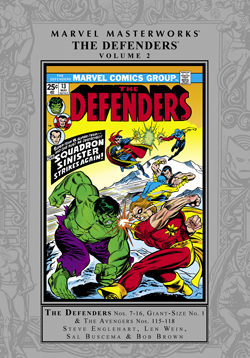
Marvel Masterworks: Defenders Volume Two

This is a review of Marvel Masterworks Defenders Volume Two. The high point of this graphic novel is the six-issue Avengers/Defenders war, in which the two teams duke it out to retrieve what looks like a plumber’s helper. The plot has a slapdash energy that I liked, even though I’ve seen it a million times before. Other storylines include a romp in the past with the Black Knight, along with The Hulk fighting the Abominable Snowman. Also: The Squadron Supreme sells earth to aliens!

Being Marvel’s one and only non-team, The Defenders’ roster changes with the winds, but semi-regular members include Doctor Strange, The Valkyrie, and The Hulk. In the volume I read, Hawkeye and Nighthawk come to visit, but only Nighthawk stays. 1970’s superhero comics mostly consist of a bunch of one or two issue storylines and have a villain of the month quality – Loki, Mordred, The Squadron Supreme, Magneto, etc.

These issues read fine, but are mostly forgettable. Writer Steve Englehart leaves, and writer Len Wein arrives. Both Mr. Englehart and Mr. Wein do good work here, but both have done better elsewhere. This is perfectly decent comics schlock that doesn’t take itself too seriously.

Batman: Dark Victory

This is a review of Batman: Dark Victory, which is a direct sequel to Batman: The Long Halloween, reviewed here. Batman is younger in this graphic novel, but by the end of it he seems to have aged a hundred years. At the start of the story, Catwoman is flirting with him; by the end, he’s stepping on her neck. This is something I didn’t notice on my first read, years ago. The progression from Young Batman to mega-bleak Asshole Batman is depressing to behold.

Batman is a loner, but there are three people in this storyline he considers confiding to. The first, Harvey Dent, would have been an enormous mistake. From reading Long Halloween, it’s my opinion that Harvey was way off-kilter before getting the acid treatment. The second, Catwoman, is more interesting. Tom King played with this concept in his Batman run. The third is Dick Grayson, whose acrobat parents were murdered by mobsters in this very volume.

Bruce chooses to confide in Dick Grayson. My guess is that it’s partly because he empathizes with Dick’s anger and grief, and partly to keep Dick – who’s determined to solve his parents’ murders on his own – alive. I get that, but bringing a twelve or thirteen-year old into your war against crime (Dick Grayson is the first Robin) isn’t what a rational person does.

I’ve read a lot of Batman comics, and believe me Dick takes a beating. The second Robin, Jason Todd, was bludgeoned to death by a crowbar-wielding Joker, in a shameful 900-Number Scandal (call this number to vote if you want him to die!). They brought Jason back as the Red Hood, but when I read the original comic, he sure looked dead to me.

This doesn’t have much to do with the plot of Dark Victory, which is a lot easier to follow than The Long Halloween. Dark Victory lives up to its name, and includes one shock murder in the final act that I think is effective, because it knocks the magic pixie dust out of Batman’s eyes and shows that Dent is truly irredeemable.

Bottom line, this is one of the top ten Batman storylines I’ve ever read, but finish The Long Halloween first. Highly recommended.

Marvel Masterworks: Doctor Strange Volume One

  This is a review of Marvel Masterworks Doctor Strange Volume One. IMO, there are three classic Marvel titles to emerge from the early 1960’s. The first is Jack Kirby’s Fantastic Four, the second is Steve Ditko’s Spider-Man, and the third is Mr. Ditko’s Doctor Strange. I suppose you can also include Jack Kirby’s Captain America and SHIELD runs, which I believe took place in the same time period. The rest of the Marvel output from the early 1960’s is uneven (Daredevil and The Avengers), and some of it is just plain bad – early Thor and Iron Man were wretched.

Anyway, Doctor Strange is a standout. The reason for this is Steve Ditko, whose art for this series is bizarre, distinctive, and surreal. Besides the artwork, it wouldn’t surprise me if Ditko did much of the plotting, leaving Stan Lee to write the dialogue. I believe Steve Ditko to deserve the lion’s share of the credit for the quality of this title, but YMMV. The stories here range from five to twenty pages. The shorter stories are marvels of efficiency. Not a panel is wasted.

Doctor Strange lives in a mansion in Greenwich Village. He is Earth’s Sorcerer Supreme, a phrase that’s never really explained. The less said about his origin story – which is a take on a hoary old trope most people don’t use anymore – the better. Strange is written as an interesting mix of arrogance and humility – he will help anyone who asks, but there’s something that sets him apart from the rest of humanity. He’s not the type you’d like to have a drink with at a bar.

Doctor Strange’s foes include Baron Mordo, the Mindless Ones, and the Dread Dormammu. Strange has a cloak of levitation, and he can summon the all-seeing Eye of Agamotto and the Crimson Bands of Cytorrak. He’s a solitary figure, keeping to himself and not really fitting in with the rest of the Marvel Universe at that time. There’s an issue guest-starring Thor and also an issue where he shares the limelight with Spider-Man, but mostly the good doctor is a loner.

Highly recommended!

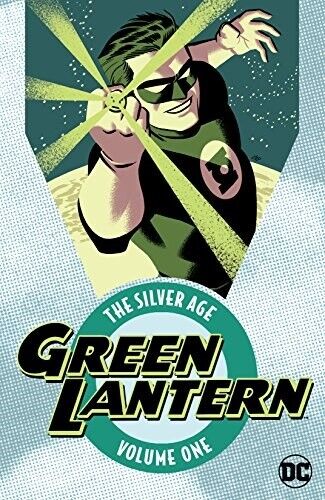
Green Lantern: The Silver Age Volume One

This is a review of Green Lantern: The Silver Age Volume One. For the most part, this is fun comic book science fiction. The writer introduces many characters and concepts – the Green Lantern Corps, Sinestro, Hector Hammond, The Weaponeers of Qward – and lays the groundwork for future stories here. There’s a story about a group of people who live underground hooked up to the Matrix – er, machines, but their minds wander about in a dream city.

Green Lantern is Hal Jordan, hotshot test pilot. He’s summoned to the spaceship of a dying alien, who gives him his power ring. This ring can manifest anything into existence, as long as you have enough willpower. I’m unsure what ‘willpower’ means in this context. Does it mean resisting second helpings or double desserts, or maybe holding it in when you have to use the bathroom? After reading this volume, I figured it means being decisive and quick-thinking, but what do I know?

Anyway, Hal becomes the equivalent of a cosmic cop. He fights evil with his power ring, which has a single vulnerability – it can’t affect the color yellow. Of course, Hal’s boss/love interest Carol Ferris falls in love with Green Lantern, while giving Hal the cold shoulder. BTW, Hal is the type of employee who gives Human Resource Departments migraines.

The episode I’ll always remember is when Green Lantern, trying to avoid Carol’s marriage proposal (it’s Leap Year, which means it’s okay for Carol to propose!), creates an enormous green monster with his power ring so he’ll have something to fight. When he bumps his head, the jolly green giant almost destroys the earth. Boy, they don’t make comics like that anymore!

My issue with this graphic novel has to do with Green Lantern’s sidekick, Thomas Kalmaku, who goes by a nickname that I will not use here. Thomas is written as a racial stereotype who’s used mostly for comic relief. Back then, people might have thought that was funny, but today it’s cringeworthy, and mars an otherwise good graphic novel.

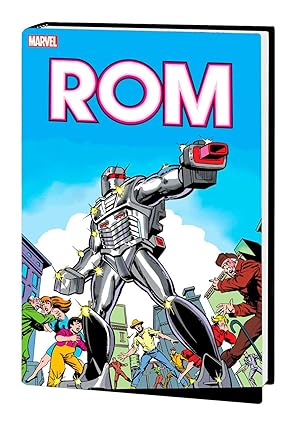
Rom: The Original Marvel Years Omnibus Volume One

 This is part one of a review of Rom: The Original Marvel Years Omnibus Volume One. Because this is a longer graphic novel (thirty issues), I’m going to review it in two parts. One of my goals for the New Year is to read longer material. I started reviewing graphic novels in 2023 because at this point in my life I have trouble finishing longer books. Reading two issues per day isn’t a lot of work, but it’s additive. In 2023, I read and reviewed fifty-four graphic novels.

On to the review. Rom was a toy released by Parker Brothers in the late 1970’s. The toy company went to Marvel, who have written material for properties such as The Micronauts, Planet of the Apes, and G.I. Joe, for help in fleshing out the character. Writer Bill Mantlo and artist Sal Buscema filled in the blanks, and the rest is history.

Rom is a Spaceknight, hailing from the planet Galador, and he’s fighting a war against the evil Dire Wraiths. The Wraiths are shape-changers like Skrulls, but they depend on magic as much as science. They’re written as being evil with a capital ‘E.’ In one of the first issues, they shoot a dog. They let a man die on the operating table. You get the idea.

Rom – who has been pursuing the Dire Wraiths for two hundred years – crash lands on earth. He sets foot in West Virginia, and is almost run off the road by Brandy Clark, his future love interest. Rom uses his analyzer to determine that Brandy isn’t a Dire Wraith. When Brandy sees Rom seemingly kill humans, she’s a tad upset, but Rom explains to her that they are actually Dire Wraiths in disguise. He isn’t killing them, but banishing them to Limbo with his Neutralizer.

I am guessing the banishing to Limbo bit has to do with an edict Jim Shooter, the editor-in-chief of Marvel at the time, made about Marvel heroes not killing. This is used to great advantage here. Rom’s Neutralizer banishes the Dire Wraiths to Limbo, but to human eyes it looks like he’s killing human beings. All that’s left of the Dire Wraiths is a pile of ashes. Nobody believes Rom but Brandy and her boyfriend, Steve.

Rom, Brandy, and Steve soon become enmeshed in a bizarre love triangle. Rom is a cyborg; his nervous system has been bonded to his armor. This makes him very powerful, but since he’s partly human he’s also very, uh, lonely. Unfortunately, at this point he’s mostly robot. Rom soon falls in love with Brandy, who senses Rom’s noble spirit, and Steve doesn’t like any of it. Unlike Rom, Steve has a functioning penis, so you’d think there wouldn’t be much suspense as to how this love triangle ends, but appearances can be deceiving.

I stopped reading when Brandy is about to marry a Dire Wraith disguised as Steve, and Rom strides into the church. Sort of like that scene in The Graduate, except instead of Dustin Hoffman a eight-foot silver robot bursts into the church. Anyway, really good stuff. Highly recommended.

Part Two coming soon!