Count Magnus

This is a review of the short story Count Magnus, written by M.R. James and published in his collection Ghost Stories of an Antiquary. Read my reviews of The Treasure of Abbot Thomas, Canon Alberic’s Scrap Book, ‘Oh, Whistle, And I’ll Come to You, My Lad,’ and Number Thirteen. M.R. James was a Cambridge scholar who wrote ghost stories in the early 20th century.

A scholar and gentleman-of-means named Wraxall travels to Sweden to write a guidebook and becomes interested in one Count Magnus, a deceased Swedish nobleman with a nasty reputation. Among other things, it’s said the Count went to Chorazin on the Black Pilgrimage and brought something/someone back with him. Before this, I’d never heard of Chorazin or the Black Pilgrimage. Reading is educational!

Wraxall, who talks to himself and easily loses track of his surroundings, seems like the type who walks into trees and other people’s houses. His cluelessness proves fatal when he unwittingly resurrects the Count and his companion, who looks like Cthulhu’s bratty kid brother.

Does this sound familiar? Maybe it does, because it’s the same plot as the past four stories in this volume. It goes like this: a scholar and man-of-means with wanderlust encounters the supernatural during the course of his travels. Sometimes he escapes with a few bad memories and minor phobias; sometimes his curiosity costs him his life.

None of James’ narrators have much in the way of a personality. All overstep a boundary, often without knowing it.  In this case, Wraxall summons Count Magnus by saying out loud he’d like to meet him. He has no way of knowing that the Count is ready and eager to accept visitors!

Lastly, the star of James’s stories is always the ghost, whether it’s a dancing and singing ghost, a ghost made out of bedsheets, or a ghost with the skin of a toad. James’s ghosts – and the way he describes the ghosts – are why he is still known and read today. Recommended for ghost story lovers!

The Girl from HOPPERS: A Love & Rockets Book

This is a review of the Girl from HOPPERS: A Love & Rockets Book, drawn and written by Jaime Hernandez. Read my review of Human Diastrophism, drawn and written by his brother Gilbert, here. Love and Rockets is an indie comic that came out in the 1980’s. Jaime writes about Hoppers, a fictional working-class Mexican-American neighborhood in California, while many of Gilbert’s stories are set in Palomar, a mythical town in Latin America.

The characters in this graphic novel all grew up in the 1970’s and 80’s, just like me. I myself came of age thousands of miles away in a suburb, but my experiences were pretty similar. Boredom. Restlessness. The urge to escape. It’s lost youth, except some of these characters are in their twenties and thirties. Being a rebel is great as a kid, but when you’re thirty years old and bagging groceries at the supermarket or a perpetual couch surfer who spends time at the homeless shelter, it loses its luster.

There are two standout stories in this volume. The first is the Death of Speedy, who has a thing for Maggie but ends up having sex with her sister, which upsets the gangbanger she’s dating. Anyway, Speedy dies, which isn’t a spoiler because that’s the title of the story. At first I thought I was missing something, but there’s nothing to miss. In the volume I read, he isn’t mentioned again. This is a bold storytelling choice because it’s so realistic. Life goes on, and so do we. We are all Speedy, R.I.P.

The second story involves Izzy, Speedy’s sister. Izzy travels to Mexico, meets a guy with a young son, almost marries him, and then her guilt arrives in the form of Satan and she checks out. I think it’s because she had an abortion, but it’s not clear. Mr. Hernandez makes the editorial choice to leave things murky, which doesn’t bother me but may drive others crazy. I will give Izzy this; she allows herself the space to process her feelings, as awful as those feelings may be. Most of the characters in this graphic novel are too busy anesthetizing or even killing themselves to bother.

To say The Girl from HOPPERS has an ensemble cast is to understate things. Characters wander in and out of the story, just like in real life! I haven’t even mentioned the through story, which involves Maggie getting mad when she misses going on Hopey’s band’s tour because she overslept, and then Hopey vanishes for two years, which makes Maggie so angry she dumps her current boyfriend Ray as soon as Hopey returns. Ray seems like a decent guy but Maggie doesn’t want decent. She’s drawn to Hopey, who never met an impulse she didn’t act on.

This graphic novel is comic storytelling at its finest, but it’s not for everyone. There are a LOT of characters, the timeline jumps back and forth, and sometimes motives and even plot points are left intentionally ambiguous. But if you like your comics unsanitized, with realistic (read: flawed) characters who don’t always do the right thing, and who don’t always get the happy ending, you will love this series. Highly recommended!

Number Thirteen

This is a review of the short story Number Thirteen, written by M.R. James and published in his collection Ghost Stories of an Antiquary. You can read my reviews of The Treasure of Abbot Thomas, Canon Alberic’s Scrap Book, and ‘Oh, Whistle, and I’ll Come to You, My Lad’ here, here, and here. M.R. James was a Cambridge scholar who wrote ghost stories in the early 20th century; if you like ghosts in horror literature, you should read him.

Anderson is a scholar and gentleman-of-means who travels to Denmark in order to study the last days of Roman Catholicism in that country. James tries to make Danish history interesting and fun by telling us about the holes in the murdered King Erik Glippling’s head. It’s a trap, just like when they told you reading is fun or eating broccoli is good for you. Don’t fall for it!

Since this story isn’t about the history of the church in Denmark, you should read it. Anderson retains Room 12 in The Golden Lion. There is no Room 13. That evening, Anderson peeks out his window and sees the shadow of his neighbor, who favors red lamps and wears a hood. Oh, and the Room 13 phases into existence after the sun falls.

Anderson, doubting his own sanity, invites the inn’s garrulous landlord to his room that night to smoke a cigar and perhaps be an eyewitness. In the interim, he peeks out his window again and sees the shadow of his next-door neighbor dancing quite vigorously. When the landlord arrives, that selfsame next-door neighbor starts to sing in a cracked, cackling voice. Unfortunately, the shenanigans end when the cock cries dawn. There’s some nonsense about a corrupt archbishop and his hidden dwelling place, but don’t be fooled. This story exists because James wanted to make a ghost dance.

This is one of my favorite M.R. James’s stories. In a normal ghost story of that era, the hero/heroine would be awakened in the middle of the night by an apparition, and then swoon. James has his ghost auditioning for America’s Got Talent. Its actions are so bizarre and unexpected and funny, and that only adds to the story.

Highly recommended for lovers of ghost stories and Victorian/Edwardian literature!

Avengers Forever

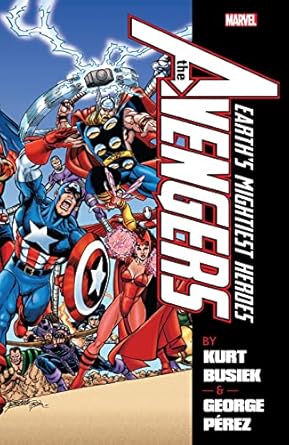
This is a review of Avengers Forever, a 12-issue miniseries by Kurt Busiek (writer) and Carlos Pacheco (artist). This miniseries appears in Avengers Earth’s Mightiest Heroes Omnibus Volume One, which I didn’t finish because it’s over 1,000 pages. Kurt Busiek has the distinction of writing one of the best runs in Avengers history. Years later, all that’s been undone, but these stories stand the test of time. This miniseries came out when Marvel still cared about correcting their continuity goofs and plot flaws.

Speaking of which…this miniseries has a lot of story. Here is the Cliffs note version of the plot. At the behest of his masters the Time Keepers, the time traveling villain Immortus attempts to murder Rick Jones, because Jones is the conduit to a power activated by the Kree Supreme Intelligence. This is the same Supreme Intelligence that destroyed its own race because they reached an evolutionary dead end.

In some timelines, Rick Jones’ power surge leads to the Avengers turning bad and conquering the universe. Note I said, some timelines. The exact number is 42%, which turns to 0% if Rick dies, so the Time Keepers have a valid argument! Fortunately for Rick, the Avengers disagree. So does Kang the Conqueror, who is Immortus’ younger self. So does someone called Libra, and the Kree Supreme Intelligence.

Avengers are plucked from different timelines to deal with the threat. We have mainstays Hawkeye and Captain America, who are still hanging around. There’s also Goliath and the Wasp. This is before Hank Pym ran off with Ultron and Jan Van Dyne died, because Brian Bendis wanted to kill a character (who played a miniscule part in the plot) at the end of Secret Invasion. Someday there will be a discussion of why a person who hated the Avengers ended up writing them, but that’s for another day.

Captain Marvel Jr. and Songbird are part of the team, too. If you aren’t a big comic geek, like yours truly, you might not know them. Yellowjacket is – wait a minute, Yellowjacket? Isn’t he also Goliath? That’s right! Hank Pym has almost as many nom de plumes as nervous breakdowns. In this one, he claims to have killed Hank Pym (bringing self-hatred to new heights!), so he’s not in the best of shape.

The Avengers waste no time figuring out what’s going on. This involves a number of time anomalies, along with Martians, dinosaurs, and a Skrull Richard Nixon. After which, we are treated to two solid issues worth of exposition. If you are interested in seeing how Marvel tried to correct a bunch of their editorial goofs, you might find these issues interesting. This is followed by a rousing climax that wraps up all loose ends.

The only thing that stops this miniseries from being a classic is the aforementioned exposition, and the fact that some of the characters are a tad obscure. It is not the best introduction to Busiek’s Avengers run. That would be the first issue, contained in this selfsame volume. I still recommend this miniseries, but only after you read the first nine issues!

‘Oh, Whistle, and I’ll Come to You, My Lad’

This is a review of the short story ‘Oh, Whistle, and I’ll Come to You, My Lad,’ written by M.R. James and published in his collection Ghost Stories of an Antiquary (published 1904). You can read my review of his short stories The Treasure of Abbot Thomas and Canon Alberic’s Scrap Bookhere and here.

Parkins is a Professor of Ontography who doesn’t believe in ghosts and is trying to improve his golf game. He goes on a golfing vacation, and his hotel room has two beds (foreshadowing alert!!!). One evening he comes across the ruins of an ancient temple by the beach, and finds an old whistle. When Parkins examines the whistle, he sees the following epitaph: Who is This Who is Coming? IMO, it should read Who is Coming, but the Victorians never met a word they didn’t like. The gist of the question is, if you want to find out who is coming blow the whistle.

Does this sound vaguely ominous? Would you blow the whistle? Well, Parkins does! As a doctor of Ontography, which doesn’t seem to be a real academic field, he doesn’t believe in ghosts. Ontography is the study and documentation of what is real; it is Philosophy and not Natural Science.

Basically, Parkins is a professor of the literal, which explains why he doesn’t believe in ghosts. I’m sure he doesn’t get subtext, either. This little in-joke adds another layer to the story. Too bad Parkins falls into the same trap as many others – i.e., mistaking his view of reality as actual reality. The whistle summons a thing that rises from the spare bed in the middle of the night, while Parkins lies quaking in his own bed. What will become of our plucky professor of Ontography?

James is great at creating ghosts, and this one is inspired. It seems mostly composed of bedsheets, and James himself says (through one of his characters) that the ghost’s power lies in frightening people out of their wits. To me, the scariest thing about this story – which might’ve freaked me out as a kid – lies in the violation of privacy. Parkins thinks he’s safe and alone in his bedroom, when it turns out he’s neither.

Recommended for ghost story lovers and lovers of Victorian supernatural fiction!

Marvel Masterworks: The Avengers Volume Four

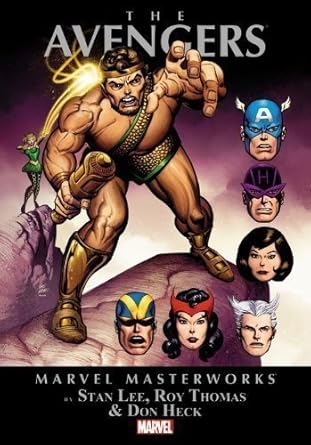
This is a review of Marvel Masterworks: The Avengers Volume Four. See what I thought of the first three volumes here, here, and here. A quick review of the first forty issues of the Avengers –started slow, but got better once the creators started making the team members fight each other more than the villains. Jack Kirby (comic creator) is gone, Stan Lee (writer) is leaving, and Roy Thomas’ (writer) time is upon us.

This volume, the roster expands as Hank Pym – aka Ant Man, aka Goliath, aka Yellowjacket, aka Ultron’s Daddy – and The Wasp rejoin the team. The Greek God Hercules, who at one point we see playing ukulele at a tiki bar, also joins after a mild misunderstanding – Herc tries to kill them all – gets ironed out. Hawkeye wants his girlfriend The Black Widow to join the team, also, and she’d be an interesting addition, but it doesn’t happen because reasons.

The tension between Hawkeye and Captain America is gone, replaced by tension between Goliath and Hawkeye. Goliath is written as a loose cannon. Besides that, he’s sort of a dick. He is also the team’s strong-man, which is weird considering he’s a scientist. What kind of scientist, do you ask? If forced to answer, I would call Pym a physicist, just because the power to grow and shrink seems to be quantum physics. What he has, of course, is a doctorate in handwavium.

The team fights the Sons of the Serpent, a two-issue storyline that today would be an 18 part event. The Living Laser storyline features one of the first realistic depictions of a stalker in comic books I’ve ever seen. There are Ultroids in Bavarian villages and yet another battle with the Sub Mariner, who manages to uncover the Cosmic Cube.

I have a confession to make. Sometimes reading 60’s era Marvel comics (besides Jack Kirby and Steve Ditko) is a real slog, but I look forward to these volumes. After a rough first volume, this series is a must-read. Recommended!

Canon Alberic’s Scrapbook

This is a review of the short story Canon Alberic’s Scrapbook, written by M.R. James and published in his collection Ghost Stories of an Antiquary (published 1904). You can read my review of his short story The Treasure of Abbot Thomas, here. Like the main character of this story, M.R. James was a scholar and a Cambridge man. If you like ghosts, he is a must read. Ghost Stories of an Antiquary contains many of his strongest stories.

An amateur archaeologist stops at an old church, where he spends the day looking at whatever amateur archaeologists look at. You’ll have to use your imagination, here. He’s accompanied by the church’s sacristan (a fancy name for keeper), an old man with a horrid case of nerves. Or is it nerves? Dennistoun – who lacks imagination – hears strange things in the church, but he’s not the sort to be put off by unexplained bumps or gouts of uncontrollable laughter.

Afterwards, the sacristan shows Dennistoun a scrapbook consisting of leaves scavenged from illuminated manuscripts. One picture stands out – King Solomon confronting a demon of the night. Dennistoun buys the book from the sacristan. Something follows him back to the hotel. Later that evening, he meets it. The end.

This is a creepy story. By today’s standards, the Victorian prose might seem overly ornate with flat characters, but you are here for the monsters. And James delivers. The demon in this story is described in a tactile way – spider eyes, shallow jaw, black hair, all bone and muscle. The creepiest thing is the monster’s closeness. Dennistoun sees its hand resting on the desk he’s working on, and then it rises up behind him. Talk about breathing down someone’s neck!

I like the idea of a haunted scrapbook. Using the magic of the Google, I searched for an image similar to the one found in the scrapbook. Alas, I found nothing. If anyone knows if an image answering to the description of King Solomon’s Dispute with a Demon of the Night exists, please let me know.

It is also interesting to note how clueless Dennistoun truly is. Or I suppose you could call him literal. There are ample warning signs that things are amiss – strange, unexplained laughter in the church, the old man’s eagerness to unload the scrapbook – which he ignores. I don’t blame him. Everyone knows monsters aren’t real.

Recommended for lovers of creepy and the supernatural.

B.P.R.D.: The Universal Machine

This is a review of B.P.R.D.: The Universal Machine. Read my reviews of the first, second, third, fourth, and fifth volumes. The Bureau of Paranormal Research and Defense consists of Abe Sapien, fish-man; Ben Daimio, dead man walking; Johan Kraus, ghost in the machine; Liz Sherman, fire starter; Roger, homunculus stewed in horse manure (R.I.P.). We also have Dr. Kate Corrigan, academic, who in this volume takes center stage.

The death of Roger the Golem continues to have repercussions. Dr. Corrigan travels to Ableben, a charming small town in France to meet a collector, who may have the obscure book needed to bring Roger back. The collector is an odd fellow, as collectors often are. He shows off his collection, including a stuffed baboon that people in the Middle Ages thought a werewolf, along with the replica of a magic ring that rests upon his finger. True to B.P.R.D. form, the town is full of actual werewolves.

While Kate travels to France, the remaining members of the B.P.R.D. do their version of sitting around a campfire telling ghost stories. Daimio’s story is the standout, a tale of blood and murder as he and his team are slaughtered in Bolivia by the minions of a jaguar god. Not to be undone, Krauss tells us how he fell in love with a female ghost, and used her grieving husband to keep seeing her. Interestingly, Daimio is the only one who correctly calls the story pathetic.

Meanwhile, Kate is stuck in the collector’s shop, which is bigger on the inside than the outside and which seems to have faded from our reality, leaving her companion stranded in a phone booth surrounded by werewolves. A dwarf and a group of aristocrat vampires join the party. The collector gets pushy, as collectors often do when arguing over prices. Kate cuts off negotiations – as well as the finger with the magic ring – and feeds it to the dwarf, who transforms into a demon, and that’s when the shit hits the fan.

Recommended for fans of occult comics, Hellboy, and the X-Files!