
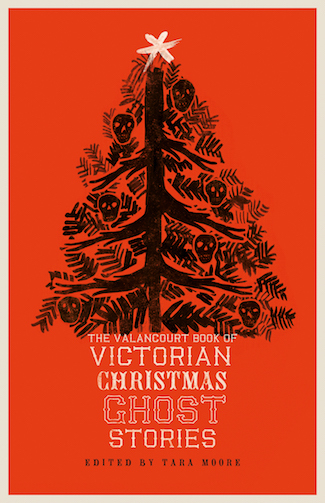
I am reviewing tales from The Valancourt Book of Victorian Christmas Ghost Stories for the month of December. Read my review of The Tapestried Chamber here, my review of Horror: A True Tale here, and my review of ‘Bring Me a Light!’ here. This is a review of The Ghost’s Summons, by Ada Buisoon.
A doctor is offered 1,000 pounds to attend a deathbed. The rub: his ‘patient’ is alive and seems to be in good physical health. His mental health is another matter, of course. The doctor agrees, because of the money. After giving his patient a sleeping draught, he replenishes the fire, pours himself a big glass of wine, and draws the curtains before retiring himself. Why the doctor feels comfortable falling asleep in a total stranger’s house is one of many details the story does not explain.
The doctor awakens at 1 a.m. to witness a specter with a severed left middle finger kill his patient! For obvious reasons, the doctor leaves the house in a hurry. When the widowed wife makes noises about contesting her husband’s will (where the 1,000 pounds is included) because her spouse wasn’t in his right mind, the doctor requests an audience.
I’m curious about his motives, here. Well, obviously his motive is money, but him coming forward raises all sorts of bizarre questions. ‘Hello, I’m the doctor your husband hired to attend him at his deathbed. I know I sort of left, uh, suddenly, when your husband died. By the way, the ghost that killed him had a severed left middle finger – just like you!’ The story ends when the doctor collects his 1,000 pounds from the ‘sinful’ (the author’s word, not mine) wife and goes on his way.
And that’s it. I suppose the takeaway is that the wife did away with her husband by – uhh, I don’t know. One of the things I have seen whilst reading these stories is that the ghost in the 19th century was often a stand-in for something else: fear of assault, wayward sexual urges, psychotic mothers-in-law, etc. Add murderous wives to the list.
The Ghost’s Summons did leave me with questions. I’d like to know if the doctor brought his pajamas with him. Maybe he took off his pants to prepare himself for slumber? Did he sleep in an armchair, or in the same bed as his patient? Like the other issues raised by this story, these questions go unanswered.
I am not being sarcastic when I say that I am unsure why this was ever published, as I don’t think it holds together. When a story has gaping plot holes with characters who act in bizarre ways that aren’t explained, the most likely explanation is bad writing. I don’t wish to malign the author, and it is possible that I’m judging this story by 21st century standards, when it was meant to be read during the witching hour with flickering candles and the wind whistling outside, etc., etc., etc. Whatever the reason, this story did not work for me.
 Abandoned Places