Marvel Masterworks: Captain America Volume Two

This is a review of Marvel Masterworks: Captain America Volume Two. Back in the 1960’s, Captain America and Iron Man shared the same magazine – Tales of Suspense – for awhile. The difference being, Captain America had Jack Kirby and Iron Man didn’t. The characters might have been in the same magazine, but the stories are in different stratospheres.

I am sure you will all be fascinated to know that I rate all the graphic novels I read. The only thing preventing this from being a four-star book was the absence of Kirby in two storylines. The fill-in artists (one of whom was Gil Kane) did a fine job with the art, but the stories read as sloppy, unfocused, and rushed. Kirby was a craftsman. More than that, he cared. When you read his product you can tell he cared about what he was putting on the page.

Most of the storylines in this volume follow a template: a villain returns with an apocalypse device. When Cap teams with Agent Thirteen and The Black Panther (Kirby story), it’s a satellite that focuses solar energy into death rays. Okay, that’s scary. In Kirby’s absence, it’s a device that can enclose anything in indestructible bubbles. Which is stupid, especially when the villain ditches his bubble machine for a nuclear submarine. Anyway: Cap kicks the shit out of the villain so that he can go back to being depressed. What, you say Captain America’s depressed? If you were frozen in an iceberg for twenty years and then thawed out, you’d be depressed too!

There are two storylines I’d like to mention. The first involves the Super Adaptoid, a creation of A.I.M. (Advanced Idea Mechanics). The Adaptoid gets the jump on Cap and duplicates him exactly, and then proceeds to get his head handed to him by a Z-grade villain called The Tumbler. Although the Adaptoid has all of Cap’s physical prowess and skills, he doesn’t know how to fight. The Adaptoid goes down, and the real Cap recovers in time to beat the tar out of the confused Tumbler. This is a story built around an idea.

The second storyline is when Cap proposes to Agent Thirteen, the SHIELD agent he’s in love with (even though he doesn’t know her name). Agent Thirteen turns down his proposal to be Mrs. Captain America because she has a sense of duty – and she doesn’t want to quit her job, although she doesn’t say that. Unfortunately for them, it’s the mid-60’s so they can’t just shack up. Cap, depressed, publicly unmasks and quits so that he can have a life. This has real repercussions, in that a number of Captain America impersonators run amok in the city and the Syndicate starts trying to kill them all.

Recommended!

Marvel Masterworks: The Invincible Iron Man Volume Three

This is a review of Marvel Masterworks: The Invincible Iron Man Vol. 3. Note: this volume contains Iron Man and Captain America stories, but I only read the Iron Man material. You can peruse my reviews of the first two volumes here and here.

Iron Man is Tony Stark, multi-millionaire. Tony makes weapons for SHIELD and the U.S. Defense Department. Since he hails from the Marvel Universe, there’s a catch. Stark’s heart was damaged in Vietnam, and now he’s living on borrowed time. The only thing keeping him alive is the plate welded onto his chest, which he must charge whenever there’s an emergency or a supervillain appears.

The art – mostly by Don Heck and Gene Colan – is good. The stories are – well, they’re a mixed bag. No more Mr. Doll, which is a shame. Instead we have The Titanium Man, a big burly Russian who builds a big burly green suit of armor. TM challenges Iron Man to a battle royale, mano a mano, East vs. West – just like that exciting Rocky movie, which I’ve never seen! (Confession: I’ve never seen any of the Rocky movies).

Iron Man triumphs, but only after his chauffer Happy Hogan is almost killed bringing Shell-Head the MacGuffin, an object so integral to Tony’s battle with Titanium Man that he left it behind on his coffee table. Luckily, Happy is saved by the Enervator, which has the unfortunate side-effect of transforming him into an enormous hulking freak of nature. Hey, it happens.

After that, warlord and racist caricature The Mandarin stops by to test his enormous android, Ultimo, against Iron Man. And then the Sub-Mariner attacks! Lots of action, no let up. The problem being, the stories all start to blend together. There are a few points during the Sub-Mariner storyline where the creators forget their own plot points and contradict themselves, but I’d have trouble remembering it all also.

Iron Man started out as a propaganda war comic, and this volume possesses some of these elements. Stark’s main antagonist is Senator Byrd, a dedicated public servant who manages to shut down Stark Enterprises, because reasons. Actually, Byrd’s reasons aren’t bad – Mark Millar’s Civil War, penned decades later, riffs off this.

Nowadays, Iron Man is viewed as a semi-problematic character, depending on who writes him. He’s a millionaire. When you look up ‘capitalist’ in the dictionary there’s a picture of him next to the Monopoly guy. He’s good looking and assumedly gets all the sex he wants. He’s had substance abuse issues with alcohol and he’s the main villain in the first Civil War.

If you’re an Iron Man fan or completist, you might like this.

Tales of the Batman: Archie Goodwin

This is a review of Tales of the Batman: Archie Goodwin. Mr. Goodwin was a prolific writer and editor. This volume collects his Batman stories, with a bonus being his entire Manhunter run (reviewed last week, here). What impressed me most about these tales is how Mr. Goodwin had a vision of Batman and stuck to it. Batman’s origins are grounded in the pulp tradition, and these stories reflect that, hearkening back to Batman’s early adventures when he fought crooked politicians, mobsters, and fifth columnists.

None of the members of Batman’s rogue gallery make appearances here. His foes are evil men and women, period. Batman himself doesn’t get tied up and put into a deathtrap once. This reflects the truism that most criminals will go for the tried & true – a bullet to the head, knife to the heart, etc. – when killing an enemy. Paraphilias aside, killing a person by tying them to a conveyer belt is stupid on multiple levels.

All the stories in this volume are great, but the standout is the final tale, which deals with child abuse. There’s a serial killer in Gotham who is killing parents who abuse their kids. The killer dresses up in a mask, just like Batman The difference being that Batman doesn’t kill criminals, he just beats the snot out of them.

Commissioner Gordon almost hits his own son, Jimmy – who grows up to become a serial killer. Batman himself is obviously mentally ill, because that’s what you call people who dress up as enormous bats and send people into intensive care. Mr. Goodwin puts the elements out there, but leaves it to the reader to connect the dots. Or not, as the case may be. This issue takes a fairly blunt look at child abuse and the trauma it causes, without offering any answers, so please be warned.

There’s also a storyline involving the Yakuza, and another that hearkens back to the days of Bruce Wayne’s grandfather. Silver St. Cloud makes an appearance that feels gratuitous and almost gets fridged, which is really the only low point of this volume.

Recommended for Batman fans, only because of the volume’s high price. Bat-fans should know that Comixology’s Batman sale ends today (8/12).

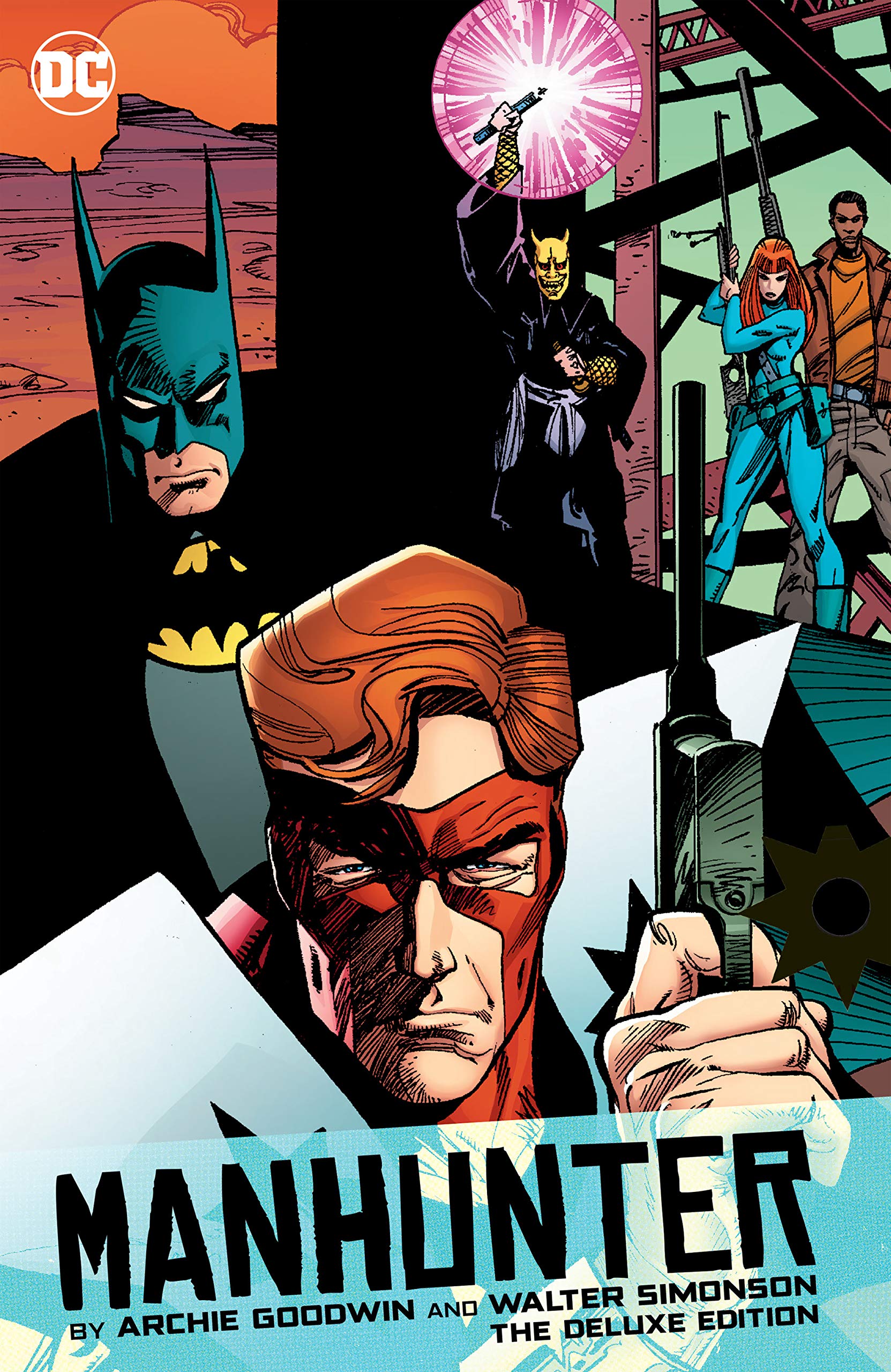
Manhunter Deluxe Edition

This is a review of Manhunter Deluxe Edition by Archie Goodwin (writer) and Walter Simonson (art). When I read Howard the Duck last month, the person who wrote the introduction made the case that the second half of that volume was the world’s first graphic novel. Since graphic novels are a format and not a genre, I disagree.

I think what he meant is that it’s the world’s first stand-alone story in comics, which I also disagree with. Howard having a nervous breakdown is a storyline contained in a larger storyline, whereas Manhunter is a stand-alone story with a beginning and end told in the course of seven back-up issues, climaxing in a full-sized issue guest-starring Batman. There is also a postscript issue that takes place decades later. The entire story – minus postscript – is less than 100 pages.

Anyhow: Manhunter is Paul Kirk, big-game hunter, who dies and is resurrected by a secret society. The Council wants Paul to be their hitman, but he soon discovers they have less than pure intentions and rebels. Here’s the twist: the Council cloned Paul, so he has multiple copies of himself running around. He’s fighting himself, literally.

Manhunter is short, but insanely influential. Paul has a healing factor that lets him recover from most of his wounds – does that sound familiar? Unlike Batman, he has no problem killing people. The postscript issue has no words at all, because Mr. Goodwin unfortunately passed away, but I was impressed by how I didn’t need words to understand the story perfectly. This is action-espionage comics done right. Recommended!