Batman: The Long Halloween

This is a review of Batman: The Long Halloween. I read this graphic novel years ago and even owned a physical copy, which I lost during a move. The timeframe is around the same time as Batman: Year One, which I’ve never read. Batman is just starting out, aided and abetted by policeman Jim Gordon. At this point he’s basically the GCPD’s unofficially sanctioned vigilante. Just FYI: if the police department of your city has a big spotlight they use to summon a guy who dresses as a bat to fight crime, you should consider relocating to another city.

The plot: a serial killer is killing mobsters on holidays. The unknown killer, dubbed Holiday, uses a .22 equipped with a modified silencer (a baby pacifier). This upsets Batman, who wants to stop Holiday; district attorney Harvey Dent, who isn’t all that upset; and Calendar Man, a serial killer who spends the graphic novel channeling Hannibal Lecter in Arkham Asylum. The Joker is also irked, and expresses his frustration by attempting to kill everyone in Gotham City, but he’s not a big player here.

Each of the thirteen issues takes place during a holiday and usually features a member of Batman’s rogue gallery. It’s a simple framing device that works very well. Two standouts: the portrayal of Cat Woman and Two-Face are very well done; this volume is Two-Face’s origin story. The art is wonderful, and the writing is very good as well. The script has layers and is more complex than it looks, but by the end of the graphic novel I was still a little confused. I can’t say more, because spoilers.

A great read for Batman fans.
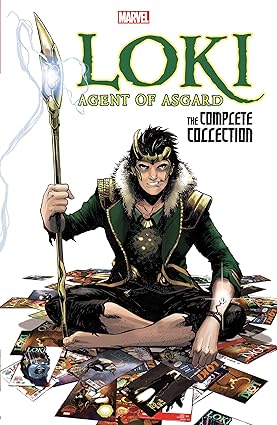
Loki Agent of Asgard: Complete Collection

This is a review of Loki Agent of Asgard: The Complete Collection. Please note that this review contains SPOILERS, so be forewarned. I recall seeing the original Avengers movie when it came out in 2012. There are a number of things I could say about that movie, but the only thing that’s related to this review is the fact that the actor who played Loki (the villain) made him interesting enough so that people liked the character, and Marvel picked up the baton from there.

The concept behind this graphic novel is that there’s a new Loki in town, and he (sometimes Loki is a she, but I’ll use he because Loki spends most of his time as a man) acts as Asgard’s agent, and for every good deed he does another one of old Loki’s heinous deeds is wiped from existence. This status quo lasts for three or four issues before the old Loki comes back.

I don’t know if this is a sly bit of meta-commentary by the authors, because at that time iconic Marvel characters were being replaced left and right, only to return after a year or two. At the time of this series’ release, Jane Foster was Thor. You should feel bad for Loki, because while Jane’s story arc lasted years, Loki’s story only lasts a few issues.

Turns out, the old Loki is from the future and the ‘new’ Loki is his younger self. Old Loki killed the real new Loki and took his place, but the current Loki has trouble accepting this. I am unsure why the current Loki thought he could move on from murdering himself, but perhaps he needs therapy. Anyway, the old Loki is so butt-hurt about being called the God of Lies (even though that’s what he is) he decides to bring on Ragnarok. Can the current Loki stop him, and does he even want to?

I admire this series for not jumping the shark. It comes close, though. My only quibble are the two tie-ins with company-wide crossovers, but in this day and age that can’t be helped. The authors do a good job of humanizing Loki, which makes us care about him and thus creates suspense. Loki is a god, which means he’s a beaucoup powerful character. You can’t kill him, any more than you can kill a story.

Recommended!

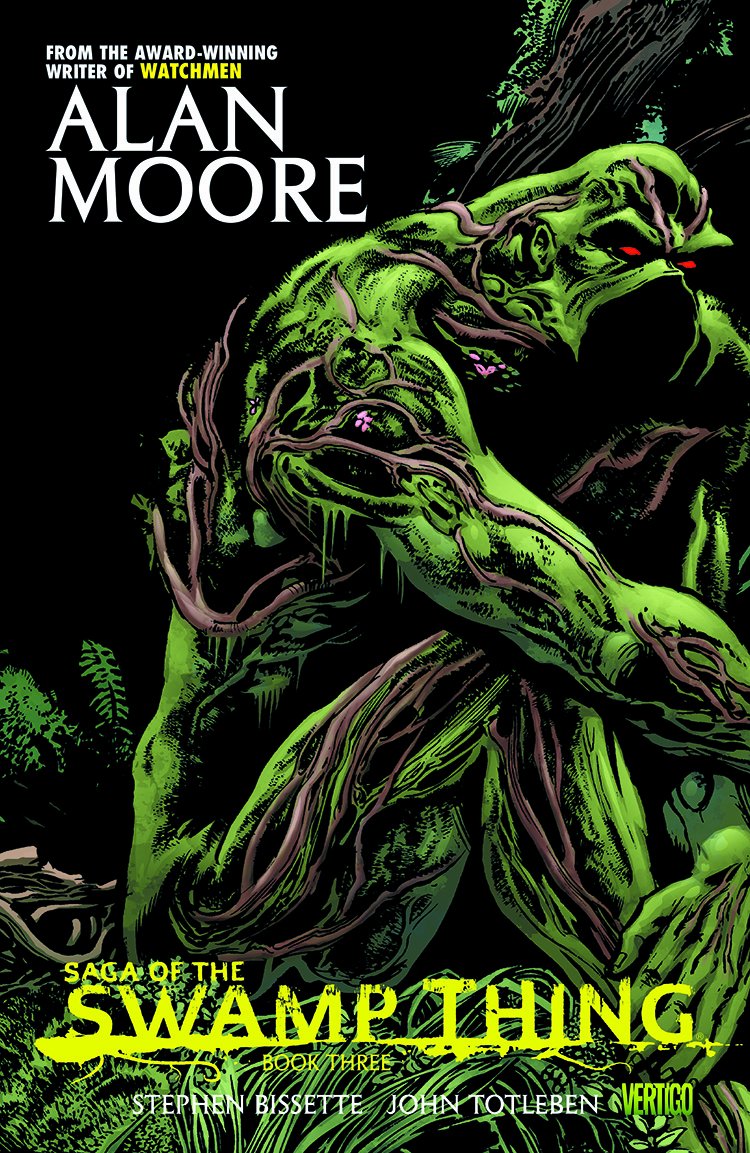
Saga of the Swamp Thing Book Three


This is a review of Saga of the Swamp Thing Volume Three, which continues Alan Moore’s groundbreaking run on the title. One of the eye-openers of this volume is reading John Totleben’s (the artist’s) introduction and realizing how much of a collaborative process comic creation is. The idea for Nukeface, one of the series more memorable characters, came from Mr. Totleben.

Swamp Thing continues be a status quo breaker. Most superhero comic series love the status quo and hate change. True, things may seem to change, but they almost always revert back to the mean. The tried and true method is to have the title character quit/die/get his or her brain swapped/be transported back in time or to another dimension. While they are on the shelf (it’s always temporary), someone else takes up the mantle.

This has happened to Spider-Man (brain swap with Dr. Octopus), Thor (unworthy of Mjolnir), Iron Man (Tony goes back on the sauce), Captain America (assassinated), Superman (killed by Doomsday), Green Lantern (quit, died), and so on. The most notable instance that I’ve read this year is the first volume of Knightfall, when Batman’s back is broken by supervillain/steroid freak Bane, and he is replaced by a guy who turned out to be so unpopular DC killed him and didn’t bother resurrecting him.

Anyway, Alan Moore’s version of Swamp Thing thrives on real change. After his tryst with Abigail Arcane, the Swampster encounters an irradiated hobo named Nukeface who calls everyone Ed. Even though Nukeface’s touch means death, he really isn’t a bad fellow. Like everyone else, Nukeface needs to eat and drink – except he eats & drinks toxic sludge.

Swamp Thing is irradiated, dies, and manages to regrow his body. Shit gets even realer with the arrival of John Constantine, a nasty Englishman who looks like a young Sting (of the Police) and is partly based on Jerry Cornelius (created by Michael Moorcock). Constantine is an occultist, and he leads Swamp Thing on a merry chase across the country, where he encounters aquatic vampires, a werewolf story (that was quite controversial at the time), and finally zombies.

A great horror comic.

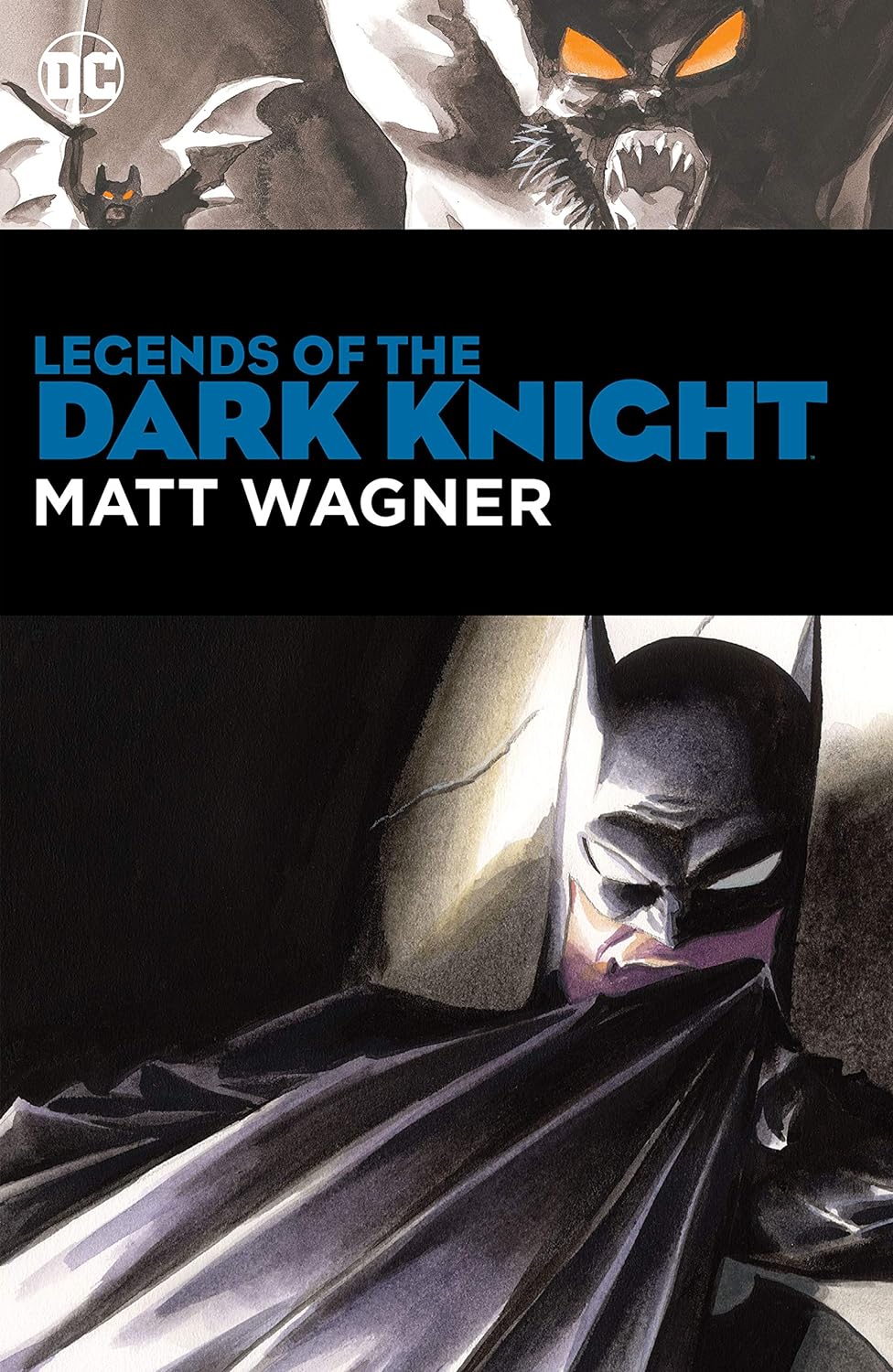
Legends of the Dark Knight: Matt Wagner


This is a review of Legends of the Dark Knight: Matt Wagner. As the book’s title tells us, this collection is written and partly drawn by comics legend Matt Wagner, creator of Grendel and the writer of Sandman Mystery Theatre. Mr. Wagner’s stories in this volume contain lots of plot, focus on side characters and side storylines, and bring a fresh perspective to The Dark Knight.

Unlike many comic scribes, who can’t, won’t, or don’t want to, Mr. Wagner goes there on a fairly regular basis. He doesn’t shy away from the dark side of human nature, writing violent, unsettling material. The other comic writer I can think of who does this is Robert Kirkman, the creator of The Walking Dead and Invincible. To me, it’s a jarring way of breaking the fourth wall.

This graphic novel contains three major storylines. The first is a Two-Face story, which is very good. There’s also a Riddler one-shot, where Ed Nigma hosts an underground game show that proves to be a big hit with the Gotham public. What interests me are the last two storylines, both of which involve Batman characters and villains from the 1940’s. The source material for these stories is contained in the Batman Golden Age volumes, some of which are reviewed here. These are retro stories that take place at the beginning of Batman’s career.

The first story involves a minor Batman villain named Hugo Strange, M.D. (medical deviant). Strange is fascinated with genetic engineering and seeks funding to continue his studies. Since he’s a mad scientist who probably locks his test subjects in the basement, nobody but mobsters will fund him. Trouble starts when it turns out that the wacky Strange does indeed lock his monstrous, mutated test subjects in the basement.

The second storyline involves a villain called the Monk. Originally a kitschy Dracula homage done by Kane & Finger, Wagner’s version of the Monk wears a bright red robe and hood, S&M style. The story is ambivalent about whether he’s really a vampire, but he’s certainly deranged. A few of the torture/dream sequences in this storyline are quite disturbing.

We also have Julie Madison, who in the 1940’s holds the distinction of being Bruce Wayne’s arm candy fiancée before she dumps him in favor of movie stardom. In these storylines, she’s really Bruce’s girlfriend, which is…look, superhero comics have always been terrible at depicting normal relationships. Historically, they’re aimed at 14-year-old boys, whose hormones are raging out of control.

IMO, having Batman behave like a normal human being is a risky proposition, because if you humanize Batman too much he falls apart as a character. That sort of happens here. Seeing Bruce lie to his girlfriend about – well, basically everything – hammers home the point that he’s an emotionally stunted man who is terrified of intimacy. The fact that he draws all the wrong conclusions when she leaves makes it worse. There’s a brief story after this one that shows us the present-day Batman, and let me tell you he is one sad motherclucker.

Recommended!

Marvel Masterworks Iron Man Volume Two

This is a review of Marvel Masterworks: Iron Man Volume Two. I expected nothing from this graphic novel. That’s because the first volume – read my review here – was a mish-mash of bad art, clichés, propaganda, and poorly developed characters.

I am happy to report that the series finds its legs in the second volume. We have the usual Marvel love triangle, this being between Tony Stark, Pepper Potts (secretary), and Happy Hogan (chauffer). We have the introduction of Marvel mainstays The Black Widow and Hawkeye, as villains. The Black Widow is a Russian spy and Hawkeye is her boy toy.

I like the characterization of Hawkeye, here. Think Captain America, without Cap’s brains and sterling moral compass. In the Black Widow’s first appearance, she’s teamed with another spy named Boris (the Black Widow’s first name is Natasha). Since I watched Rocky & Bullwinkle as a kid, I found this very funny but YMMV.

We also have our first Iron Man multi-issue storyline. If you read my review of the first volume, you’ll know that Tony Stark has shrapnel in his chest and the only thing keeping him alive is his chest plate. When Tony’s heart problems worsen, he can’t take off his Iron Man armor, and his employees/only friends Happy & Pepper begin to suspect Iron Man of doing away with him!

I should mention my favorite scene of this volume. Tony invents an anti-gravity machine, but doesn’t recall exactly how he did it. When the Black Widow visits, Tony knows she’s a Russian spy, but little Tony makes him demonstrate the anti-gravity device in an effort to impress her. Thus, it is the Black Widow and not Mr. Doll or Jack Frost who comes closest to ending Iron Man’s life. Instead of putting a bullet through Tony’s head, Natasha merely gasses him and steals the device. It’s a lot of fun watching his increasingly frantic efforts to get it back.

There’s also the time Tony leaves the briefcase with his Iron Man armor behind. The armor is stolen, and Tony must use his ugly old golden armor to fight the interloper, who goes crazy during the course of their battle. Instead of telling the world that Tony Stark is Iron Man, he tells everyone that he’s Iron Man. Whew, that’s a lucky one!

Stark is written as being careless at best, unreliable at worst. I am unsure if the word ‘narcissist’ was used much back then, but it describes Tony to a tee. He’s a self-centered workaholic who is obsessed with money and has no real relationships to speak of. Maybe it’s because he’s living on borrowed time, or maybe it’s just the way he is.

A decent volume, especially if you like Iron Man!