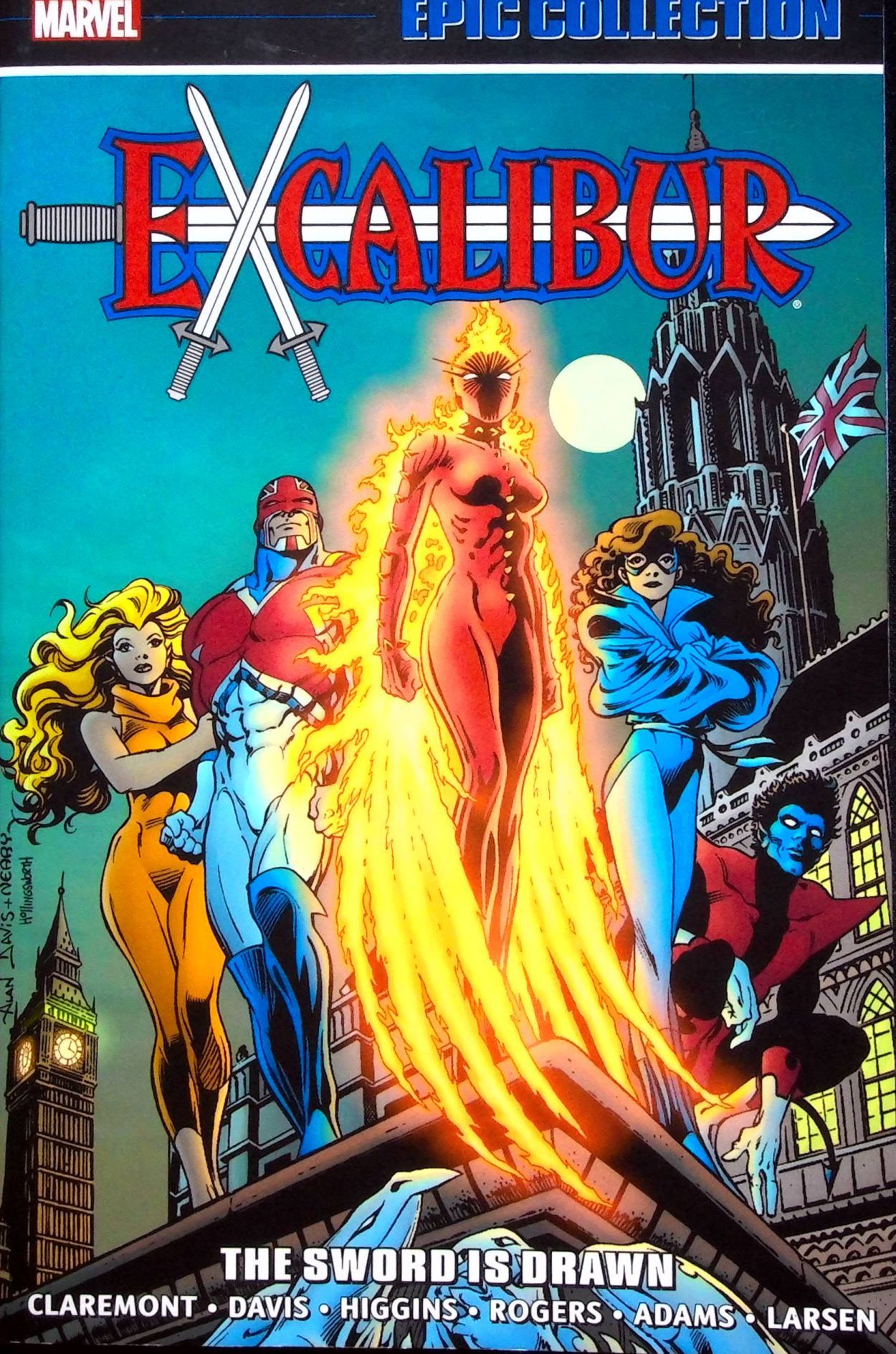
Excalibur Epic Collection: The Sword is Drawn

This is a review of Excalibur Epic Collection: The Sword is Drawn. This graphic novel is written by Chris Claremont, who wrote Excalibur along with most of the X-Output in the 1980’s. I read a lot of Chris Claremont comics growing up.

Excalibur consists of five members, three former X-Men (Nightcrawler, Shadowcat, the Rachel Summers Phoenix) along with British superheroes Meggan and Captain Britain. All but Captain Britain are mutants – or muties, in Claremont Parlance. Sidenote: I don’t consider an X-title finished unless some stupid human says muties. The events of Excalibur take place after the Mutant Massacre, a famous (or infamous) crossover that shook up the X-Books.

Excalibur has all the elements of a Chris Claremont book: ensemble cast, soap opera histrionics, and short, punchy storylines. Characters say things like – “I know you’re a hero. But let’s see if you’re a man!” It’s amazing that a title whose feature characters are Nightcrawler and Kitty Pryde lasted over a hundred issues. I think it likely that the wonderful art by Alan Davis – who went on to write the book after Claremont left – has something to do with that.

Excalibur’s origin story lasts exactly one issue, and then we are off to the races. Honestly, the team has no real reason for existence, but who cares? Whatever they did worked. Excalibur has no problem finding its legs. The title comes roaring out of the gate, as the members fight bounty hunters from outer space, interdimensional werewolves, Arcade, and the Nazi versions of themselves. There’s also a two-issue crossover with the X-Men, an Inferno storyline in which Excalibur is so superfluous none of the crossover’s major players even know they are there.

I’d be remiss if I didn’t mention this. The first time I read Excalibur, I was still a kid and some of this title’s more, uh, grown-up elements flew over my head. The creators like dress-up and cosplay, because this title features lots of costumes -some sexy, more often outright bizarre. There are also a few gratuitous underwear shots, mostly female. As a kid I didn’t mind; as an adult, it’s embarrassing. If you find this offensive, I’d avoid this graphic novel.

A good read for fans of the 1980’s X-Men.
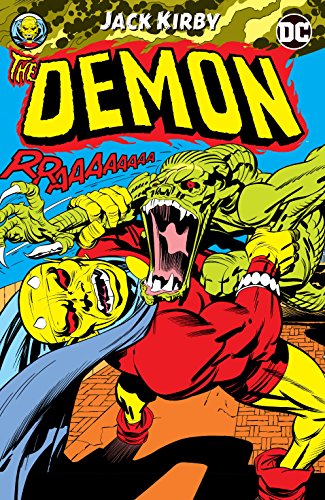
The Demon

This is a review of The Demon, a comic series written, drawn and edited by Jack Kirby. The Demon is one of the projects Mr. Kirby worked on when he went to DC in the 1970s. I read part of the first issue in an anthology, somewhere, but that’s it.

Short summary: The Demon is Merlin the Magician’s pet monster. The first time we meet him is during the fall of Camelot, where he fights the demon hordes of Morgan Le Fay, and then we fast-forward to modern day (1970’s) New York City. Jason Blood is a demonologist; unbeknownst to him, he’s also a Demon.

This is a short run, sixteen issues. The art is great. My favorite character design is Klarion the Witch Boy. In his first appearance, Klarion is more of a pest. He doesn’t turn evil until his second appearance, which is one of my problems with this series. More on that later.

Make no mistake about it, this is a horror comic. I wouldn’t call it disturbing, exactly, but I was surprised at the level of violence. In one issue, Baron von Evilstein is going to cut Blood’s head off. In another, a demon marks Blood’s forehead with a white-hot poker. A Frankenstein’s monster is tormented and killed by his ‘master.’ The bad guys and girls are really bad, and the stories don’t always have happy endings.

This series is written & drawn by Jack Kirby, which means it’s good. All I can say is that it didn’t hit me where I live, and I am not sure why. It might have been good if Mr. Kirby had an editor, because the stories feel slightly unfocused. Klarion the Witch Boy’s transformation into a villain is one example.

Here’s another: in the first few issues, The Demon is more threatening. One of the high points of the early issues is Blood’s ‘nightmare,’ where he’s chained to The Demon. This sequence – Blood wondering if he’s losing his humanity, or maybe he’s already lost it – is the real thing. Unfortunately, The Demon mellows as the series progresses and misplaces its crazy energy. Bottom line: to me, this title loses its legs, and that’s something an editor can help with. It’s still worth a read, especially if you’re a Jack Kirby fan.

Marvel Masterworks: The Sub-Mariner Volume One

This is a review of Marvel Masterworks: The Sub-Mariner Volume One, starring the Sub-Mariner, aka Prince Namor, aka the guy with wings on his ankles. The first storyline spans over twelve issues, so points for ambition. The art is mostly done by Gene Colan, an artist I adore, but I wasn’t crazy about his inker. My main issue is Stan Lee’s script, which repeats itself and is all over the place.

The plot involves Warlord Krang’s attempts to seize the throne of Atlantis. He does this while Namor is off gallivanting on the surface world. Namor must find the Trident of Neptune, aka the MacGuffin, to regain his throne. For some reason Krang – who has Namor in his power – lets him go. Since finding the trident involves punching things, Namor is in his element.

After finding the trident and winning his crown back, the Sub-Mariner banishes Warlord Krang, who simply bides his time and awaits another opportunity. That opportunity comes when Krang tells Dorma, Namor’s beloved, that he’ll kill Namor if she doesn’t marry him, and this evil plan – uh, works. For some reason Dorma believes Warlord Krang. She and Namor are made for each other, in that they are both unbelievably gullible.

At one point Namor even wonders if he’s fit to rule, a rare moment of self-reflection. The answer is no. For all his faults Warlord Krang – Namor’s foe in this volume – would make a much stronger ruler. This is mainly because Namor has no control over his emotions. If the Hulk is a toddler, the Sub-Mariner is a 12-year old going through puberty.

Like many Marvel strongmen, he’s vulnerable to mind control, brainwashing, and amnesia. He doesn’t listen and refuses to admit when he needs help. This gets taken to ridiculous extremes in this volume, as Namor is manipulated by both the Puppet Master and the head of the Secret Empire.

The two people the Sub-Mariner most resembles are Dr. Doom and the Marvel version of Dracula. Namor is better than them in that he’s not as ruthless and doesn’t murder people for fun. He carries a streak of nobility that neither villain possesses. There are several points in this volume where Namor avoids hurting or killing humans. That’s great, but judging by this volume, he’s not an interesting enough character to sustain his own title.

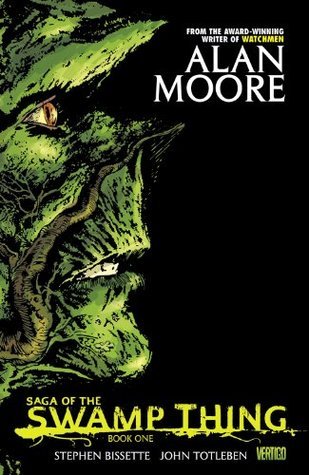
Saga of the Swamp Thing, Book One

 This is a review of Saga of the Swamp Thing Book One. This volume marks the start of writer Alan Moore’s fabled run on Swamp Thing, and features great art by John Totleben and Stephen Bissette. The first issue starts with a bang, literally. Alec Holland, the man behind the moss-encrusted monstrosity of a man, is shot in the head by a kill squad sent by the Sunderland Corporation. Yes, Alec Holland is dead, but Swamp Thing is another matter.

Swamp Thing’s body is examined via autopsy by Jason Woodrue, aka the supervillain The Floronic Man. Woodrue realizes that the Swampster needs none of the internal organs that are in his body. He also discovers that the Swamp Thing doesn’t need to breathe oxygen because he’s a plant. Most importantly, you can’t kill a plant by shooting it in the head. Sure enough, Swamp Thing awakens, reads his own file, and wreaks vengeance on Sunderland. Woodrue himself goes crazy and declares war on the human race, as one does.

 Afterwards, we meet The Monkey King, a demon that feeds on fear. The Monkey King is hiding in a home for troubled children, where Swamp Thing supporting character Abigail Arcane works. This story guest stars Jason Blook, aka Etrigan The Demon (created by Jack Kirby).

A must read!

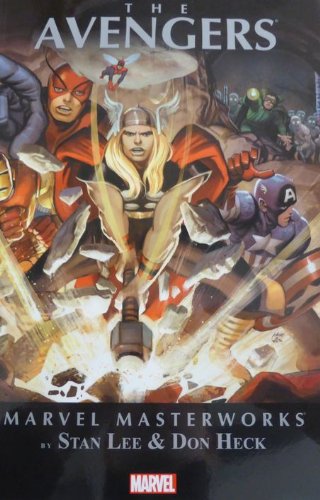
Marvel Masterworks: The Avengers Volume Two

This is a review of Marvel Masterworks: The Avengers Volume Two. You can read my review of the first volume, here. This series has the distinction of being the only title I’ve reviewed so far that finds its legs twice.

I will be honest: the first few issues of this volume are pretty wretched, mostly because of the art. But the stories aren’t great, either. In one issue the Avengers fight a Spider-Man robot in Mexico; Spider-Robot has been sent from the future by Kang the Conqueror. The Wasp is shot at the very end of an issue, mostly for shock value (it happens off-panel), and the Avengers’ search for the specialist to save her leads them to space aliens living in the North Pole. The Wasp is back the very next issue, none the worse for wear, and nobody refers to this issue again, although it does foreshadow the first signs of mental instability in Hank Pym.

The Masters of Evil make another appearance, giving Jack Kirby a chance to tie up the Baron Zemo storyline, and then the book’s creators shake the book up. They disband the old team, which wasn’t working, and give us a new lineup – Captain America, Quicksilver, The Scarlet Witch, and Hawkeye. This is a much more interesting lineup and pays dividends immediately. This volume also gives us the first appearance of The Swordsman, an intriguing character.

Uneven, but good.